1939–1940, developed by Ansel Adams and Fred Archer
Typeface · Newsreader
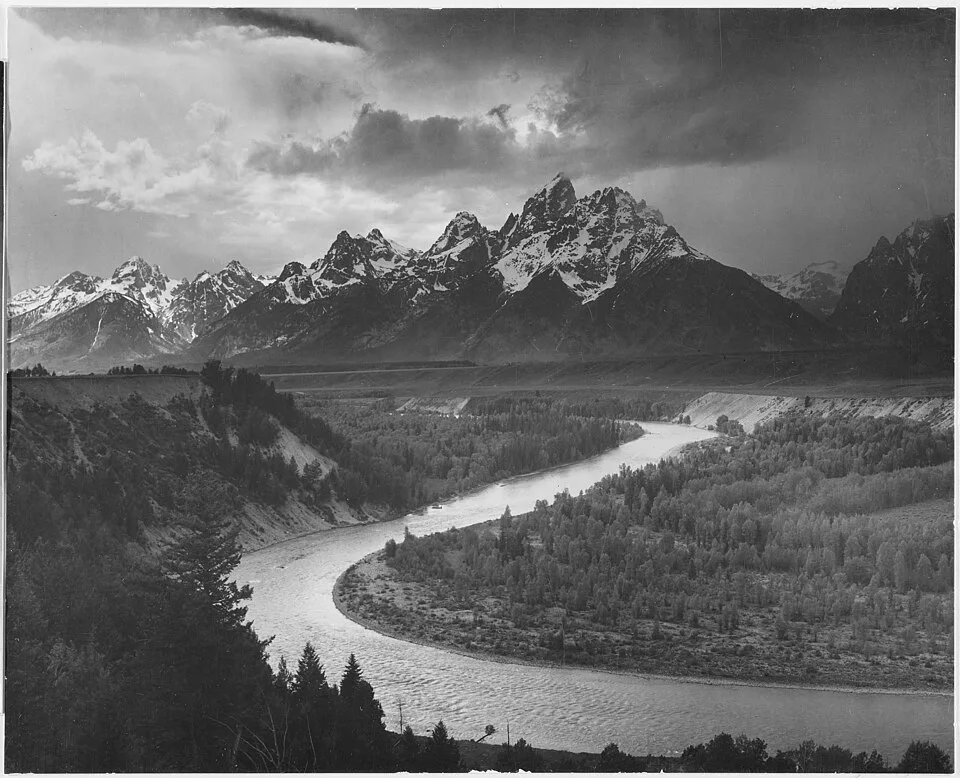
The Tetons and the Snake River. The Snake River winds through wooded flats beneath the snow-streaked Tetons and a luminous, cloud-filled sky.Ansel Adams · Public domain · via Wikimedia CommonsView source ↗
Prompt
Apply a Zone System-inspired black-and-white print treatment with deep blacks, luminous whites, and carefully separated intermediate grays. Preserve texture in important shadows and bright surfaces, shape local contrast gently, and add restrained fine grain with crisp natural edges. Keep the original subject and composition.
Typical black-and-white prints show [deep blacks], luminous whites, and [carefully separated gray tones]. Important shadows and highlights retain texture, though appearance alone cannot confirm the method.
Principle
The system maps measured scene brightness onto eleven zones, from black to white. With black-and-white negative film, [exposure establishes shadow detail], while development adjusts contrast, especially in highlights.
Example
Ansel Adams: The Tetons and the Snake River, 1942.
Try it out
Photograph awhite towel beside dark fabric at three exposures; compare which versions preserve texture in each material.
Background
Adams and Archer developed the Zone System around 1939–1940, building on established photographic sensitometry1. It helped photographers predict afinished print before exposing the negative. Zones run from 0, representing black, to X, representing white. Adjacent zones correspond to one stop2of exposure, not equal steps in printed brightness. Photographers meter selected areas and choose where their tones should fall. Exposure secures needed shadow information; development changes negative contrast3to suit the scene and printing paper. Printing remains essential, and not every photograph needs the full tonal scale.
Distinction
Unlike simply increasing contrast, the Zone System plans tonal placement before exposure and coordinates development with printing. Strong contrast alone does not demonstrate its use.
Aftermath
It teaches that scene brightness, recorded information, and final print tones are related but distinct.
Further examples · 7 images
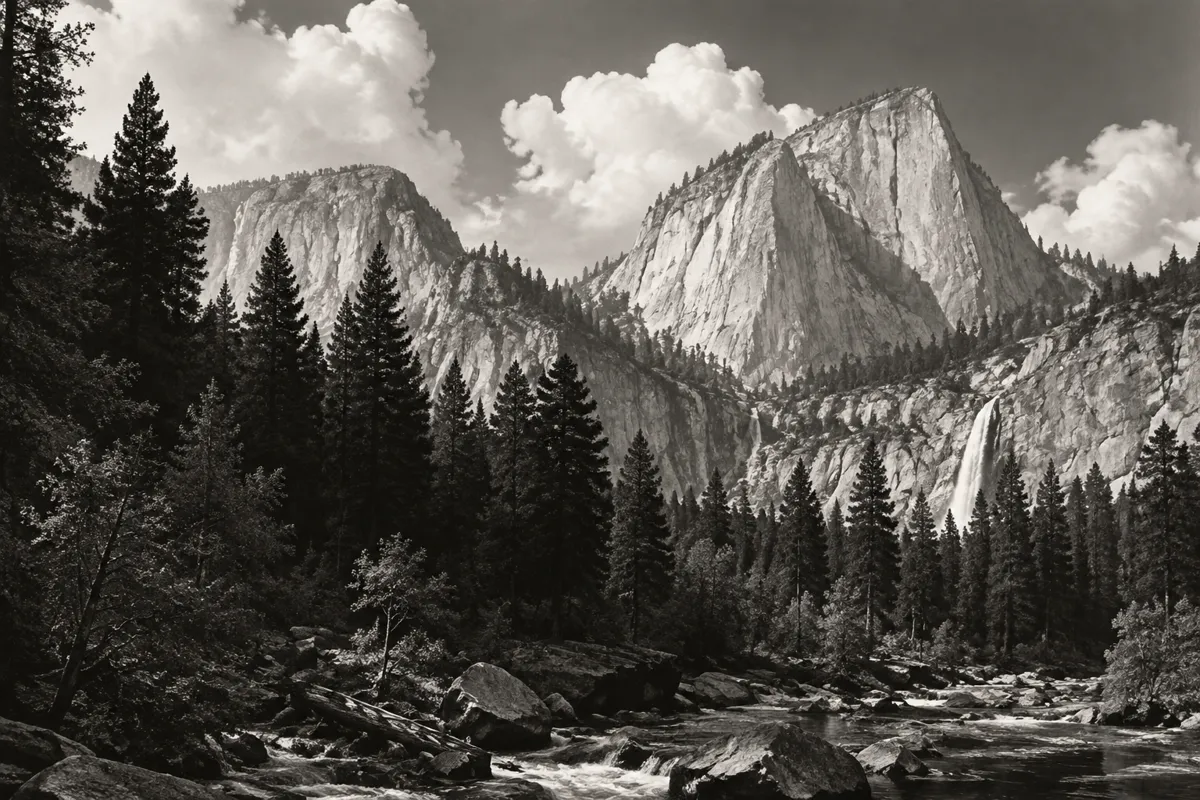
02Tetons and Snake River, Darker ReproductionBright river water leads toward the Tetons beneath storm clouds, framed by dark trees and mountain slopes. This darker reproduction of Ansel Adams's celebrated photograph presents the expressive tonal relationships central to his Zone System practice, although reproduction affects the visible shadow separation.Ansel Adams · Public domain · Wikimedia Commons03Canyon Bend in Rich GraysA river curves around a monumental sandstone wall, with layered rock emerging from deep shadows beneath bright clouds. This recognizable Ansel Adams canyon photograph illustrates the controlled tonal separation associated with his Zone System practice, although this reproduction cannot establish individual zone placements.trialsanderrors · CC BY 2.0 · Wikimedia Commons04Canyon Bend with Open Shadow DetailA broad river bend encircles a sandstone promontory in a black-and-white print with extensive middle-gray detail. This recognizable Ansel Adams composition provides a useful example of tonal organization associated with the Zone System, though its lighter reproduction does not independently document the technique.Ansel Adams · Public domain · Wikimedia Commons05AI illustration: High contrast landscape showing full tonal scaleThis landscape displays a vast dynamic range, from the dark textures of the evergreen forest to the brilliant white of the clouds. Every zone remains distinct, ensuring the rocky granite peaks retain fine details without succumbing to flat highlights or blocked shadows.Illustration generated for the Atlas (AI)06AI illustration: Tonal separation in a monochromatic environmental portraitA workshop portrait features a wide range of grays, capturing the subtle textures of the carpenter's wool coat and wooden tools. The careful management of light allows the scene to feel natural and dimensional through graduated tonal separation.Illustration generated for the Atlas (AI)07AI illustration: Still life demonstrating shadow and highlight textureThis still life contrasts a cast-iron kettle against a white ceramic pitcher to demonstrate the extremes of the eleven-zone scale. The metallic surface retains deep shadow detail while the bright ceramic highlights avoid losing their roundness and texture.Illustration generated for the Atlas (AI)
Question
Why not rely on longer development to recover shadows that received too little exposure?
Show possible answer +Hide answer −
Too little exposure records little useful shadow information. Longer development mainly increases contrast and highlight density rather than restoring missing shadow detail.