Distortion Photography
1930s; André Kertész's Distortions, 1933
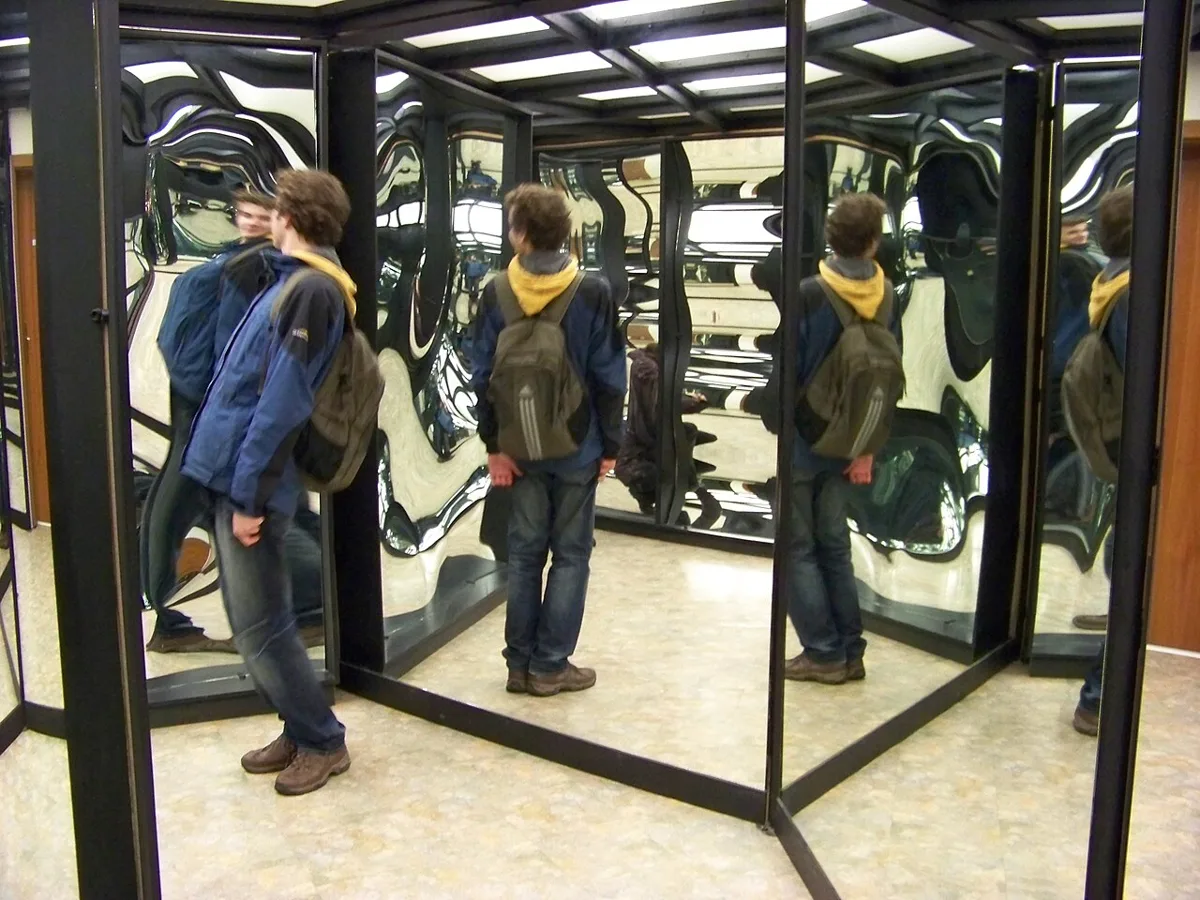
Prompt
Apply a Distortion Photography effect resembling a curved mirror reflection, with localized stretching, swollen curves, pinched shapes, and smoothly bent contours. Retain photographic surface texture, realistic highlights, and continuous lighting across warped areas rather than adding painterly abstraction. Keep the original subject recognizable and preserve the overall composition.
Identify
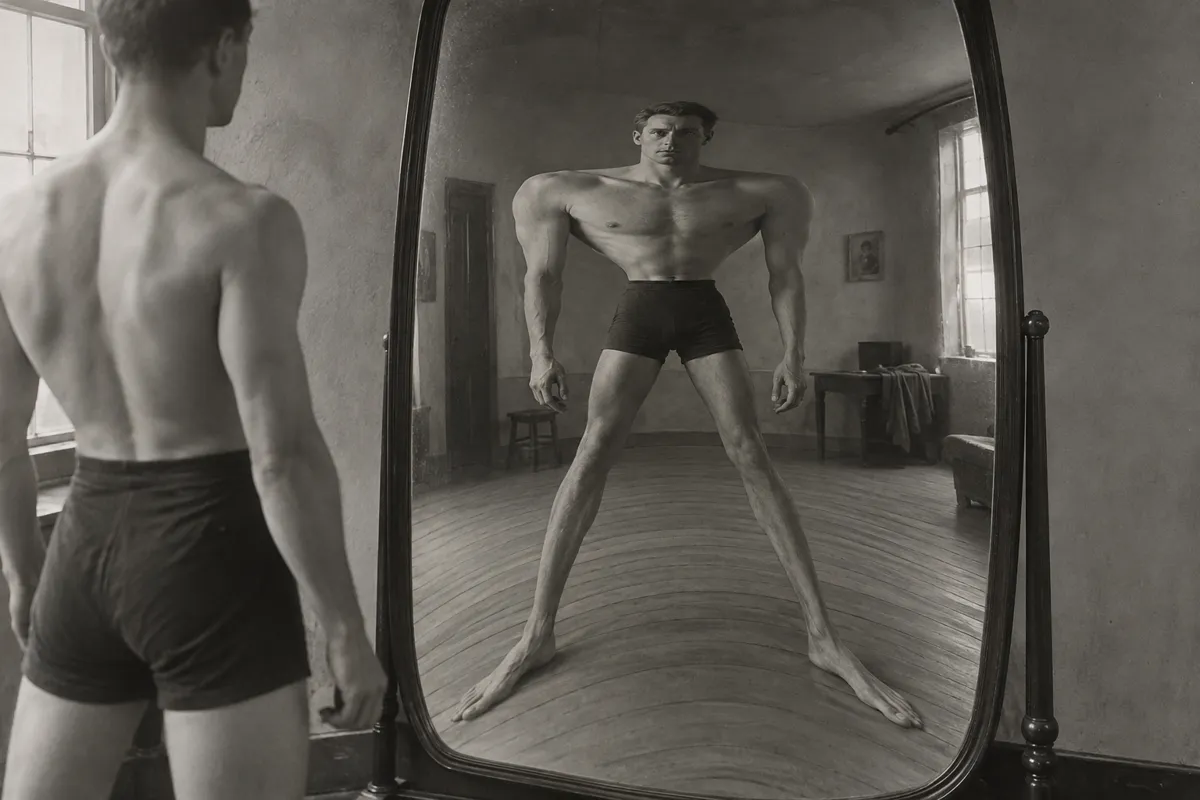
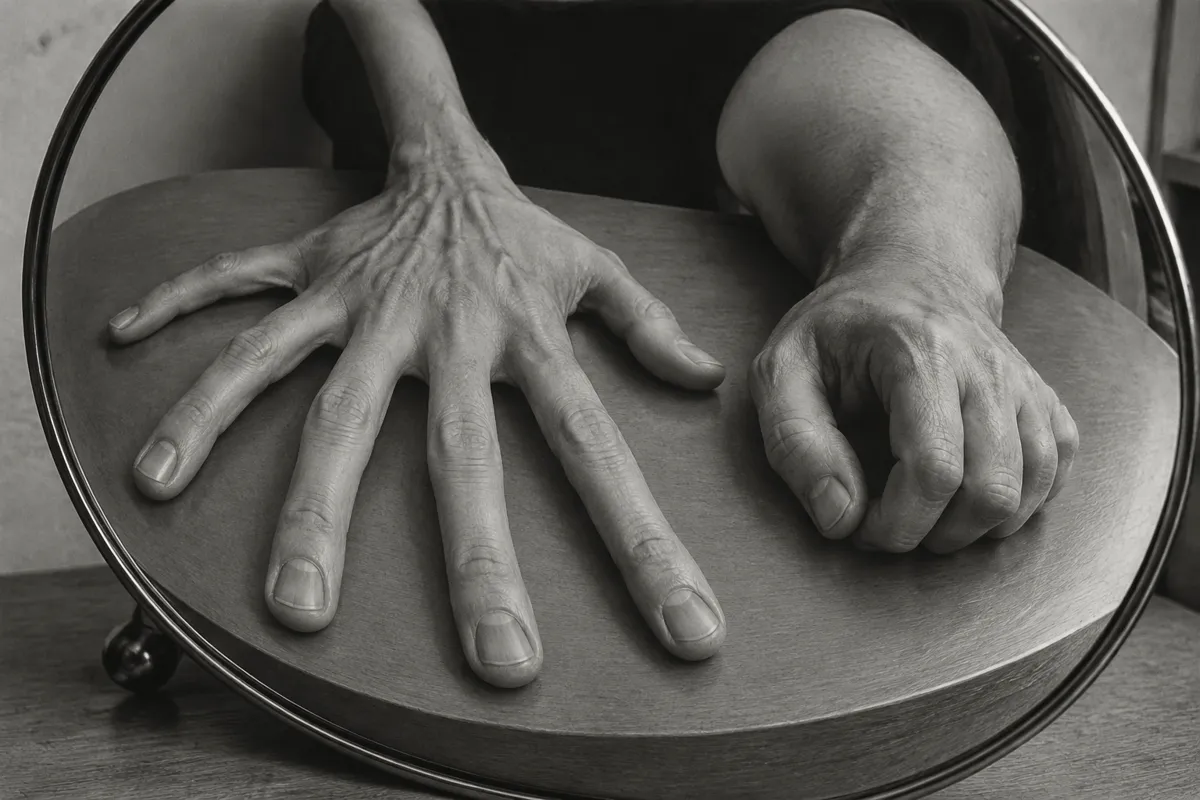
Bodies appear as stretched limbs, swollen curves, and compressed shapes, while skin and lighting remain photographically detailed. Familiar anatomy becomes strange and sometimes almost abstract.
Principle
A curved mirror redirects reflected light, producing uneven magnification1 across the image. The camera records this warped reflection during exposure2; development3 does not create the deformation.
Example
André Kertész: Distortions, 1933.
Try it out
Photograph your reflection in a shiny spoon, then change its angle and watch which features expand or shrink.
Background
In 1933, André Kertész photographed nude models reflected in distorting mirrors in Paris. His Distortions series turned familiar bodies into unstable combinations of recognizable details and sweeping curves. The pictures belong to a wider interwar interest in experimental photography and unfamiliar views of ordinary things. Mirror curvature changes the apparent scale and position of different body parts. Moving the model, mirror, or camera changes the result before exposure. The photographic process preserves these optical transformations rather than inventing them during development. Smooth tonal detail makes the impossible-looking anatomy especially convincing.
Distinction
Unlike a double exposure, this method does not require overlapping separate exposures. Unlike motion blur, its stretched forms can retain sharply defined edges.
Aftermath
It shows that a photograph can record light faithfully while presenting radically misleading proportions.
Further examples · 6 images


Question
Why can a distorted body still have crisp edges and detailed skin?
Show possible answer +Hide answer −
The mirror changes the geometry of the reflected image without necessarily blurring it. A focused camera can record that altered image sharply.