H 159 / 3211960s

Xerographic Animation

1960s; Disney’s One Hundred and One Dalmatians, 1961
Typeface · Neucha

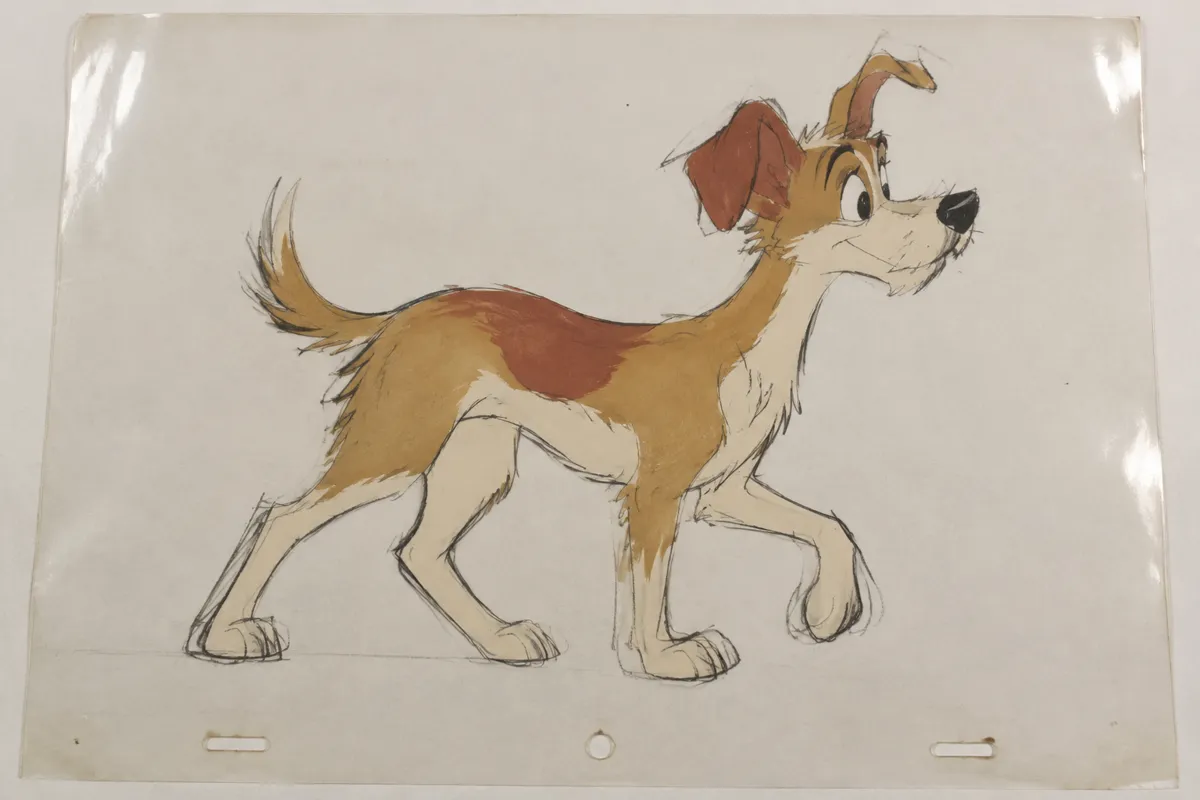
AI illustration: Animation cel showing raw xerographic line work.
AI illustration: Animation cel showing raw xerographic line work.Illustration generated for the Atlas (AI)View source ↗

Prompt

Transform this image into Xerographic Animation with sketchy black toner outlines, rough pencil contours, occasional stray construction marks, and flat painted color fills. Add slight line-density variation, powdery edge speckles, and subtly textured painted backgrounds, avoiding uniformly smooth digital inking or glossy dimensional shading. Keep the original subject and composition.

Identify

Sketchy black outlines surround flat painted colors, with rough edges and occasional stray pencil marks. The characters retain a visibly drawn texture rather than uniformly smooth ink contours.

Principle

Light exposure creates an electrostatic image1, which toner2 develops into a visible powder image. The toner image is transferred and fixed onto transparent cels3, preserving pencil marks without hand tracing.

Example

Walt Disney Productions: One Hundred and One Dalmatians, 1961.

Try it out

Pause a close-up in One Hundred and One Dalmatians; compare the uneven black contours with the smooth painted areas.

Background

Disney adopted xerography to transfer animation drawings onto cels, reducing the labor of tracing outlines by hand. Ub Iwerks helped adapt the process for animation production. One Hundred and One Dalmatians made its graphic possibilities especially visible in 1961. Light exposure formed an electrostatic image; toner development made that image visible before transfer to the cel. Artists still painted the colors, usually on the reverse side. The process preserved much of the drawing’s character, including irregular contours. Its early black outlines became a defining feature of Disney’s 1960s animation.

Distinction

Unlike hand-inked cel animation, xerography transfers the drawn contours instead of having an artist retrace them. It is not rotoscoping, which uses filmed movement as a drawing reference.

Aftermath

Xerographic animation shows how a labor-saving reproduction process can also change a film’s visual style.

Further examples · 6 images
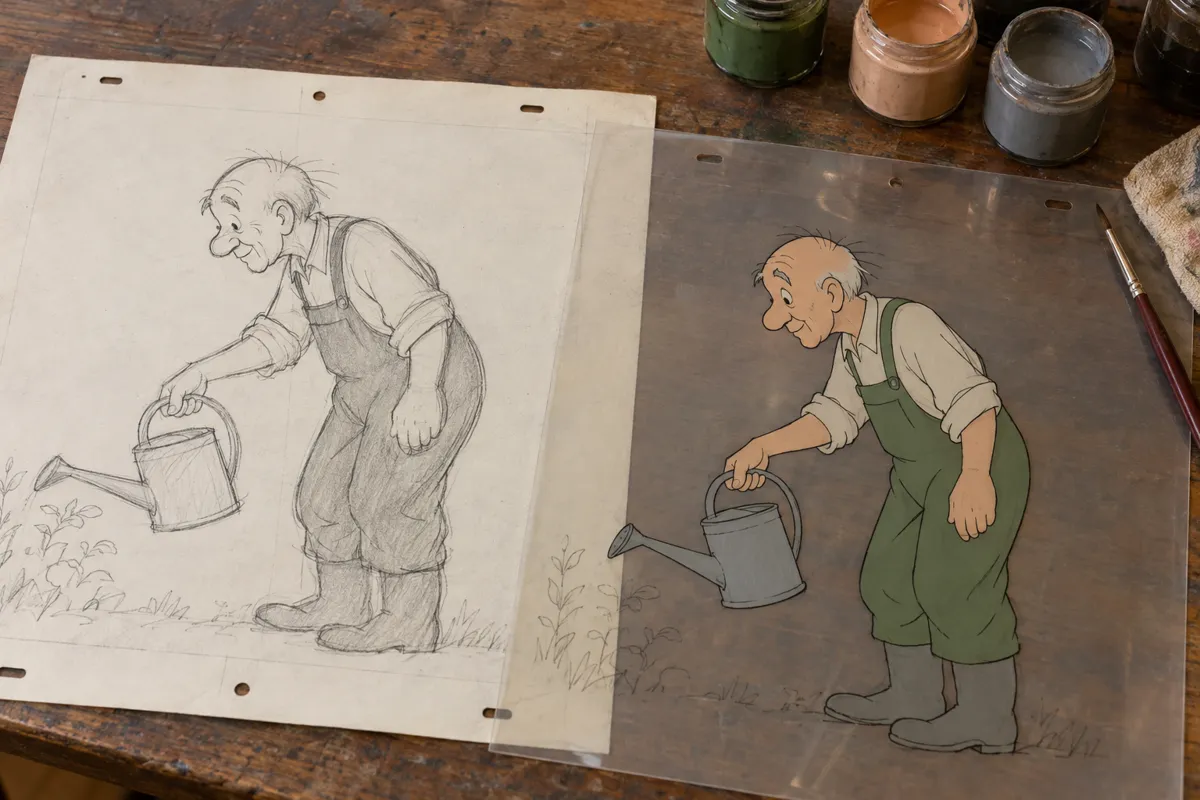
AI illustration: Comparison of pencil drawing and xerographic cel
02 AI illustration: Comparison of pencil drawing and xerographic celA side-by-side comparison shows an original graphite sketch and its corresponding cel with transferred outlines and flat paint fills. The replication of the sketch's loose, sketchy qualities onto the cel illustrates the fidelity of electrostatic toner transfer.Illustration generated for the Atlas (AI)
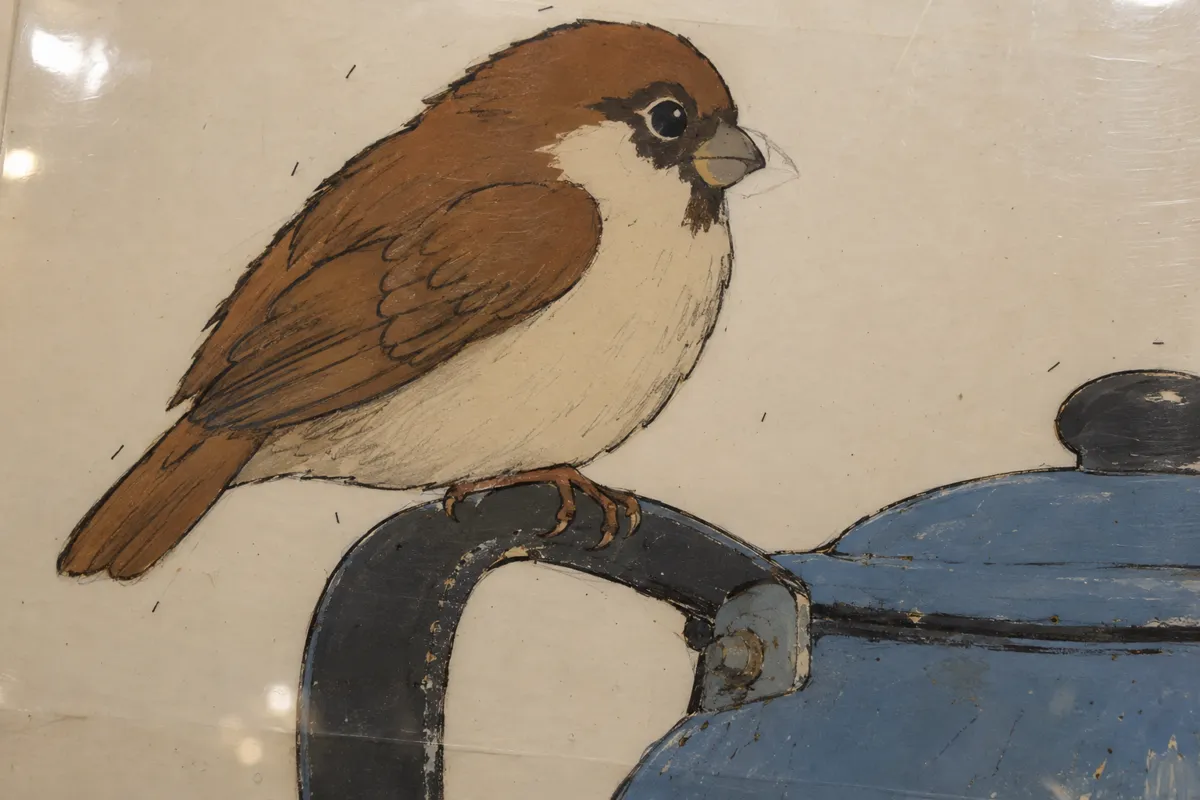
AI illustration: Textured toner outlines on a bird animation cel
03 AI illustration: Textured toner outlines on a bird animation celClose-up details of this sparrow animation cel reveal the slightly broken, carbon-heavy texture of the outlines against the solid paint. This grainy, non-uniform contour is a primary visual characteristic of toner being fixed onto acetate.Illustration generated for the Atlas (AI)
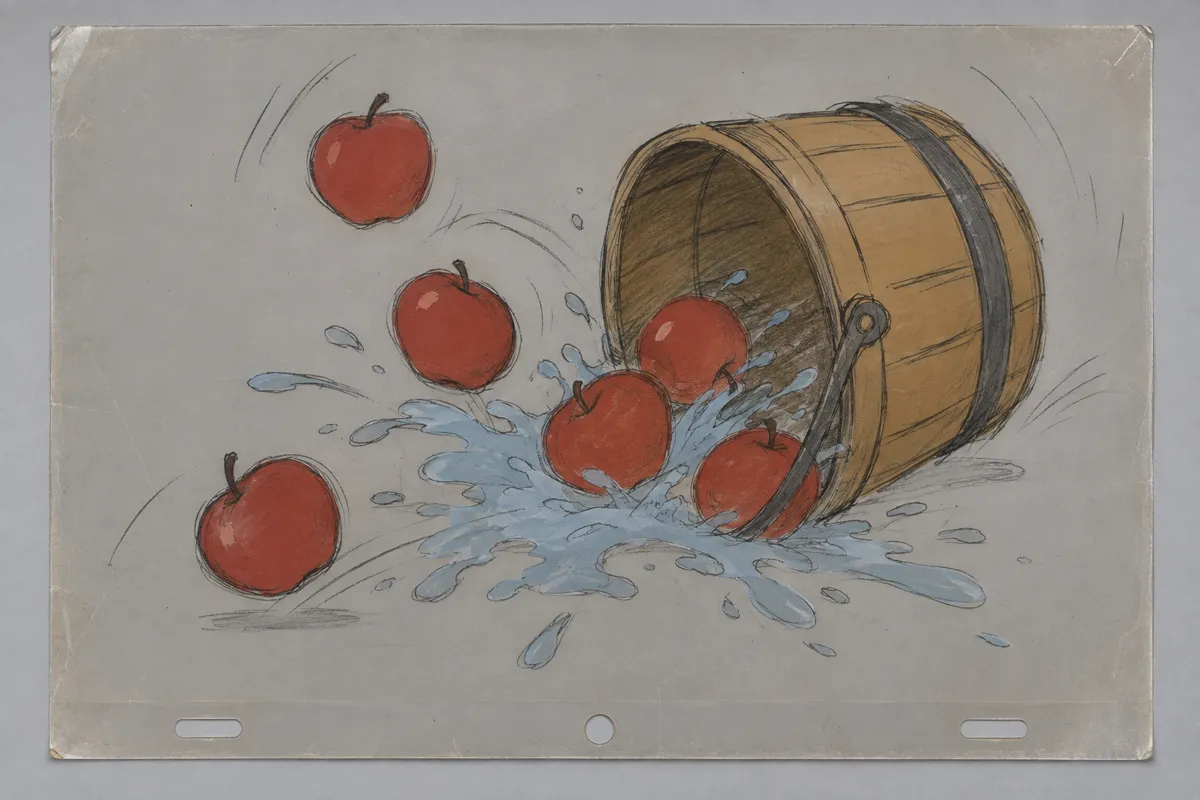
AI illustration: Dynamic movement preserved through electrostatic transfer
04 AI illustration: Dynamic movement preserved through electrostatic transferThis production cel of spilling apples features multiple overlapping sketch lines and stray marks that would typically be lost in traditional hand-inking. By utilizing xerography, the frenetic energy of the animator's rough draft is preserved in the final screen image.Illustration generated for the Atlas (AI)
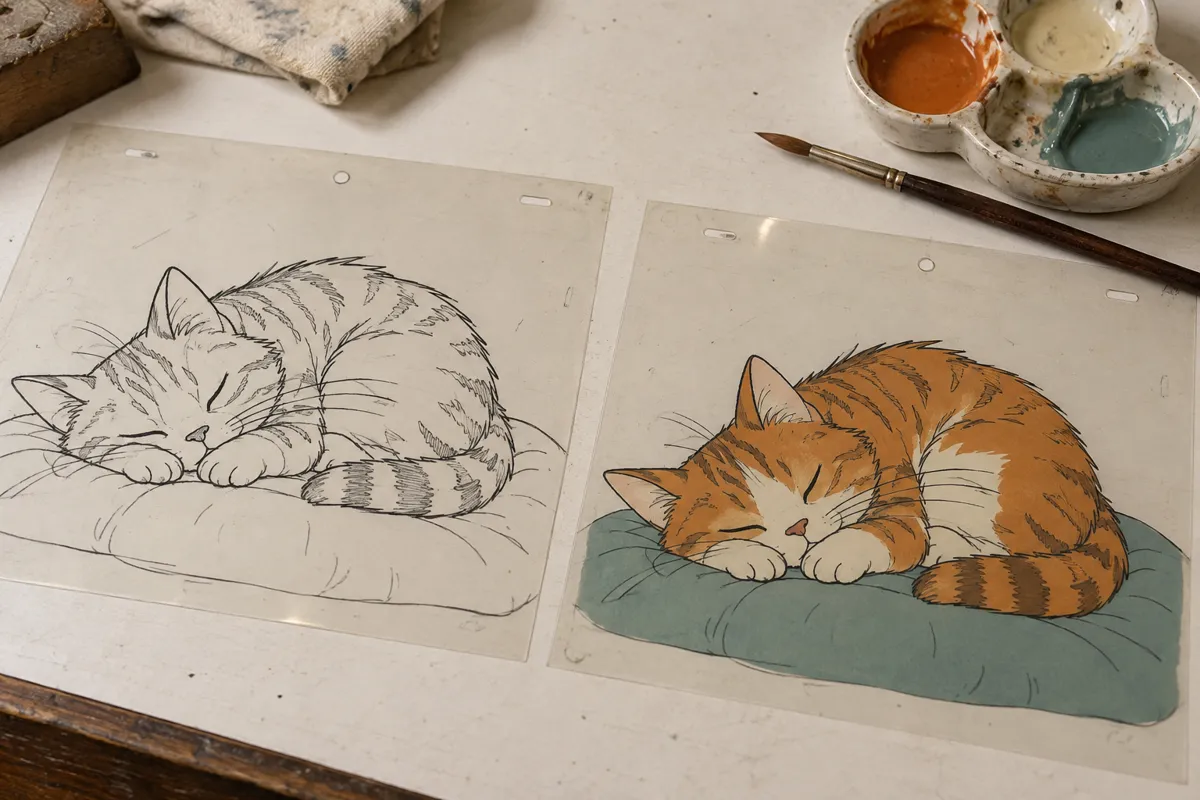
AI illustration: Process stages of xerographic character cel
05 AI illustration: Process stages of xerographic character celTwo stages of a sleeping cat character show the transformation from a clean toner transfer to a finished cel with opaque paint. The presence of sketchy, unrefined edges in the painted version highlights the organic aesthetic introduced by the xerographic method.Illustration generated for the Atlas (AI)
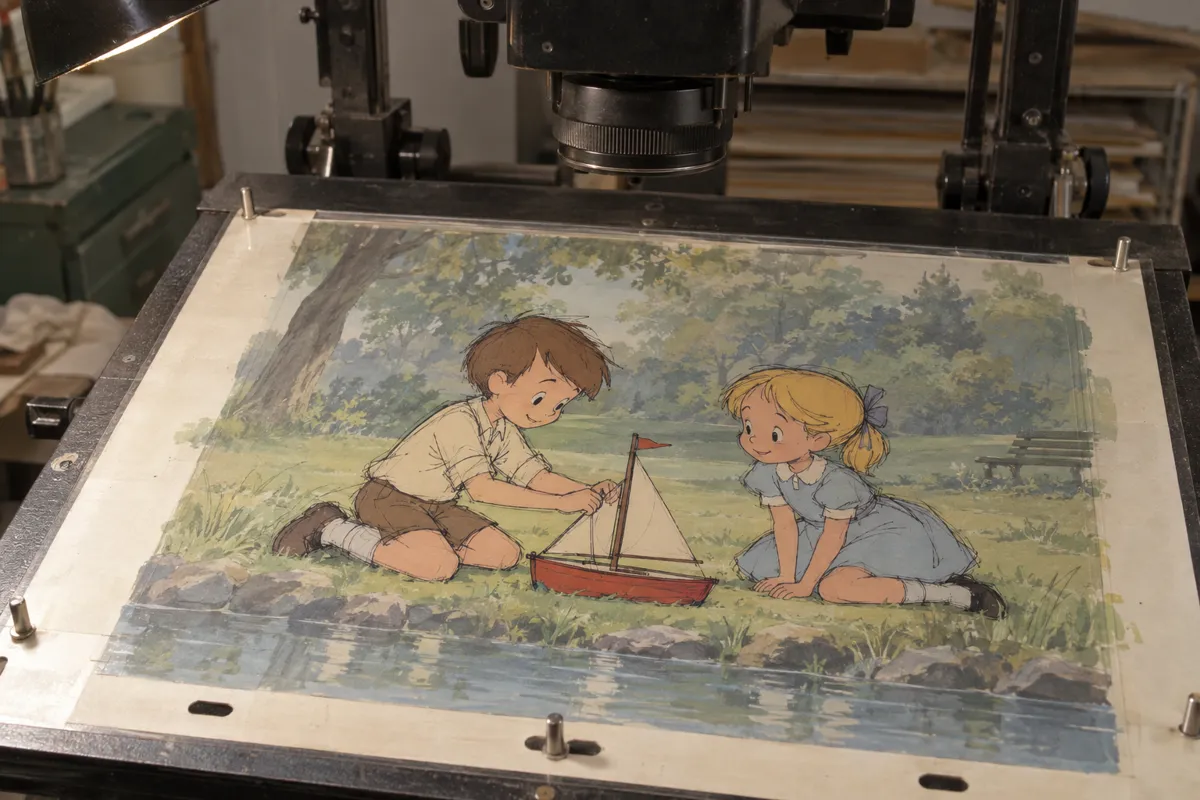
AI illustration: Xerographic character cel on a painted background
06 AI illustration: Xerographic character cel on a painted backgroundA completed animation setup sits under a camera, featuring characters with distinctively scratchy black outlines over a watercolor background. The contrast between the soft background and the raw, unpolished character contours is typical of films using this technology.Illustration generated for the Atlas (AI)

Question

Did xerography automatically supply the characters’ colors?

Show possible answer +

No. It reproduced the drawing’s lines, while artists painted the color areas separately on the cels.

Sources