H 158 / 3211960s

Match Cut

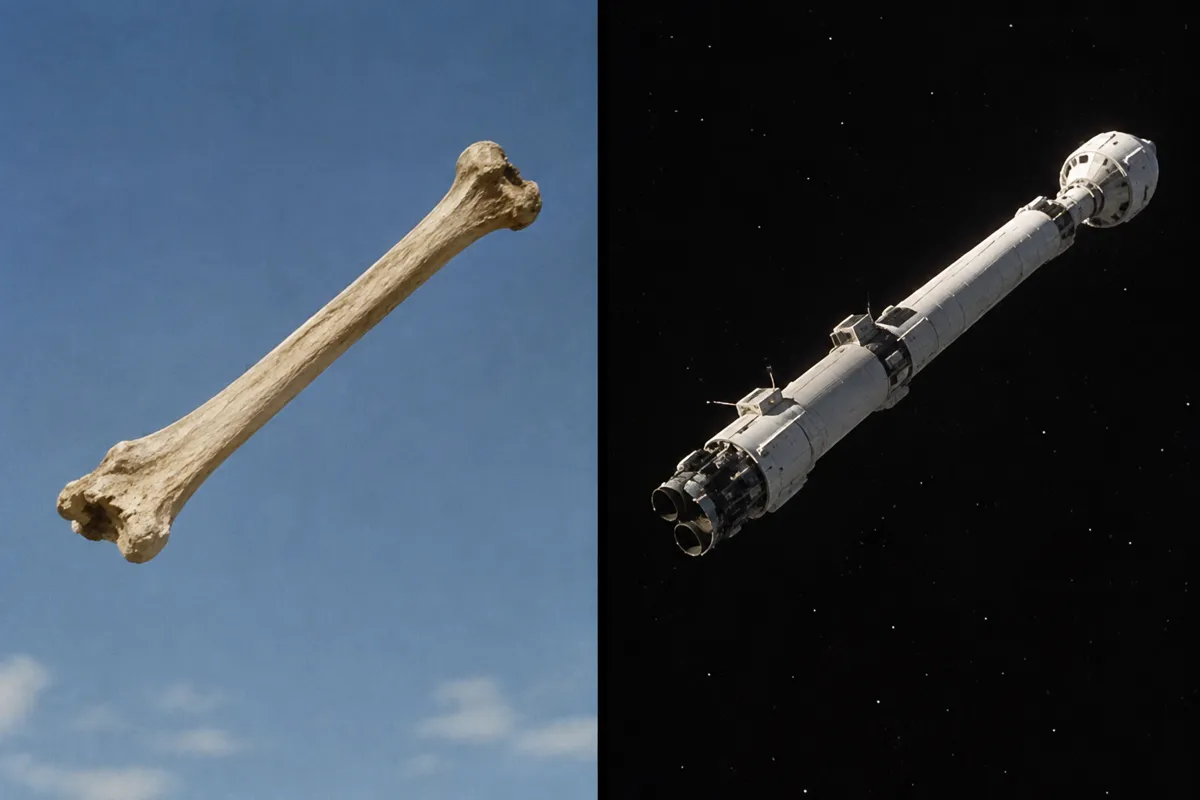
1968, Stanley Kubrick's 2001: A Space Odyssey
Typeface · Goldman

AI illustration: Bone and Spacecraft Continuity across Time.
AI illustration: Bone and Spacecraft Continuity across Time.Illustration generated for the Atlas (AI)View source ↗

Prompt

Apply a Match Cut effect as a single-frame transition composite, matching an existing prominent silhouette to a secondary analogous shape at exactly the same scale and position. Use a crisp localized splice, contrasting surface textures, and seamless contour alignment rather than diffuse double exposure. Keep the original subject and composition.

Identify

You see two consecutive shots where an object in the first shot is instantly replaced by a similar object. The two shapes share the same size, motion, or position on the screen.

Principle

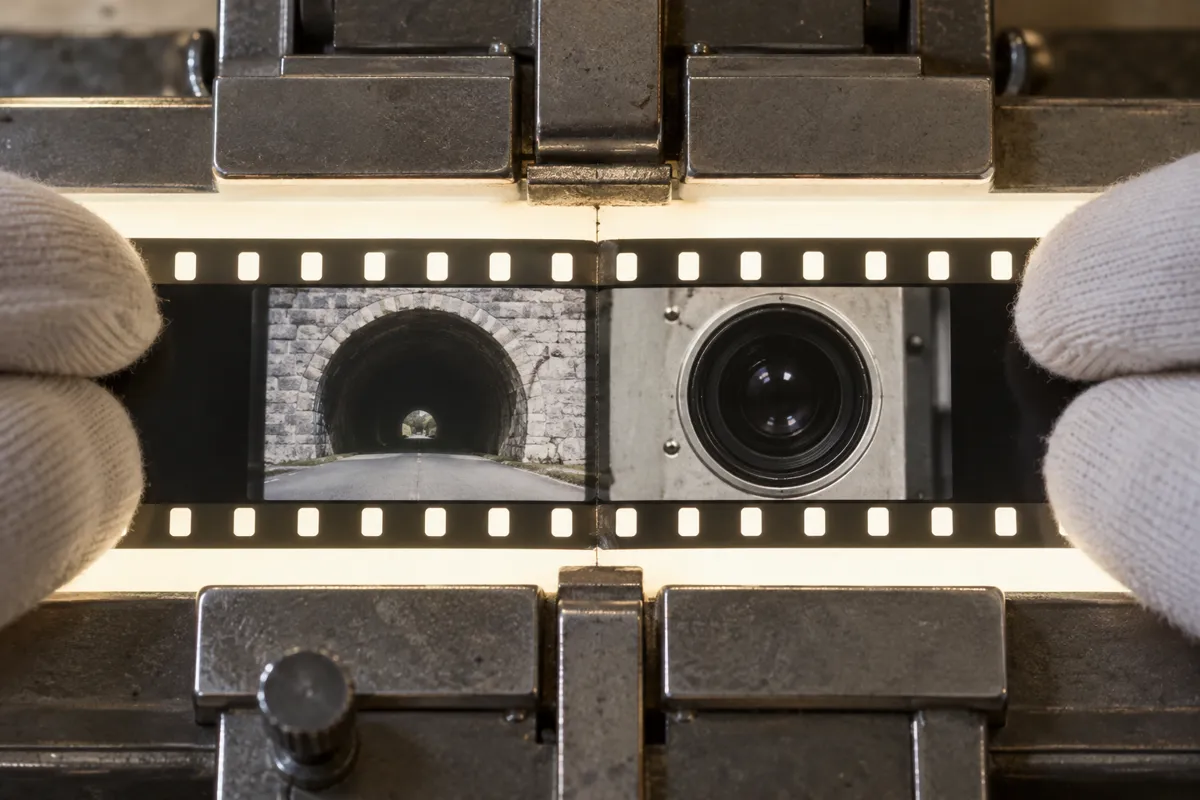
An editor splices two pieces of film together at a precise frame1. The visual composition of the outgoing shot aligns perfectly with the incoming shot.

Example

Stanley Kubrick: 2001: A Space Odyssey, 1968.

Try it out

Hold a pen horizontally, then blink and imagine it instantly becoming an airplane in the sky.

Background

A match cut connects two different scenes by linking similar shapes or actions. Editors use it to jump across time or space instantly. The technique requires careful planning during filming. A director must frame both objects in the exact same part of the camera lens. During editing, the two shots are spliced2 together. The viewer's eye remains fixed on the same screen location. This creates a smooth visual bridge between unrelated events. In 1968, Stanley Kubrick used this to skip millions of years. A falling bone becomes an orbiting satellite, summarizing human technological evolution in one edit.

Distinction

A match cut relies on visual similarity to link scenes. A jump cut disrupts time by skipping forward within the exact same shot.

Aftermath

It shows how visual repetition can connect completely different eras and locations.

Further examples · 7 images
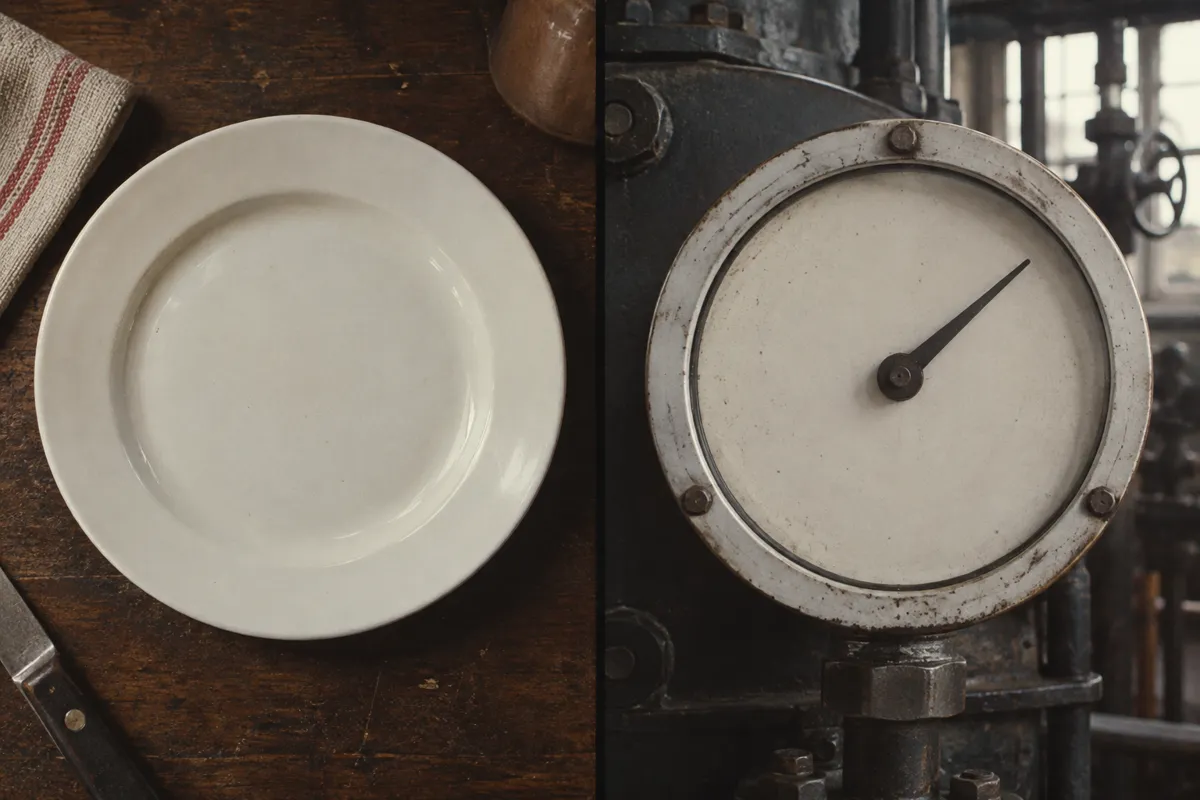
AI illustration: Graphic Similarity between Plate and Gauge
02 AI illustration: Graphic Similarity between Plate and GaugeA white ceramic dinner plate on a wooden table is shown next to a circular industrial pressure gauge. The identical framing and geometric similarity bridge the domestic and mechanical settings.Illustration generated for the Atlas (AI)
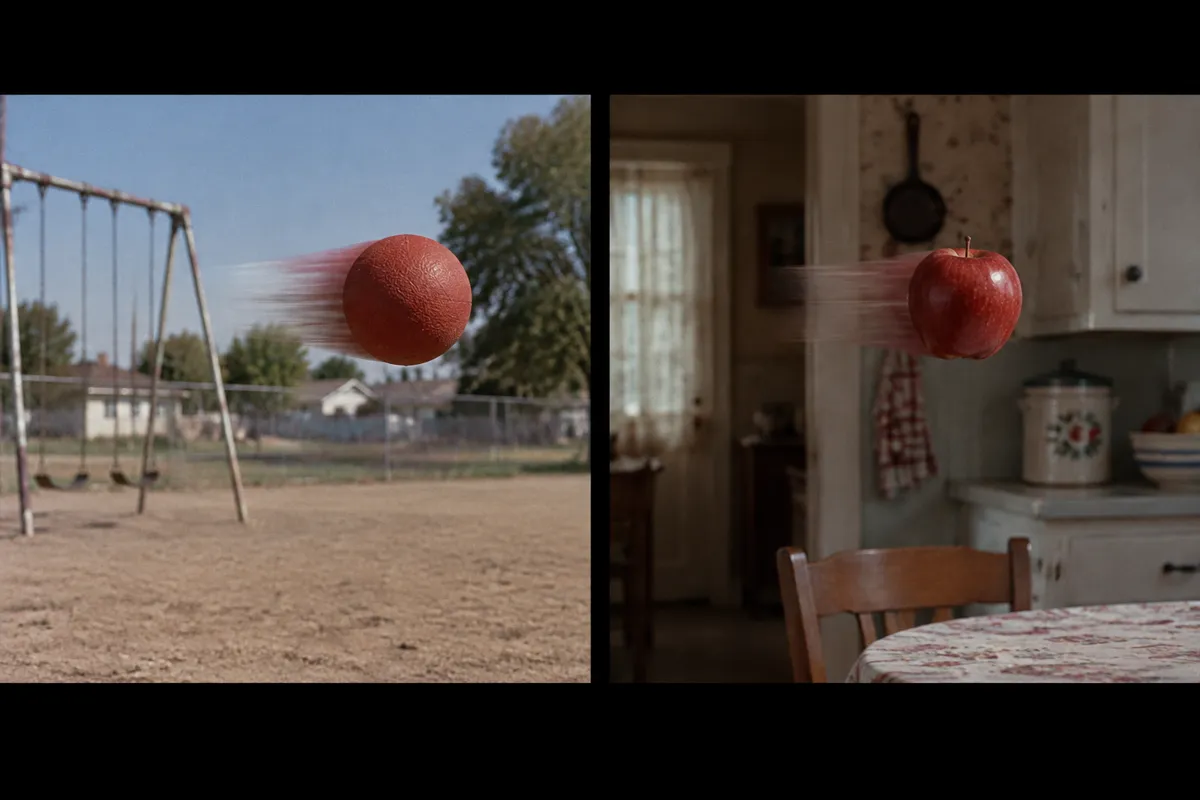
AI illustration: Matching Motion and Shape of Red Objects
03 AI illustration: Matching Motion and Shape of Red ObjectsA red playground ball in flight is matched with a red apple moving across a kitchen. The shared color, spherical form, and directional motion provide a fluid visual link between shots.Illustration generated for the Atlas (AI)
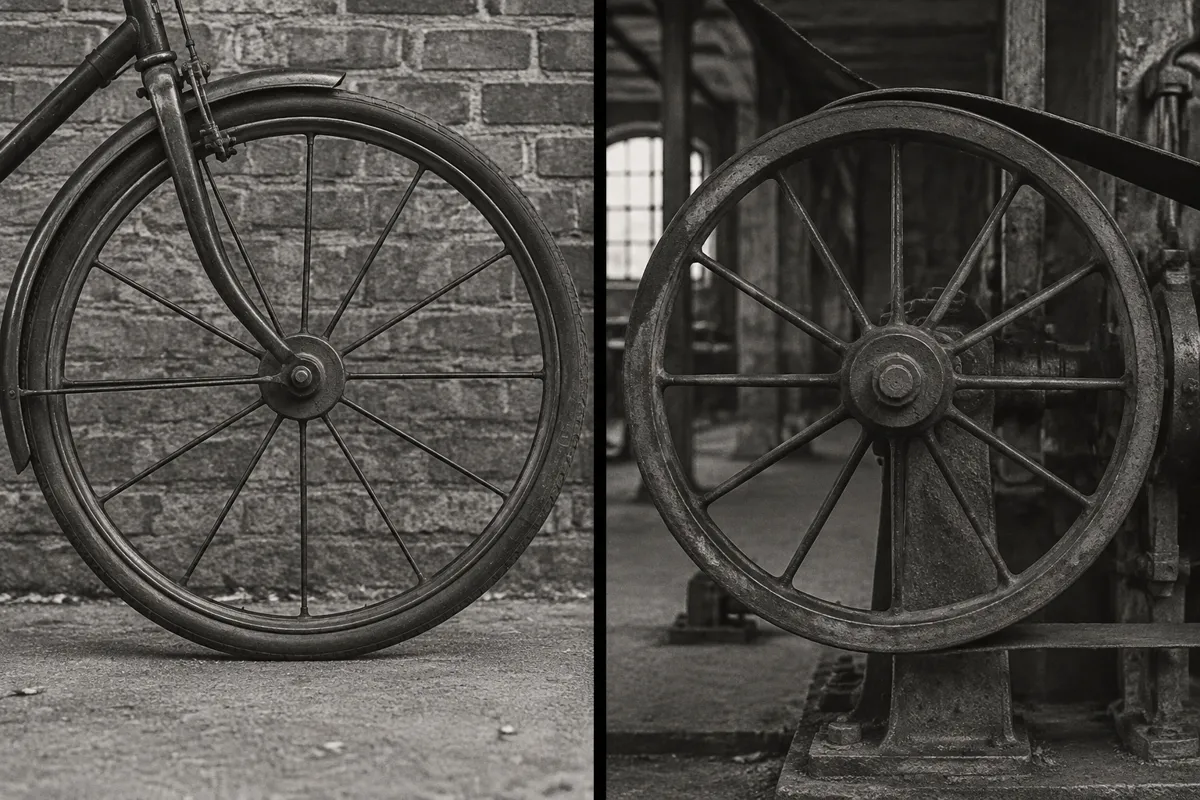
AI illustration: Aligned Wheel Geometries in Editing
04 AI illustration: Aligned Wheel Geometries in EditingThe spoked wheel of a bicycle aligns with a heavy iron flywheel in a workshop. This composition highlights the mechanical parallels through centered placement and structural repetition.Illustration generated for the Atlas (AI)
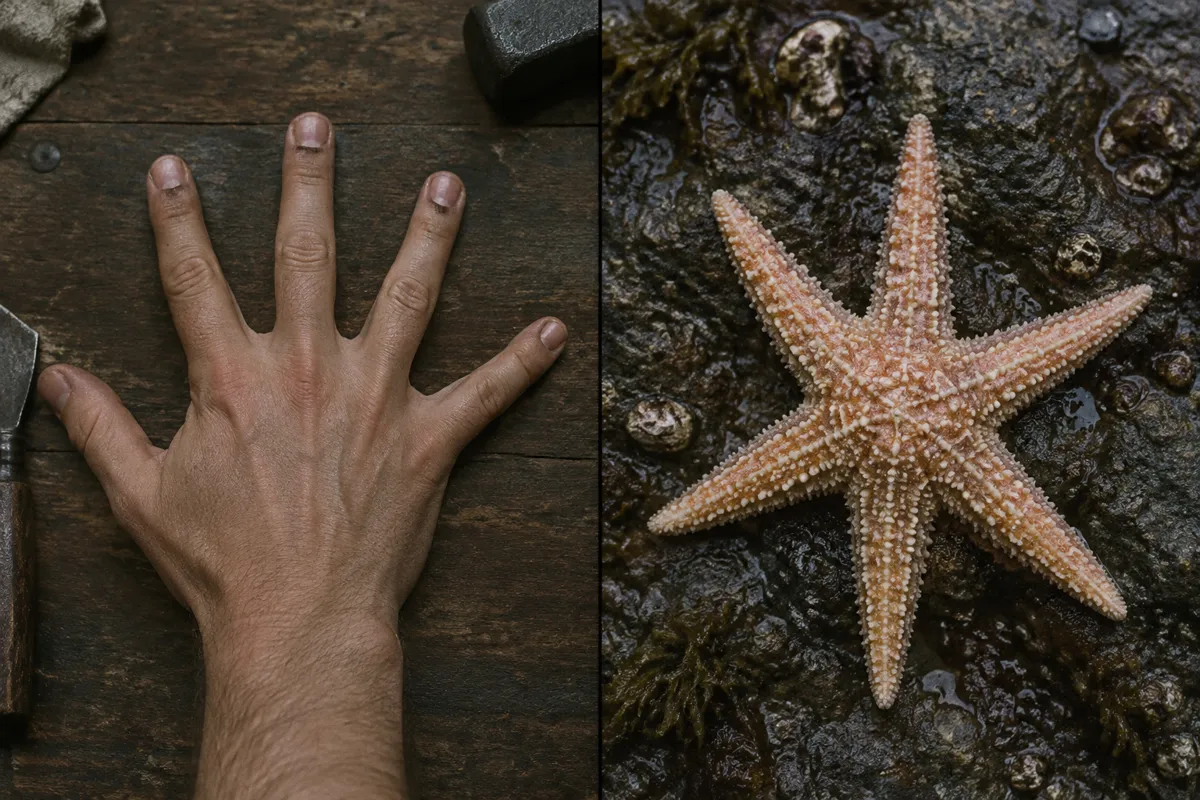
AI illustration: Radial Symmetry in Human and Natural Forms
05 AI illustration: Radial Symmetry in Human and Natural FormsA human hand with fingers spread is placed alongside a five-pointed starfish on a rock. The organic symmetry of the two subjects allows the eye to maintain focus on the same screen area.Illustration generated for the Atlas (AI)
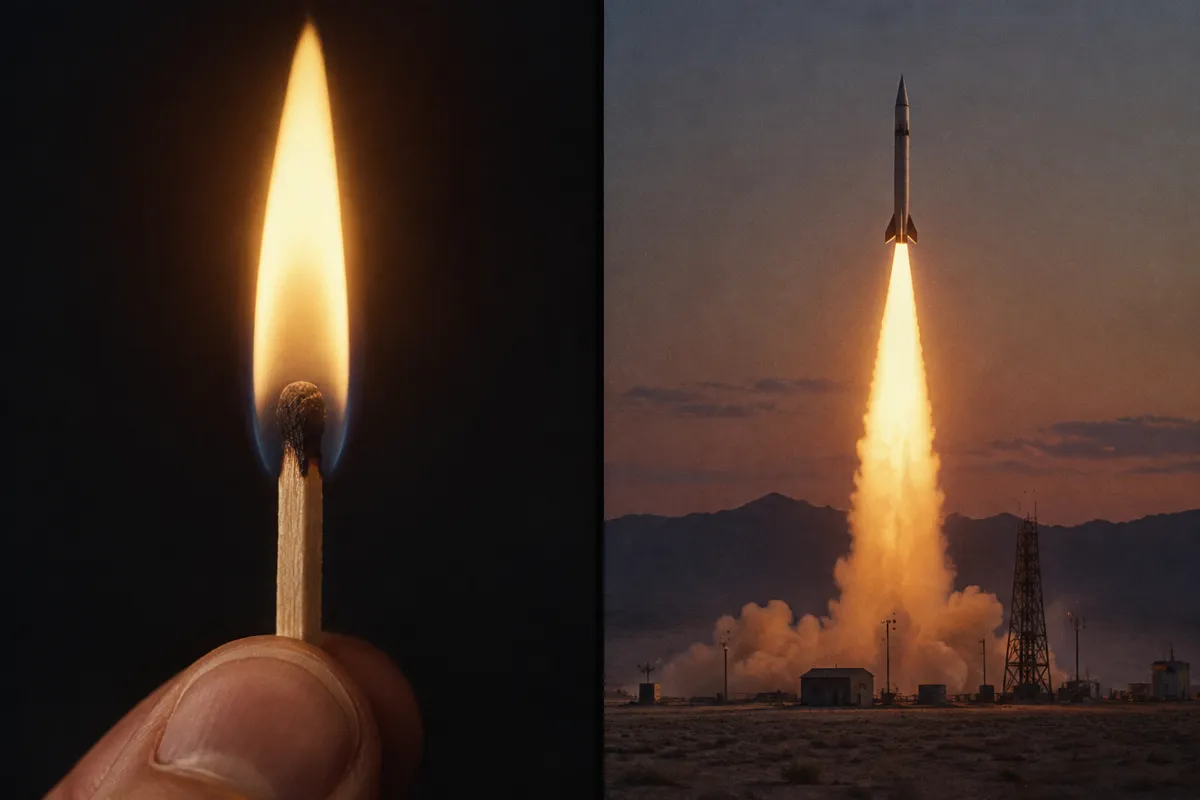
AI illustration: Visual Linkage of Match Flame and Rocket
06 AI illustration: Visual Linkage of Match Flame and RocketThe vertical flame of a single matchstick is compared to the fiery plume of a launching rocket. The visual bridge is formed by the shared silhouette and luminosity of the two elements.Illustration generated for the Atlas (AI)
AI illustration: Physical Film Splice of Circular Motifs
07 AI illustration: Physical Film Splice of Circular MotifsTwo film frames on a light table show the dark circular opening of a tunnel followed by a camera lens. This physically demonstrates the splice point where two distinct subjects share a centered circular composition.Illustration generated for the Atlas (AI)

Question

Why do filmmakers use a match cut instead of a normal fade?

Show possible answer +

A fade creates a slow, gentle transition that implies a pause. A match cut forces a direct, immediate intellectual connection between two objects.

Sources