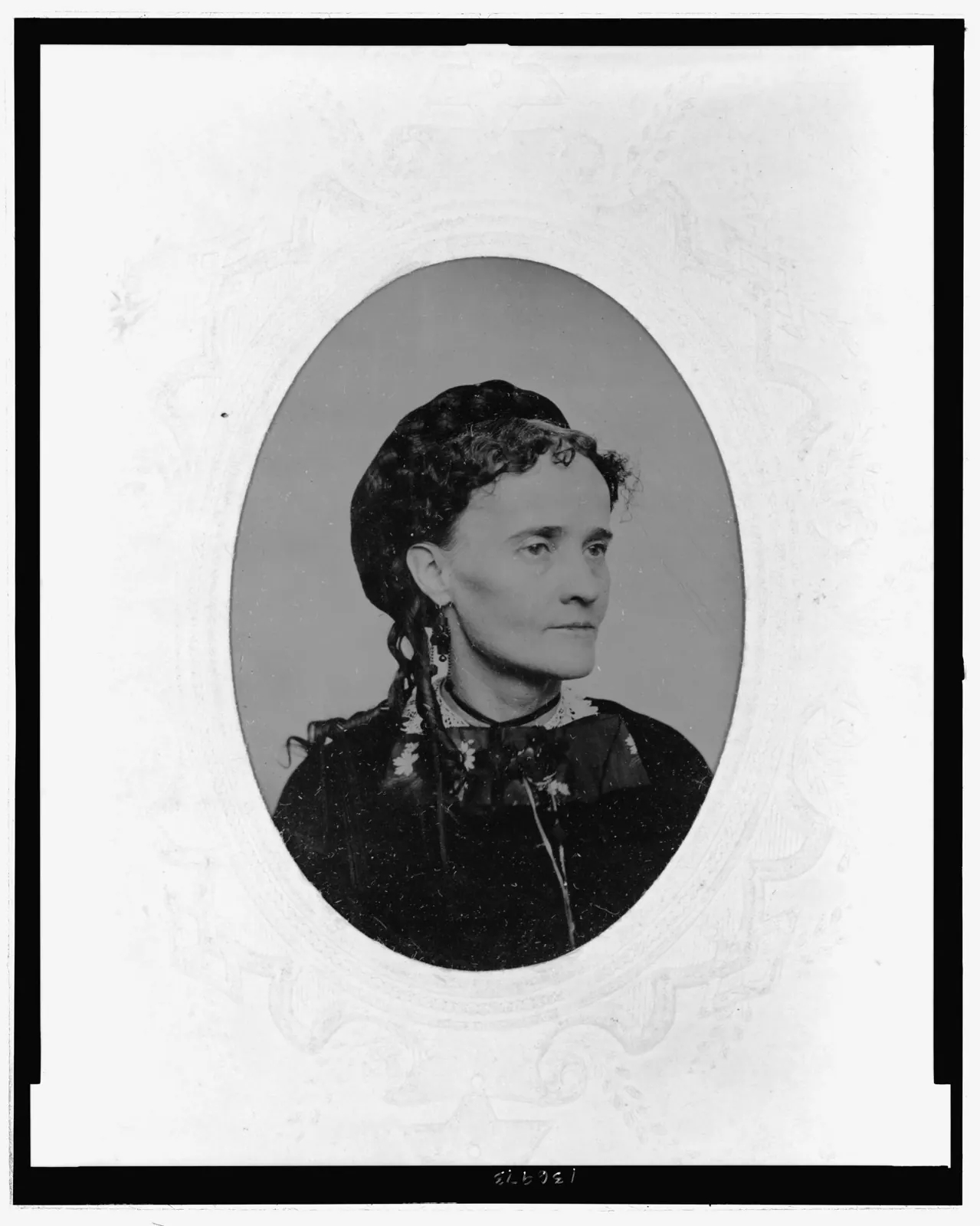
Tintype / ferrotype. From 1856 onwards; popular portrait photography of the 1860s and beyond
Typeface · Rye
Woman with a bonnet. Historical, hand-colored ferrotype. Library of Congress.Miscellaneous Items in High Demand, PPOC, Library of Congress / Public domain; Wikimedia CommonsView source ↗
Prompt
Transform this image into a Tintype with charcoal-black shadows, muted silver-gray highlights, and a dark lacquered iron surface. Add subtle metallic sheen, fine collodion detail, irregular chemical edges, tiny abrasions, and modest corner wear, keeping the overall image slightly underlit and physically tactile. Keep the original subject and composition.
Match the supports to their respective materials: iron, glass, or silver-plated copper?
Background
The ferrotype became widespread after 1856 as an affordable and robust portrait format. The image was created directly in the camera and was unique. It did not necessarily require aprotective case like adelicate glass plate. Itinerant photographers and popular portrait services took advantage of this everyday usability. The association with the 1860s refers to its historical prevalence.
Aftermath
Price and robustness change who can be photographed.
Further examples · 7 images
02Tintype examplesSix oval portraits are arranged in a horizontal row within a single frame. The dark metallic finish and small, handheld scale are characteristic of 19th-century tintype collections.Unknown authorUnknown author · CC BY-SA 4.0 · Wikimedia Commons03FerrotypeA man in a hat leans against a rustic wooden post in an outdoor setting. The image displays the typical dark tones and clipped corners of a robust ferrotype plate.Unknown · Public domain · Wikimedia Commons04Tintype Kralupy nad Vltavou (SOkA Mělník)Two children pose together against a painted studio backdrop. The visible surface irregularities and metallic sheen identify this as a collodion positive on a black lacquered support.AnonymousUnknown author · Public domain · Wikimedia Commons05Tintype 2018A man and woman are captured in a high-contrast studio portrait from 2018. This modern example demonstrates the enduring dark, chemical aesthetic and unique nature of the wet collodion process.Vicktorfox85 · CC BY-SA 4.0 · Wikimedia Commons06Tintype croppedA group of four adults is shown in formal attire within a studio setting. The plate exhibits rough edges and a low-key tonal range typical of the 1860s tintype format.Andrevan · CC BY-SA 4.0 · Wikimedia Commons07Tintype of Hungarian familyA woman and two children sit for a family portrait in front of a landscape backdrop. The image shows the characteristic matte finish and dark shadows associated with 1860s metallic plates.Unknown authorUnknown author · Public domain · Wikimedia Commons
Question
What metal is a classic ferrotype made of?
Show possible answer +Hide answer −
Made of dark-painted sheet iron; "tin" is not areliable indication of the material here.