Three-Strip Technicolor
Three-strip Technicolor. 1930s–1950s: defining Hollywood color style.
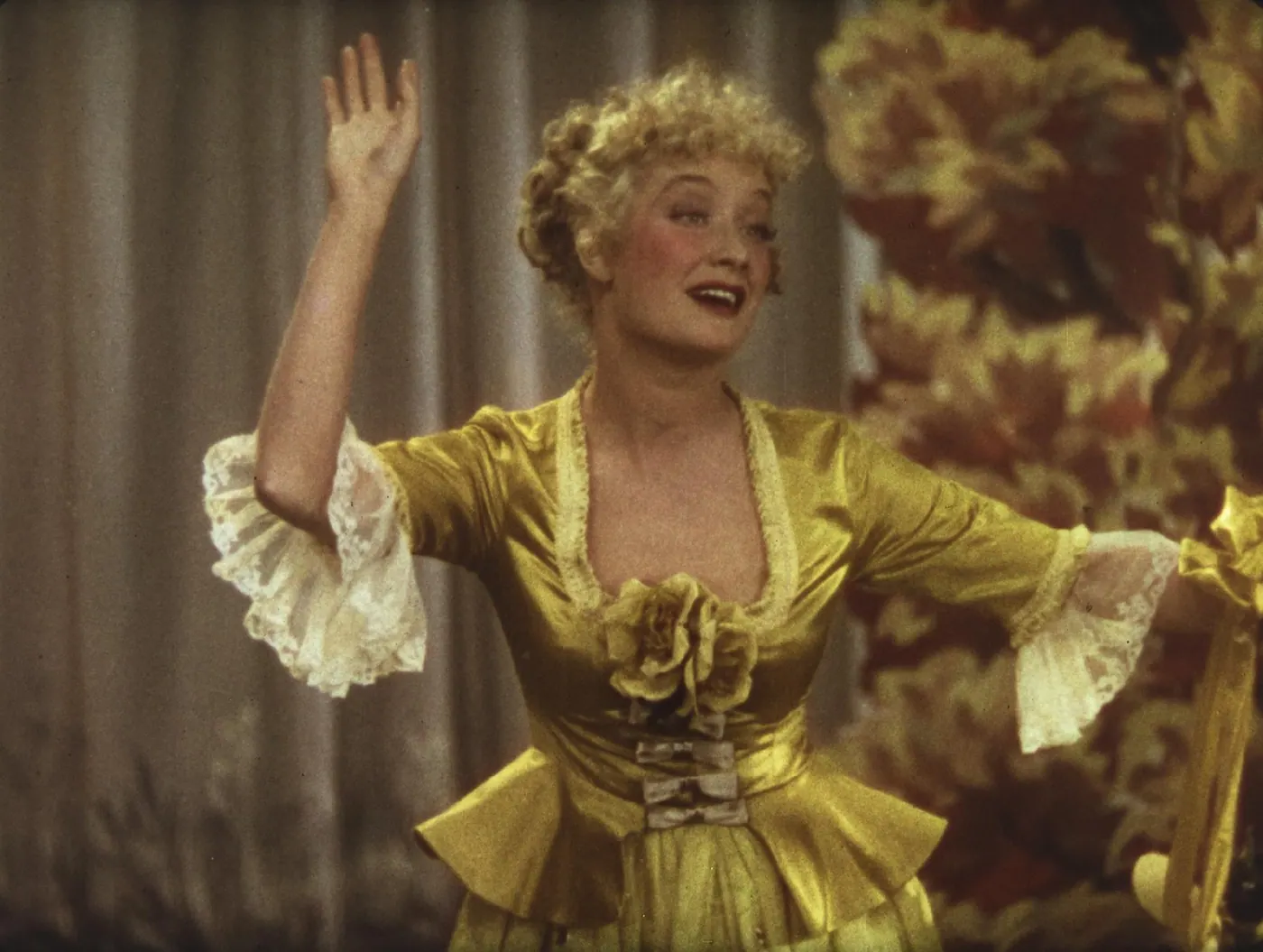
Prompt
Apply a Three-Strip Dye-Transfer Cinema treatment with richly saturated reds, emerald greens, clear blues, warm natural skin tones where present, and deep neutral blacks. Use dense dye-like color, controlled luminous highlights, fine film grain, crisp separation between hues, and softly rounded photographic detail. Keep the original subject and composition.
Identify
Bold colors combined with carefully controlled costumes and decorations.
Principle
A camera exposes three black and white film strips for separate color components1. During color copying2, this information is combined.
Example
Becky Sharp, 1935: first complete live-action feature film using the three-strip method. The Wizard of Oz, 1939.
Try it out
Compare red, yellow, and blue. Which color catches your eye first?
Background
Three-strip camera in 1932; first feature-length live-action film using this process: Becky Sharp, 1935. 1930s–1950s: defining Hollywood color style. A single production and copying process, not a single color filter. Not everything credited as "Color by Technicolor" was filmed with a three-strip camera.
Recognize: Bold, nuanced colors; famous examples combine them with carefully controlled sets and costumes. Mechanism: A beam splitter exposes three black and white film strips for separate color components. During color copying, the information is recombined. example: Rouben Mamoulian: Becky Sharp, 1935; The Wizard of Oz, 1939. Practice: Compare red, yellow, and blue in the costume: Which color first catches your eye? Consider how the costume, decor, and lighting together support this color impression and which nuance would be lost in a black and white image.
A beam splitter exposes three black and white film strips for separate color components. During color copying, the information is recombined. Bold, nuanced colors; famous examples combine them with carefully controlled sets and costumes. Compare red, yellow, and blue in the costume: Which color catches your eye first? A production and copying process, not a single color filter. Not everything credited as "Color by Technicolor" was filmed with a three-strip camera.
Distinction
A production and copying process, not a single color filter. Not everything credited as "Color by Technicolor" was filmed with a three-strip camera.
Aftermath
Today, the term Technicolor look often refers to a digital approximation of this color appearance.
Further examples · 7 images


