H 099 / 3211930s

Rear Projection

Rear projection / process shot. 1930s–1950s: Hollywood, car rides and fantastic worlds.
Typeface · Limelight

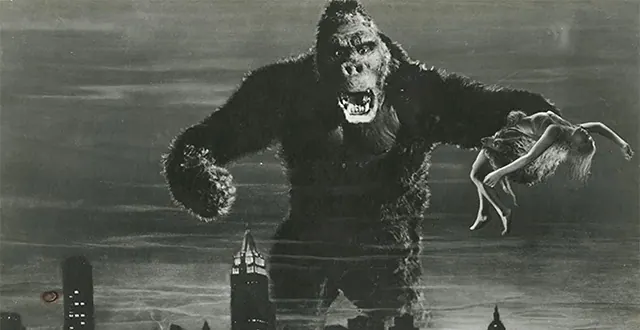
King Kong (1933): Context of a film using multiple compositing techniques.
King Kong (1933): Context of a film using multiple compositing techniques.RKO / Warner Bros.; reproduced by The Film Foundation; Film copyright;no open license stated;not a specific rear-projection setup photo.View source ↗

Prompt

Apply a Rear Projection treatment, keeping the foreground sharply studio-lit while making the existing background resemble footage on a translucent screen. Add softer background focus, lower contrast, visible projected grain, slight hotspot illumination, and restrained lateral background blur with subtly mismatched lighting. Keep the original subject and composition.

Identify

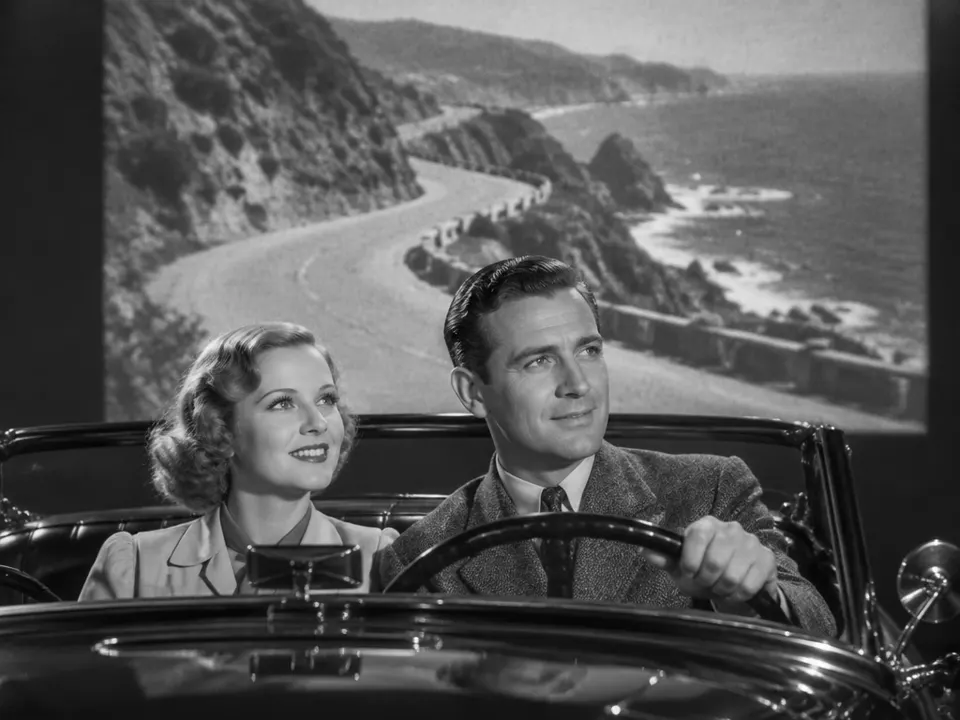
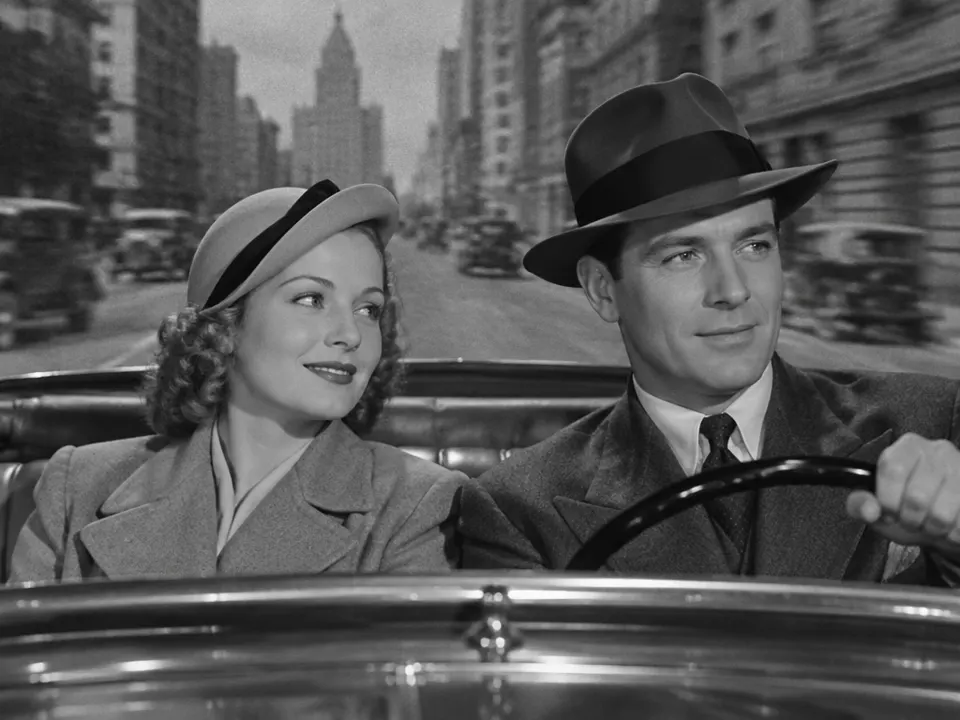
The actors appear to be sitting in a moving car while the background passes by.

Principle

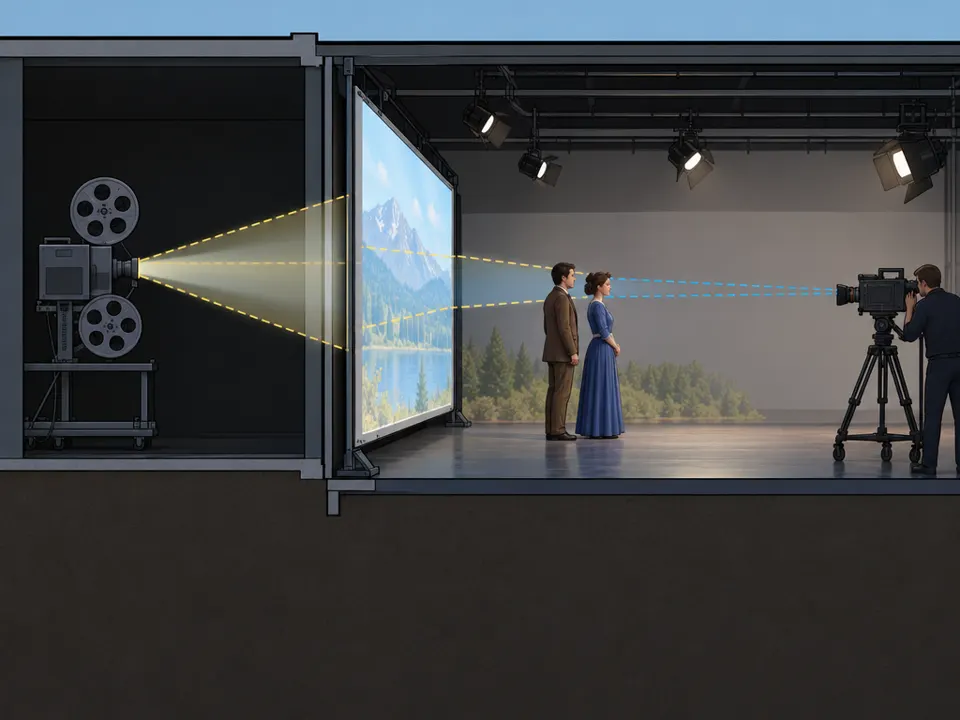
A pre-filmed background is projected from behind onto a translucent screen1. The camera records the actors and the projection2 simultaneously.

Example

King Kong, 1933: Combination of actors, projections and other special effects techniques.

Try it out

Check old car journeys to see if the background movement and the lighting of the faces match up.

Background

Early experiments before 1930; classic studio process in the sound film era. 1930s–1950s: Hollywood, car rides, and fantastical worlds. The image shows a composite King Kong effect; the film uses multiple techniques. Not every shot is rear projection.

Recognize: Actors appear stationary in a moving car; background and foreground can easily have different sharpness or contrasts. Mechanism: A pre-filmed background is projected from behind onto a translucent screen. The actors perform in front of this; the camera records both planes simultaneously. Example: King Kong, 1933: real actors are combined with separately created backgrounds and miniature projections. Practice: When driving an old car, pay attention to whether the backlighting really moves across the faces.

A pre-filmed background is projected from behind onto a translucent screen. The actors perform in front of it; the camera records both levels simultaneously. Actors appear stationary in a moving car; background and foreground may have slightly different sharpness or contrasts. When driving an old car, pay attention to whether the backlighting really moves across the faces. The image shows a composite King Kong effect; the film uses several techniques. Not every shot is rear projection.

Distinction

The image shows a composite King Kong effect; the film uses several techniques. Not every shot is rear projection.

Aftermath

A historical relative of today's LED walls and virtual production.

Further examples · 7 images

Rear projection effect
02 Rear projection effectA diagram shows a projector behind a screen with a figure in front and a camera capturing the scene. It demonstrates how a pre-filmed background integrates with live action in a studio setting.Wikiwikiyarou · CC BY-SA 3.0 · Wikimedia Commons
King Kong Fay Wray 1933
03 King Kong Fay Wray 1933This production still shows the composite nature of King Kong. In several scenes, live actors were filmed against a rear-projected screen featuring stop-motion animation to integrate them into the prehistoric environment.The chain of ownership of RKO properties after its demise in 1959 is unclear, however, whomever owned distribution right · Public domain · Wikimedia Commons
AI illustration: Actors sit in a studio car prop in front of a projection screen
04 AI illustration: Actors sit in a studio car prop in front of a projection screenActors sit in a studio car prop in front of a projection screen. The image illustrates a finished shot where the pre-recorded coastal road is visible behind the foreground subjects.Illustration generated for the Atlas (AI)
AI illustration: A cross-section diagram shows a projector behind a translucent screen fac
05 AI illustration: A cross-section diagram shows a projector behind a translucent screen facA cross-section diagram shows a projector behind a translucent screen facing the camera. It clearly labels the spatial arrangement of the rear projection technique used in filmmaking.Illustration generated for the Atlas (AI)
AI illustration: A couple sits in a stationary car while a city background appears to move
06 AI illustration: A couple sits in a stationary car while a city background appears to moveA couple sits in a stationary car while a city background appears to move behind them. This mimics the classic cinematic use of rear projection for vehicle interior shots.Illustration generated for the Atlas (AI)
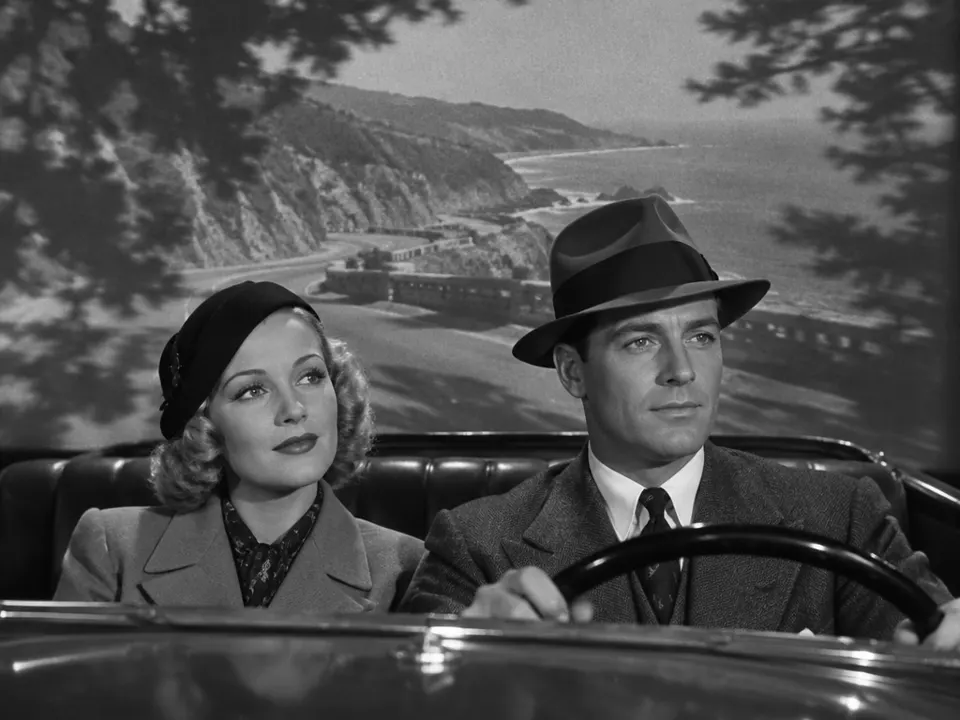
AI illustration: Actors sit in a car mock-up before a projected coastal landscape
07 AI illustration: Actors sit in a car mock-up before a projected coastal landscapeActors sit in a car mock-up before a projected coastal landscape. The flat background lighting and static foreground illustrate the classic in-camera composite technique.Illustration generated for the Atlas (AI)

Sources