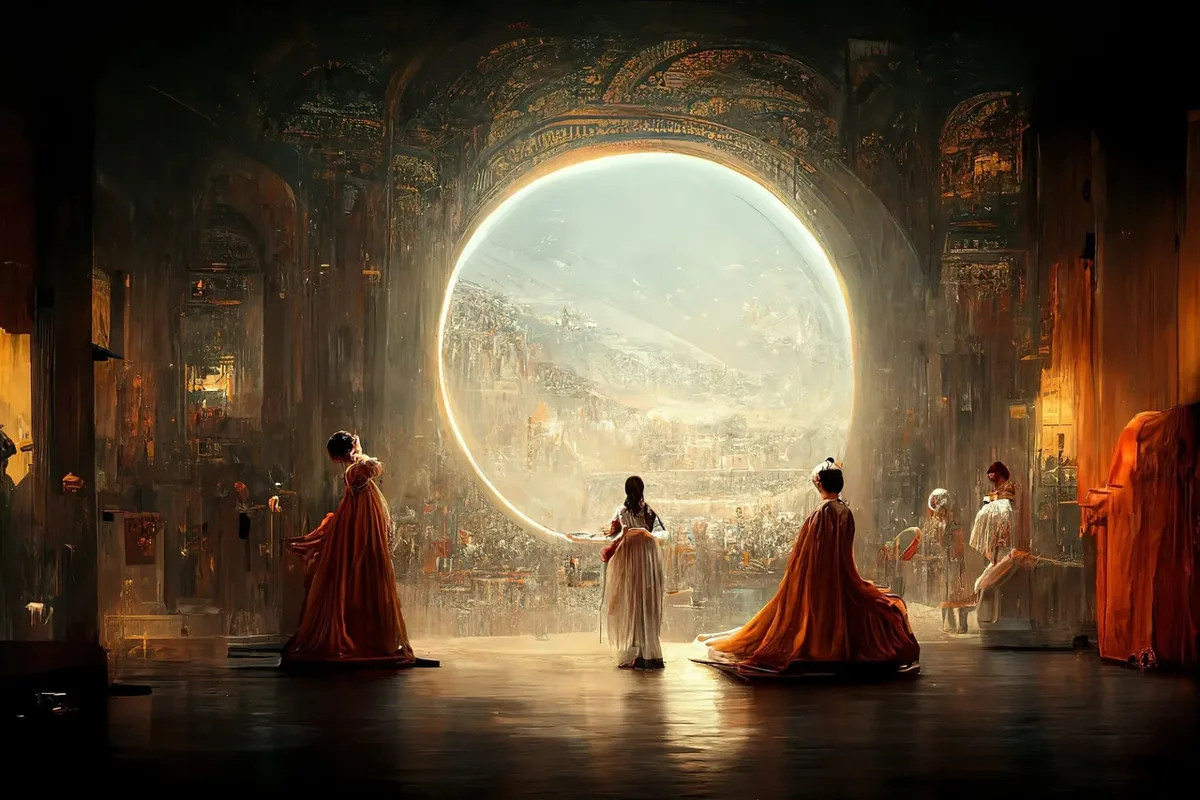
Théâtre D’opéra Spatial. Figures in elaborate gowns occupy a monumental hall dominated by a luminous circular opening.Left intentionally blank · Public domain · via Wikimedia CommonsView source ↗
Prompt
Apply a Text-to-Image Generation aesthetic with richly synthesized surface detail, polished cinematic lighting, unusually coherent color grading, and subtly dreamlike background textures. Introduce minor ambiguous ornamental shapes in peripheral areas while preserving believable anatomy and avoiding invented lettering. Keep the original subject and composition.
You see highly detailed pictures that match awritten description. Early examples often feature [visual errors like mangled fingers]or nonsensical text.
Principle
Software gradually refines afield of [random digital noise1]into acoherent picture. It relies on mathematical models trained on [massive datasets2].
Example
Jason Allen: Théâtre D'opéra Spatial, 2022.
Try it out
Look closely at the hands, background text, and repeating patterns in an AI-generated image to find structural flaws.
Background
Text-to-image generation surged into public view in the early 2020s. The dominant method uses amathematical process called diffusion3. The software starts with pure, static-like noise. Over many small steps, it subtracts this noise to reveal an image. Auser's written prompt guides this subtractive process. The system understands concepts because it analyzed massive datasets of existing images and captions. Early tools struggled with complex human anatomy and spatial logic. However, the technology improved rapidly. It sparked intense debates about copyright, artistic intent, and visual authenticity.
Distinction
Unlike traditional 3D rendering where an artist builds virtual geometry, this process statistically predicts pixels based on linguistic patterns.
Aftermath
It demonstrates that human visual logic and computational pattern recognition are fundamentally different.
Further examples · 7 images
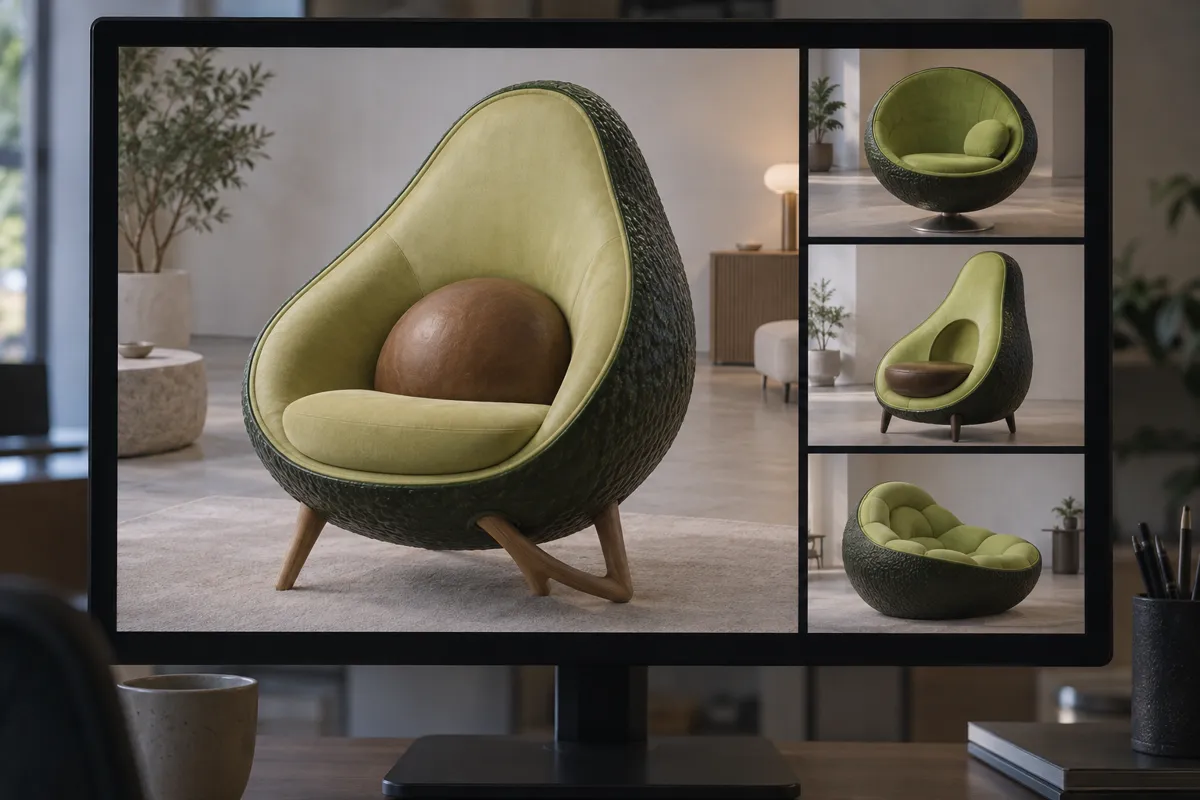
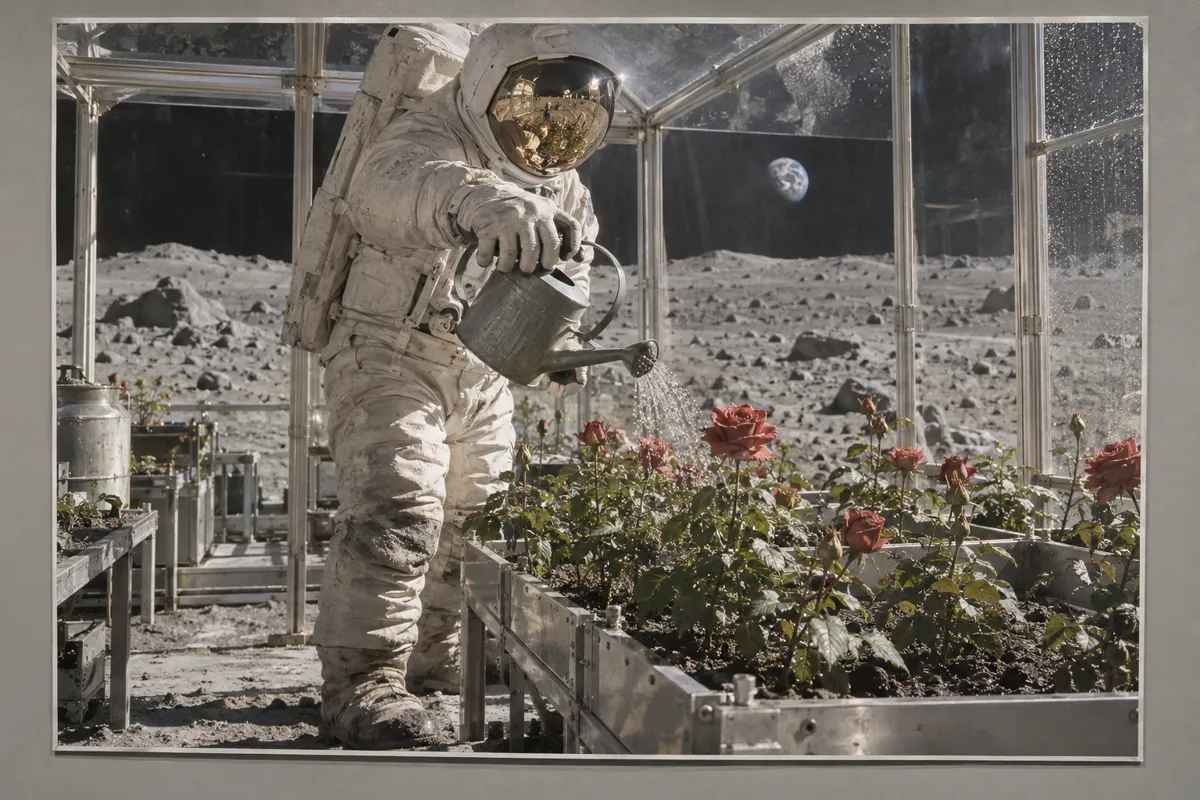
02DALL·E Text-Guided Image EditingA DALL·E editing interface displays a suited, animal-headed figure beside a financial chart and an empty checkerboard extension area. The visible prompt controls and generation canvas directly demonstrate a text-guided image-generation workflow.DALL-E2 · Public domain · Wikimedia Commons03Rhinoceros Generation Across Sampling StepsSix rhinoceros images are labeled with increasing step counts, progressing from blurred forms toward more resolved detail. This comparison demonstrates how diffusion sampling steps affect the refinement of a generated picture.Stable Diffusion WebUI - Automatic1111 · Public domain · Wikimedia Commons04Astronaut Riding a HorseAn astronaut rides a white horse across a barren surface with Earth filling the background. This recognizable Stable Diffusion demonstration combines the subjects of a written prompt into a coherent, photorealistic scene.VulcanSphere · Public domain · Wikimedia Commons05Billboard Generations Compared Against a Shared PromptA side-by-side comparison labeled OpenAI and stability.ai shows roadside billboards above a shared written prompt. The explicit pairing of instructions and generated results demonstrates text-to-image generation, including its characteristic difficulty rendering legible lettering.Dall-E2 and Stable Diffusion · Public domain · Wikimedia Commons06AI illustration: AI-generated furniture designs based on avocado fruitA series of chair designs are shown that mimic the specific texture and anatomy of a halved avocado. This set illustrates the capacity of generative models to blend disparate concepts into surreal, yet photorealistic, product concepts.Illustration generated for the Atlas (AI)07AI illustration: Surreal scene of an astronaut gardening on the moonAn astronaut in full gear is depicted watering a bed of red roses inside a greenhouse on the lunar surface. The image demonstrates the synthesis of complex, imaginative prompts into a high-fidelity visual scene through neural networks.Illustration generated for the Atlas (AI)
Question
Why do early AI generators often struggle with drawing hands?
Show possible answer +Hide answer −
Hands appear in complex, overlapping poses. The model learns the texture of fingers but struggles with their underlying structural logic.