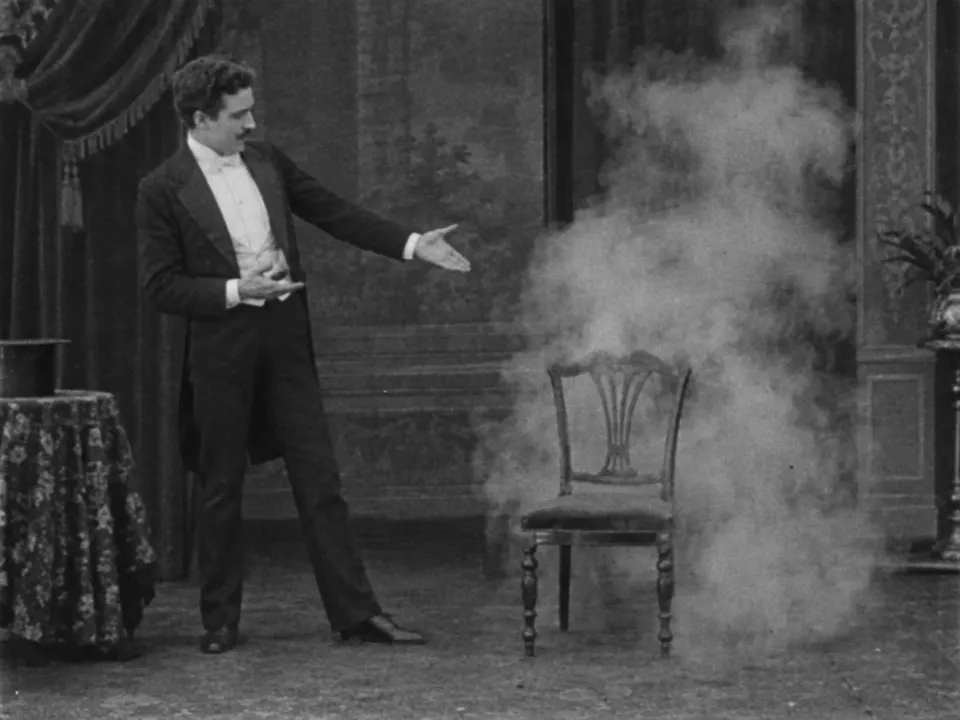
Stop trick / substitution splice. Documented in 1895, Méliès’ film magic from 1896
Typeface · Limelight
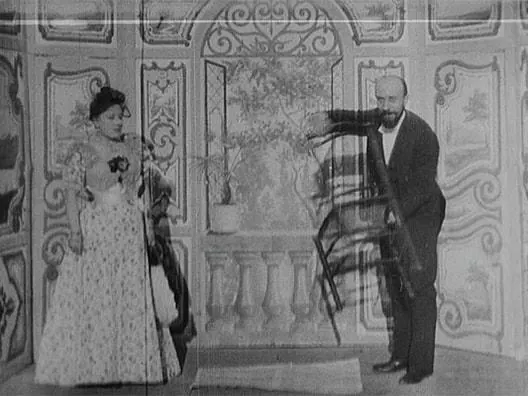
Georges Méliès: The Vanishing Lady, 1896. Still from a historical film; link leads to the viewing.
Temporal effect: still image or image sequence.Georges Méliès / La Cinémathèque française. Historical film in the public domain; digital restoration/presentation Cinémathèque française.View source ↗
Prompt
Apply a Stop Trick effect as two adjacent, identically framed film stills capturing an abrupt substitution. Keep the subject intact in the first and transformed into a sculptural replica in the second, with perfectly aligned surroundings, monochrome grain, slight gate jitter, and a hard cut. Keep the original subject and composition.
A[person suddenly disappears or transforms], while the surroundings seemingly continue without interruption.
Principle
Stop the camera, [replace the subject], and continue filming with the same frame position1. A[cut2conceals the interrupted recording time].
Example
Georges Méliès: The Vanishing Lady, 1896.
Try it out
Secure your smartphone and swap out an object during arecording break. Edit both parts together immediately.
Background
Documented in *The Execution of Mary, Queen of Scots*, 1895; Méliès used it as amagic trick in 1896. Animated films around 1900, early special effects cinema. Detailed mechanism: Stop the camera, replace aperson or object, continue filming from the same frame position. Asuitable cut conceals the interruption. The effect is created by an invisible gap in time. Distinguish from step-by-step animated stop motion.
Distinction
The effect is created by an invisible time gap. Distinguish it from step-by-step animated stop motion.
Aftermath
Jump-cut transformations, outfit transitions, and social video magic.
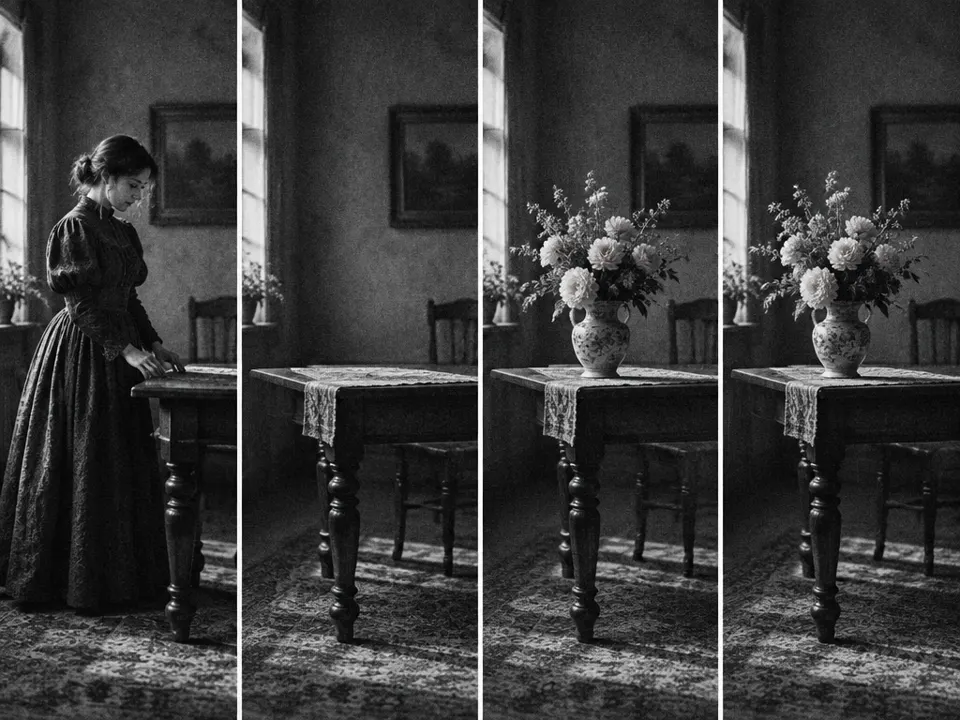
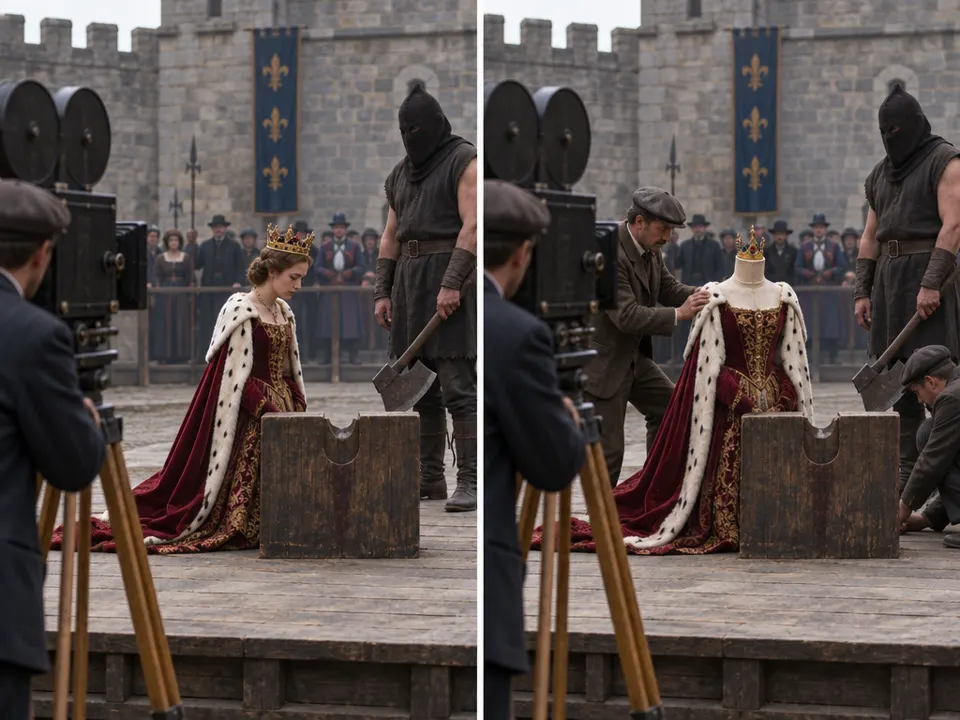
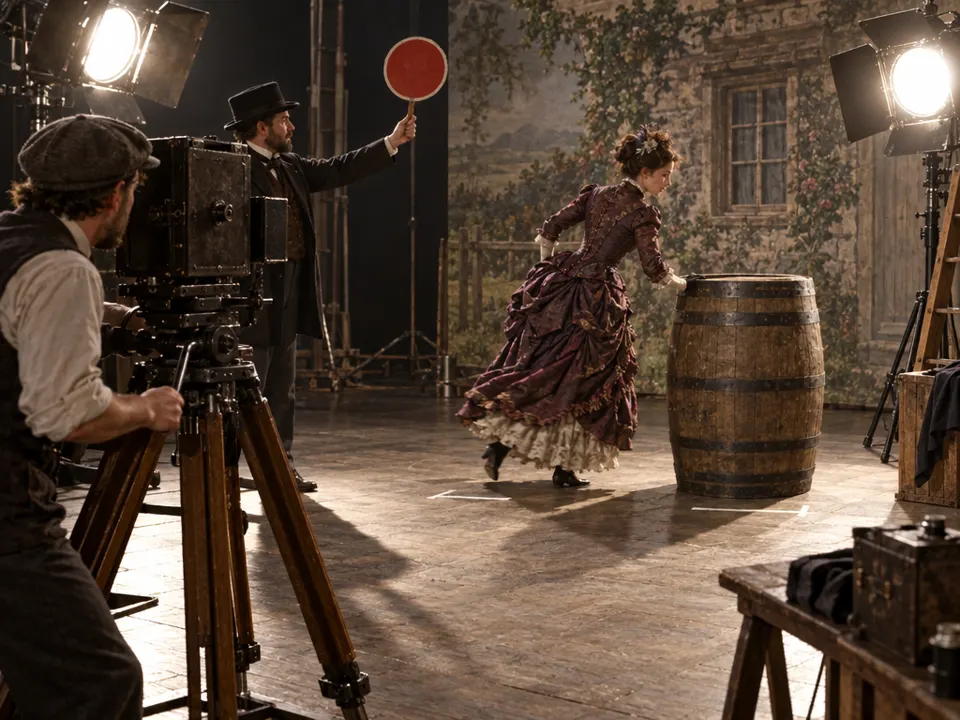
Further examples · 7 images
02Méliès, Escamotage d'une dame chez Robert-Houdin (Star Film 70, 1896)A woman is being replaced by a skeleton under a cloth in this 1896 film frame. The stop trick allows the actress to leave the set during a camera pause, creating a sudden transformation.Georges Méliès · Public domain · Wikimedia Commons03MaryExecutionA film frame shows the execution of Mary, Queen of Scots. A dummy was substituted for the live actor during a camera pause to simulate decapitation, representing one of the earliest documented uses of the technique.Unknown · Public domain · Wikimedia Commons04AI illustration: Four frames show a woman being replaced by a vase of flowers while the baFour frames show a woman being replaced by a vase of flowers while the background remains identical. This sequence perfectly illustrates the stop-and-replace mechanism of the stop trick.Illustration generated for the Atlas (AI)05AI illustration: A side-by-side comparison shows a queen being replaced by a headless dummA side-by-side comparison shows a queen being replaced by a headless dummy during a filming break. It demonstrates how stopping the camera allows for a safe and seamless transition in the final cut.Illustration generated for the Atlas (AI)06AI illustration: A film crew is shown using a signal to halt the action for a camera stopA film crew is shown using a signal to halt the action for a camera stop. This depicts the preparation for substituting an object or actor before resuming the shot.Illustration generated for the Atlas (AI)07AI illustration: A magician gestures toward an empty chair where a person has just vanisheA magician gestures toward an empty chair where a person has just vanished behind a cloud of smoke. This portrays the end result of a stop trick after the camera was paused to remove the subject.Illustration generated for the Atlas (AI)