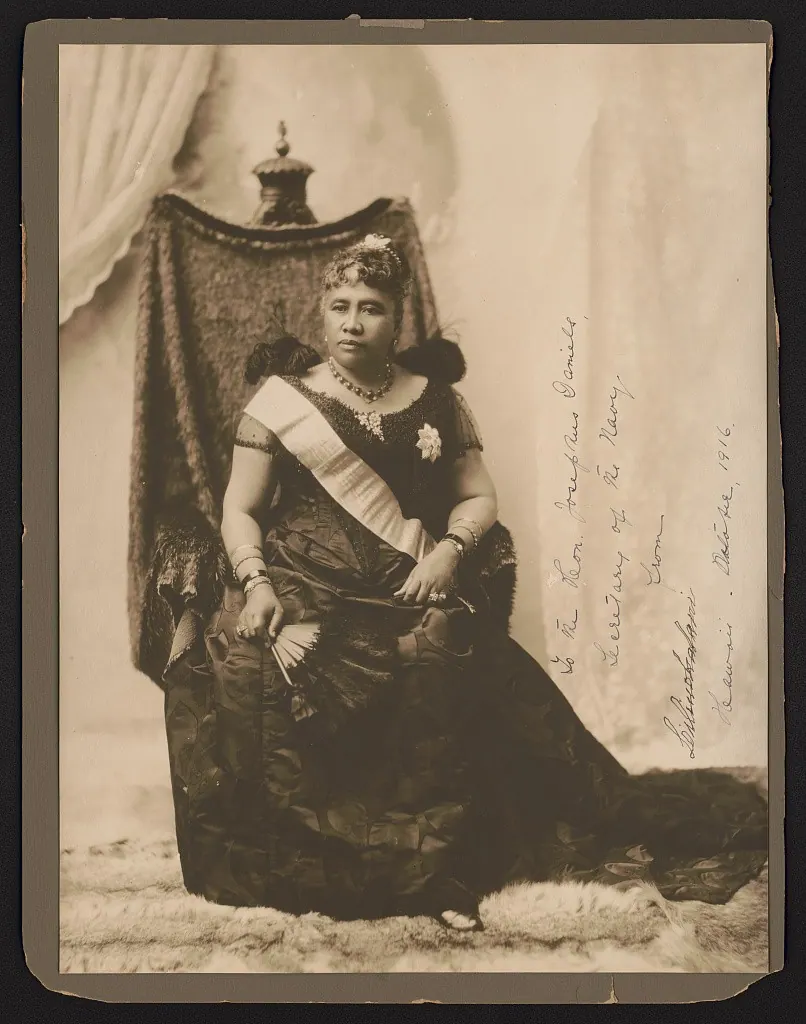
Sepia toning. 19th century; later, a universal nostalgia look
Typeface · Lora
Liliʻuokalani, circa 1891. Historical silver gelatin portrait in warm tones.Library of Congress / No known restrictionsView source ↗
Prompt
Apply a Sepia Toning effect, replacing all original colors with a continuous range of warm brown tones, from creamy ivory highlights through tobacco midtones to deep chocolate shadows. Add restrained photographic grain and a matte paper finish without excessive distressing or artificial stains. Keep the original subject and composition.
Sepia toning is part of the history of chemical post-processing of photographic prints. Sulfide toning produces brown tones and can improve the durability of asilver print. Later, photo editing software adopted the color scheme as asymbol of memory and the past. The decade-based association marks the historical brown look, not aclearly datable invention.
Distinction
Brown historical images can also result from their printing process or aging. The hue alone does not identify sepia toning. Digital tinting replicates the visible look; it does not automatically possess the same material properties.
Aftermath
Read color association and material history separately.
Further examples · 8 images
02City of Bolzano - Photo by Giovanni Ussi - In Black and White Sepia 28An urban road leads toward modern apartments and office blocks. The uniform brownish hue demonstrates how sepia toning alters image silver into a warm monochromatic scale.Giovanni Ussi · CC BY-SA 4.0 · Wikimedia Commons03City of Bolzano - Photo by Giovanni Ussi - In Black and White Sepia 22A courtyard with cobblestones features a central evergreen tree and a stone building. Sepia toning provides a consistent aged look despite the modern subject matter.Giovanni Ussi · Public domain · Wikimedia Commons04City of Bolzano - Photo by Giovanni Ussi - In Black and White Sepia 10Large multi-story buildings flank a Bolzano street under an overcast sky. The sepia treatment softens the contrast and creates a mood of universal nostalgia.Giovanni Ussi · CC BY-SA 4.0 · Wikimedia Commons05City of Bolzano - Photo by Giovanni Ussi - In Black and White Sepia 31Modern apartment blocks and a street lamp stand against a hillside. The sepia process turns the highlights and shadows into varying shades of dark brown and tan.Giovanni Ussi · CC BY-SA 4.0 · Wikimedia Commons06City of Bolzano - Photo by Giovanni Ussi - In Black and White Sepia 16Apartment buildings and a street corner are shown in this wide urban view. The sepia effect reduces the harshness of the modern scene, giving it a historical quality.Giovanni Ussi · CC BY-SA 4.0 · Wikimedia Commons07City of Bolzano - Photo by Giovanni Ussi - In Black and White Sepia 25A large stone facade with a decorative frieze dominates the right side of the frame. The heavy sepia toning emphasizes the texture of the stone and the dramatic sky.Giovanni Ussi · CC BY-SA 4.0 · Wikimedia Commons08Mary Garrity - Ida B. Wells-Barnett - Google Art Project - restoration cropA monochrome portrait showing a distinct range of reddish-brown hues. The chemical toning process has replaced standard black silver with a warmer pigment, enhancing the archival quality and creating a soft, warm aesthetic.Adam Cuerden · Public domain · Wikimedia Commons
Question
Does a brown photo prove that it has been toned in sepia?
Show possible answer +Hide answer −
No. Albumin, other processes, and aging can also produce brown image tones.