Star Filter
1960s, popularized in television entertainment and glamour photography
Prompt
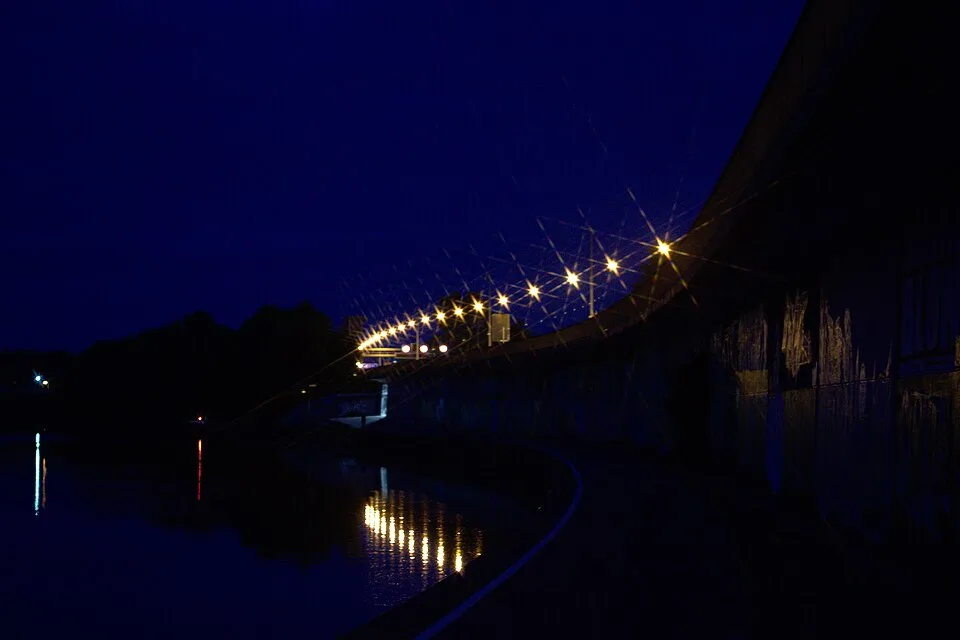
Apply a Star Filter effect to existing bright points and specular reflections, extending them into symmetrical four-point or six-point stars with fine needlelike rays. Add gentle luminous halos, subtle spectral glints, and mild highlight bloom while leaving darker textures and ordinary edges clear. Keep the original subject and composition.
Identify
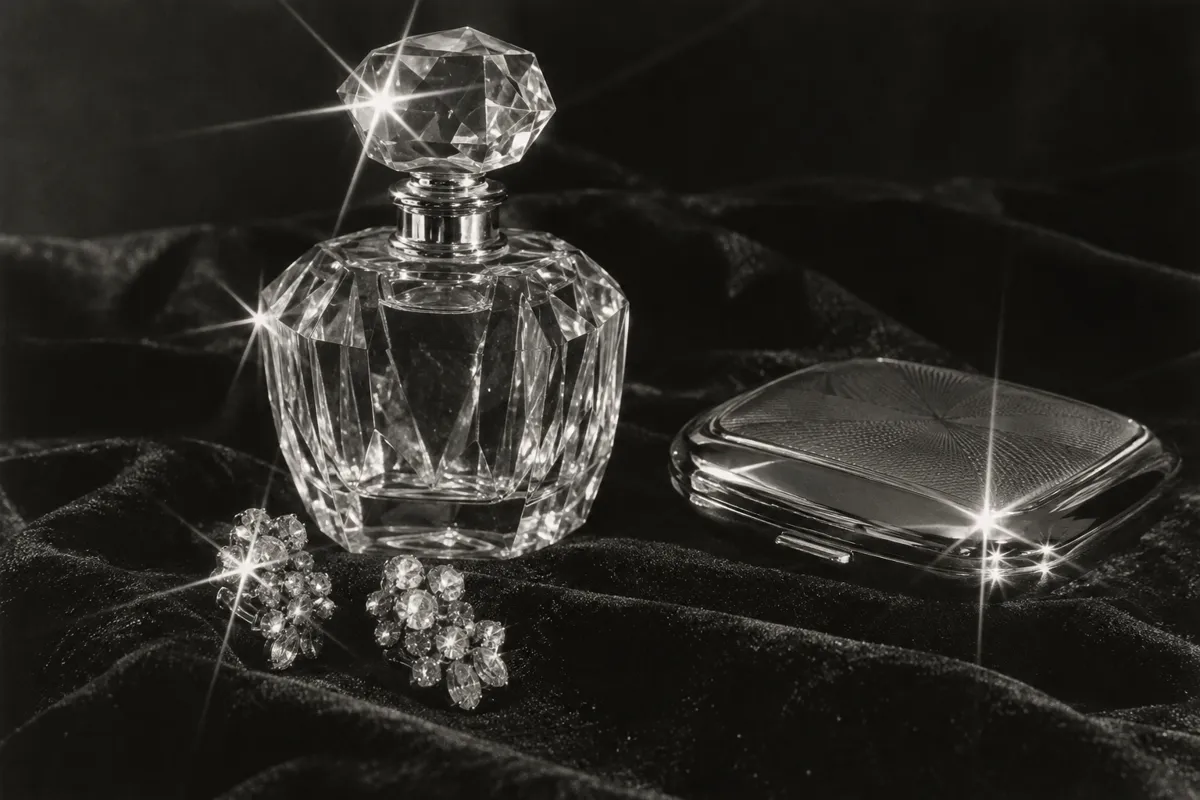
You see bright points of light radiating symmetrical, needle-like lines. These luminous streaks transform ordinary glare into distinct, multi-pointed stars.
Principle
A glass or plastic filter is etched1 with a fine grid of intersecting lines. This physical grid bends incoming light through diffraction2, spreading point sources into visible rays.
Example
Harry Stradling Sr. (Cinematographer): Funny Girl, 1968.
Try it out
Look at a distant streetlamp through a finely woven window screen at night to see a similar geometric ray effect.
Background
Photographers and television operators in the 1960s sought new ways to make scenes look glamorous. They placed specialized glass filters in front of their lenses. These filters had microscopic patterns etched into their surfaces. The etched lines scattered intense light sources into dramatic starbursts. Four-point, six-point, and eight-point variations were created by changing the grid pattern. The technique became a staple of music variety shows and romantic film close-ups. It turned reflections on jewelry, stage lights, and wet streets into dazzling spectacles. The effect peaked in the 1970s disco era before declining.
Distinction
Unlike lens flares caused by internal glass reflections, star filters are created deliberately by exterior grids. Star filters always produce highly symmetrical, evenly spaced rays from light sources.
Aftermath
It demonstrates how microscopic physical modifications to a lens surface can radically reshape captured light.
Further examples · 7 images



Question
Why do some star filters make four points while others make eight?
Show possible answer +Hide answer −
The number of rays depends entirely on the etched pattern. Two intersecting lines create four points, while four intersecting lines create eight points.