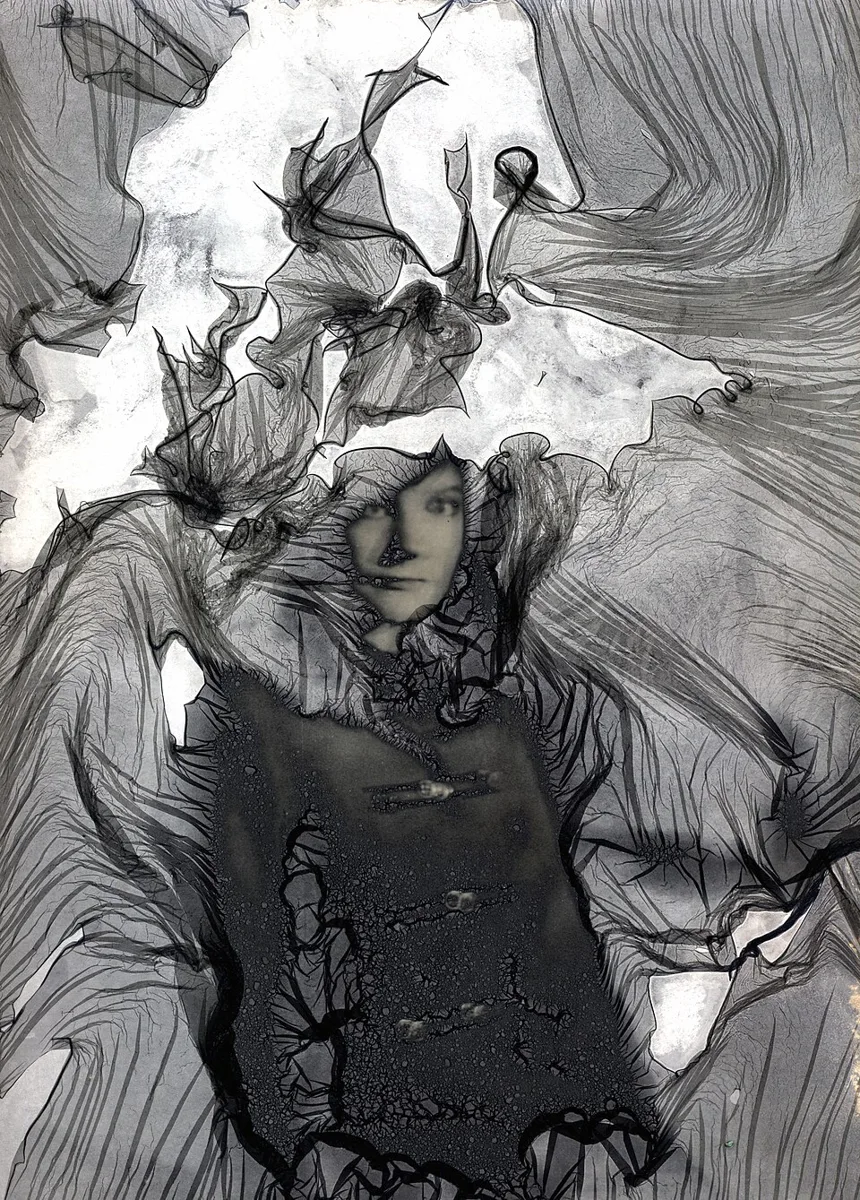
Portrait Amid Lifted Emulsion Veils. A woman's portrait emerges among sweeping translucent folds, fine wrinkles, and ragged dark edges.stacey svendsen from a little bit of everywhere · CC BY 2.0 · via Wikimedia CommonsView source ↗
Prompt
Apply a Mordançage effect with monochrome photographic tones and deep shadow regions lifting into delicate, wrinkled gelatin veils. Introduce curled emulsion edges, fluid distortions, pale bleached patches, and torn-looking pockets of texture concentrated in darker areas, while retaining readable highlights and essential contours. Keep the original subject and composition.
You see black-and-white photographs with [distorted, fluid, or torn areas]. The darkest parts often look like [floating veils or wrinkled skin].
Principle
Aharsh chemical bath bleaches the print and [softens the darkest gelatin emulsion1]. The photographer then physically lifts or rearranges these shadows.
Look at amordançage print and try to spot where the dark emulsion has been pushed into 3D wrinkles.
Background
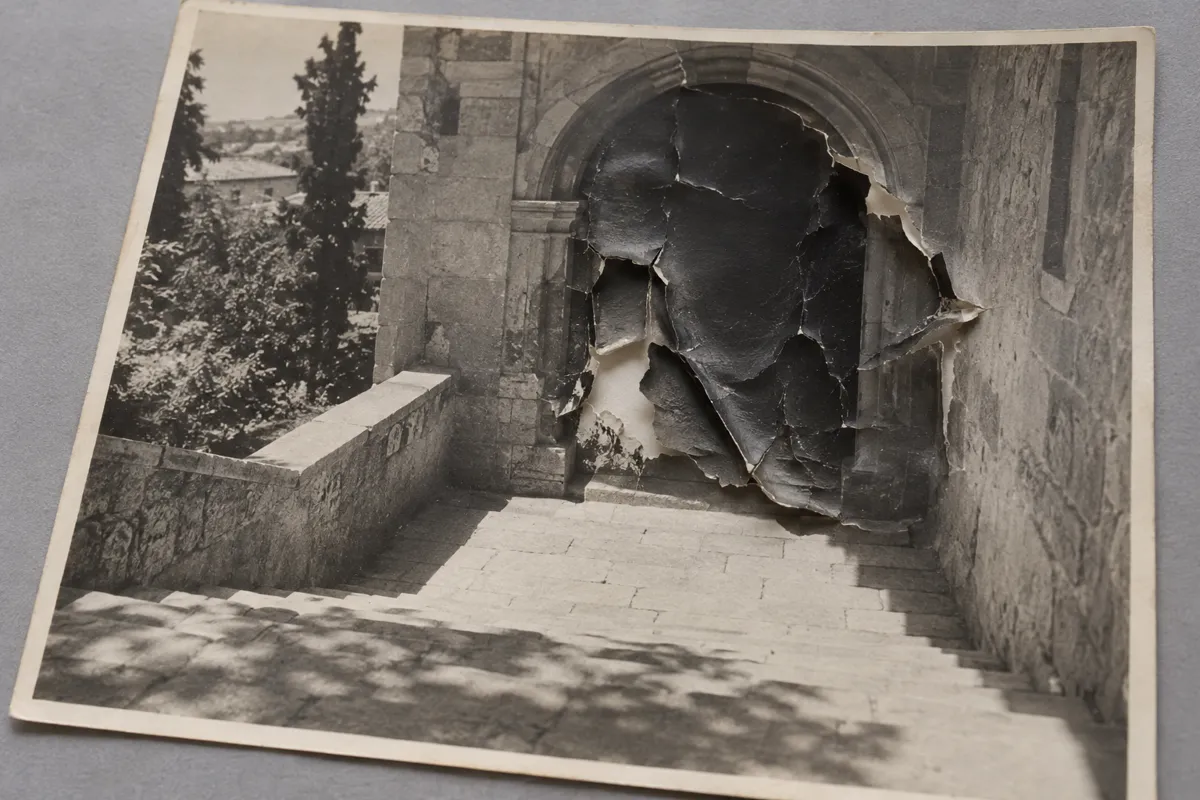
Mordançage is adestructive darkroom process popularized by French photographer Jean-Pierre Sudre in the 1960s. It evolved from alate 19th-century reversal technique called etch-bleach2. Sudre placed afully developed silver gelatin print in atoxic mixture of copper chloride3, hydrogen peroxide, and acetic acid. This solution acts proportionally, softening the gelatin where the most silver is present. The darkest shadows swell and detach from the paper base. The photographer can leave these veils hanging, brush them away completely, or reshape them. Finally, they redevelop the remaining image into new colors.
Distinction
Unlike solarization, which uses light to reverse tones, mordançage uses chemicals and physical manipulation. This alters the print's actual physical surface.
Aftermath
It shows that aphotograph is aphysical object made of fragile layers, not just aflat image.
Further examples · 7 images
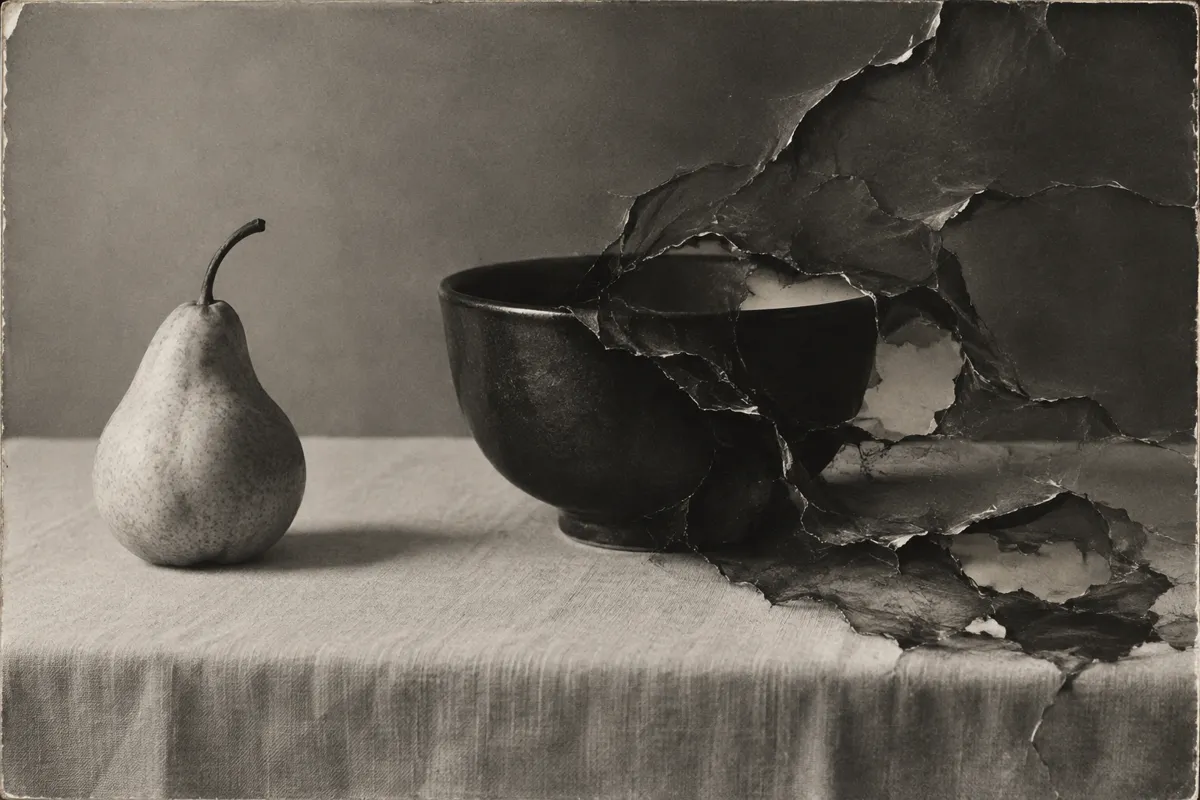
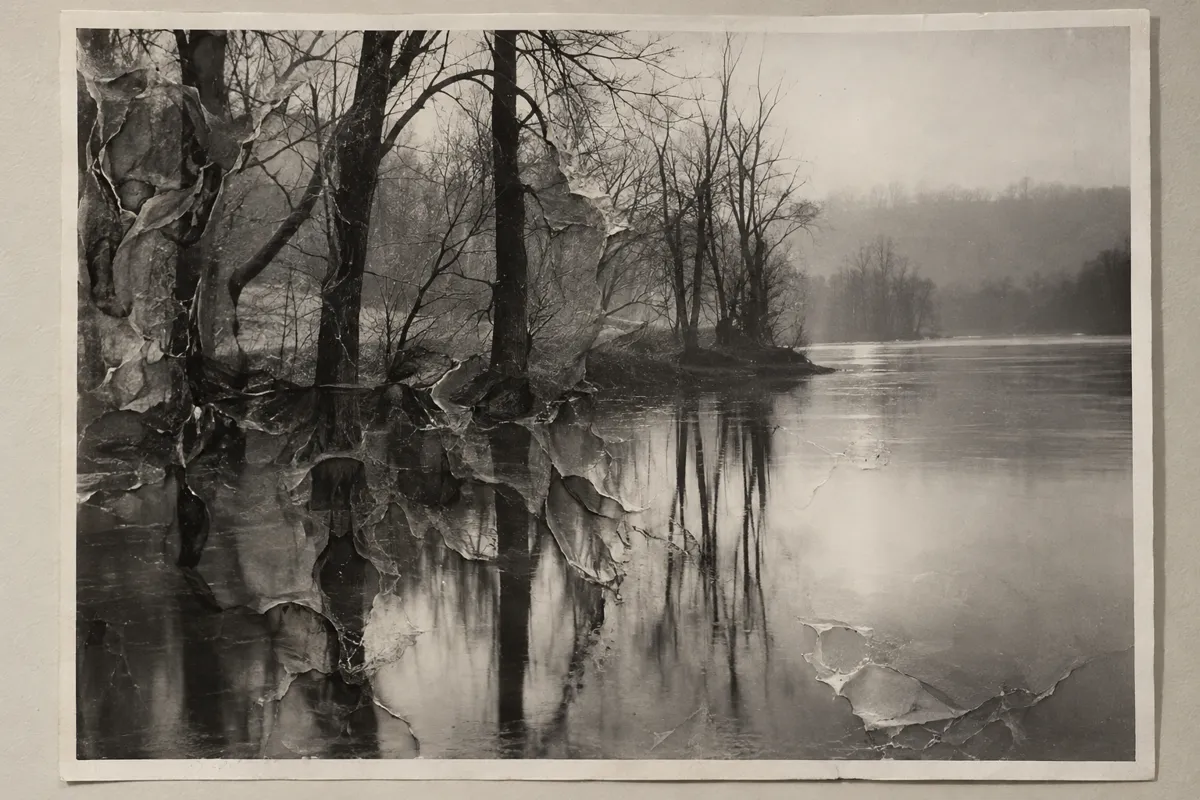
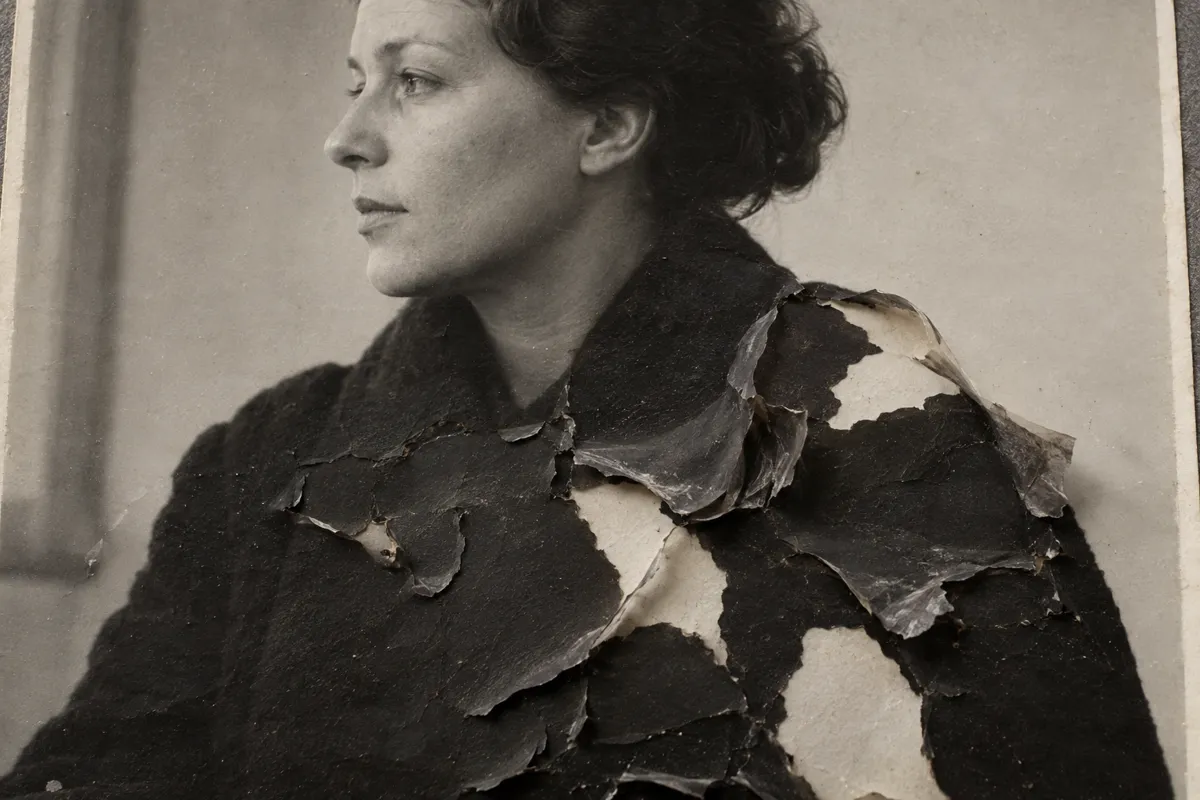
02Reclining Figure Among Emulsion FoldsA reclining figure is surrounded by dark, deeply wrinkled membranes that hang like curtains and gather around the body. These folded sheets of displaced shadow emulsion clearly demonstrate the veiling effect of mordançage.stacey svendsen from a little bit of everywhere · CC BY 2.0 · Wikimedia Commons03Seated Figure with Curled Emulsion EdgesA seated figure with clasped hands appears within a pale, mottled field bordered by curled dark fragments and torn-looking membranes. The lifted shadow edges and bleached photographic surface visibly exhibit mordançage's chemical alteration and separation of the emulsion.stacey svendsen from a little bit of everywhere · CC BY 2.0 · Wikimedia Commons04AI illustration: Still life with lifted gelatin veilsA still life composition features a pear alongside a dark bowl whose shadows have been physically lifted from the paper. The black silver emulsion appears as a series of delicate, torn veils that float across the right side of the frame.Illustration generated for the Atlas (AI)05AI illustration: River landscape with manipulated emulsion membranesThis monochrome landscape displays a river scene where the dark trunks and reflections have been chemically softened and manipulated. The resulting image shows the shadows as translucent, wrinkled membranes that peel away from the landscape.Illustration generated for the Atlas (AI)06AI illustration: Portrait showing distressed and flaked emulsionIn this profile portrait, the subject's dark clothing has been transformed into a series of ragged, three-dimensional flakes. The chemical bleaching process has allowed the photographer to pull and distress the darkest areas of the silver gelatin.Illustration generated for the Atlas (AI)07AI illustration: Architectural study with curling shadow veilsThe arched doorway of this stone structure is filled with large, curling pieces of black emulsion that appear to be falling off the print surface. This demonstrates the characteristic detachment of the shadow layer following a concentrated chemical bath.Illustration generated for the Atlas (AI)
Question
Why do only the darkest parts of the image lift off the paper?
Show possible answer +Hide answer −
The mordançage solution specifically targets the silver particles in the print. Since dark areas contain the most silver, the gelatin there softens most.