1920s landmark: Lon Chaney in The Phantom of the Opera, 1925
Typeface · Grenze Gotisch
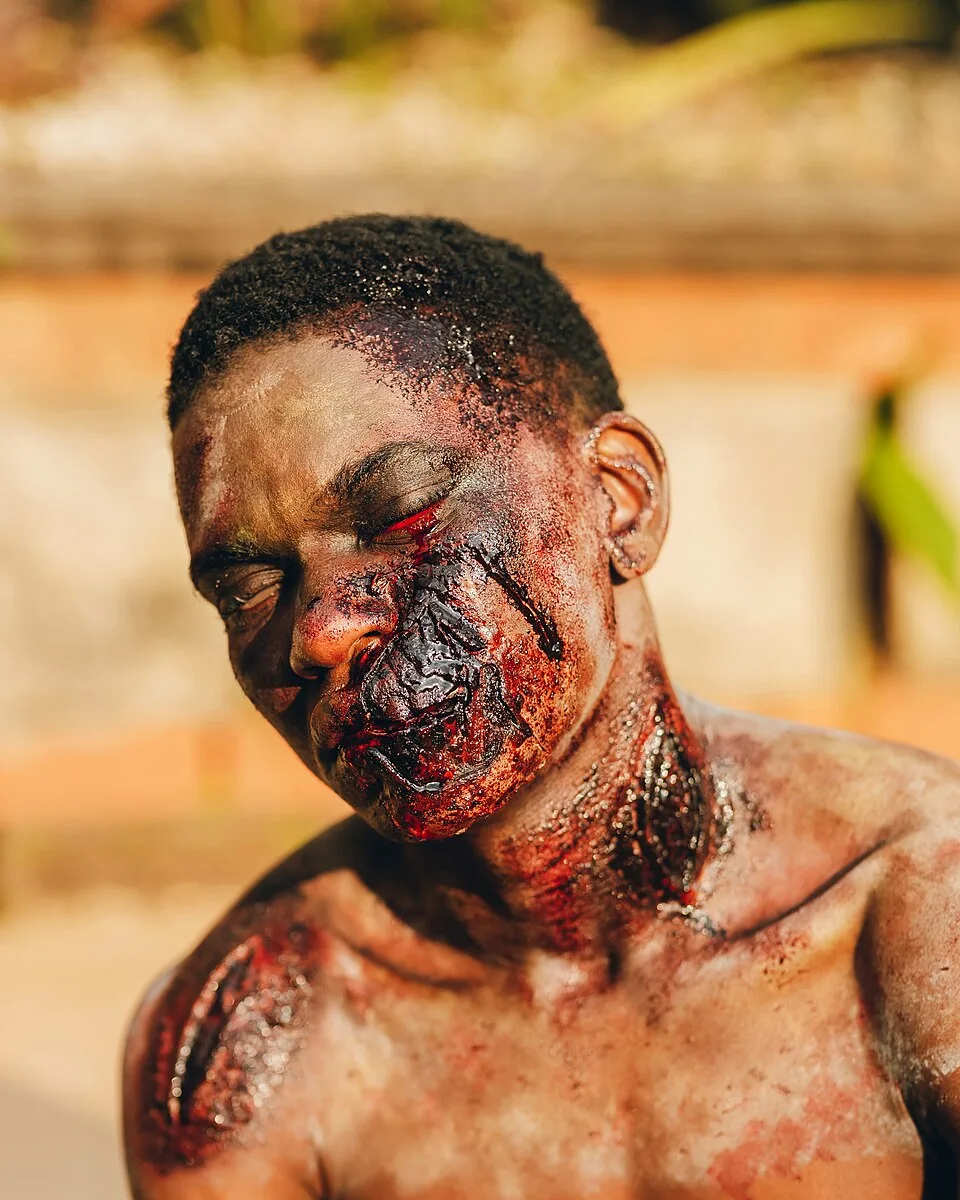
Simulated Facial and Shoulder Wounds. Blackened, torn-looking patches cover a performer's cheek, neck, and shoulder amid red wound coloration.Lisa Sonia (Li) · CC0 · via Wikimedia CommonsView source ↗
Prompt
Apply a Special Effects Makeup treatment using sculpted prosthetic textures, exaggerated creases, recessed shadows, and subtly raised healed scar details on suitable visible surfaces. Add matte rubber or wax finishes, stippled pigment, faint blended appliance edges, and directional lighting that reveals physical relief. Keep the original subject and composition.
Faces show [sunken eyes], distorted noses, scars, or exaggerated wrinkles. [Altered facial contours]remain attached to the performer as the head moves.
Principle
Painted shading changes apparent depth, while [prosthetic pieces1]physically reshape the visible surface. The camera records light reflected from these materials during exposure2.
Example
Lon Chaney: The Phantom of the Opera, 1925.
Try it out
Draw adark hollow on apaper mask, add afolded paper ridge, and compare both under amoving lamp.
Background
Special effects makeup grew from theatrical practices rather than beginning suddenly in the 1920s. Cinema brought faces closer, making texture, edges, and lighting especially important. Lon Chaney developed his own makeup for the Phantom in the 1925 film. His skull-like face combined painted contrasts3with physical alterations to facial features. Such transformations could suggest injury, age, or an invented creature without changing the film after exposure. Prosthetic appliances add material to the body; painted shadows can instead make areas appear recessed. Successful makeup also depends on performance and camera position.
Distinction
Unlike adissolve between two faces, makeup changes what stands before the camera. Painted hollows suggest missing volume; prosthetic additions physically add volume.
Aftermath
The technique shows how physical shape, painted tone, lighting, and performance can jointly transform arecognizable face.
Further examples · 11 images
02Full-Face Burn MakeupCracked, glossy layers envelop a performer's scalp and face, with red and black coloration extending onto the chest. The applied materials alter the skin's visible relief to create an extensive simulated burn effect.Lisa Sonia (Li) · CC0 · Wikimedia Commons03Extensive Burn Makeup in PreparationA seated performer wears textured wound makeup across the head and upper torso while another person works nearby. Raised patches, crater-like lesions, and layered pigmentation demonstrate practical fabrication of an injured appearance.Lisa Sonia (Li) · CC0 · Wikimedia Commons04Textured Scalp and Torso Burn EffectsAn overhead view reveals rough, darkened material covering a performer's scalp, face, and shoulders, punctuated by glossy red wounds. The dimensional buildup and painted discoloration visibly transform the skin into a simulated burned surface.Lisa Sonia (Li) · CC0 · Wikimedia Commons05Spiked Monster Mouth ApplianceA dark-painted face bears a glossy red mouth appliance fringed with numerous thin, spike-like projections. The attached sculptural elements reshape the mouth area into a monstrous wound, clearly displaying special effects makeup.Lisa Sonia (Li) · CC0 · Wikimedia Commons06Grotesque Grinning Character MakeupA grinning character in a top hat displays a pronounced nose, deeply shaded eyes, exaggerated facial creases, and prominent teeth. Altered facial contours and painted shadows produce a grotesque character transformation characteristic of special effects makeup.Unknown authorUnknown author · Public domain · Wikimedia Commons07Hunchback Character MakeupA chained performer with a hunched silhouette and a distorted face sits beside a woman in a historical costume. Exaggerated facial contours and darkened features visibly transform the performer into a physically altered character.Universal Pictures · Public domain · Wikimedia Commons08Skull-Like Phantom MakeupTwo black-and-white frames show a man with deeply shadowed eye sockets, a narrowed nose, and exposed teeth. The skull-like facial transformation demonstrates character makeup that changes the apparent structure of a living face.Universal Pictures (Q168383) · Public domain · Wikimedia Commons09Grotesque Grinning CharacterA top-hatted character displays dark eye sockets, a pronounced nose, and an exaggerated toothy grin. Sculpted-looking facial contours and painted shadows create a grotesque transformation of the performer's features.Unknown author · Public domain · Wikimedia Commons10Applying Simulated Burn MakeupSeveral artists work around a seated performer whose head and upper chest bear dark red, heavily textured simulated injuries. Brushes, pigments, and raised surface materials visibly demonstrate the construction of special effects wound makeup.Lisa Sonia (Li) · CC0 · Wikimedia Commons11Textured Injury Makeup WorkshopArtists apply finishing touches to a performer covered in mottled, crusted injury makeup across the face, scalp, and chest. The visibly built-up textures and blood-colored pigments simulate damaged skin rather than ordinary cosmetic enhancement.Lisa Sonia (Li) · CC0 · Wikimedia Commons
Question
Why might a painted hollow become less convincing when the light moves?
Show possible answer +Hide answer −
Its dark shape stays fixed rather than responding like areal shadow. Araised prosthetic piece casts shadows that change with the light.