H 167 / 3211960s

Paik–Abe Video Synthesizer

1969 development, Nam June Paik and Shuya Abe; broadcast use in 1970
Typeface · Zen Tokyo Zoo

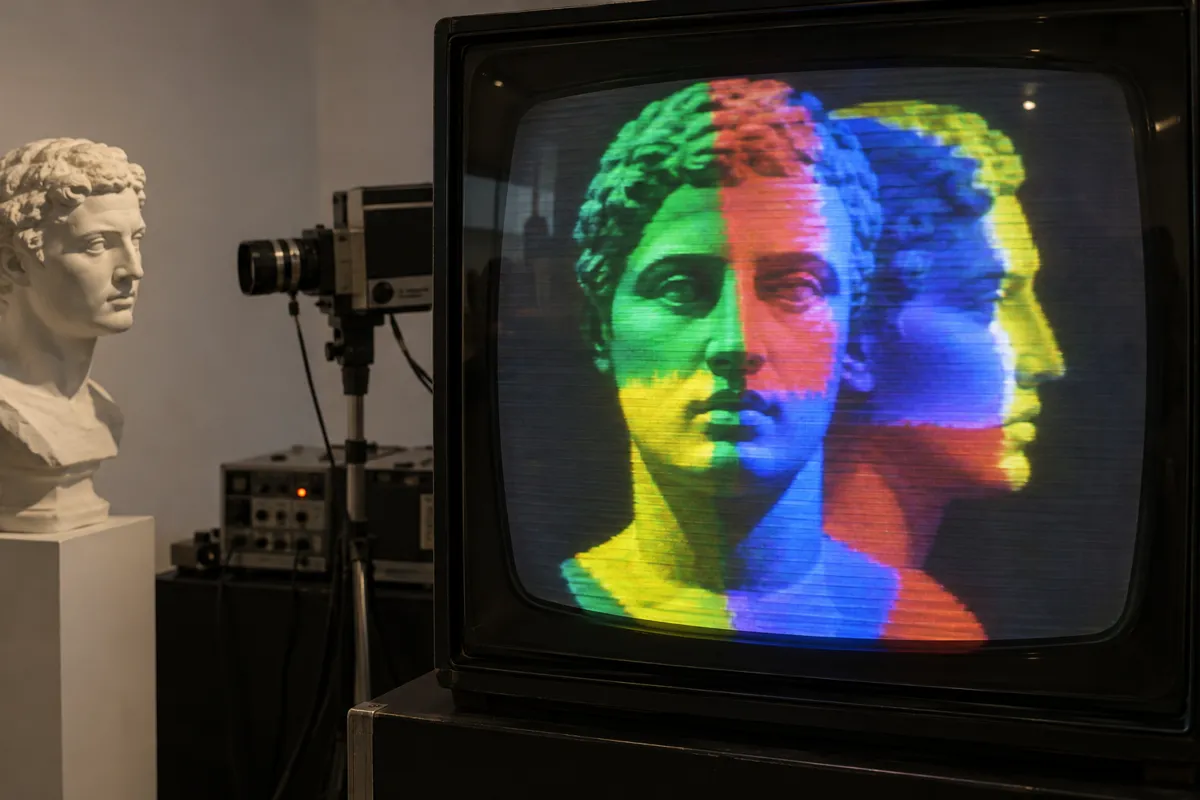
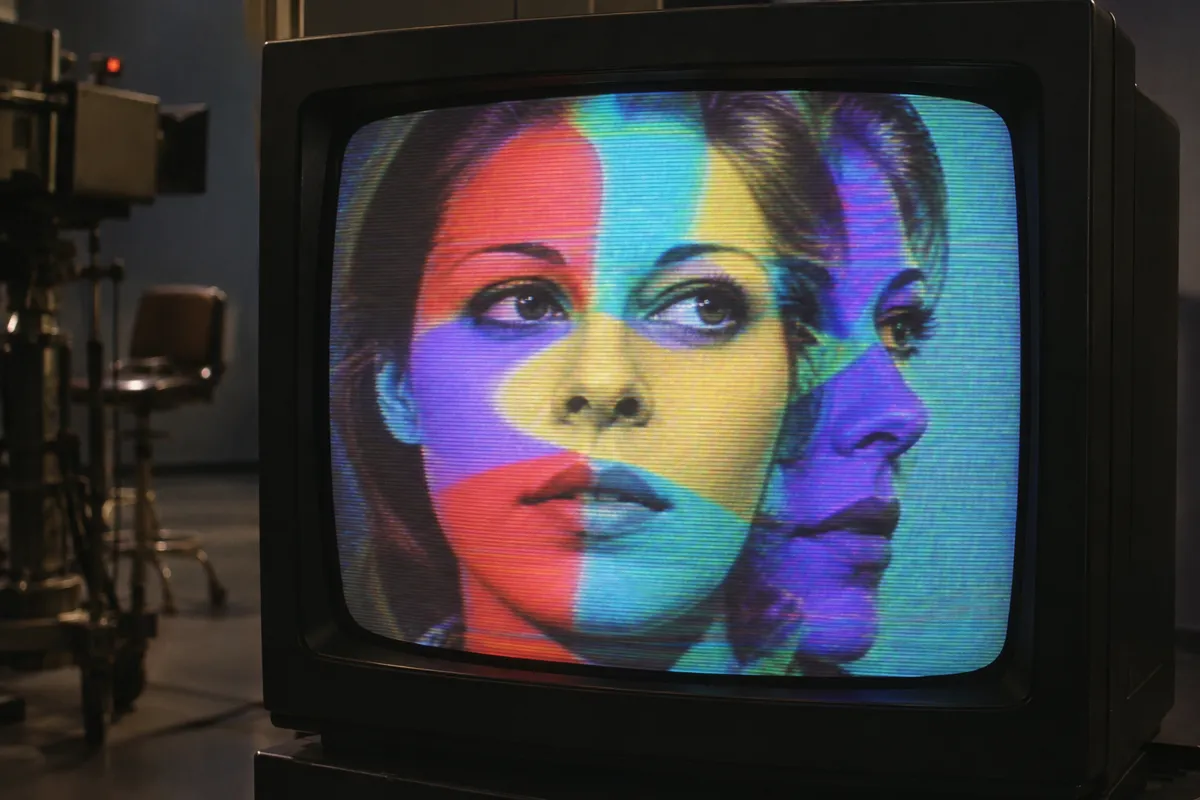
AI illustration: Synthesised portrait with overlapping colour fields.
AI illustration: Synthesised portrait with overlapping colour fields.Illustration generated for the Atlas (AI)View source ↗

Prompt

Apply a Paik–Abe Video Synthesizer effect, replacing natural shading with abrupt patches of electric cyan, hot magenta, acid green, and saturated yellow. Layer slightly offset silhouettes, luminous color bleed, soft analog scanlines, and clipped electronic highlights while retaining recognizable outlines. Keep the original subject and composition.

Identify

Faces and objects become patches of intense artificial colour, often layered into overlapping silhouettes. Abrupt colour boundaries replace natural shading.

Principle

Analogue circuits1 colourise2 and mix incoming video signals, turning brightness information into adjustable colour contributions. A colour television displays the result through additive colour mixing3.

Example

Nam June Paik: Global Groove, 1973.

Try it out

Apply a false-colour gradient to a grayscale video, then change the gradient while watching how faces separate into coloured regions.

Background

Artist Nam June Paik and engineer Shuya Abe developed the synthesizer in 1969, working with Boston television station WGBH. It reached broadcast audiences in 1970 through Video Commune. The instrument let performers colourise and combine several video sources while images were running. Its analogue controls made television pictures something to play, rather than simply record. Colour came from electronic signal processing, not dyes or photographic development. Paik used this approach to challenge television’s familiar appearance and its usual separation between programme makers and viewers.

Distinction

Unlike optical filters, this system changes electrical image signals before display. Unlike realistic colour restoration, its colourisation deliberately need not match the original scene.

Aftermath

It shows how a recording medium can also become a live instrument for shaping colour and composition.

Further examples · 7 images
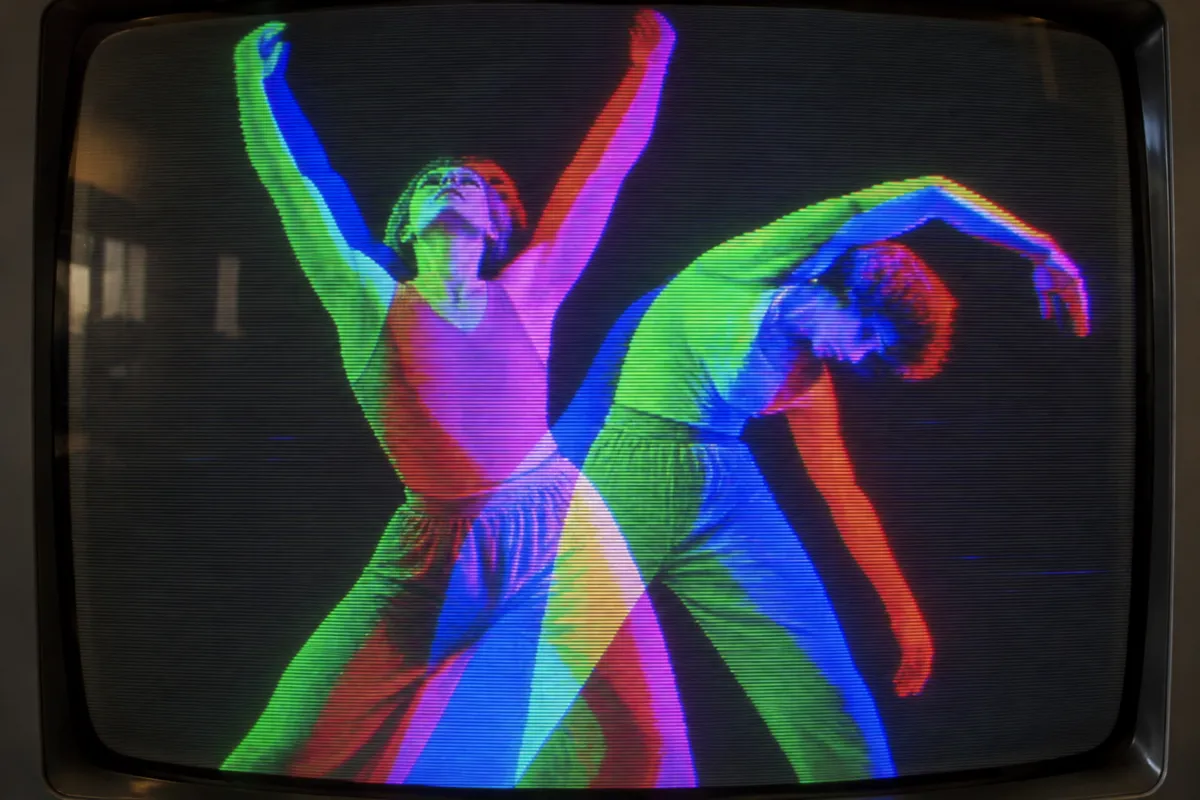
AI illustration: Dancer processed through analogue colour synthesis
02 AI illustration: Dancer processed through analogue colour synthesisA dancer is shown on a screen as a vibrant multi-coloured figure against a dark background, exhibiting significant scanline texture. The figure's movements are separated into primary colour channels, a core characteristic of the Paik-Abe video mixing technique.Illustration generated for the Atlas (AI)
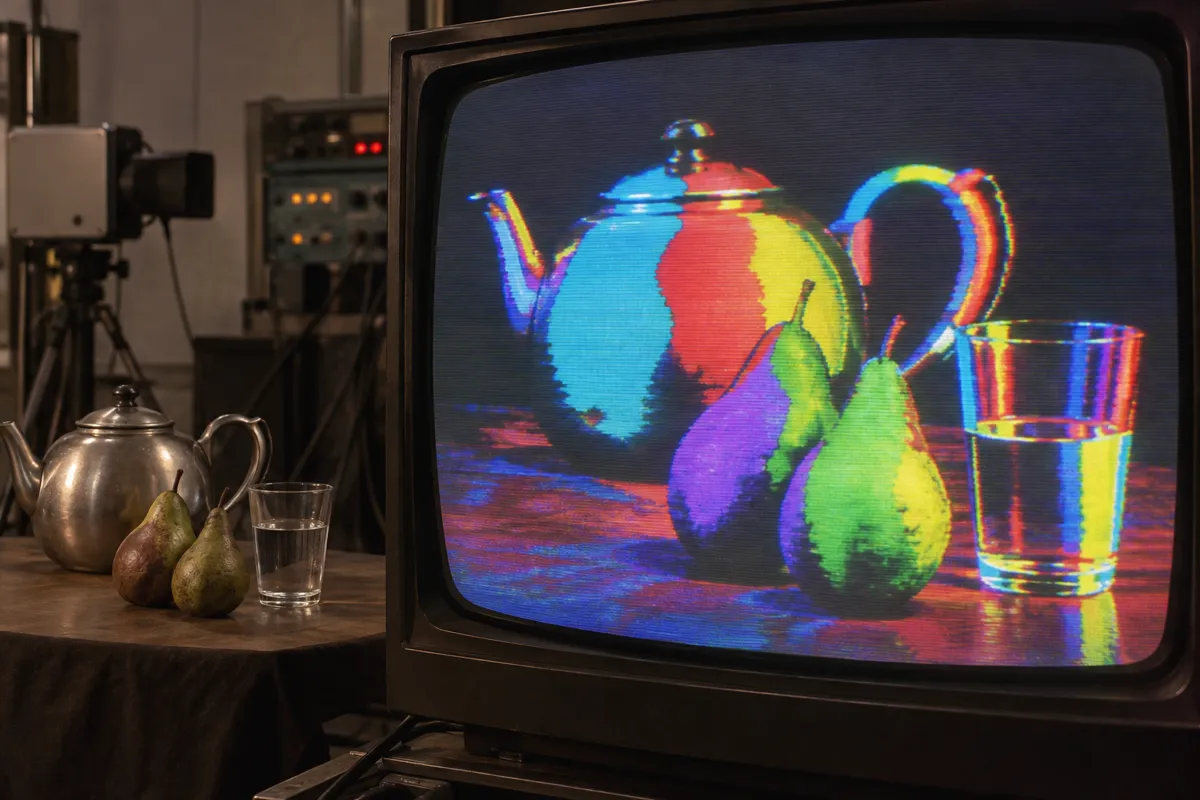
AI illustration: Still life transformed by video synthesiser
03 AI illustration: Still life transformed by video synthesiserA still life arrangement is captured by a video camera and displayed on a monitor with flat, intense colourisation. The natural gradations of the fruit and teapot are replaced by sharp boundaries of artificial electronic pigment.Illustration generated for the Atlas (AI)
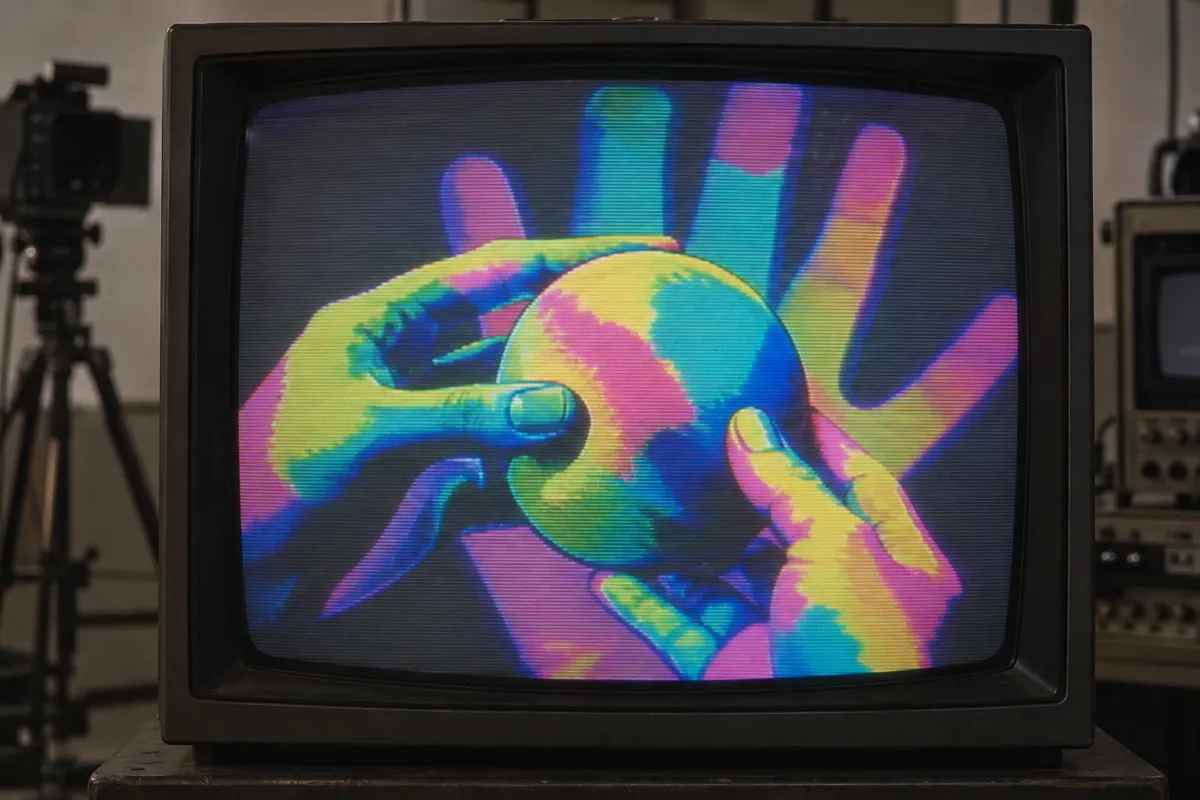
AI illustration: Graphic hand study using Paik-Abe effects
04 AI illustration: Graphic hand study using Paik-Abe effectsA pair of hands holding a sphere is displayed with solarised, neon colour palettes and distinct scanlines. This shows the system's ability to reinterpret standard video signals into high-contrast, psychedelic graphic patterns.Illustration generated for the Atlas (AI)
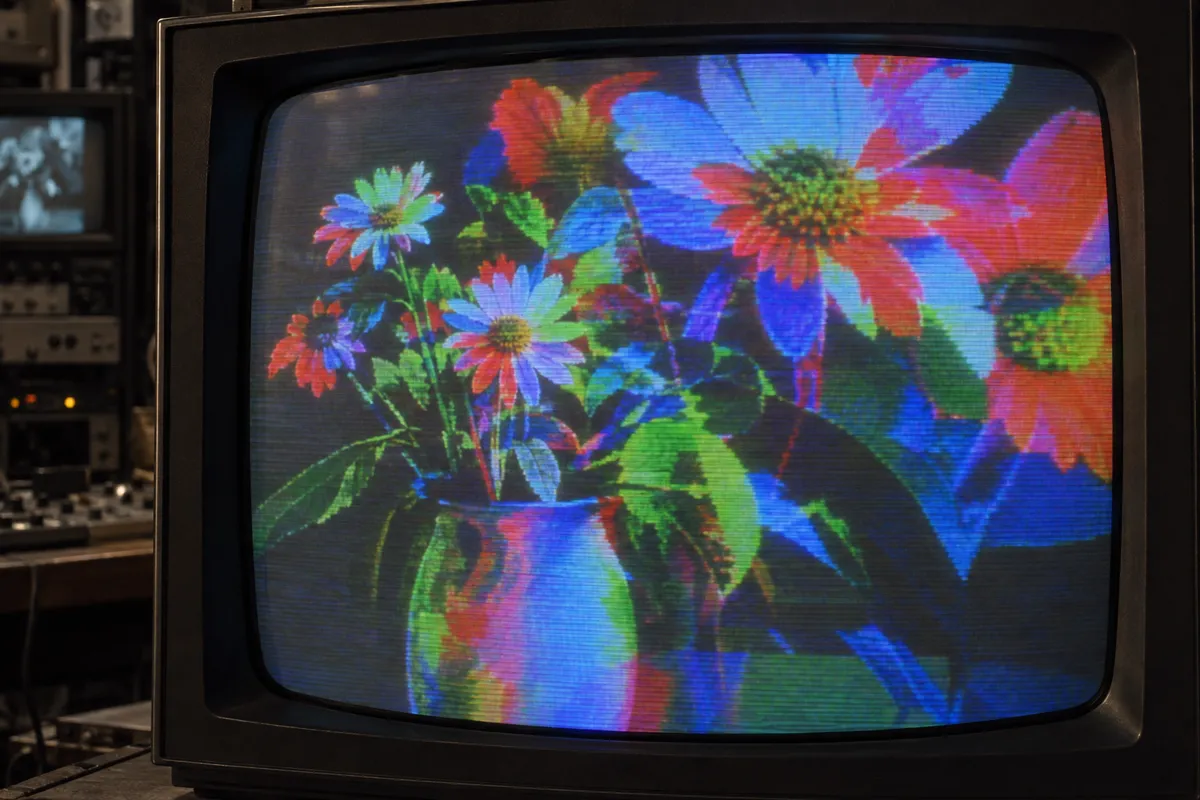
AI illustration: Electronic floral abstraction on CRT monitor
05 AI illustration: Electronic floral abstraction on CRT monitorA floral arrangement is rendered on an old television screen with vibrating, non-naturalistic colour assignments. The synthesis creates a painterly effect where the electronic signal dictates the hue of each petal based on its original brightness.Illustration generated for the Atlas (AI)
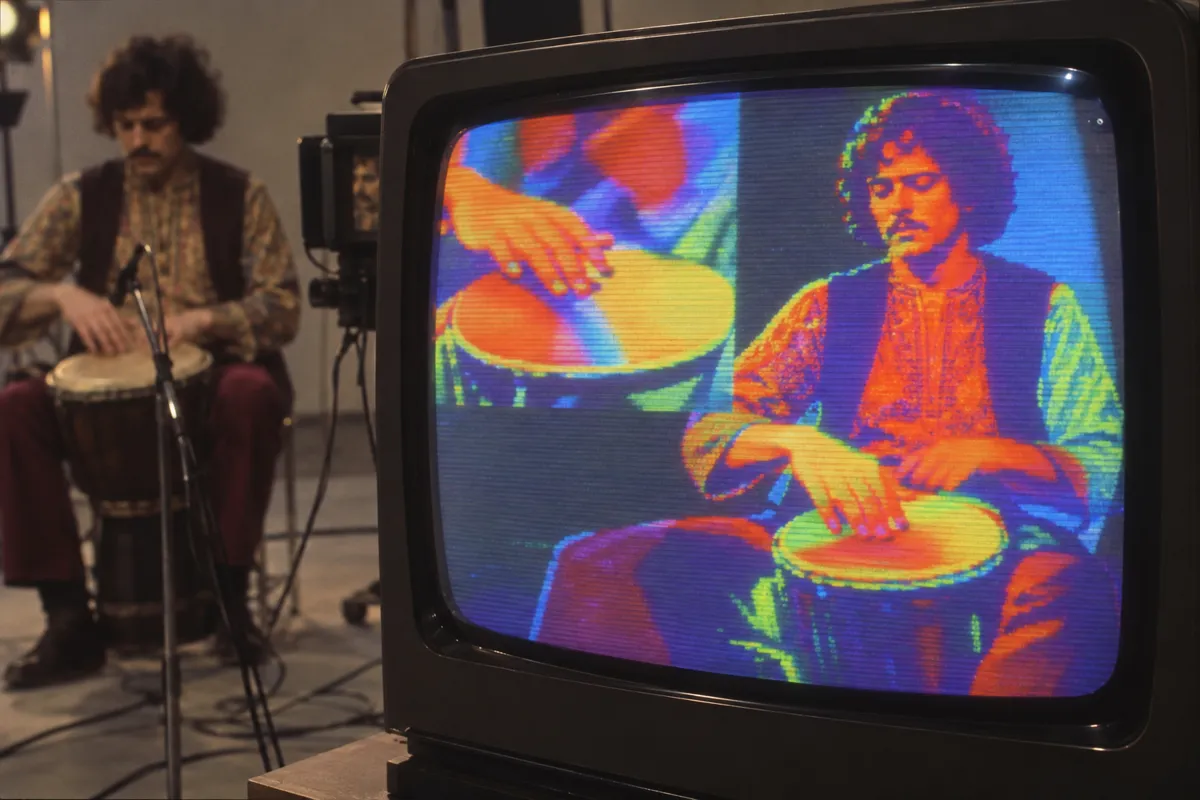
AI illustration: Live musical performance with video synthesis
06 AI illustration: Live musical performance with video synthesisA musician playing a drum is shown in a multi-channel layout with false-colour mapping and visible signal noise. The image captures the real-time performance aspect of the synthesiser, turning live video into a distorted, vibrant composition.Illustration generated for the Atlas (AI)
AI illustration: Classical sculpture with synthesised electronic colour
07 AI illustration: Classical sculpture with synthesised electronic colourA classical bust is captured by a studio camera and transformed into a multi-coloured, offset image on a cathode ray tube. The sharp transition between red and green sectors on the face exemplifies the analogue circuitry's colour-mixing capabilities.Illustration generated for the Atlas (AI)

Question

Does the synthesizer recover the original colours of a black-and-white source?

Show possible answer +

No. It assigns adjustable colours to image information, so the same source can produce many different colour schemes.

Sources