Optical printer. 1930s–1980s: central post-production technology
Typeface · Josefin Slab
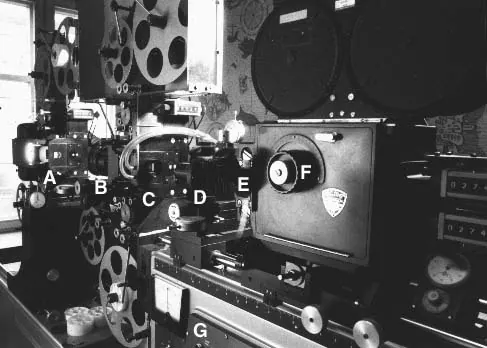
Optical printer with two projector heads: Film is photographed again.Historical documentation, public domain according to Wikimedia Commons.View source ↗
Prompt
Apply an Optical Printer effect with faint superimposed image echoes, localized enlargement, soft composite boundaries, and slight misregistration. Introduce accumulated film grain, increased contrast, washed highlights, subtle color shifts, and tiny dust artifacts characteristic of repeatedly photographed film. Keep the original subject and composition.
Film images are [enlarged, superimposed1, or recombined].
Principle
[Projectors and camera]photograph the existing film [frame by frame].
Example
Acme-Dunn printer; classic optical film tricks.
Try it out
Trace the original image through aprojector and recording camera.
Background
Optical printers2mechanically connect at least one film projector to acamera. Re-photographing allows for resizing, crossfading, titles, and image combinations. Linwood Dunn is considered the father of the optical printer by the Academy; however, various technical precursors and further developments are part of its history. Its central role in the analog studio makes this device auseful counterpart to today's digital compositing programs.
Distinction
The printer is the machine behind many different effects, not asingle look. Repeated analog copying can visibly alter grain, contrast, and image stability.
Aftermath
Many functions known as filters have amechanical-optical history.
Further examples · 7 images
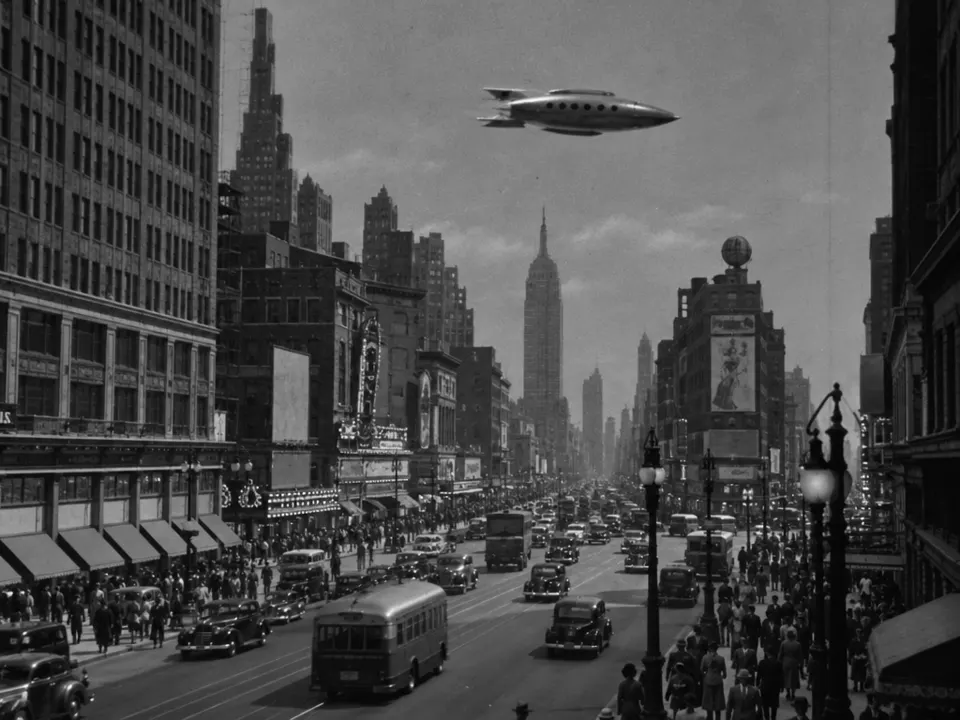
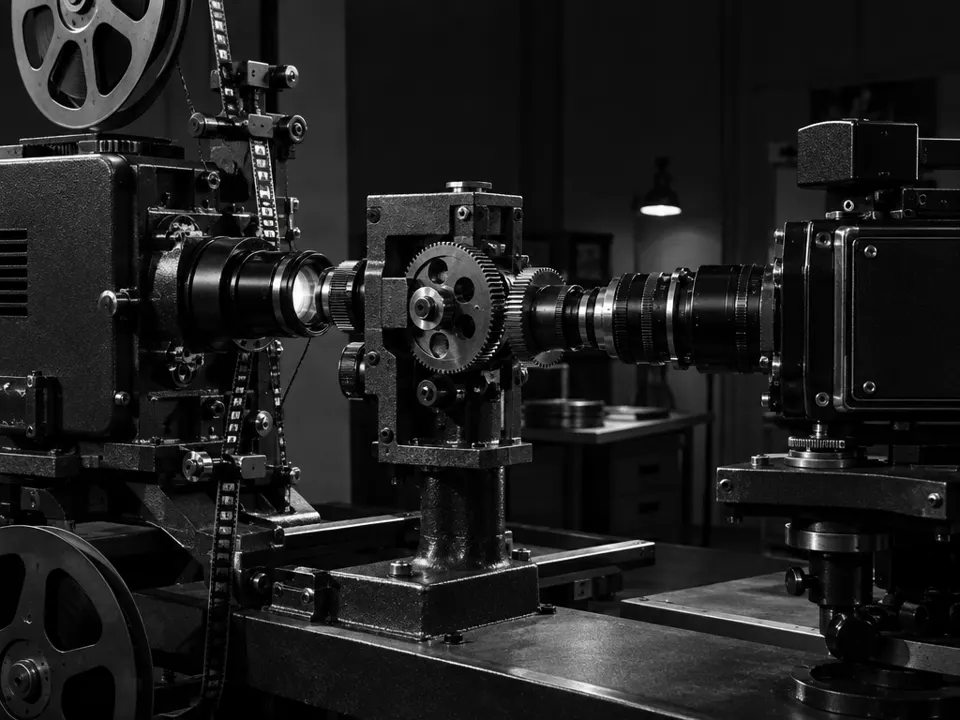
02Optical printer by Carl Louis Gregory, close view with reflector, paper print frame in aperture of projector head, several covers removed foA detailed view shows a paper print frame positioned in the projector head aperture. It demonstrates the device's ability to handle fragile source materials for conversion back to film.Carl Louis Gregory (1882-1951), images taken and published in his professional capacity as NARA staff · Public domain · Wikimedia Commons03Linwood-Dunn Optical Printer Photo-Sonics Inc lobbyAn Acme-Dunn optical printer, labeled as the Linwood Dunn model, is displayed in a lobby. This large-scale studio device represents the industry standard for historical Hollywood visual effects.Photo820S · CC BY-SA 4.0 · Wikimedia Commons04Debrie optical printerA Debrie optical printer is shown as a museum exhibit against a red background. The vertical configuration demonstrates an alternative technical design for re-photographing motion picture film.DurbeK82 · CC BY 4.0 · Wikimedia Commons05Opticalprinter3A modern Bolex camera is mounted on a rail system facing a projector head. This setup demonstrates a simplified version of the optical printing process for experimental or student work.Goatart · CC0 · Wikimedia Commons06AI illustration: A futuristic vehicle is superimposed over a historical city sceneA futuristic vehicle is superimposed over a historical city scene. This illustrates a composite image created by re-photographing multiple film elements through an optical printer.Illustration generated for the Atlas (AI)07AI illustration: A mechanical device links a film projector to a camera lens-to-lensA mechanical device links a film projector to a camera lens-to-lens. This hardware setup depicts the technical foundation of the optical printer used for frame-by-frame re-photographing.Illustration generated for the Atlas (AI)
Question
What is the difference between simple contact copying and contact copying?
Show possible answer +Hide answer −
The image is recaptured via an optical beam path and can be altered in the process.