Apply a Day for Night effect by lowering exposure, cooling colors toward midnight blue, suppressing bright skies, and deepening shadows without losing essential detail. Turn existing directional sunlight into restrained moonlight, mute warm surfaces, and preserve subtly visible silhouettes. Keep the original subject and composition.
Transform adaytime photo into a[believable nighttime scene].
Background
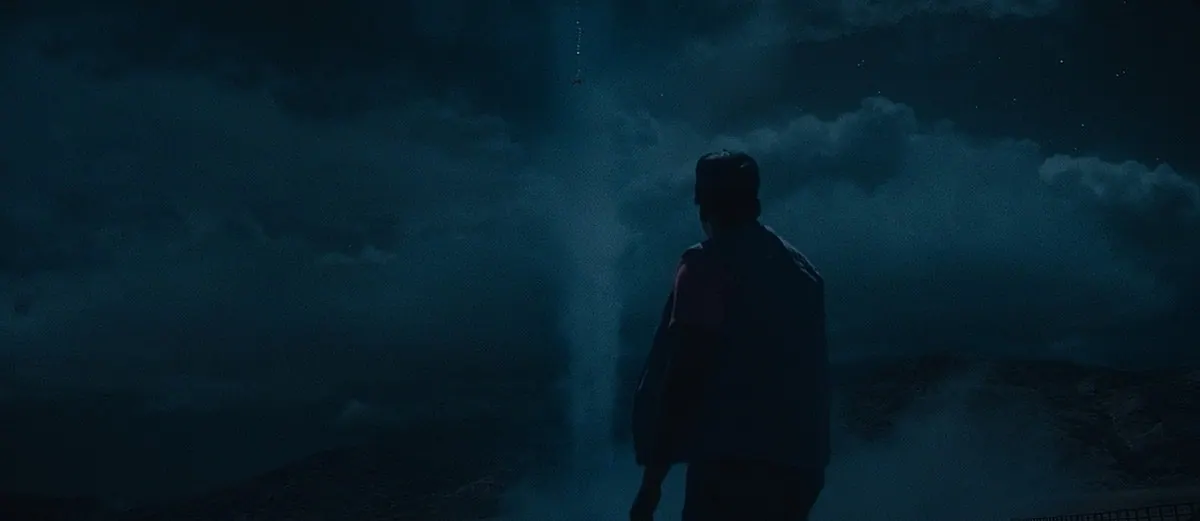
Day for Night saves on or alters the costly process of night photography by using daylight as the starting point. Columbia cites filters, underexposure, and copying processes as classic tools. For Nope, Hoyte van Hoytema's team combined color film with adigital infrared image, resulting in expansive, legible night images. The 1930s represent the classic studio context, not adocumented first use.
Distinction
Ablue filter alone does not create abelievable night. Sun, sky, shadows, and practical light sources must all align. Nope combines technical techniques that go beyond classic underexposure.
Aftermath
Night is ashaped perception of contrast, color, and visible information.
Further examples · 7 images
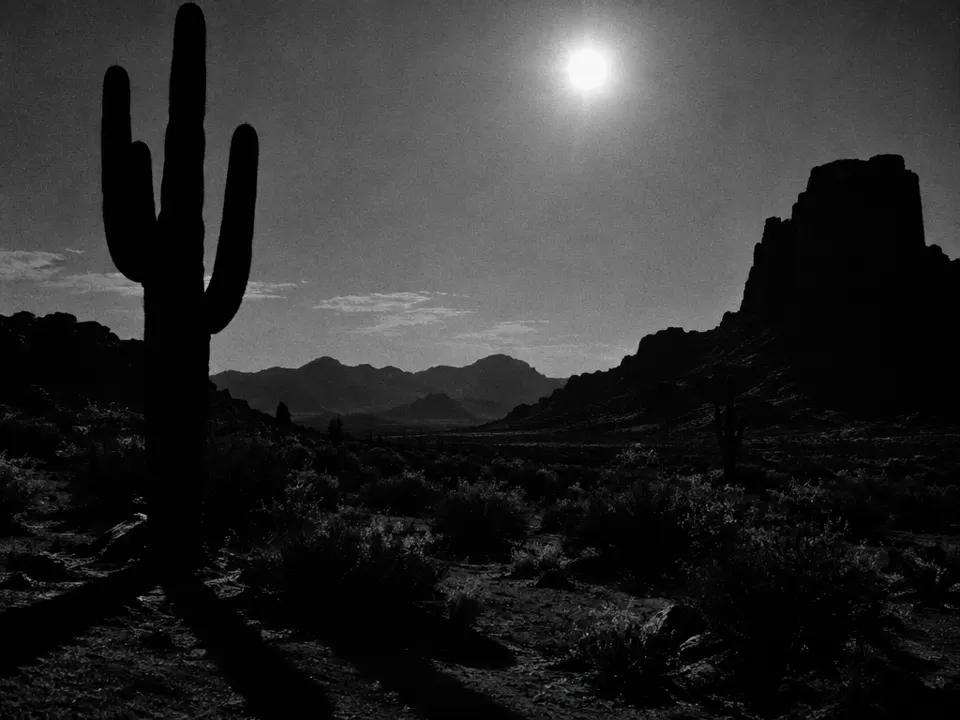
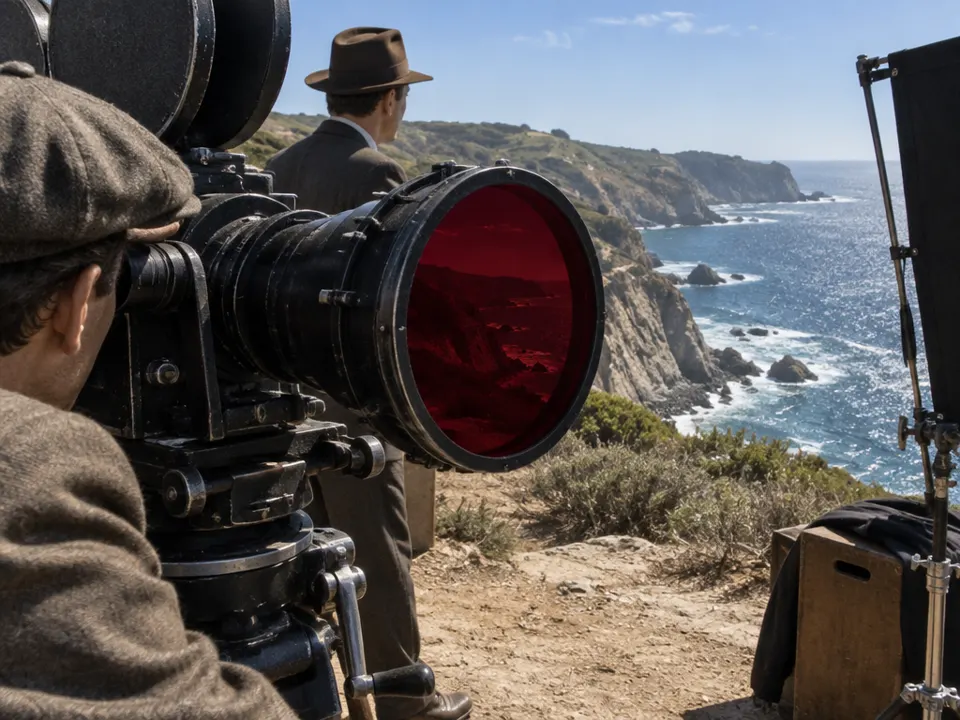
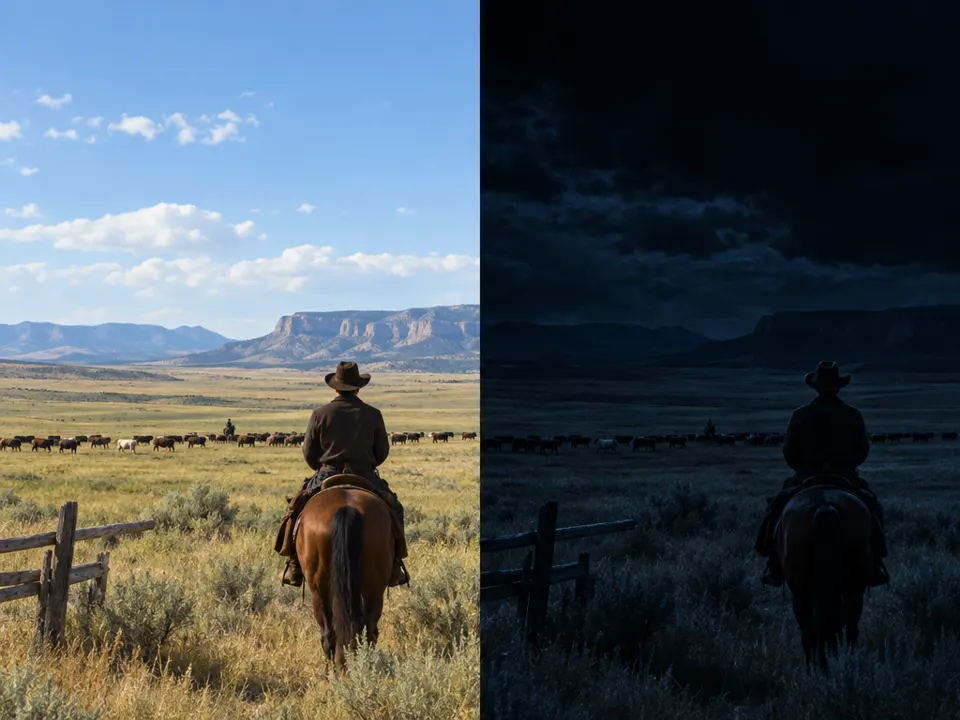
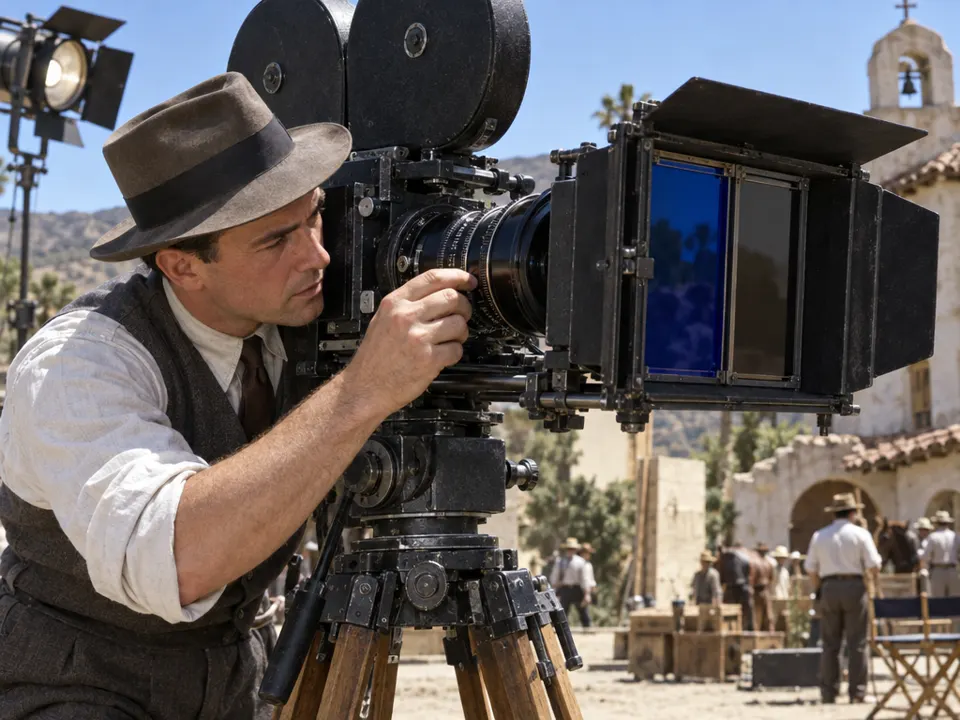
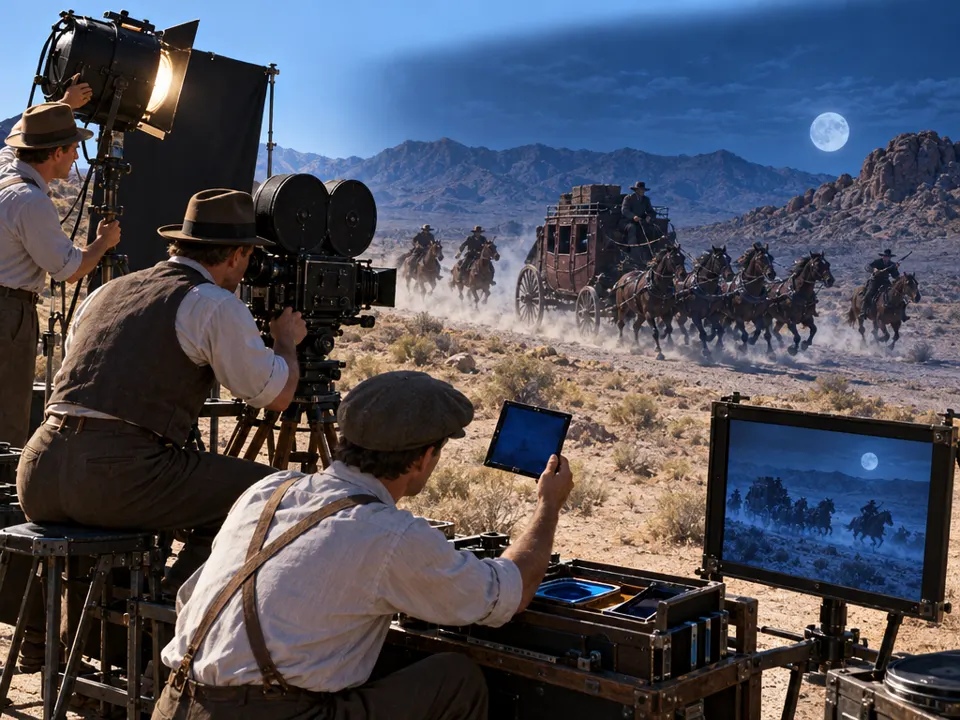
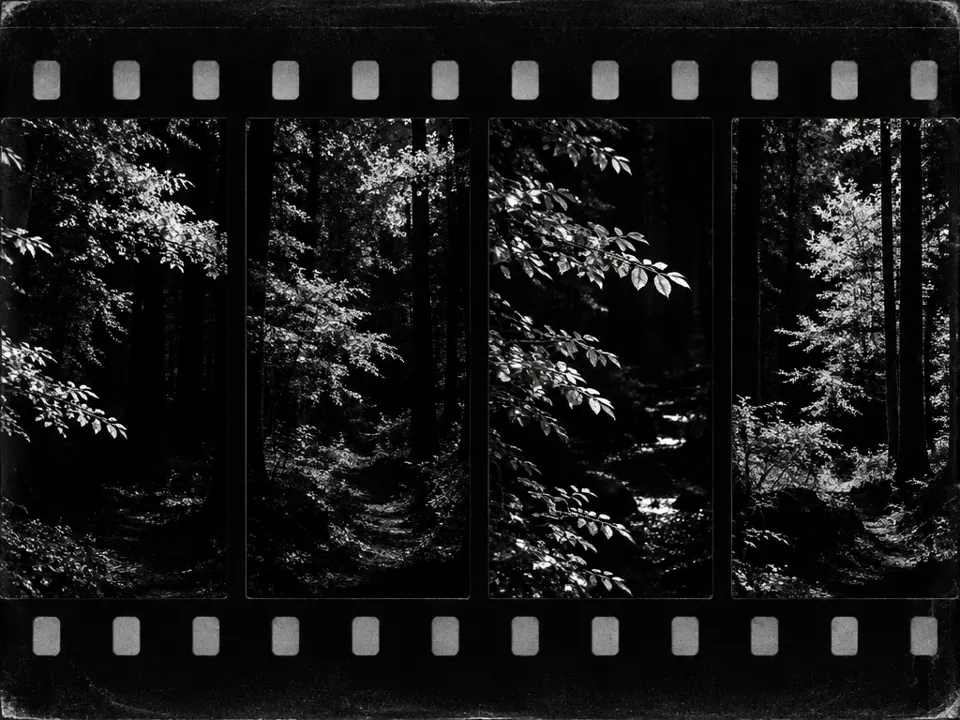
02AI illustration: A desert landscape is shown underexposed in black and whiteA desert landscape is shown underexposed in black and white. The sun acts as the moon and long shadows indicate daylight origins transformed into a nocturnal scene.Illustration generated for the Atlas (AI)03AI illustration: A vintage camera uses a red filter during a daylight coastal shootA vintage camera uses a red filter during a daylight coastal shoot. In black and white cinematography, red filters darken blue skies to simulate nighttime.Illustration generated for the Atlas (AI)04AI illustration: A side-by-side comparison shows a cowboy in bright daylight and the same A side-by-side comparison shows a cowboy in bright daylight and the same frame underexposed with a blue tint. This demonstrates the conversion from daylight to simulated night.Illustration generated for the Atlas (AI)05AI illustration: A cinematographer adjusts a blue filter on a camera during a sunny dayA cinematographer adjusts a blue filter on a camera during a sunny day. The blue filter is a standard tool for achieving the day-for-night look in color film.Illustration generated for the Atlas (AI)06AI illustration: A film crew shoots a stagecoach in daylight while the monitors display a A film crew shoots a stagecoach in daylight while the monitors display a darkened, moonlit version. The setup shows the live translation of daytime capture into nighttime footage.Illustration generated for the Atlas (AI)07AI illustration: Negative-style forest frames show high-contrast foliage against a black sNegative-style forest frames show high-contrast foliage against a black sky. The bright leaves and dark sky suggest the use of infrared film to simulate night during the day.Illustration generated for the Atlas (AI)
Question
What detail often gives away a simple blue night filter?
Show possible answer +Hide answer −
An overly bright daytime sky or unmotivated, harsh sun shadows.