Neural Relighting
2020s; Google’s Portrait Light introduced in 2020
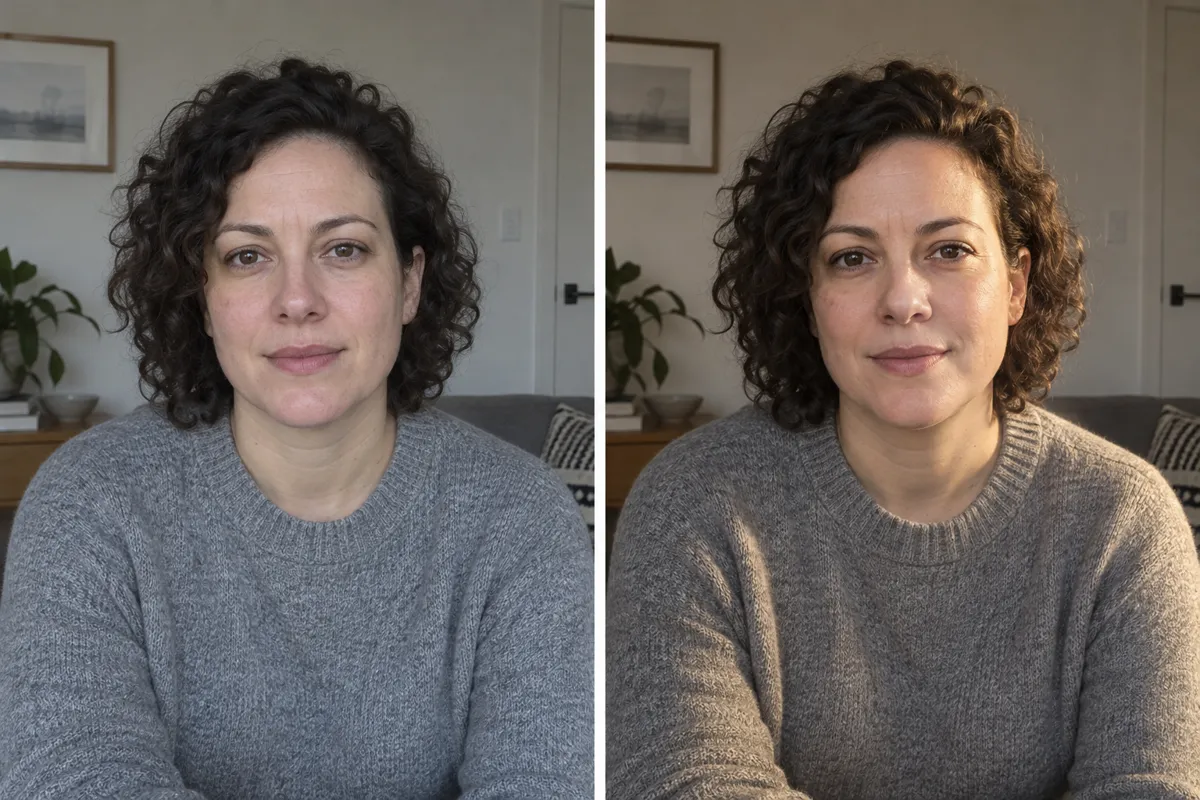
Prompt
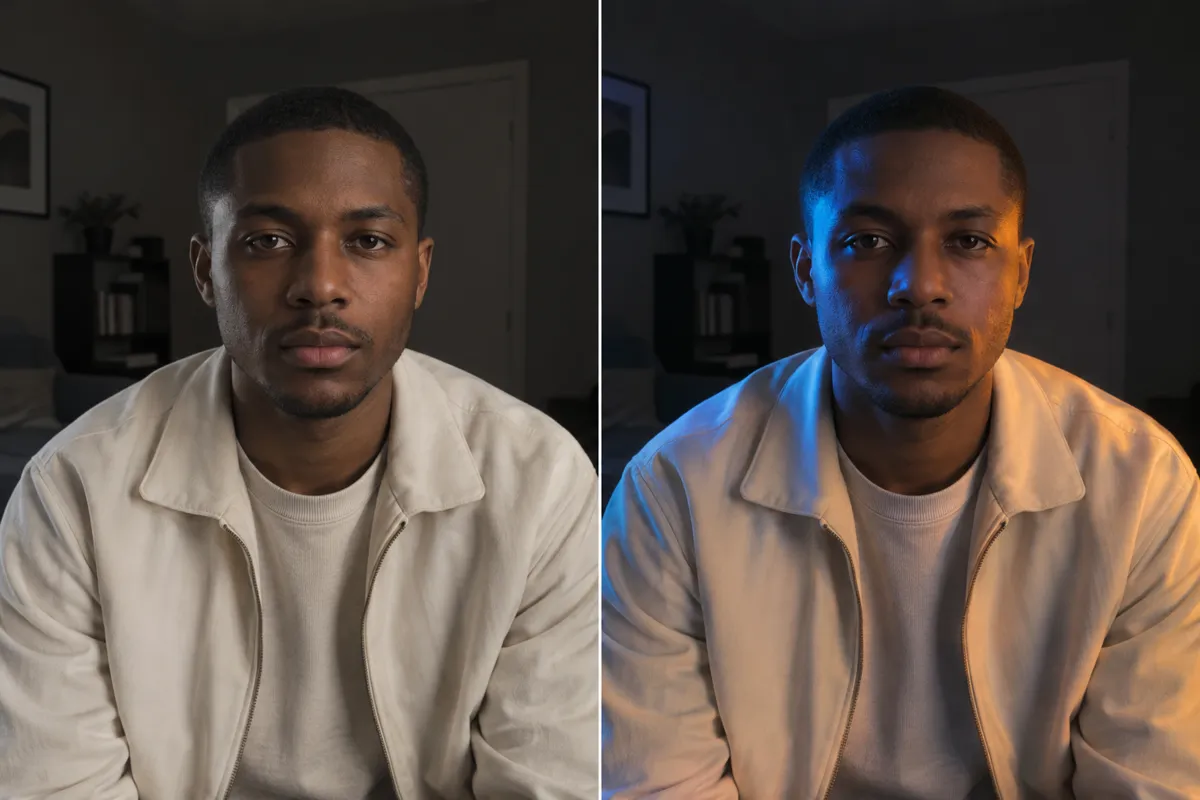
Apply Neural Relighting with a warm directional key light from the upper left and cool, soft fill from the right. Redirect cast shadows consistently, shift specular highlights to match surface geometry, and preserve natural material textures without changing viewpoint. Keep the original subject and composition.
Identify
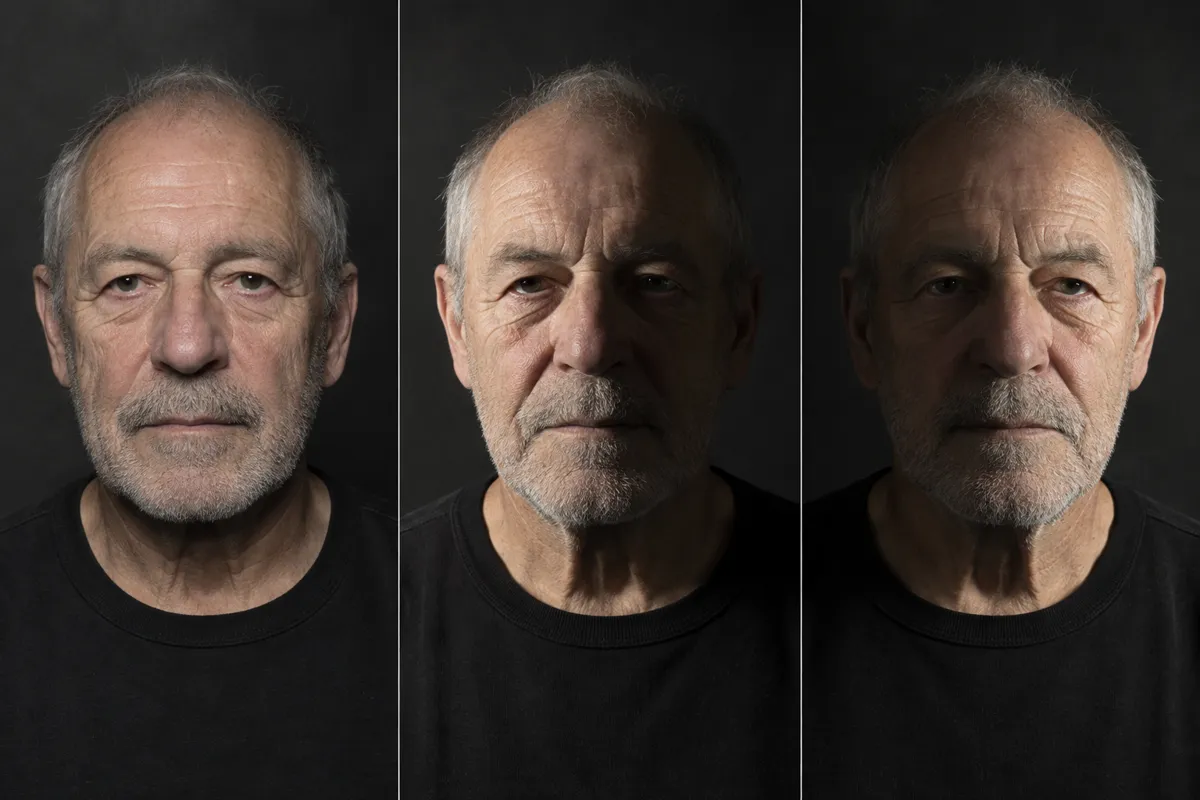
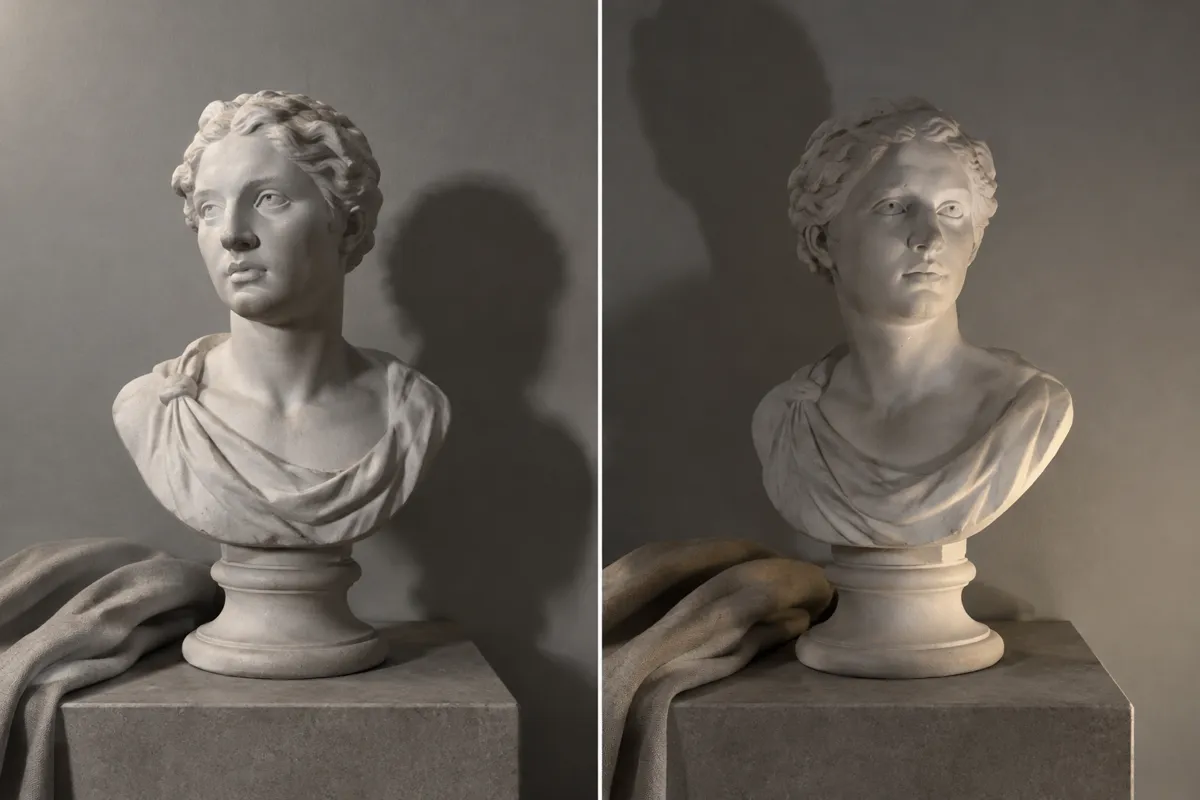
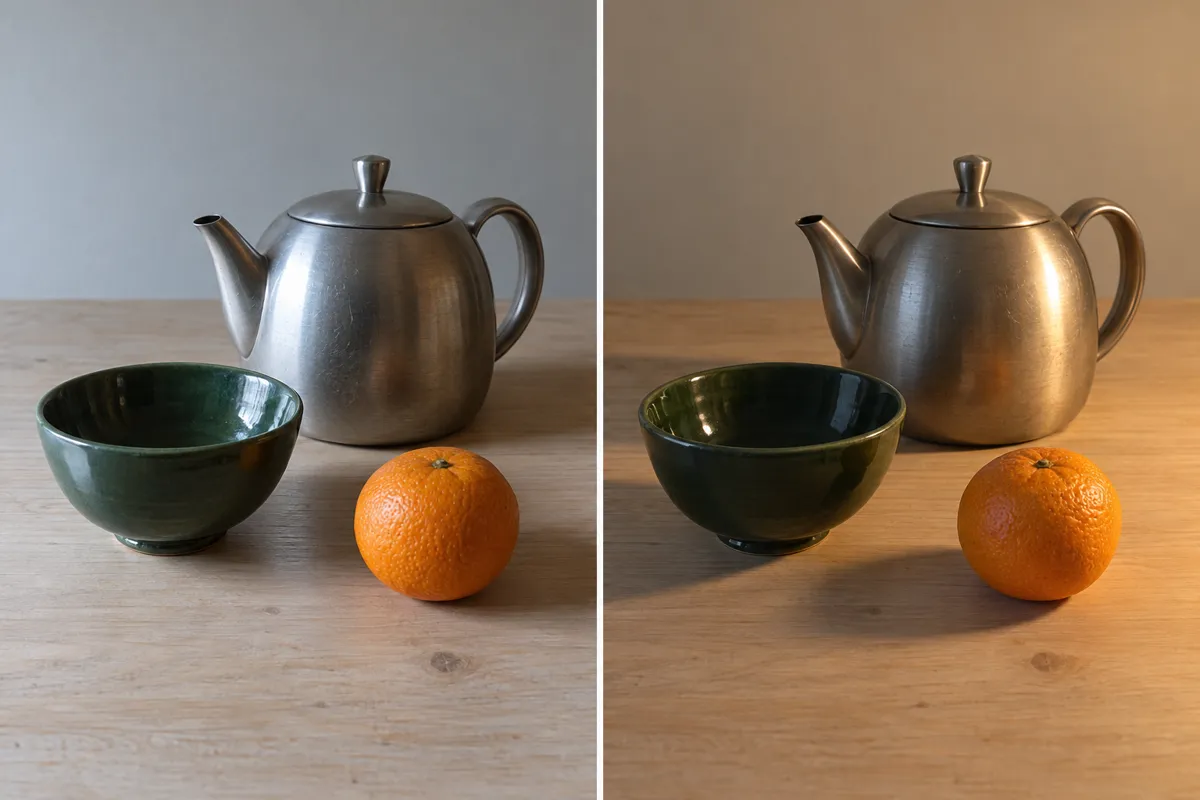
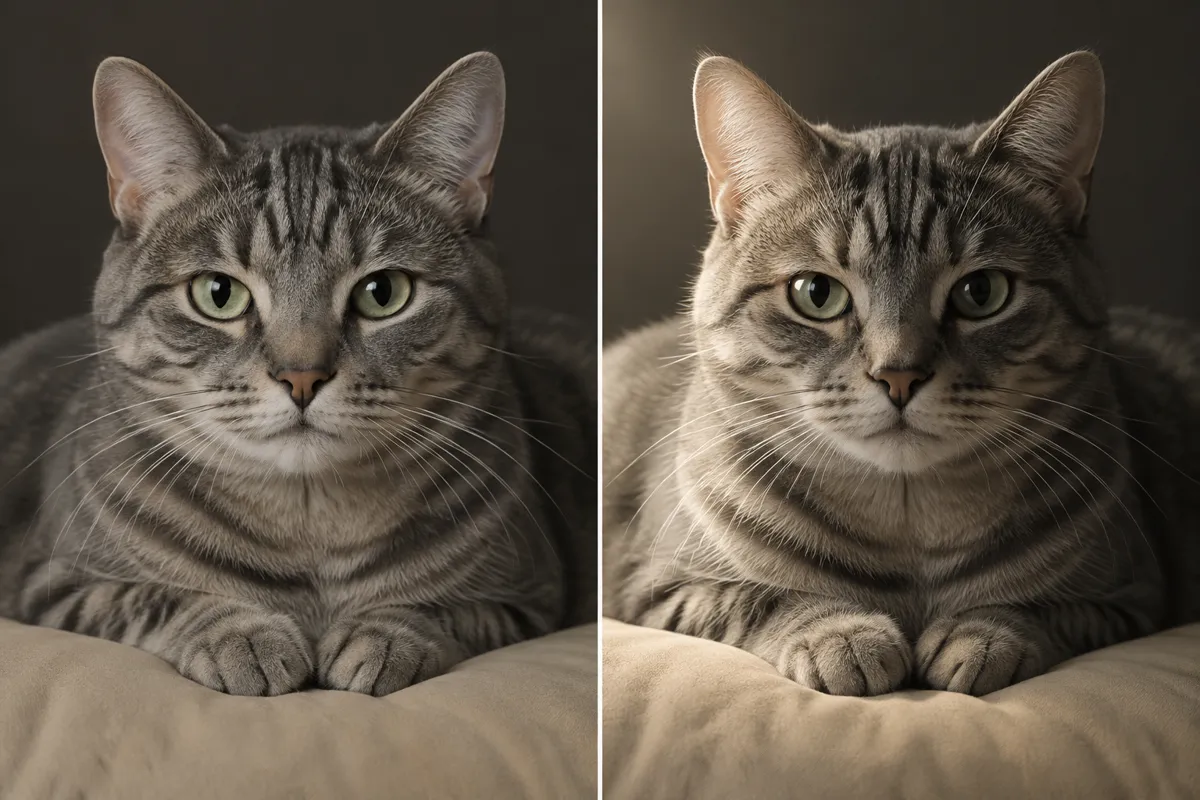
A photographed face or scene gains redirected shadows, shifted highlights, or a new lighting color. The viewpoint stays fixed while the illumination appears to change.
Principle
A neural network1 predicts how image pixels should change under different lighting, using learned patterns of shape, materials, and illumination. Some methods estimate surface geometry2 explicitly; others generate the altered appearance directly.
Example
Google: Portrait Light, 2020.
Try it out
Relight one portrait from opposite sides, then compare the nose shadow, cheek brightness, and reflections in the eyes.
Background
Neural relighting became more accessible during the 2020s, building on earlier computational photography and computer graphics research. Google’s Portrait Light offered a prominent example in 2020, adding adjustable illumination to portraits after capture. Training can use photographs under controlled lights, rendered scenes, or other image collections. The central difficulty is separating surface reflectance3 from illumination: a dark patch might be paint, shadow, or both. A single photograph rarely provides enough evidence for a unique solution. The network therefore makes learned guesses, which can produce convincing but physically inconsistent results.
Distinction
Unlike a global exposure adjustment, neural relighting can change local shading according to inferred shape. It changes the image after capture, not the original exposure.
Aftermath
Neural relighting shows that convincing illumination can be synthesized without proving how the original scene was lit.
Further examples · 7 images

Question
Why might a relit face look plausible while its glasses look wrong?
Show possible answer +Hide answer −
Skin shading and glass reflections respond differently to light. The network may predict facial shading well but misjudge reflective or transparent surfaces.