2019, Industrial Light & Magic's StageCraft system
Typeface · Heebo
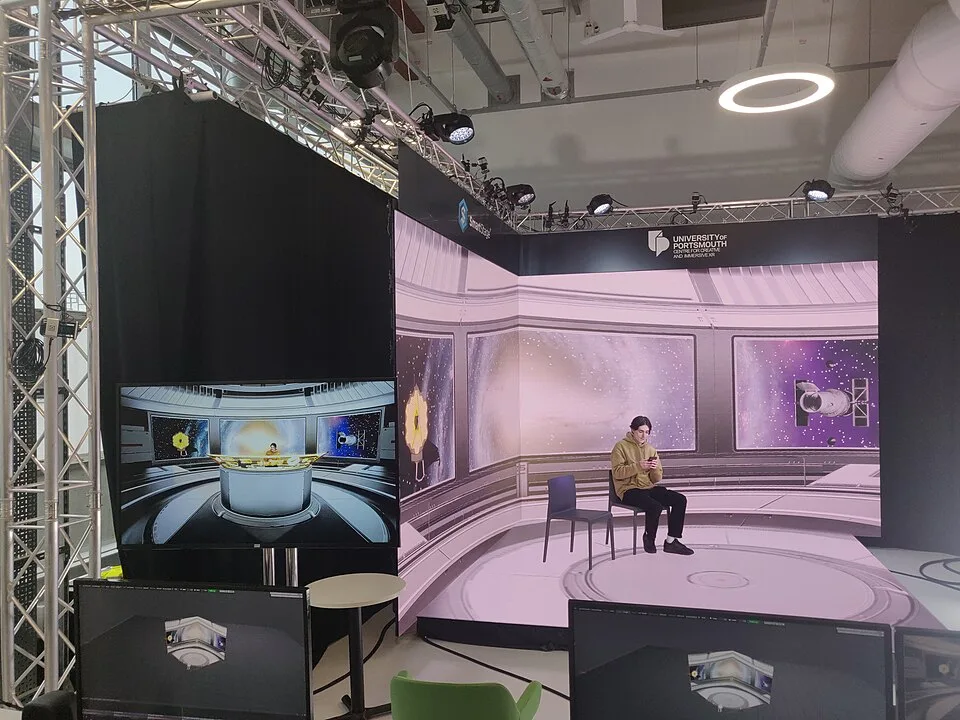
Performer Within an LED Virtual Interior. A seated performer occupies a stage enclosed by screens depicting a continuous purple architectural interior, with production monitors nearby.Tim Sheerman-Chase · CC BY 2.0 · via Wikimedia CommonsView source ↗
Prompt
Apply an LED Volume cinematic look with a realistic immersive backdrop, colored environmental light wrapping around the subject, and reflections matching nearby scenery. Balance foreground exposure with luminous background detail, adding subtle screen softness in distant areas without visible display borders. Keep the original subject and composition.
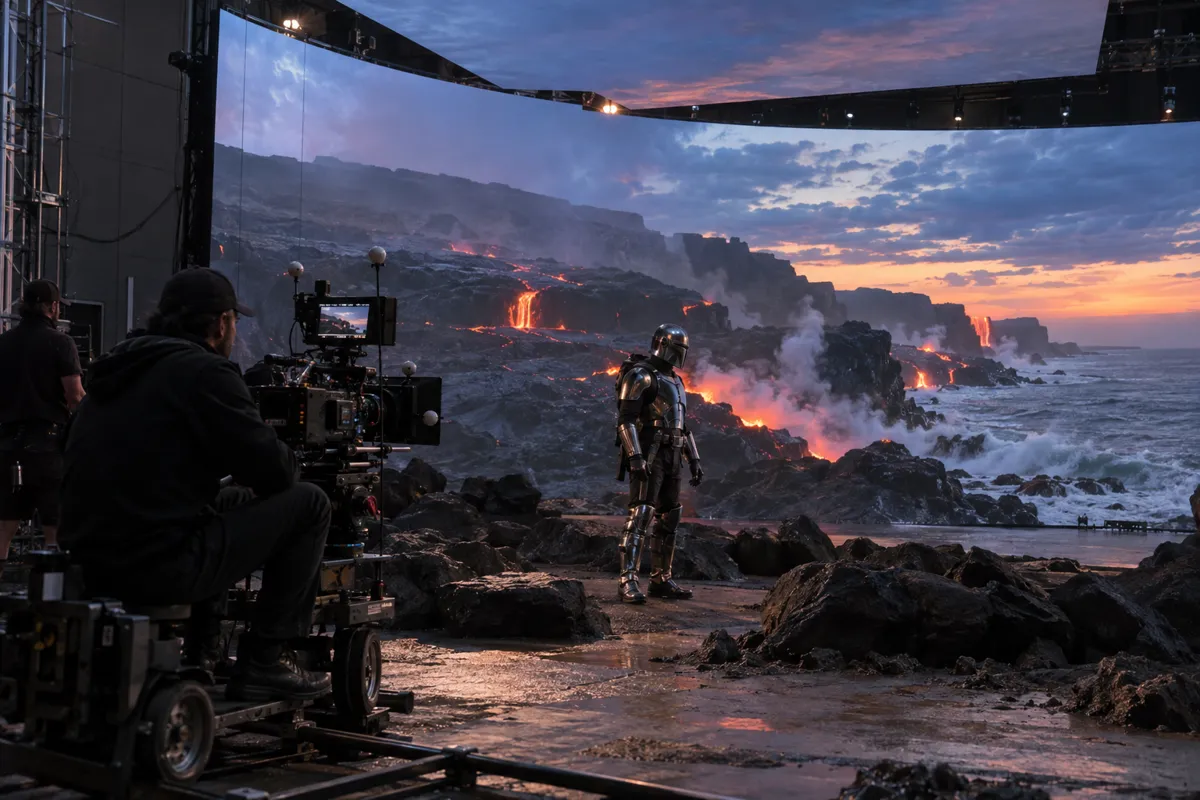
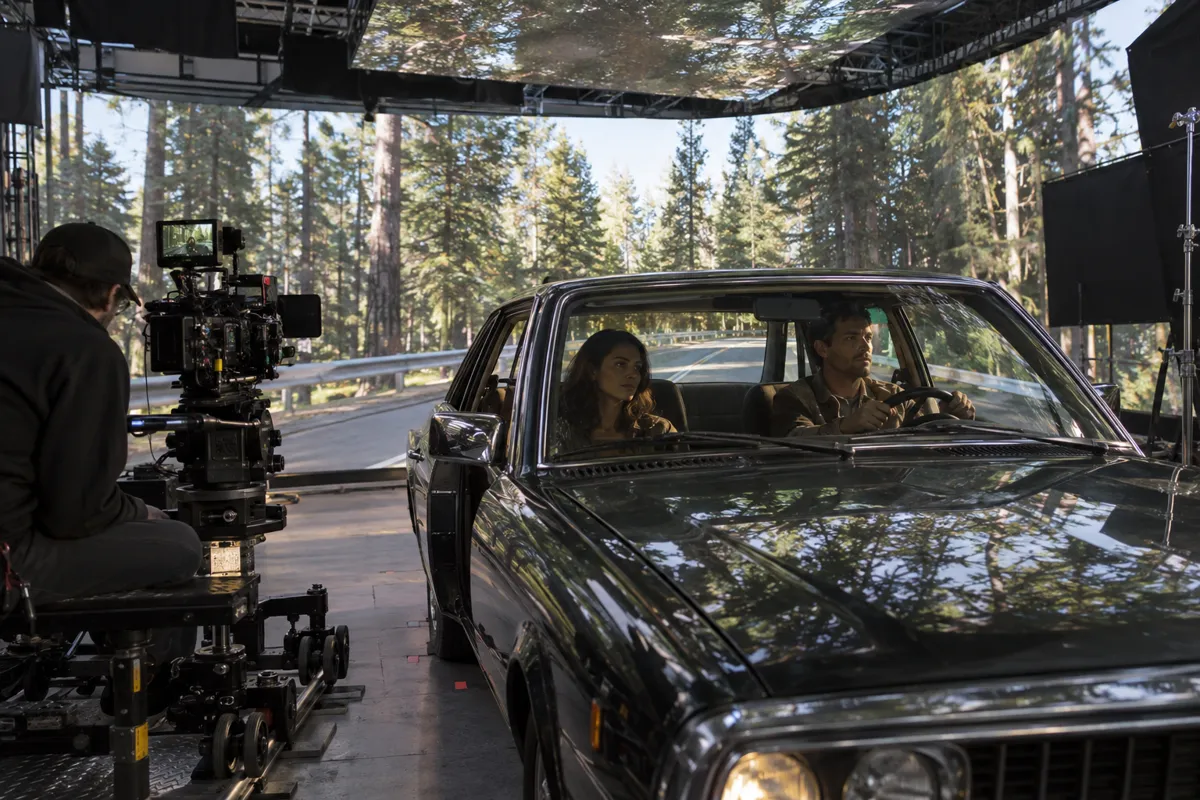
Actors and physical props appear naturally lit by complex, realistic backgrounds. [Moving reflections on shiny armor]exactly match the surrounding scenery.
Principle
High-resolution LED screens surround aphysical stage to display [real-time, 3D digital environments]. The [camera's tracking data1]updates the background perspective instantly.
Example
Industrial Light & Magic: The Mandalorian, 2019.
Try it out
Watch abehind-the-scenes video of avolume stage. Notice how the screen background shifts instantly when the camera moves.
Background
In the late 2010s, filmmakers sought better ways to blend live actors with digital effects. Green screens caused colored light to spill onto sets. This required tedious digital corrections in post-production. The LED volume solved this by wrapping the set in massive video walls. Video game engines2render the background in real time. As the physical camera moves, the digital scene shifts precisely to match its perspective. The LED panels also provide realistic lighting. Shiny props reflect the actual digital environment instantly. This allows actors to see the world they are acting in.
Distinction
Green screen relies on removing asolid color to add backgrounds later. An LED volume films the final background live on set.
Aftermath
It shows how real-time video game technology is fundamentally changing traditional cinematic lighting and photography.
Further examples · 7 images
02Virtual Stadium Production DemonstrationA robotic camera faces a physical patch of turf backed by large screens displaying a football stadium. This production demonstration combines a practical foreground with a digital scenic surround, clearly illustrating an LED-volume setup.TurnOnTheNight · CC BY-SA 4.0 · Wikimedia Commons03Robot Scene on a Virtual Production StageA cinema camera and paired monitors overlook a performer and physical debris against an illuminated scene dominated by a giant robot. The visible staging demonstrates the combination of practical action and screen-based scenery used in LED-volume production.TurnOnTheNight · CC BY-SA 4.0 · Wikimedia Commons04University Virtual Production DemonstrationVisitors stand beside a production workstation facing an illuminated stage that displays a purple virtual interior. The scenic screens, physical performance area, and camera equipment form a visible demonstration of LED-volume production.Tim Sheerman-Chase · CC BY 2.0 · Wikimedia Commons05LED Volume Stage SchematicA schematic rendering places a human figure on a platform before a curved forest display, with a camera model alongside. This unmistakable diagram illustrates the spatial arrangement of an LED-volume stage rather than documenting a finished filmed effect.Holger2130 · CC BY-SA 4.0 · Wikimedia Commons06AI illustration: Immersive Virtual Production Environment for Cinematic FilmingA production crew films an armored character on a rocky set surrounded by a massive curved LED wall displaying a volcanic coast. This view demonstrates how the high-resolution screens provide both the digital backdrop and the primary light source for the physical scene.Illustration generated for the Atlas (AI)07AI illustration: Dynamic Environmental Reflections in an LED Volume StageActors in a physical vehicle are filmed against a seamless digital forest displayed on large LED panels. The technique is clearly showcased through the realistic reflections of the virtual trees appearing on the car's hood and windshield.Illustration generated for the Atlas (AI)
Question
Why does the digital background move when the camera moves?
Show possible answer +Hide answer −
Camera tracking software tells the computer the exact lens position. The computer recalculates the 3D scene's viewpoint in real time.