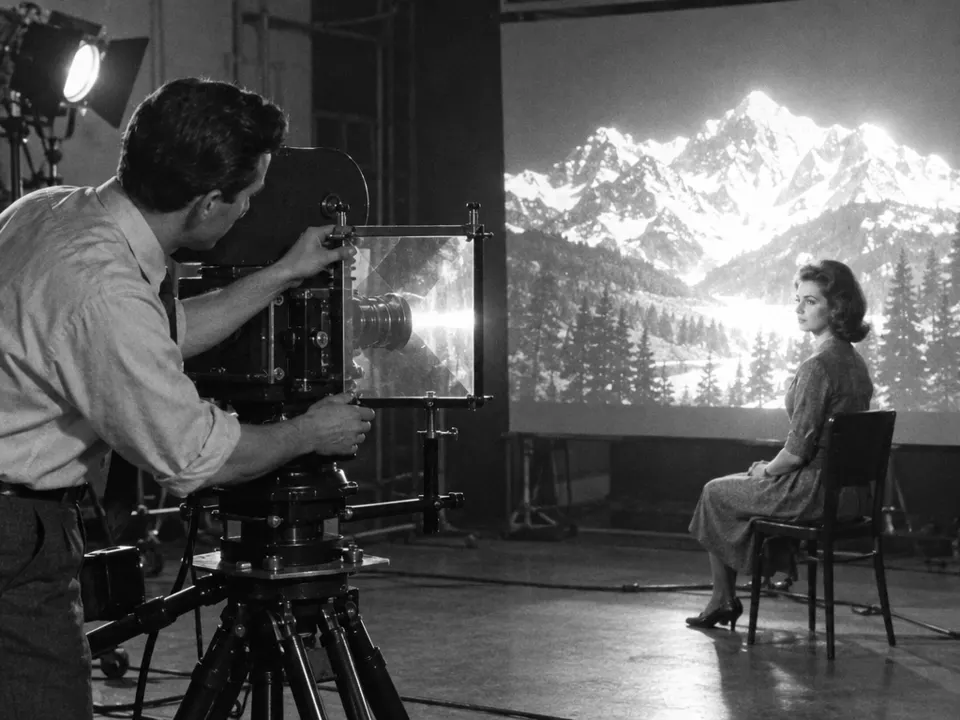
Apply a Front Projection effect, making the existing background resemble a projected photographic plate behind the foreground subject. Give the backdrop slightly flatter contrast, fine screen texture, and subtle softness, with nearly concealed shadows directly behind the subject and crisp foreground lighting. Keep the original subject and composition.
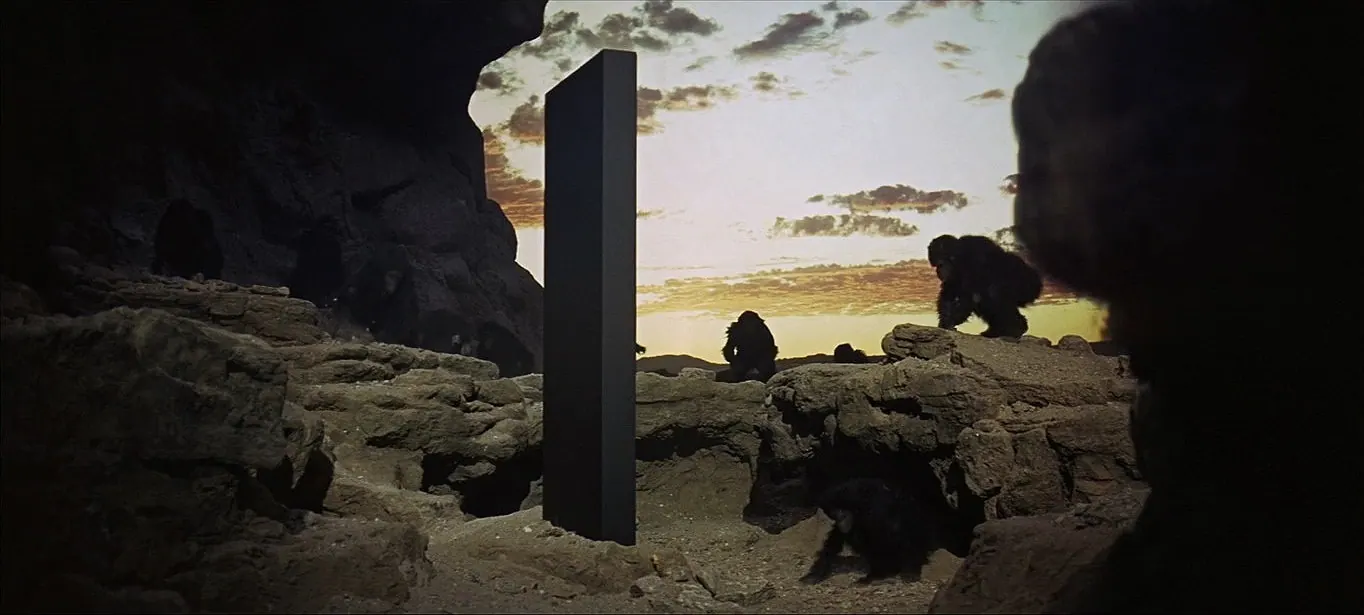
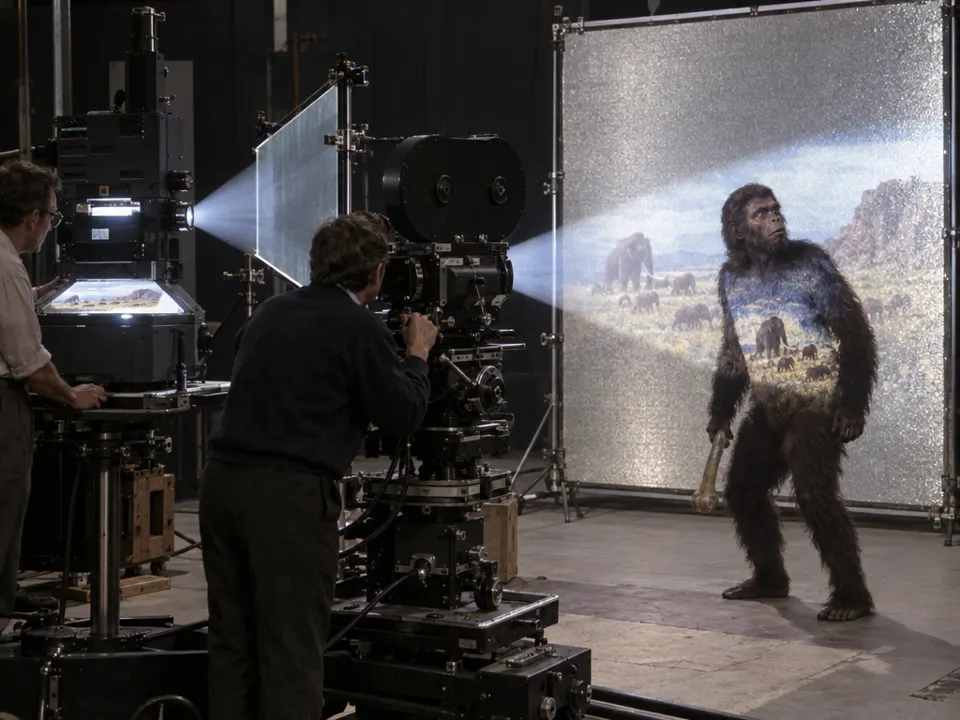
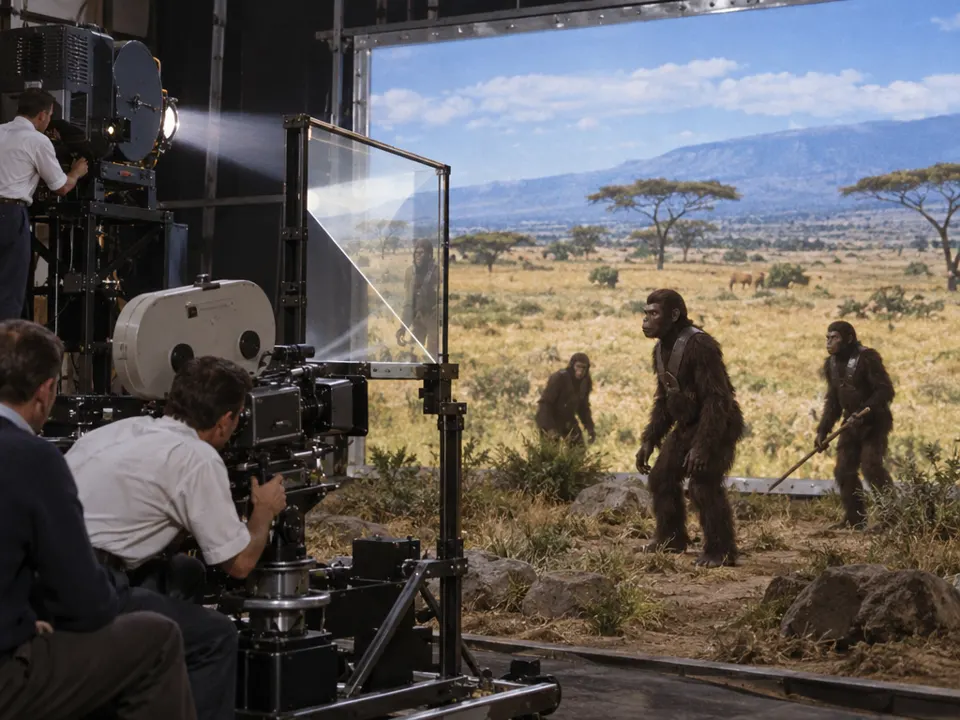
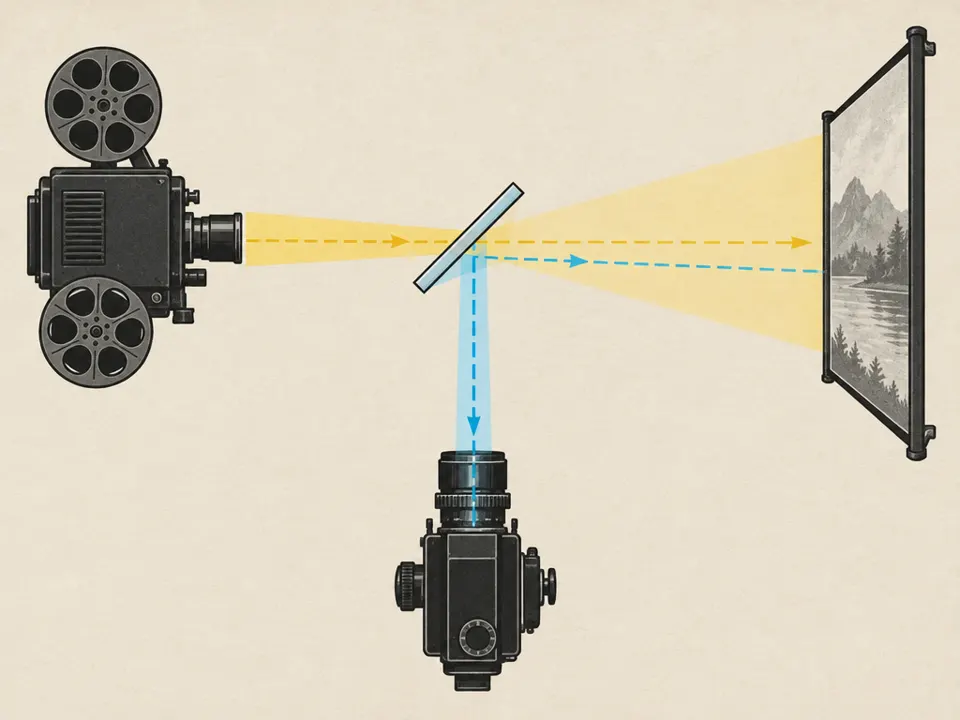
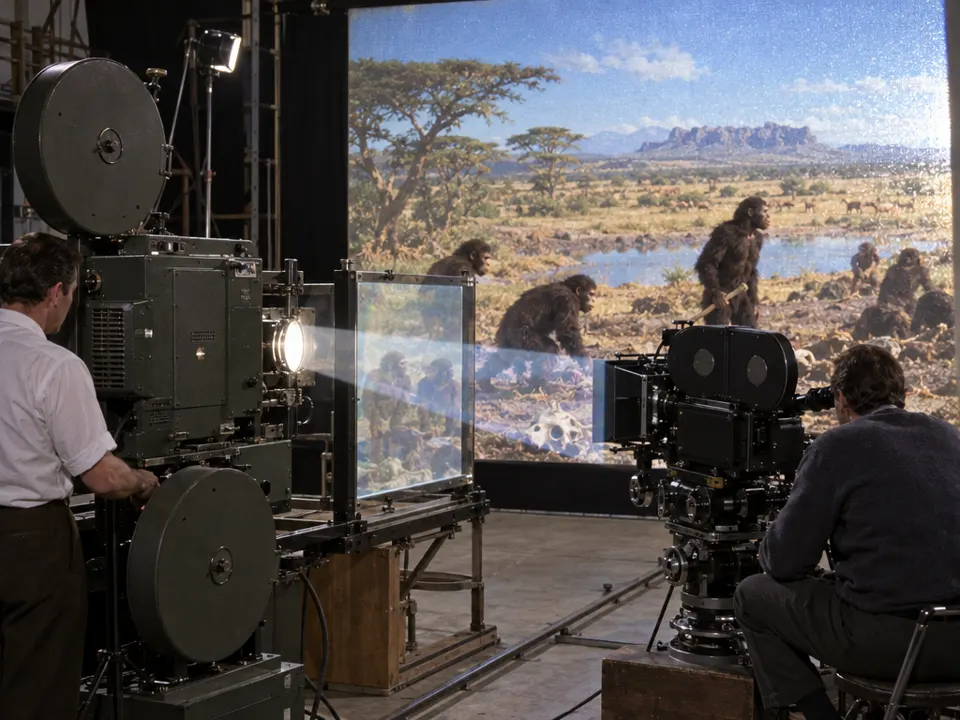
For the Dawn of Man sequence from 2001, photographed landscapes were projected onto aspecial screen. Light preferentially returns to its source; the camera therefore sees abright background image. Abeam splitter brings the projection and camera close to the same axis and hides the shadow behind the foreground subject. Kubrick's production made the technique famous in 1968; rear projection remains atechnically different setup.
Distinction
Front projection here refers to the historical combination technique using aretroreflective screen. Just any projector placed in front of awall will not automatically produce the same image integration.
Aftermath
The position of the light source determines where shadows become visible in the recorded image.
Further examples · 7 images
02Front projection effectA diagram shows a projector and camera sharing an optical axis via a central beam splitter. It illustrates how this alignment hides the subject's shadow to create a seamless composite image.Wikiwikiyarou · CC BY-SA 3.0 · Wikimedia Commons03AI illustration: A film set shows a projector and camera aligned via a beam splitterA film set shows a projector and camera aligned via a beam splitter. The background landscape is projected onto a retroreflective screen behind a performer in a primate costume, demonstrating the physical front projection setup.Illustration generated for the Atlas (AI)04AI illustration: A camera and projector are positioned at a 90-degree angle to a semi-silvA camera and projector are positioned at a 90-degree angle to a semi-silvered mirror. This beam splitter aligns the optical axes so the projector's light hits the screen from the camera's point of view.Illustration generated for the Atlas (AI)05AI illustration: This diagram illustrates the light paths through a beam splitterThis diagram illustrates the light paths through a beam splitter. It shows how the projector and camera share the same optical axis to reflect imagery onto a screen without visible shadows behind foreground objects.Illustration generated for the Atlas (AI)06AI illustration: The camera lens is aimed through a diagonal glass sheet, which reflects tThe camera lens is aimed through a diagonal glass sheet, which reflects the projector's output toward the screen. This alignment ensures the background plate appears behind the actor from the camera's perspective.Illustration generated for the Atlas (AI)07AI illustration: A film studio setup is depicted with a projector and camera aligned usingA film studio setup is depicted with a projector and camera aligned using a semi-transparent mirror. It demonstrates how a background image is cast onto a screen behind actors, following the historical Dawn of Man technique.Illustration generated for the Atlas (AI)
Question
Why does the actor's shadow largely disappear?
Show possible answer +Hide answer −
From the camera's point of view, he is lying directly behind the actor.