Apply a Sodium Vapor Process composite effect with exceptionally clean foreground separation, individually resolved fine hairs, and translucent fabric retaining delicate background visibility wherever present. Use natural colors without yellow spill, smooth matte edges, subtle film grain, and balanced foreground and background exposure. Keep the original subject and composition.
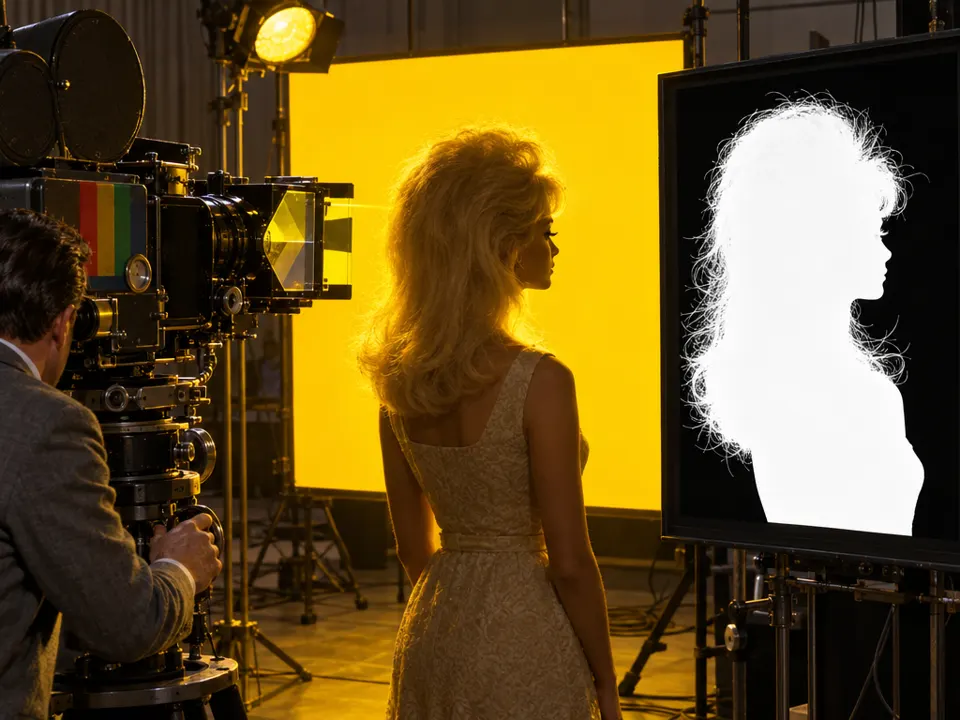
[Fine hairs and transparent fabrics]can be cleanly isolated.
Principle
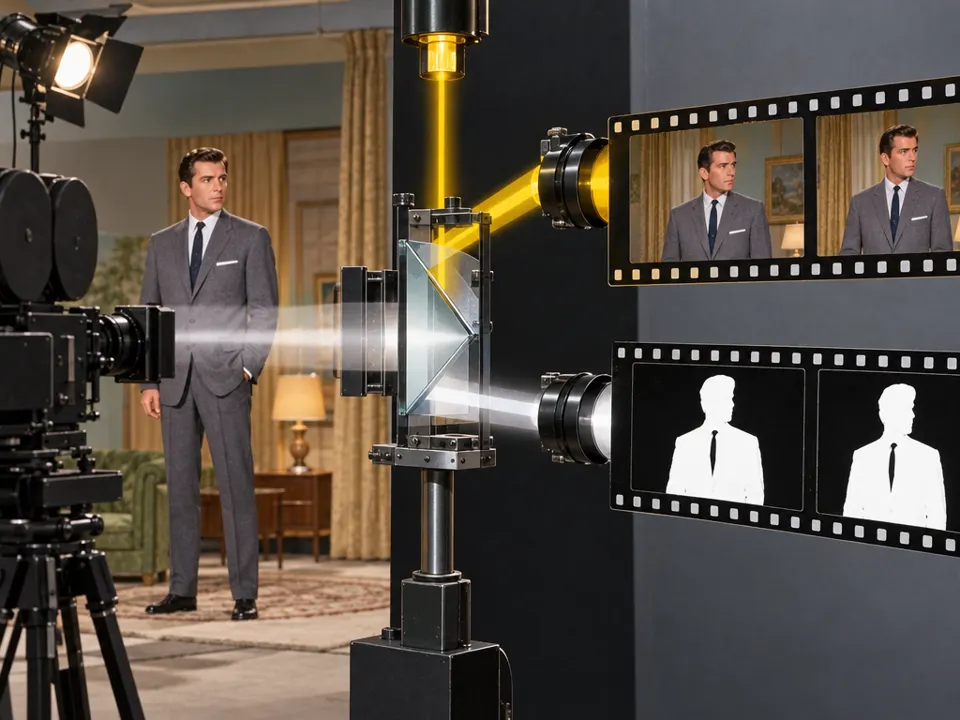
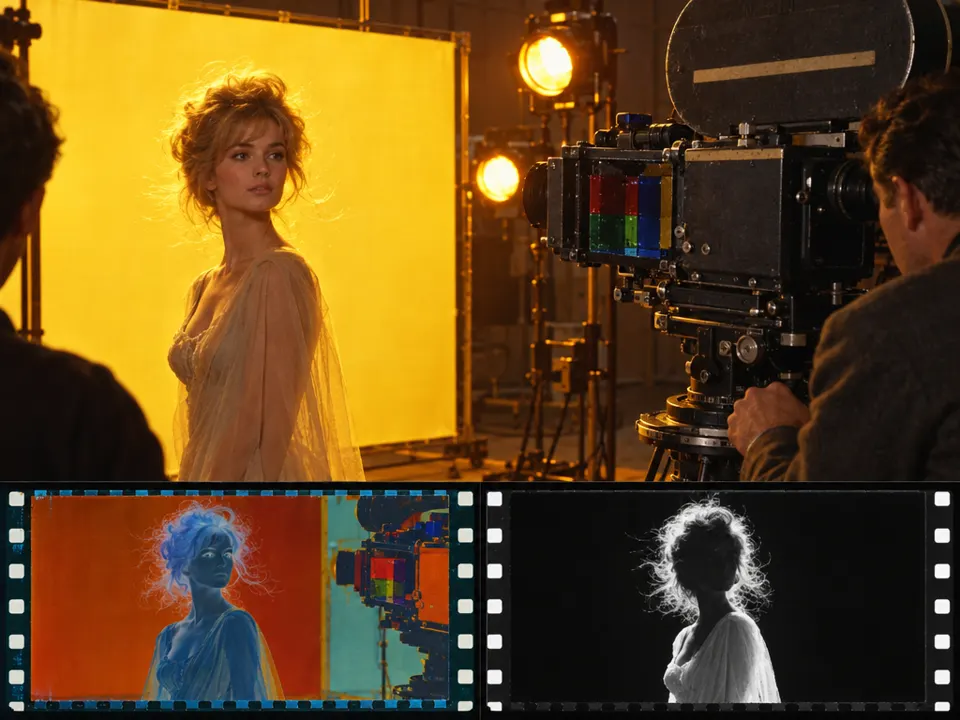
[Yellow sodium light1]is optically separated from the color image and [creates the mask2].
Example
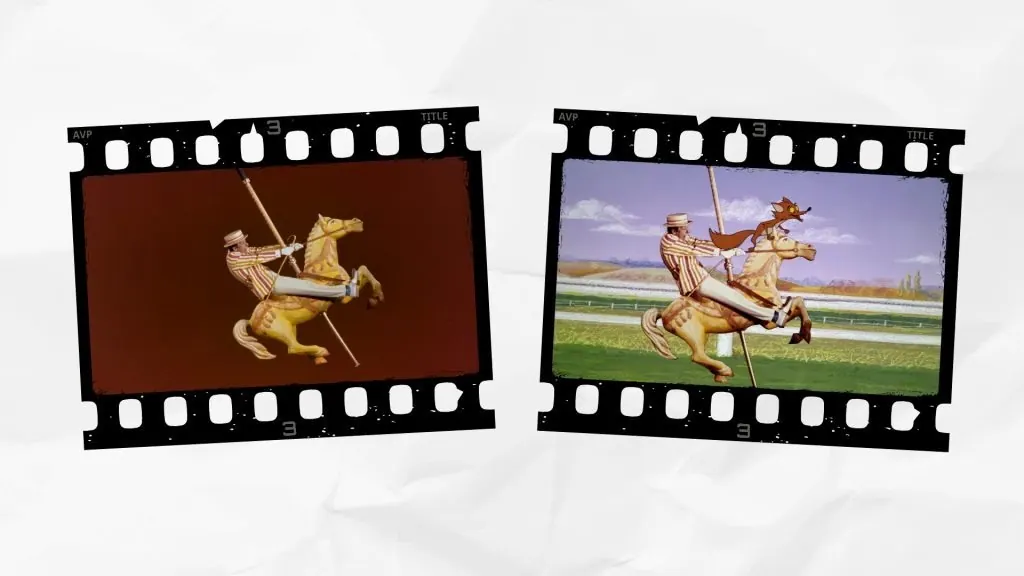
Mary Poppins, 1964.
Try it out
Compare hair before acolor mask and before asodium mask.
Background
Disney describes Ub Iwerks' development in the 1950s as key to productions like Mary Poppins. The narrow spectral line of sodium illumination allows aspecial prism to separate the background and color image. Simultaneously, aprecisely moving mask is created. Particularly intricate contours can thus be combined with painted or filmed backgrounds. The 1960s mark its prominent cinematic presence.
Distinction
The effect is arecording and compositing process, not ayellow color filter. Aspecial prism and separate recordings produce material for later combination.
Aftermath
Mask quality depends on the light and spectrum already present during the absorption process.
Further examples · 7 images
02Sodium vapor processA diagram shows light from an apple on a yellow background passing through a prism to two film strips. It illustrates how the prism splits the sodium light to create a black-and-white matte alongside the color image.RicHard-59 · CC BY-SA 3.0 · Wikimedia Commons03AI illustration: A girl stands before a sodium-yellow screen while a camera uses a beam-spA girl stands before a sodium-yellow screen while a camera uses a beam-splitting prism. This illustrates how the narrow spectral band is diverted to create the traveling matte.Illustration generated for the Atlas (AI)04AI illustration: A woman's fine veil is cleanly composited over a painted backgroundA woman's fine veil is cleanly composited over a painted background. This demonstrates the process's ability to handle transparent fabrics that other masking methods often fail to isolate.Illustration generated for the Atlas (AI)05AI illustration: The diagram shows a beam-splitter separating light into a color negative The diagram shows a beam-splitter separating light into a color negative and a black-and-white matte film. This accurately depicts Ub Iwerks' technical development for compositing.Illustration generated for the Atlas (AI)06AI illustration: A woman stands before a yellow screen lit by sodium vapor lamps while a sA woman stands before a yellow screen lit by sodium vapor lamps while a specialized camera captures the scene. The black-and-white film strip demonstrates the precise traveling matte created by the narrow spectral line.Illustration generated for the Atlas (AI)07AI illustration: A film set shows a performer before a backlit yellow screenA film set shows a performer before a backlit yellow screen. This illustrates the sodium light source being used to generate a precise black-and-white silhouette mask for intricate hair details.Illustration generated for the Atlas (AI)
Question
Is the yellow in the finished image a desired look?
Show possible answer +Hide answer −
No. The sodium light is used to create the mask and is separated from the color image.