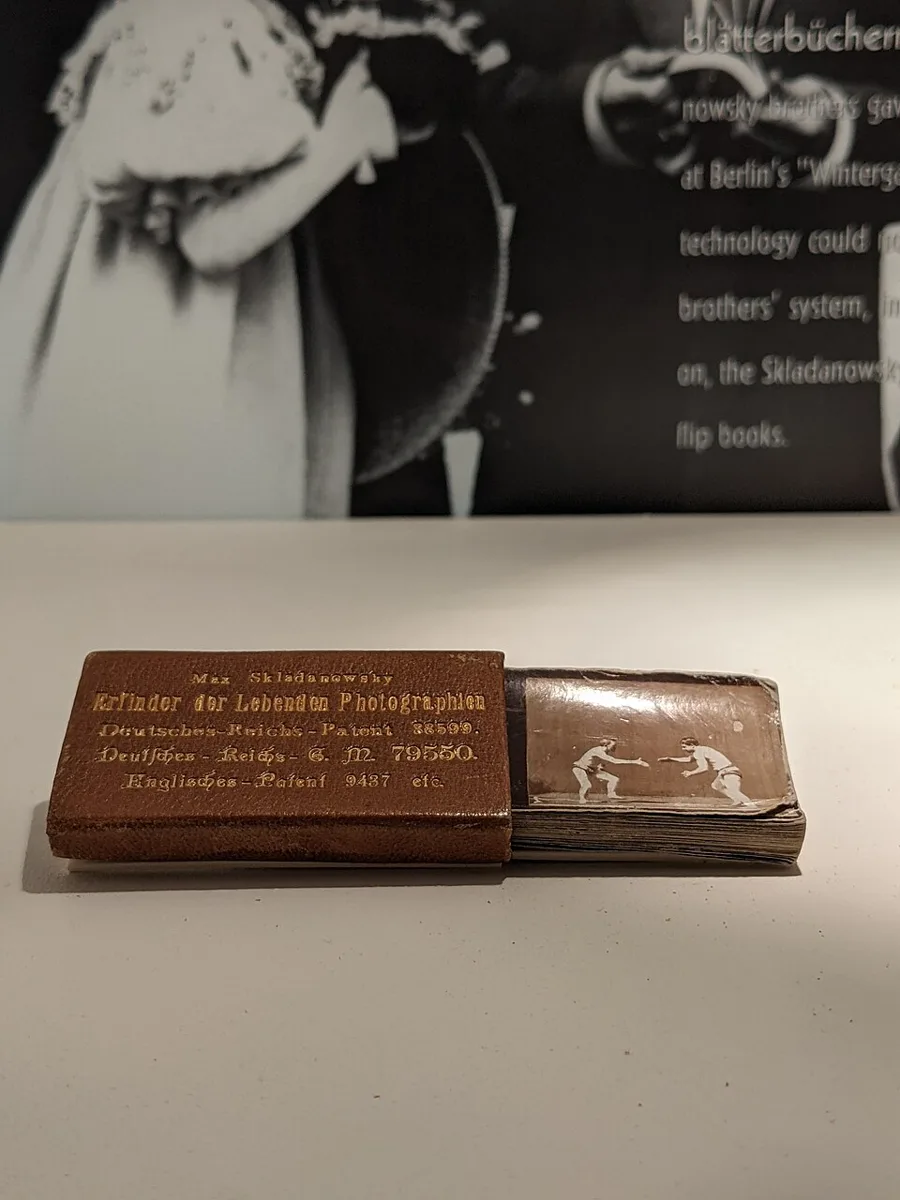
Antique Fencing Flip Book. A small antique picture booklet rests partly outside its brown sleeve, with two fencing figures visible on the exposed page and layered paper edges below.SunOfErat · CC BY-SA 4.0 · via Wikimedia CommonsView source ↗
Prompt
Apply a Flip Book effect, presenting the image on a small stack of cream paper pages with exposed edges and a gently curled top sheet. Show successive, slightly shifted action frames on the fanned pages, with black ink contours, paper grain, and minor registration jitter. Keep the original subject and composition.
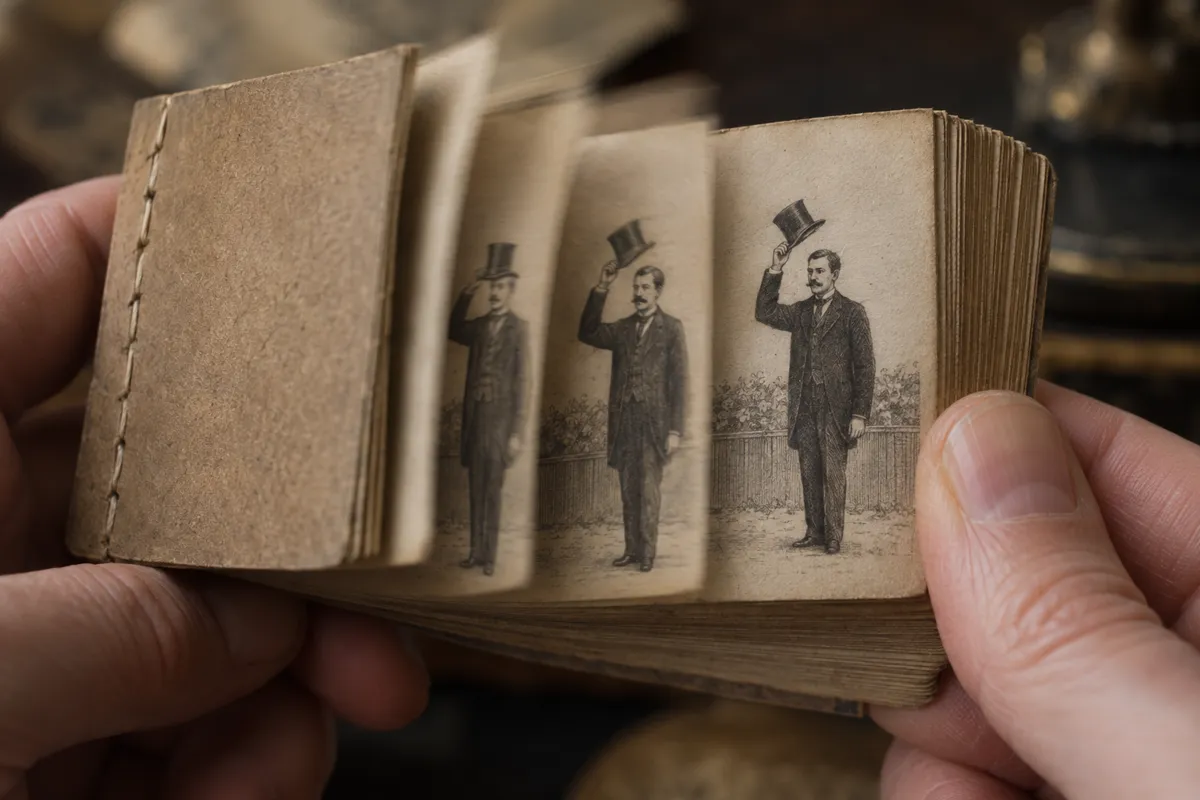
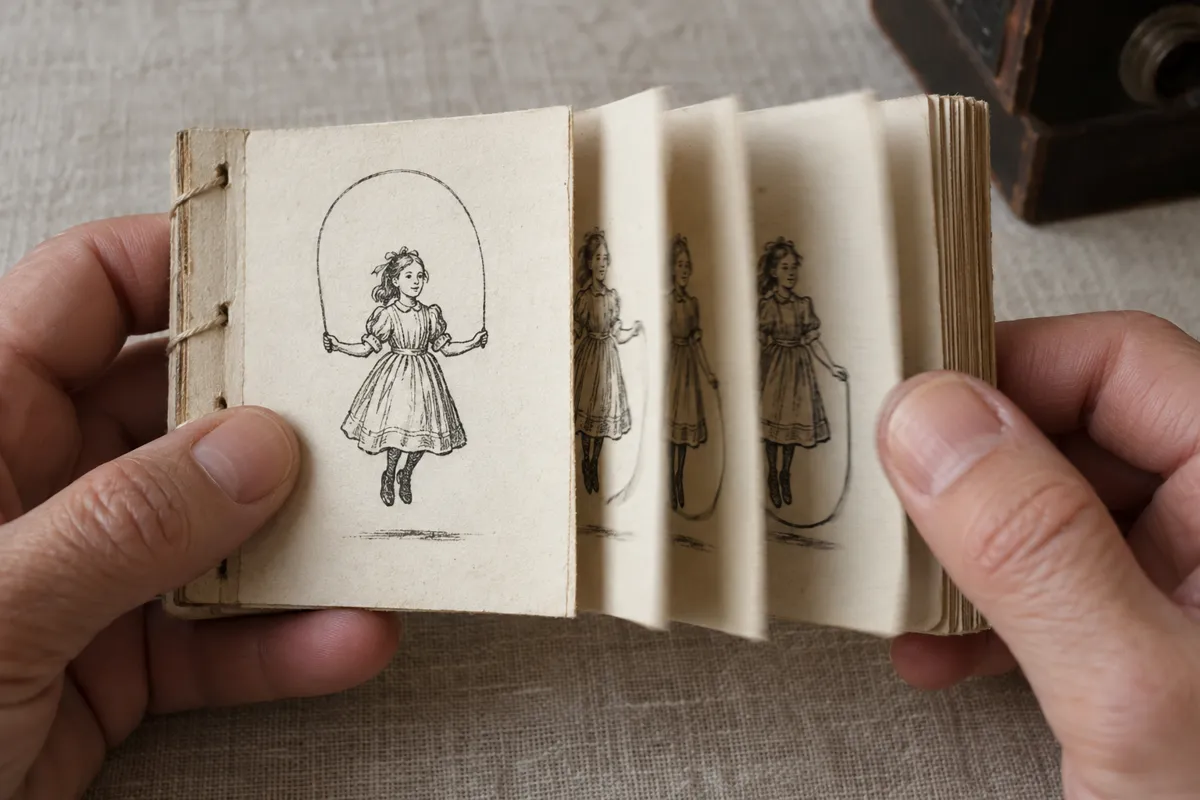
Astack of small pictures becomes amoving scene when its pages are released rapidly under the thumb. Slight changes between [successive pictures]create ashort action, often with [visible flicker].
Principle
Each page carries aseparate frame1, showing adifferent stage of movement. Rapid sequential viewing produces [apparent motion2]: the visual system interprets changing still images as movement.
Example
John Barnes Linnett: Kineograph patent illustrations, 1868.
Try it out
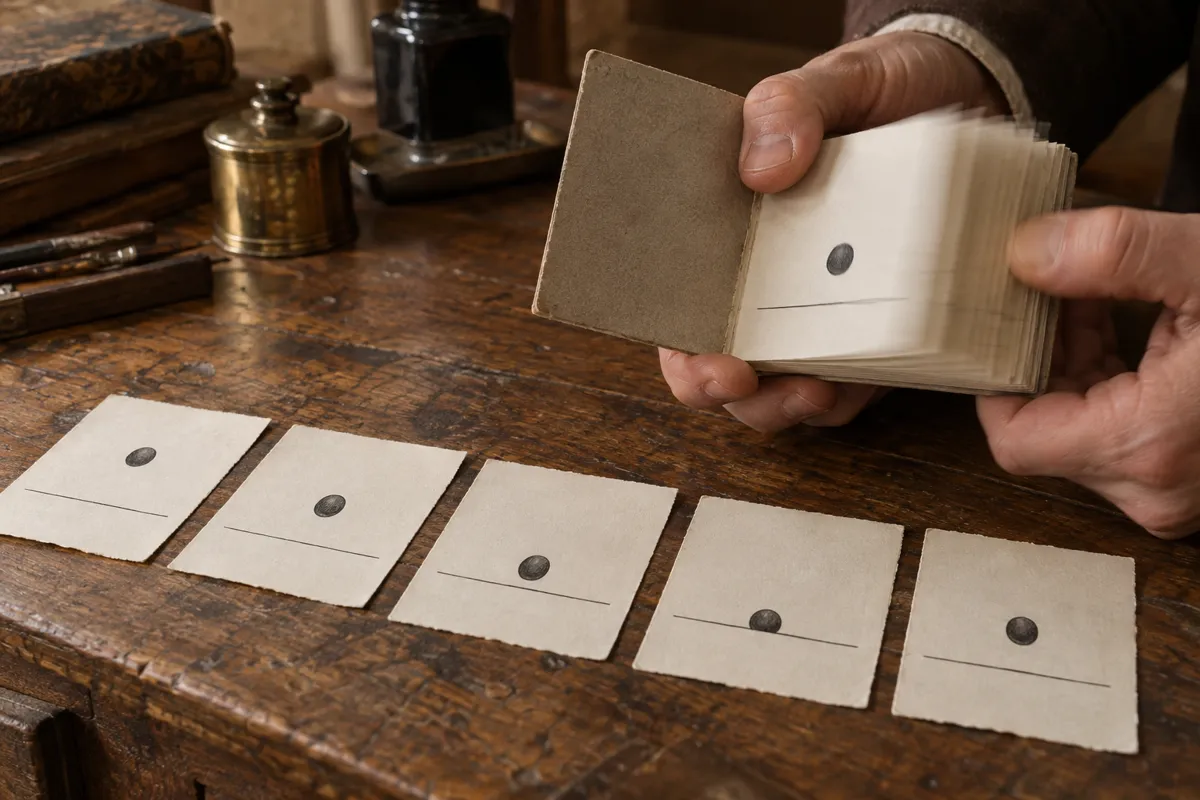
Draw aball at slightly different heights across twenty page corners, then compare slow and fast flipping.
Background
John Barnes Linnett patented the kineograph in Britain in 1868. It placed successive images in abound sequence rather than around arotating drum or disc. The viewer bent the pages and released them with athumb, briefly revealing each picture. Page order supplied the sequence, while the viewer’s hand controlled its speed. Drawings or photographs could provide the images. This compact format helped establish animation as something people could handle directly. Its mechanism needed neither projection3nor aseparate viewing machine.
Distinction
Azoetrope presents images inside arotating drum, viewed through slits. Aflip book replaces the drum and slits with sequentially released pages.
Aftermath
It shows how image order, spacing, and viewing speed shape perceived movement.
Further examples · 7 images
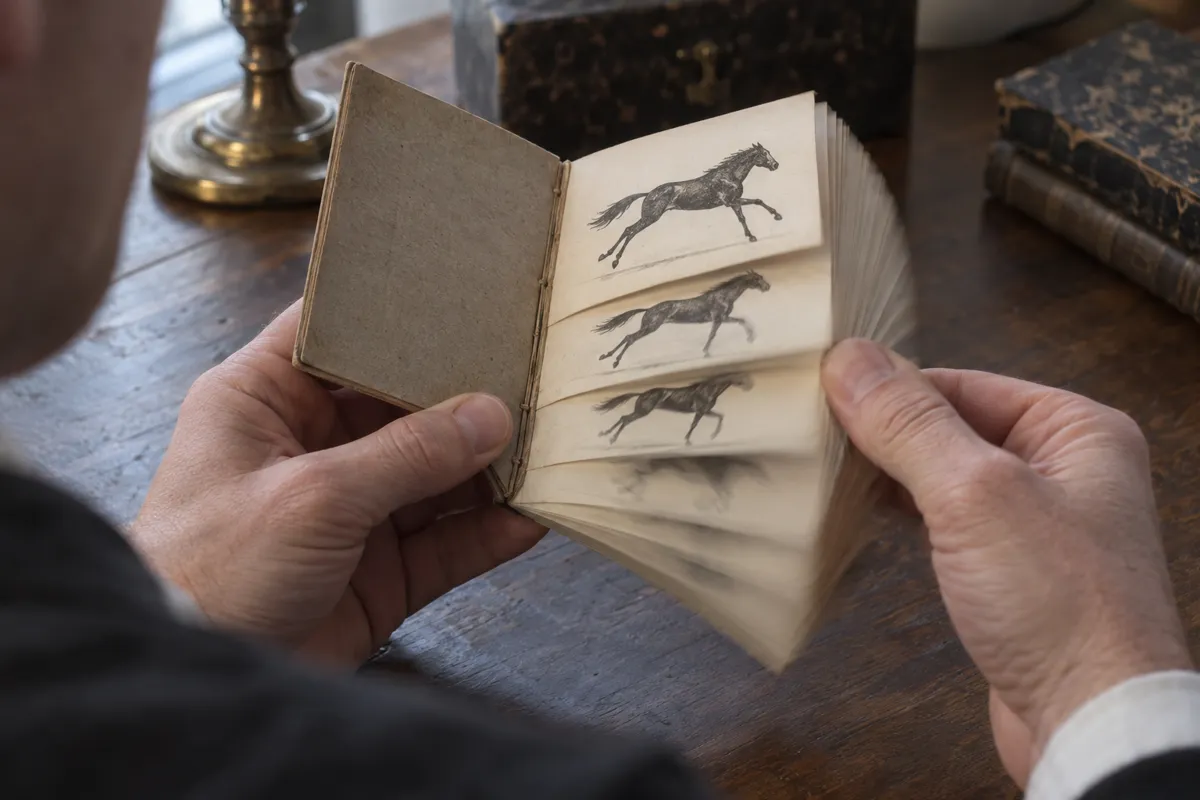
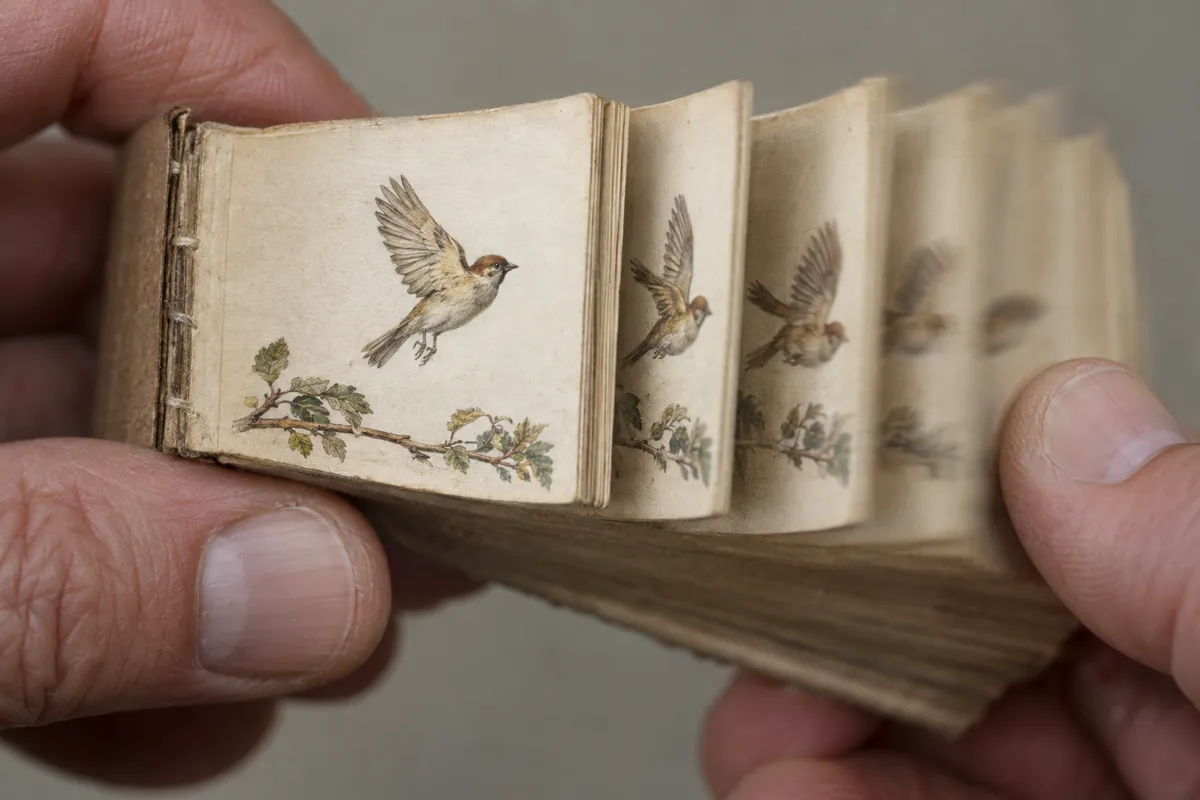
02Windmill Flip Book DemonstrationA historical illustration shows successive views of a windmill with changing sail positions, alongside hands flipping an illustrated booklet. The sequence and handling diagram explicitly demonstrate how a flip book turns small changes between still pictures into apparent movement.J. B. Linnett · CC BY-SA 4.0 · Wikimedia Commons03AI illustration: Vintage flip book showing a galloping horseA small hand-held book is manipulated to show a horse in mid-gallop across its cascading pages. The rapid progression of frames creates a seamless illusion of rhythmic animal locomotion.Illustration generated for the Atlas (AI)04AI illustration: Avian flight sequence in a pocket flip bookSuccessive illustrations of a sparrow in flight are revealed as the edges of the paper are fanned. This sequence demonstrates how incremental changes in wing position simulate fluid aerial movement.Illustration generated for the Atlas (AI)05AI illustration: Deconstructed and bound animation of a bouncing ballIndividual cards showing a bouncing ball are displayed alongside the bound collection being thumbed. The comparison highlights the transition from static, isolated frames to an integrated moving image.Illustration generated for the Atlas (AI)06AI illustration: Man tipping his hat in a sequential bookA Victorian-style figure is captured in various stages of tipping his hat as the pages are flipped. The blurred edges of the turning paper indicate the speed required for the eye to perceive motion.Illustration generated for the Atlas (AI)07AI illustration: Animated jumping rope illustration via flip bookA girl jumping rope is animated through the quick release of a bound stack of drawings. Each page acts as a single frame, contributing to the persistent visual cycle of the jumping action.Illustration generated for the Atlas (AI)
Question
Why does flipping faster usually make the action appear quicker?
Show possible answer +Hide answer −
More frames appear each second, so the same sequence finishes sooner. Uneven flipping can make the action hesitate or jump.