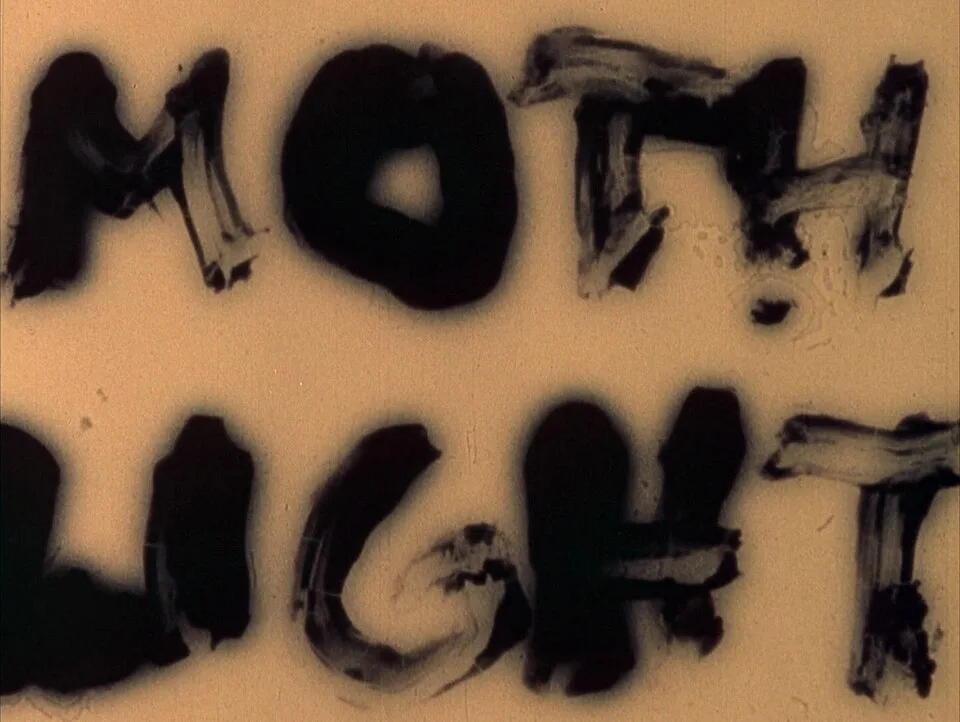
Mothlight Hand-Painted Film Title. Rough black brushstrokes spell “Moth Light” across a warm, translucent field, with uneven edges and visible smears.Stan Brakhage · Public domain · via Wikimedia CommonsView source ↗
Prompt
Apply a Direct Animation on Film effect with scratched white contours, irregular translucent paint patches, saturated color splashes, and raw black emulsion textures. Add pinholes, scraped streaks, pigment pooling, and slightly misaligned marks that suggest handmade frame-by-frame energy. Keep the original subject and composition.
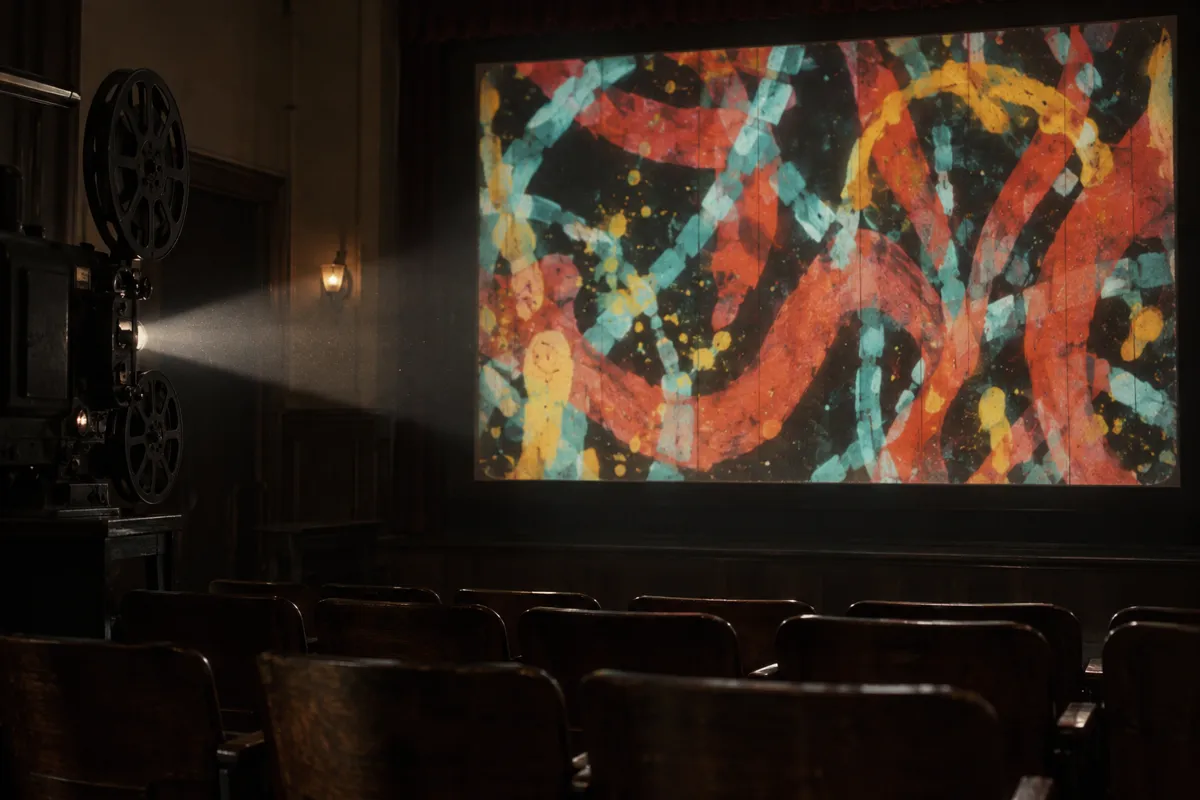
You see [rapidly shifting, jittery colors]and [frantic lines dancing]on screen. The visuals often look textured, raw, and highly energetic.
Principle
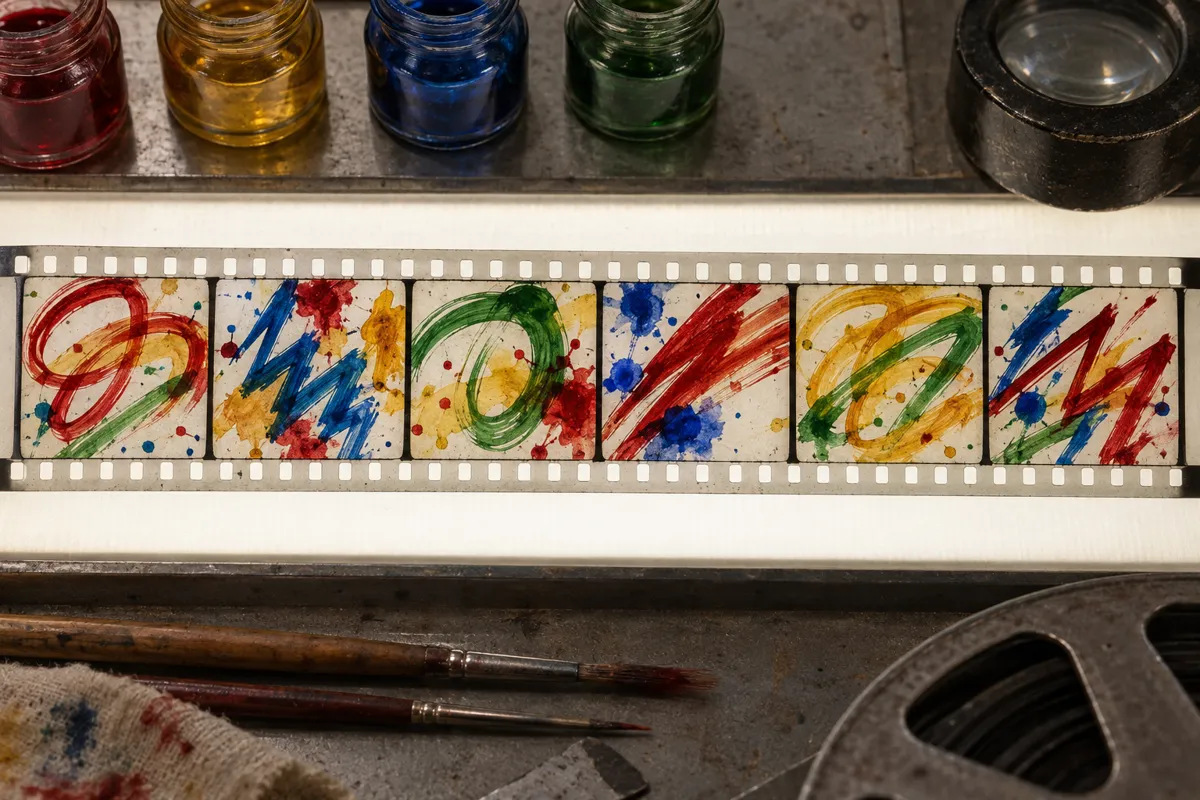
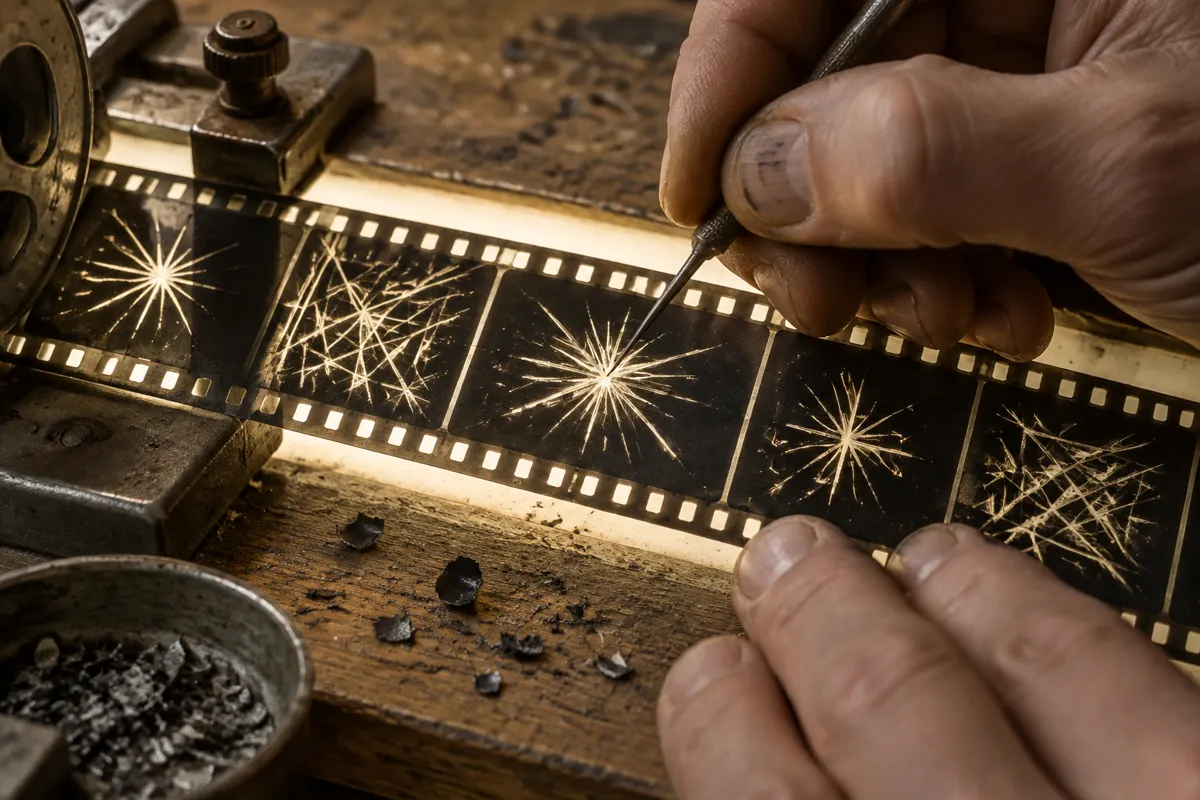
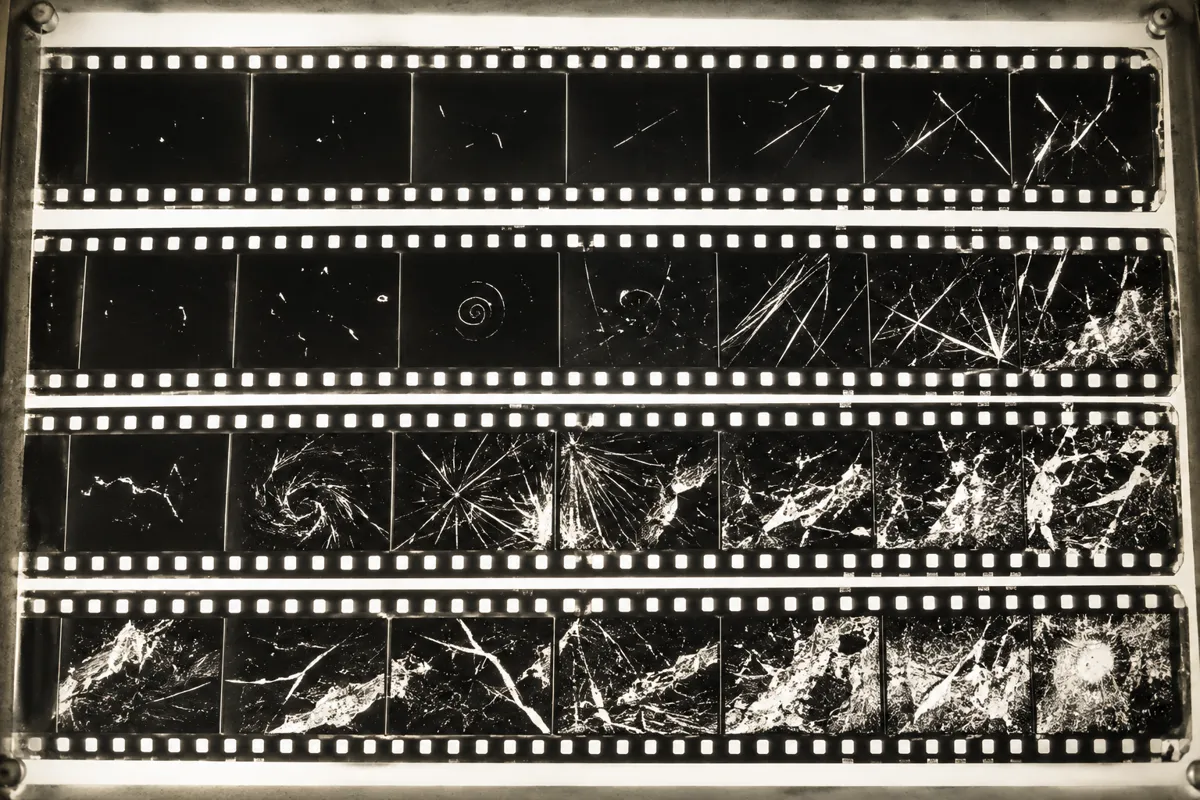
Artists apply paint directly onto the transparent film base, or they scratch imagery into the dark emulsion1of developed film. This [bypasses the camera entirely].
Example
Len Lye: AColour Box, 1935.
Try it out
Draw aflipbook using athick marker. Notice how hard it is to keep the shapes stable between pages.
Background
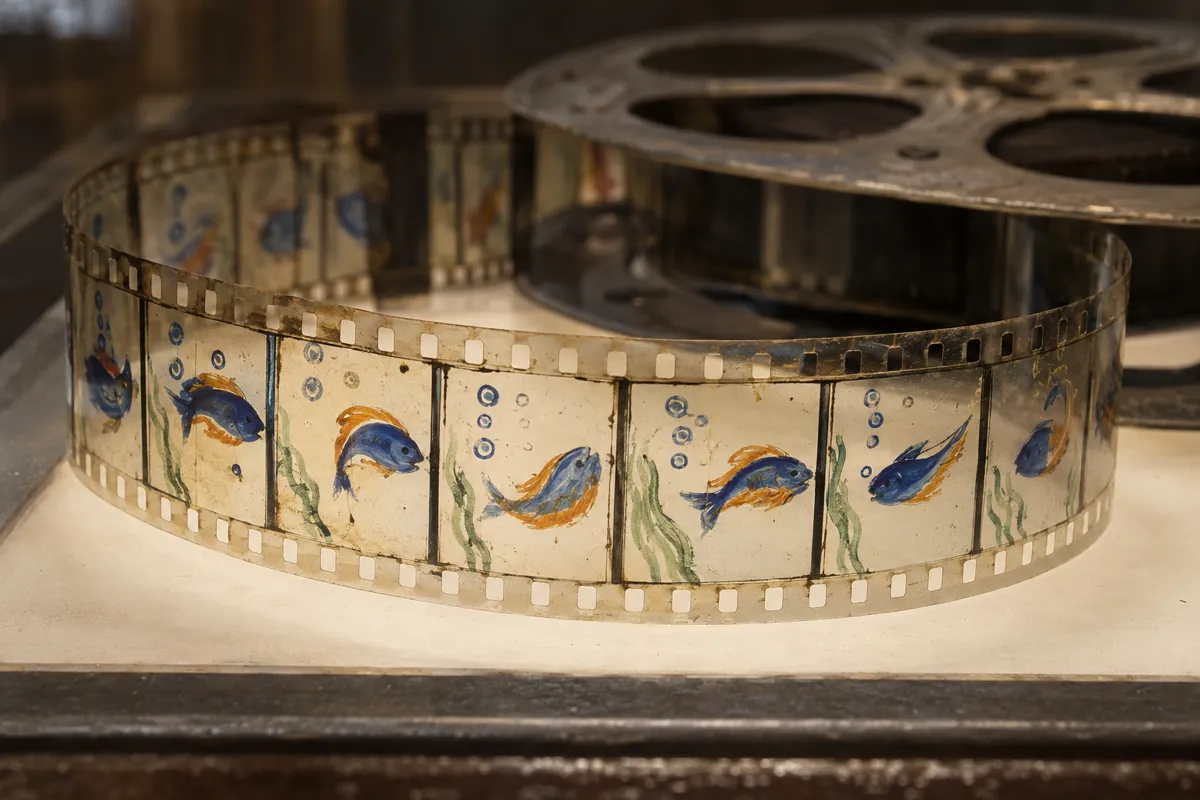
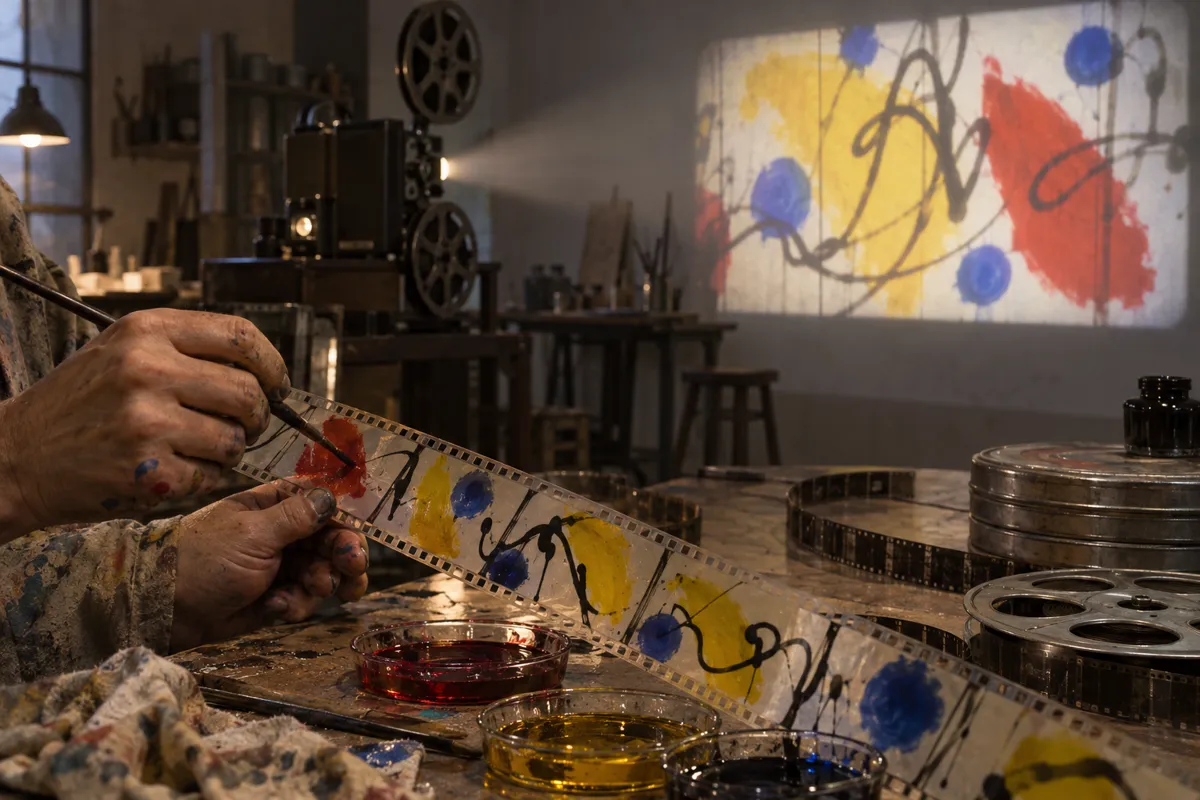
Standard animation requires acamera to photograph individual drawings. Direct animation skips the camera phase. Instead, creators manipulate the physical celluloid strip2itself. They paint, ink, or stencil shapes onto clear film stock. This is an additive process3. Alternatively, they use asubtractive method. They take black, exposed film and scrape away the dark emulsion layer to let light through. The film strip is tiny, making precise drawing difficult. When projected at 24 frames per second, these small, physical marks become large, kinetic bursts of color and light.
Distinction
Unlike traditional cel animation, direct animation puts the artwork physically on the projection film itself. There are no cameras or separate background layers.
Aftermath
It shows that moving pictures only require aphysical medium and aprojector to create the illusion of life.
Further examples · 7 images
02AI illustration: Hand-painted film frames with animation materialsBrightly colored inks are applied across sequential film frames alongside the brushes and dyes used for the process. This demonstrates the camera-less method of painting directly onto the celluloid surface to create animated movement.Illustration generated for the Atlas (AI)03AI illustration: Scratching imagery directly into film emulsionAn artist uses a fine metal tool to etch starburst patterns into the black emulsion of a film strip. This technique, known as scratching, physically removes layers from the film to allow light to pass through during projection.Illustration generated for the Atlas (AI)04AI illustration: Projection of a hand-painted direct animation filmA film projector casts a vibrant, non-representational pattern of primary colors onto a screen in a dark theater. The jittery, textured appearance of the projected light is characteristic of animation produced without a camera lens.Illustration generated for the Atlas (AI)05AI illustration: Figurative animation painted onto a celluloid stripSmall blue and yellow fish are painted frame-by-frame on a transparent strip of film coiled near its reel. While more figurative than some examples, the visible brushwork on the celluloid identifies it as a direct animation process.Illustration generated for the Atlas (AI)06AI illustration: Sequence of scratched film frames on a lightboxA series of film strips displayed on a light box shows a progression of increasingly complex scratches and marks. These frames illustrate how physical manipulation of the film stock creates a rhythmic, flickering visual experience.Illustration generated for the Atlas (AI)07AI illustration: Creating and projecting camera-less animation in studioAn animator paints bold abstract shapes onto a film strip while the results are simultaneously projected onto the studio wall. This highlights the immediate, tactile relationship between the artist's hand and the cinematic medium.Illustration generated for the Atlas (AI)
Question
Why do direct animations often look so jittery and frantic?
Show possible answer +Hide answer −
A35mm film frame is extremely small, about the size of apostage stamp. It is nearly impossible to draw identical shapes on consecutive frames by hand.