1822, Louis Daguerre and Charles Bouton's Diorama theatre
Typeface · Vidaloka
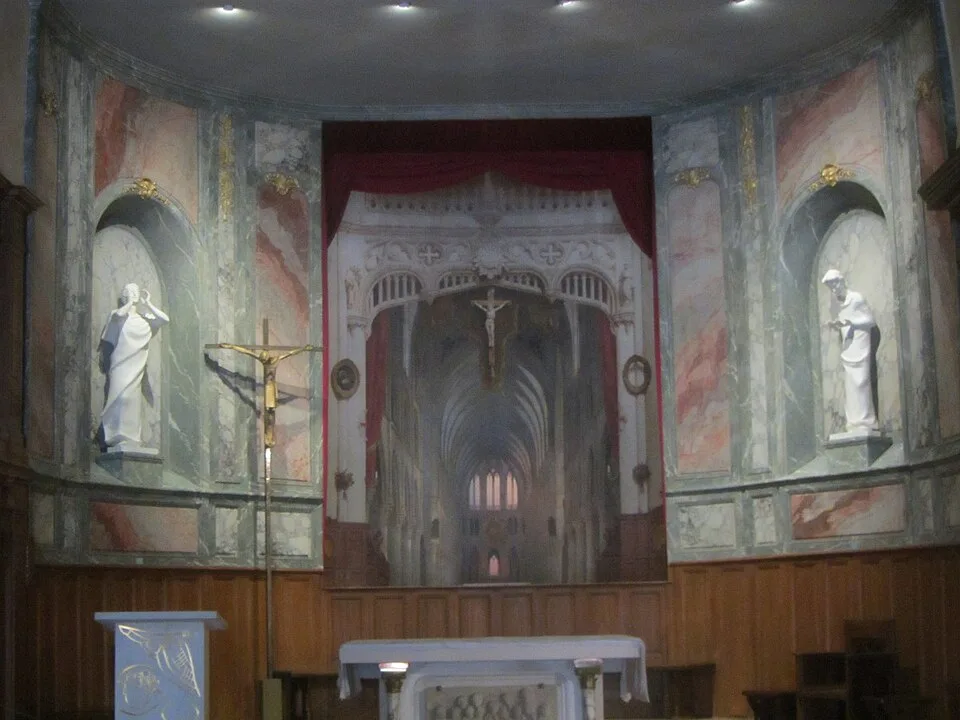
Bry-sur-Marne Diorama in Chapel Light. An altar stands before a painted Gothic nave, flanked by sculpted figures and decorative chapel walls.Pierre Tribhou · CC BY-SA 4.0 · via Wikimedia CommonsView source ↗
Prompt
Apply a Diorama Light Change effect with translucent painted-canvas texture, warm daylight transitioning into cool blue night, and soft shadows shifting across existing forms. Suggest rear illumination revealing faint details within the scene, with glowing windows or luminous accents where appropriate. Keep the original subject and composition.
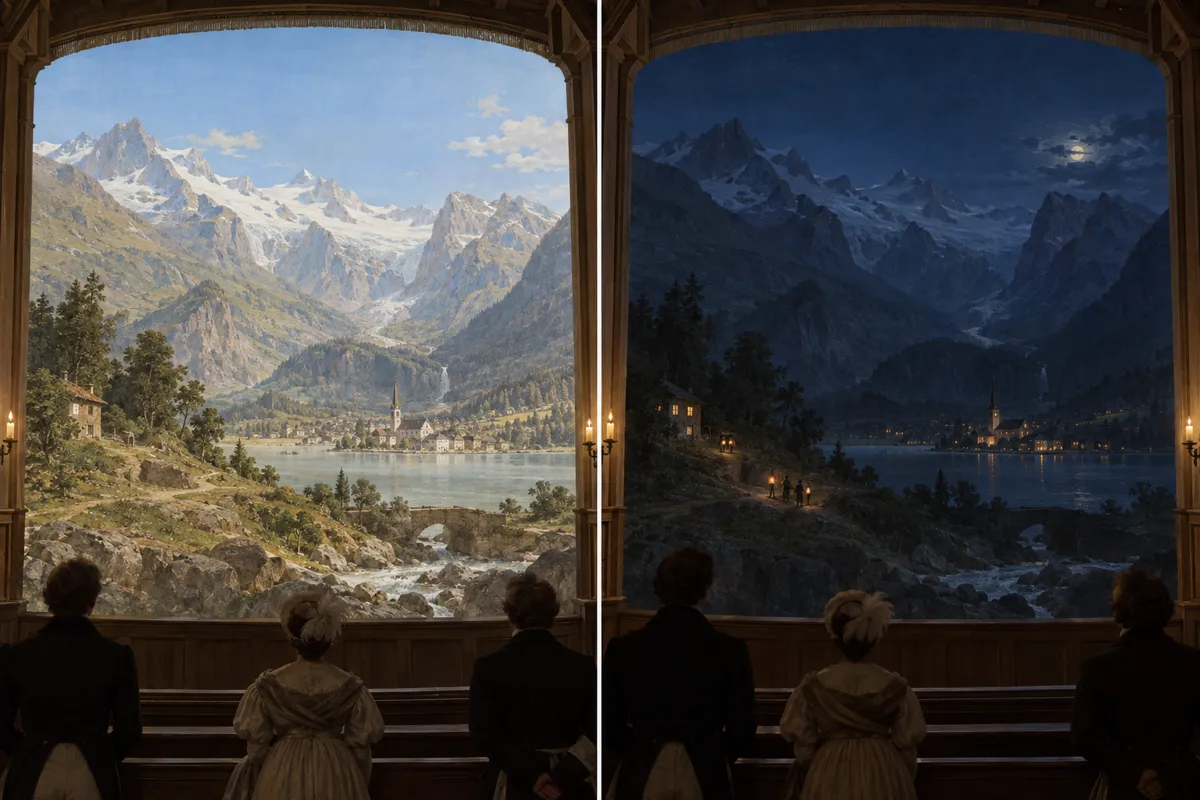
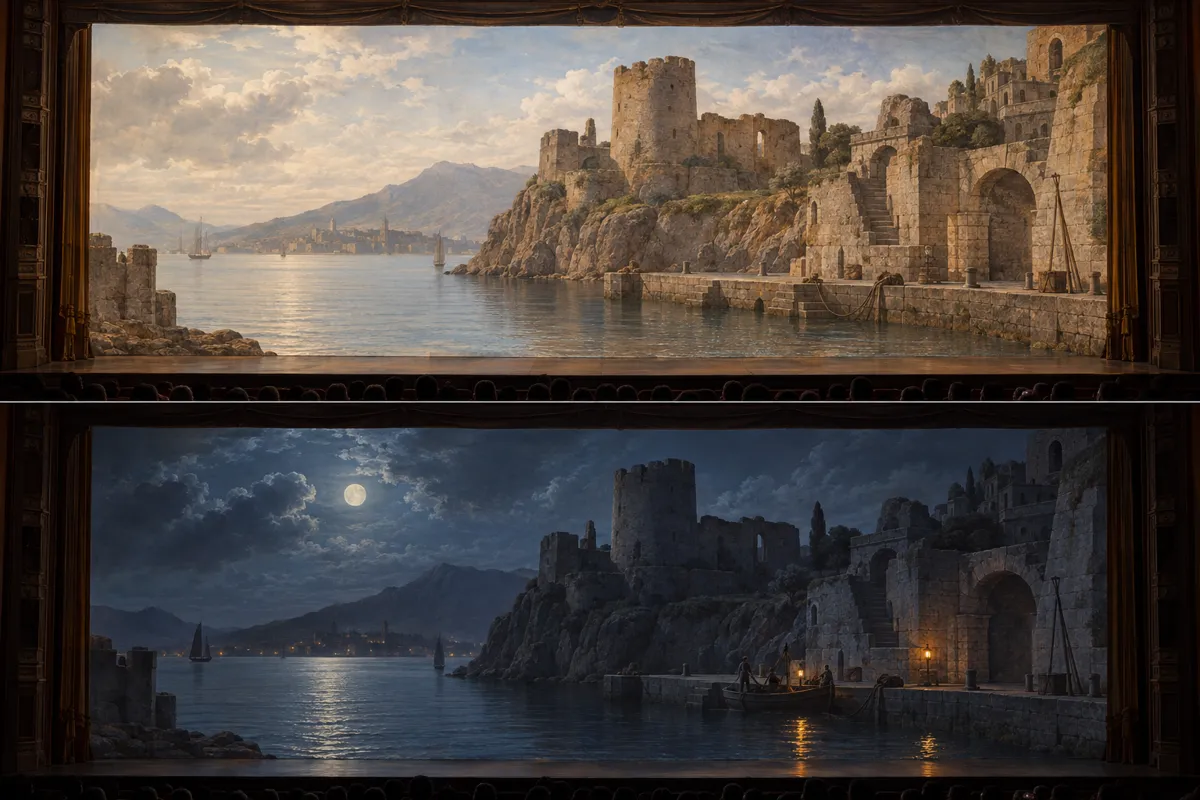
Amassive landscape painting seems to [magically transform from day to night]. Colors shift, shadows move, and hidden figures appear seamlessly.
Principle
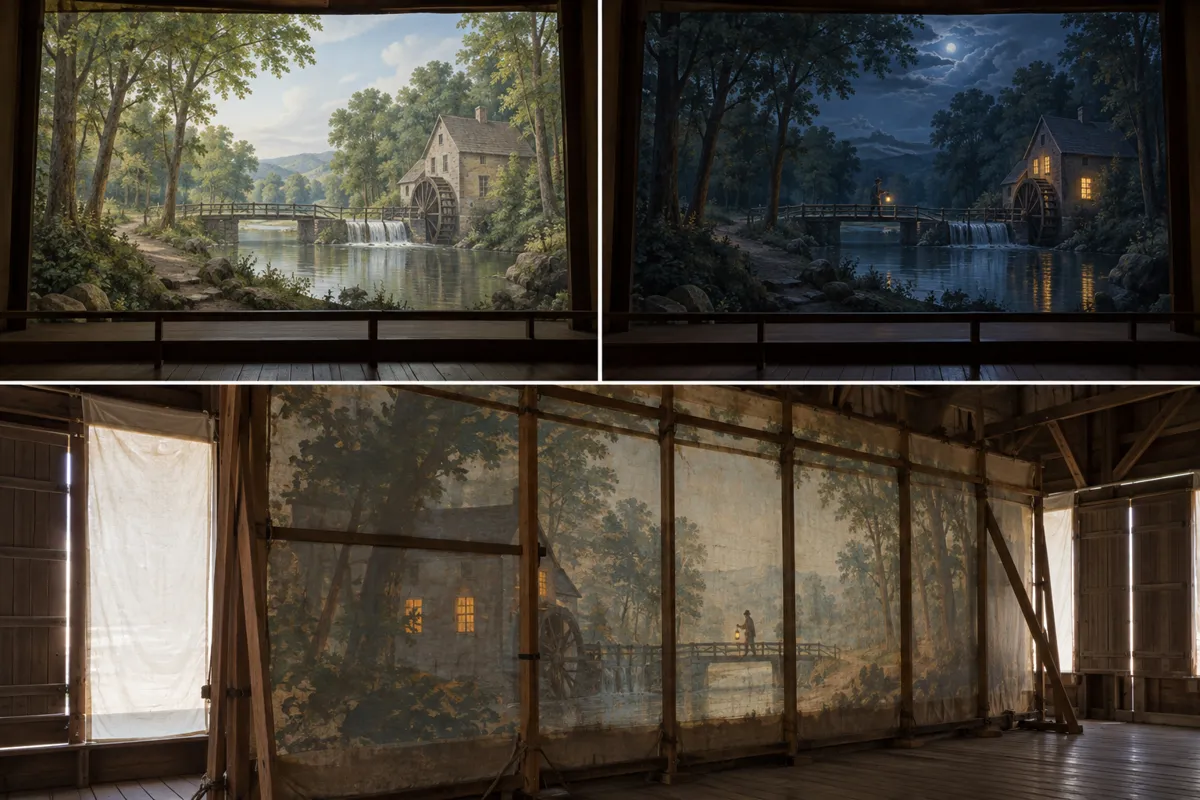
The canvas is [painted on both sides]using [translucent1and opaque paints2]. Changing the lighting from front to back reveals hidden details.
Example
Louis Daguerre: The Ruins of Holyrood Chapel, 1824.
Try it out
Draw adaytime scene on paper, add amoon on the back, and shine aflashlight behind it in darkness.
Background
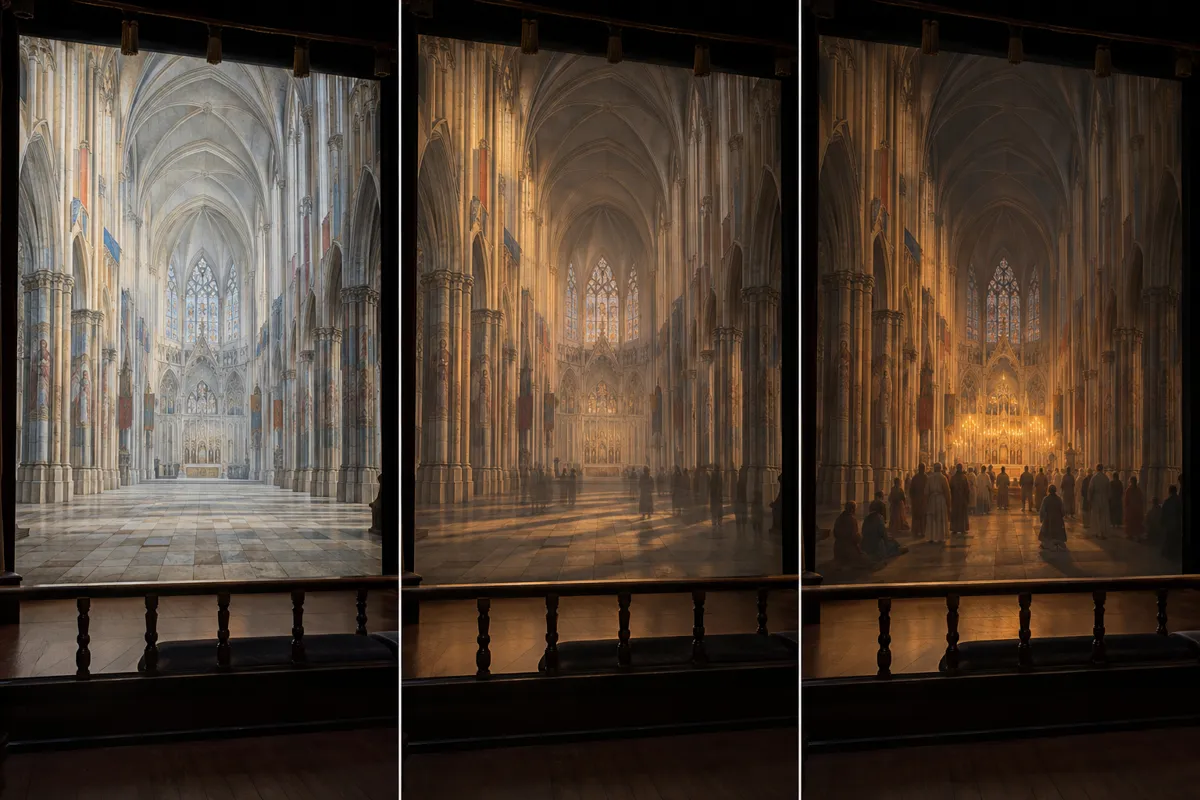
Louis Daguerre and Charles Bouton opened the Diorama theatre in Paris in 1822. Audiences sat in adark auditorium viewing massive paintings. These canvases were painted on thin calico cloth3. Artists applied opaque paints to the front and translucent tints to the back. Acomplex system of skylights and shutters controlled the illumination. By slowly blocking front light and increasing backlight, the scene shifted seamlessly. Asunny cathedral could suddenly host amidnight mass. This optical illusion thrilled crowds long before cinema existed.
It shows how manipulating light transmission through painted media can create powerful, time-based visual storytelling without moving parts.
Further examples · 7 images
02Bry-sur-Marne Diorama Under Darkened LightingThe chapel surrounds are darkened while the painted Gothic nave remains visible behind the altar. This differently illuminated view of the Bry-sur-Marne diorama displays the changing luminous appearance of its painted architectural space.Breston · CC BY-SA 4.0 · Wikimedia Commons03Greenwich Hospital Protean Transformation ViewA mounted coloured view shows Greenwich Hospital across the river, with boats in the foreground and a label identifying Spooner’s Protean Views. This historical transformation print is a small-format medium for the effect, with its label specifying a change to moonlight and the Battle of Trafalgar.William Spooner · Public domain · Wikimedia Commons04AI illustration: Day and night transitions in a mountain dioramaA side-by-side comparison shows an alpine valley transitioning from sunlight to a moonlit scene with glowing interior windows. The use of double-sided painting allows the landscape to transform entirely through a simple shift in light direction.Illustration generated for the Atlas (AI)05AI illustration: Evolution of a liturgical scene through diorama lightingThree panels depict a gothic cathedral interior where sunlight fades and a candle-lit congregation gradually appears in the nave. This sequence demonstrates how back-lighting reveals figures painted on the reverse side of the translucent canvas.Illustration generated for the Atlas (AI)06AI illustration: Coastal fortress day to night light change effectThe top frame shows a coastal fortress under a bright sky, while the bottom frame reveals a nocturnal version with harbor lights. By altering the illumination from front to back, the atmosphere and visible activity in the painting are fundamentally changed.Illustration generated for the Atlas (AI)07AI illustration: Watermill diorama with visible canvas supporting structureA scenic watermill is shown in two states alongside a view of the massive wooden frame and translucent canvas assembly. The inclusion of the apparatus provides a clear look at the physical mechanism behind the changing visual narrative.Illustration generated for the Atlas (AI)
Question
Why did artists use thin cloth instead of thick canvas for these paintings?
Show possible answer +Hide answer −
Thin cloth is translucent, allowing light to shine through from behind. This backlight was essential for revealing the hidden rear painting.