H 003 / 3211820s

Thaumatrope

1825, popularized by John Ayrton Paris
Typeface · Fraunces

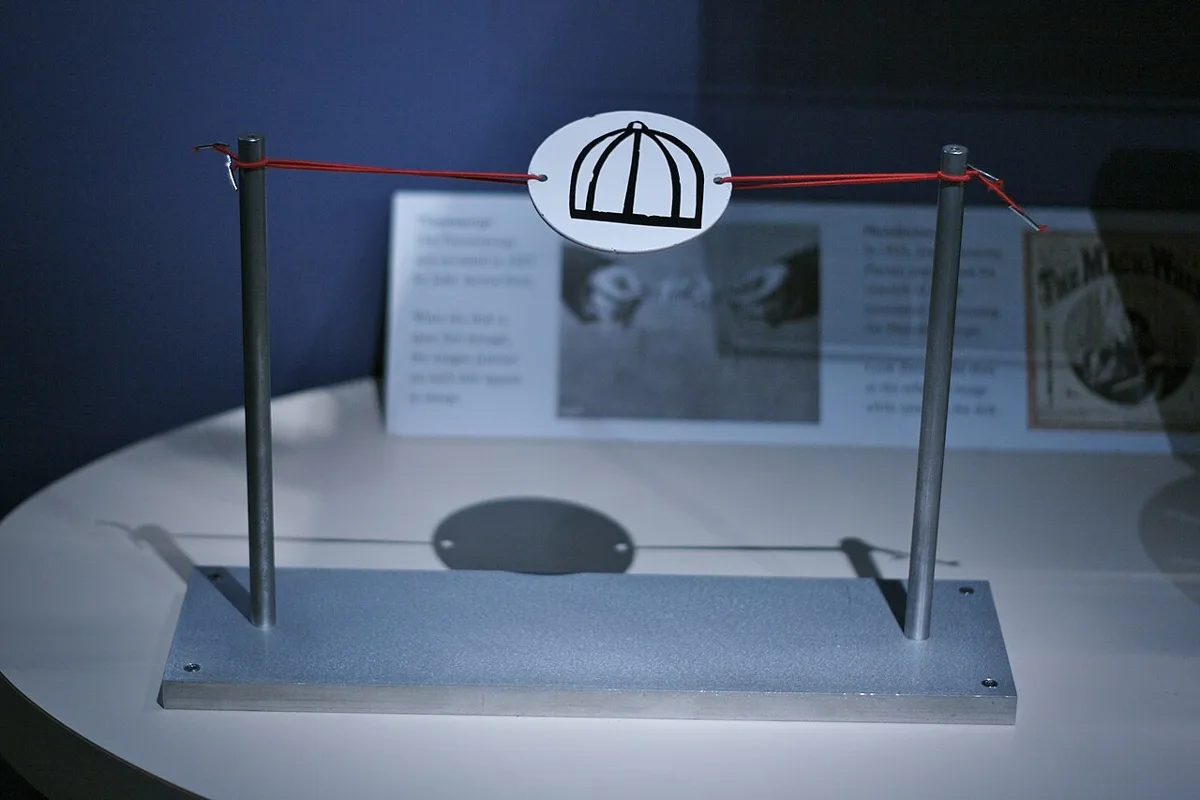
Birdcage Thaumatrope on Cords. A white disc bearing a black birdcage hangs between two posts on red cords.
Birdcage Thaumatrope on Cords. A white disc bearing a black birdcage hangs between two posts on red cords.Marcin Wichary from San Francisco, U.S.A. · CC BY 2.0 · via Wikimedia CommonsView source ↗

Prompt

Apply a Thaumatrope effect, rendering the scene as two optically blended illustrations on warm ivory card. Use faint doubled contours, translucent overlapping layers, subtle rotational smearing, and alternating pale and dark edge echoes to suggest a flickering spinning disc frozen mid-turn. Keep the original subject and composition.

Identify

You see a single composite image that flickers slightly. It is formed by visually blending two separate pictures located on opposite sides of a spinning disc.

Principle

Rapid rotation causes the viewer's eyes to retain the image of each side for a fraction of a second. This biological quirk1 fuses the two alternating views into one combined scene.

Example

John Ayrton Paris: A bird and a cage thaumatrope, 1825.

Try it out

Draw a jar on one side of a card and a bug on the back, then spin it quickly.

Background

The thaumatrope was the first popular philosophical toy2 to demonstrate persistence of vision. Physicians like John Ayrton Paris used it in the 1820s to teach optical principles to children. The device consists of a simple cardboard disc with strings attached to the edges. One side might show a bare tree, while the reverse shows green leaves. When you twist the strings tightly and pull them, the disc rapidly twirls. The viewer's brain holds onto both images simultaneously, superimposing3 them. This parlor trick laid early conceptual groundwork for future motion pictures.

Distinction

Unlike a zoetrope, which creates the illusion of continuous motion from sequential frames, a thaumatrope only merges two static images.

Aftermath

It proves that our visual system actively constructs reality by bridging tiny gaps in time.

Further examples · 7 images
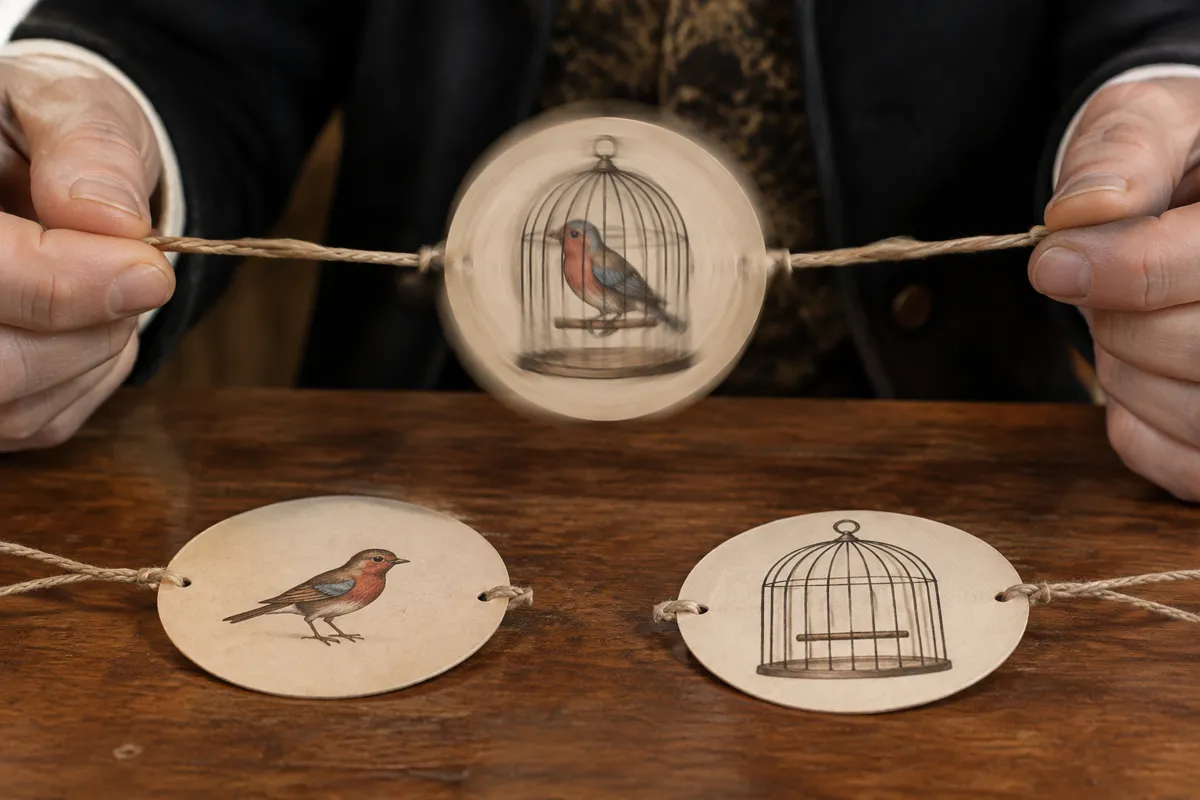
AI illustration: Traditional bird and cage thaumatrope demonstration
02 AI illustration: Traditional bird and cage thaumatrope demonstrationA bird and an empty cage on separate discs appear merged when the central disc is spun rapidly. The bird appears to be inside the cage due to the persistence of vision created by the rotation.Illustration generated for the Atlas (AI)
AI illustration: Goldfish and bowl optical illusion disc
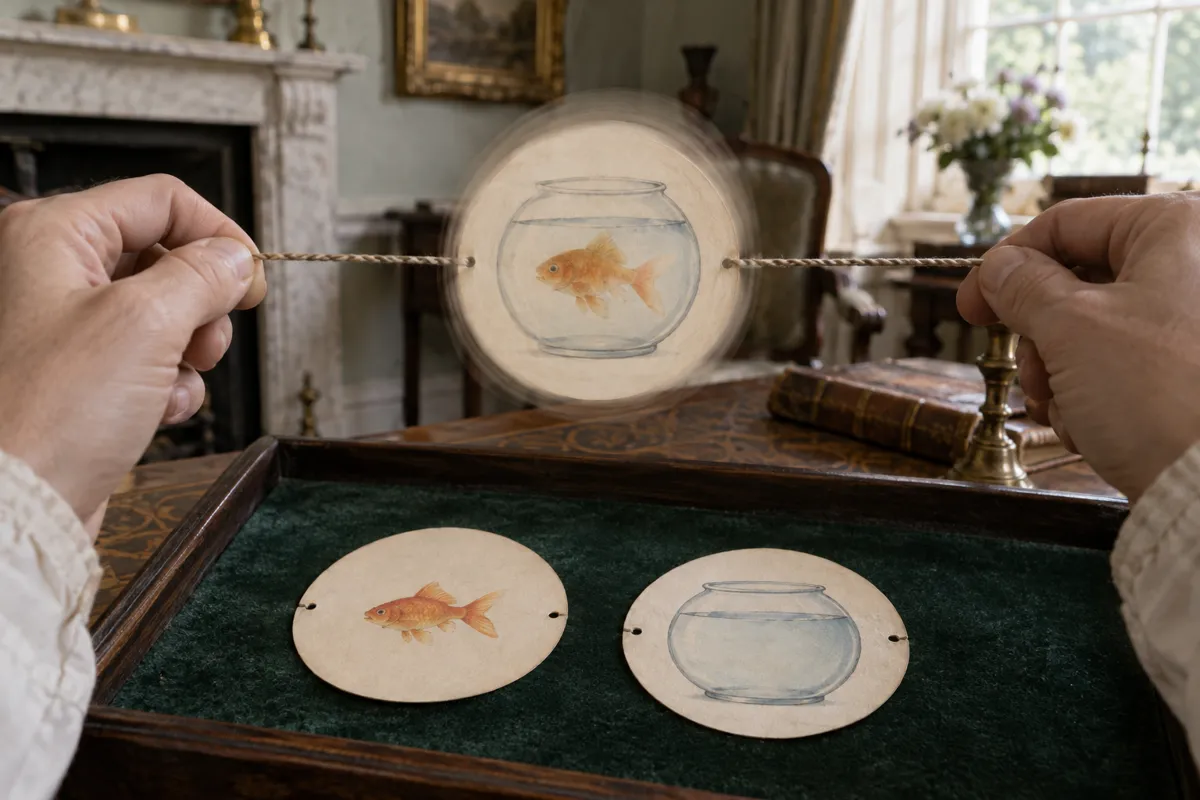
03 AI illustration: Goldfish and bowl optical illusion discA spinning disc combines the separate images of a goldfish and a glass bowl into a single composite view. This illustrates how alternating images can be perceived as one through rapid motion.Illustration generated for the Atlas (AI)
AI illustration: Horse and rider persistence of vision toy
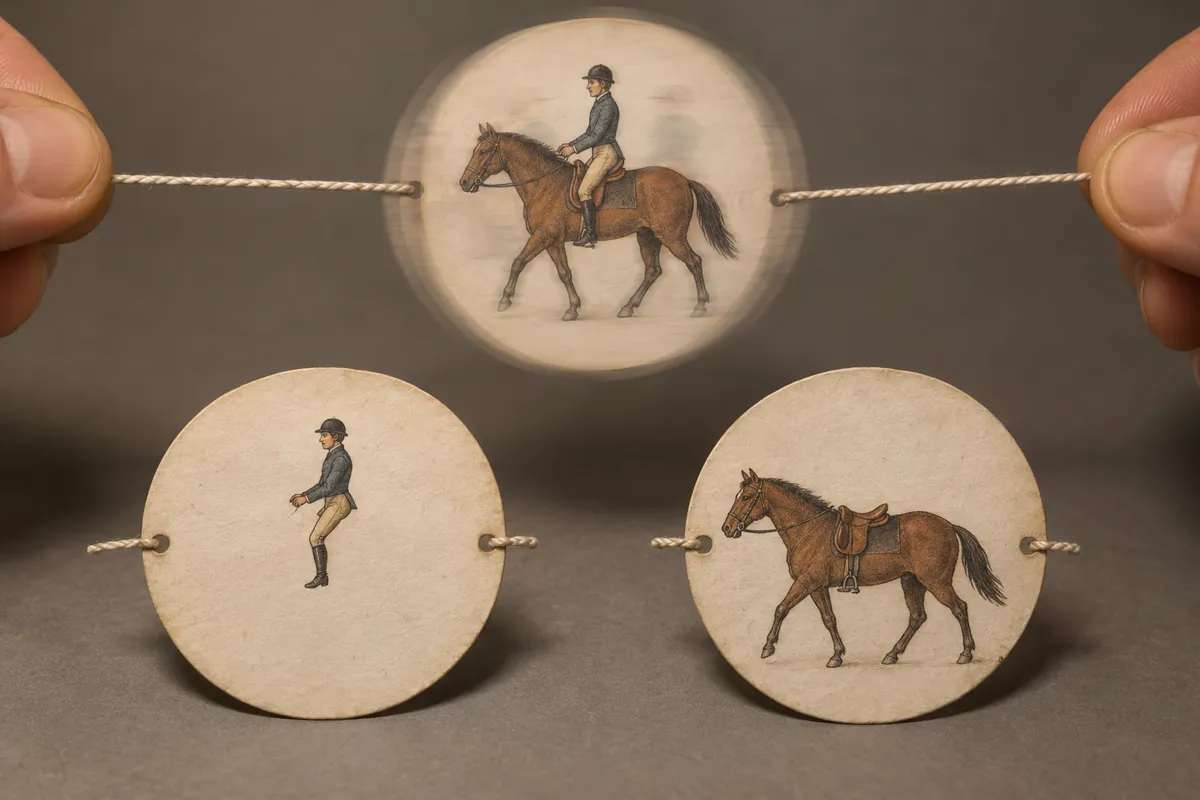
04 AI illustration: Horse and rider persistence of vision toyThe rider and horse are shown on static discs and then combined on a third spinning element. Rapidly flipping the views places the rider atop the horse in a seamless visual blend.Illustration generated for the Atlas (AI)
AI illustration: Nautical themed thaumatrope animation
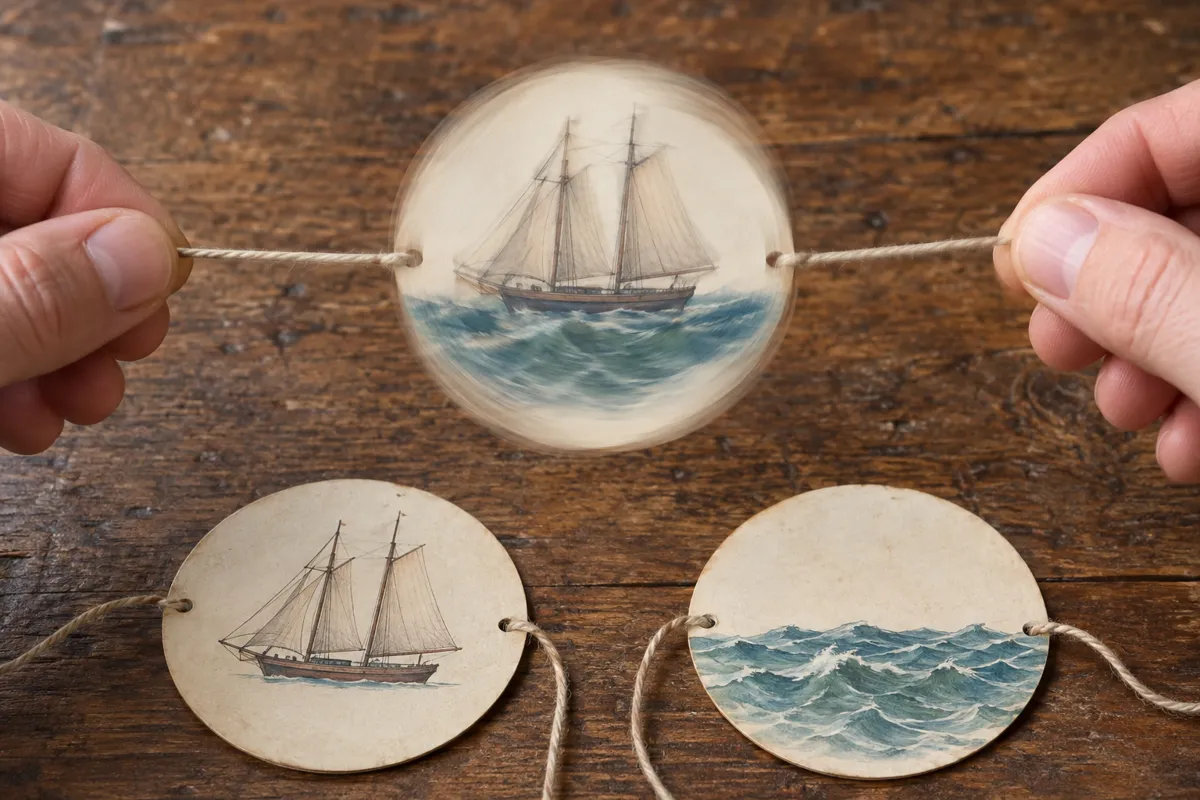
05 AI illustration: Nautical themed thaumatrope animationA sailboat and ocean waves are depicted on different surfaces and united by the thaumatrope effect. The spinning motion creates the illusion of the ship sailing upon the water.Illustration generated for the Atlas (AI)
AI illustration: Floral vase thaumatrope composite image
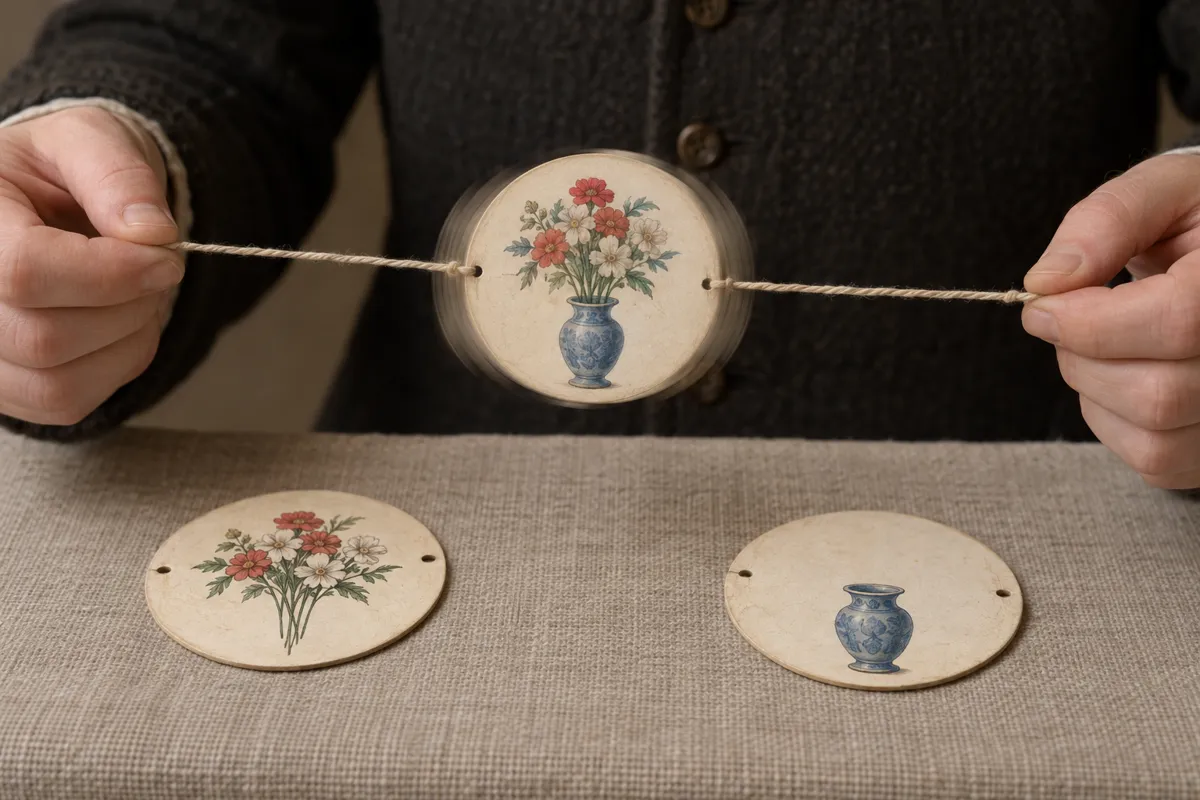
06 AI illustration: Floral vase thaumatrope composite imageA bouquet of flowers and a decorative vase are fused into one image as the disc rotates between fingers. The biological quirk of the eye retains both images to fill the vase with blooms.Illustration generated for the Atlas (AI)
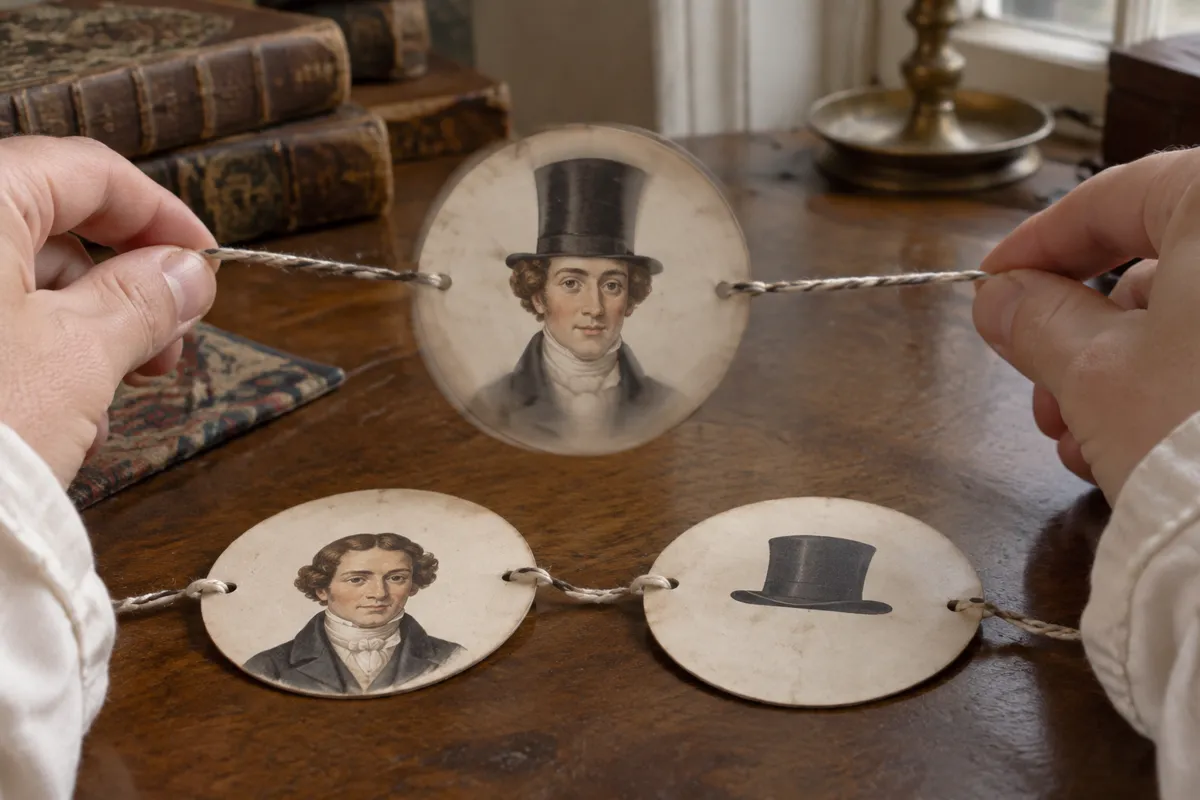
AI illustration: Man with top hat optical toy
07 AI illustration: Man with top hat optical toyA man's portrait and a top hat are merged by spinning the circular card on its string axis. The rotation causes the hat to appear perfectly positioned on the subject's head.Illustration generated for the Atlas (AI)

Question

Why do the two images need to be drawn upside down relative to each other?

Show possible answer +

The disc flips vertically around its horizontal axis when spun by the side strings. If they shared the same orientation, one image would appear upside down.

Sources