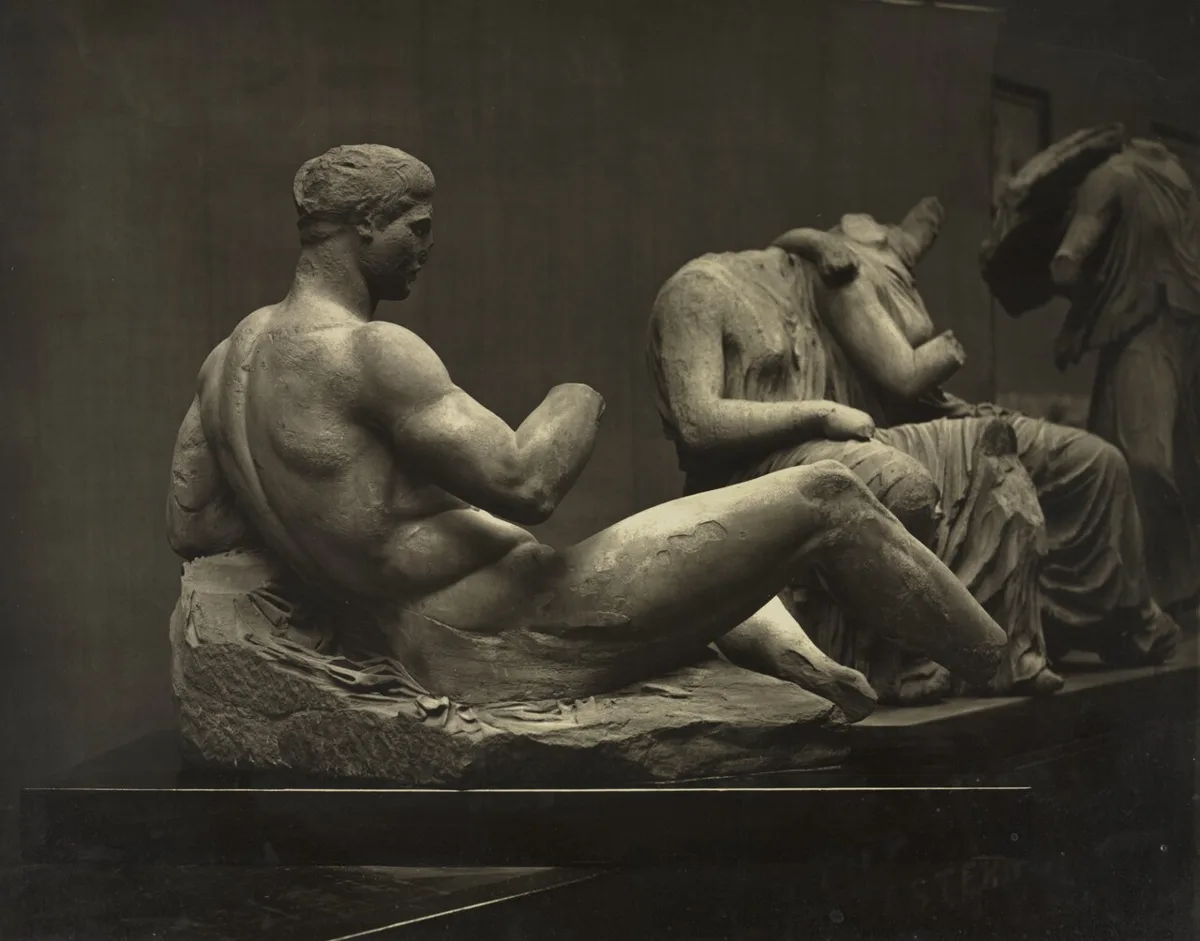
Carbon Print of Classical Greek Sculptures. A photograph captures classical Greek sculptures resting on pedestals.Adolphe Braun · CC0 · via Wikimedia CommonsView source ↗
Prompt
Transform this image into a Carbon Print with deep charcoal pigment, warm neutral midtones, crisp fine detail, and an expansive, unfaded tonal range. Add a subtly textured paper base and slight gelatin relief in dense shadows, with restrained surface sheen and no halftone pattern. Keep the original subject and composition.
In the 1850s, early silver photographs faded quickly. Photographers urgently needed apermanent alternative. Alphonse Poitevin discovered that dichromated gelatin hardens when exposed to light. In 1864, Joseph Swan perfected the carbon process. He coated paper with gelatin, potassium dichromate, and permanent carbon pigment3. After exposure beneath anegative, he transferred the image to anew base. Warm water washed away the unhardened gelatin. The remaining pigment formed astunning, fade-resistant image. This complex method created durable, richly toned prints that survive perfectly today.
Distinction
Unlike albumen or silver prints, carbon prints do not rely on light-sensitive silver. Therefore, they never yellow or fade over time.
Aftermath
It proves that utilizing chemically stable pigments can preserve photographic history indefinitely.
Further examples · 11 images
02Detailed Carbon Print of Hunting Still LifeA highly detailed still-life arrangement features hanging game birds and hunting equipment. Its deep charcoal hues and exceptional tonal range clearly demonstrate the carbon print process.Adolphe Braun · CC0 · Wikimedia Commons03Historical Architectural Carbon Print of an AlleywayA dark, narrow cobblestone alley is flanked by tall, textured stone buildings. The warm brown tones and sharp contrast are typical of historical architectural carbon prints.Thomas Annan (British, 1829 - 1887) (1829 - 1887) – photographer (British) Details on G… · Public domain · Wikimedia Commons04Sepia-Toned Carbon Print of a Narrow StreetA historic street scene looks down a narrow, sunlit alley with a hanging sign. This image exhibits the continuous tone and rich sepia color indicative of carbon printing.Thomas Annan (British, 1829 - 1887) (1829 - 1887) – photographer (British) Details on G… · Public domain · Wikimedia Commons05Sweeping Landscape Captured as a Carbon PrintA sweeping landscape photograph shows a deep valley with a high waterfall in the distance. The expansive tonal range from deep shadows to bright highlights perfectly showcases the carbon printing technique.Adolphe Braun · CC0 · Wikimedia Commons06Striking Portrait Rendered as a Carbon PrintA striking portrait of a man with intense eyes is rendered in warm brown tones. The seamless continuous tone and unfaded pigment identify this portrait as a classic carbon print.Étienne Carjat · Public domain · Wikimedia Commons07Warm Sepia Carbon Print Portrait of a ManA profile portrait of a distinguished, bearded man is presented in deep, warm sepia. The photograph's fine details and enduring pigment perfectly embody the visual qualities of a true carbon print.Julia Margaret Cameron / Adam Cuerden · Public domain · Wikimedia Commons08Carbon Print of a Narrow Stone AlleywayA historical photograph of a narrow alleyway with a wooden cart and hanging laundry. The deep charcoal tones and crisp details with no visible fading are classic indicators of a carbon print.Annan, Thomas · Public domain · Wikimedia Commons09Carbon Print of a Dark Historic CourtyardA dark, narrow courtyard featuring stone walls, hanging clothes, and steep wooden stairs. The rich, unfaded sepia-charcoal gradient and stark contrasts perfectly demonstrate the carbon print photographic process.Annan, Thomas · Public domain · Wikimedia Commons10Carbon Print Photograph of a Populated CourtyardA historic street scene showing a group of children and adults in a stone courtyard with a large cart. The excellent preservation of detail and rich, stable pigment tonality are hallmarks of genuine carbon prints.Annan, Thomas · Public domain · Wikimedia Commons11Carbon Print of an Alley with Wooden BridgeA shaded urban alleyway with a wooden walkway bridging the gap between stone buildings. Showcasing deep, lasting blacks and smooth midtones, this photograph is a classic example of a carbon print.Annan, Thomas · Public domain · Wikimedia Commons
Question
Why must the exposed carbon tissue be transferred to a new base before washing?
Show possible answer +Hide answer −
Light hardens the gelatin from the top down. Without transferring, the unhardened bottom layer would dissolve and ruin the image.