H 118 / 3211930s

Busby Berkeley Top Shot

1930s, Busby Berkeley’s Hollywood musical numbers
Typeface · Tulpen One

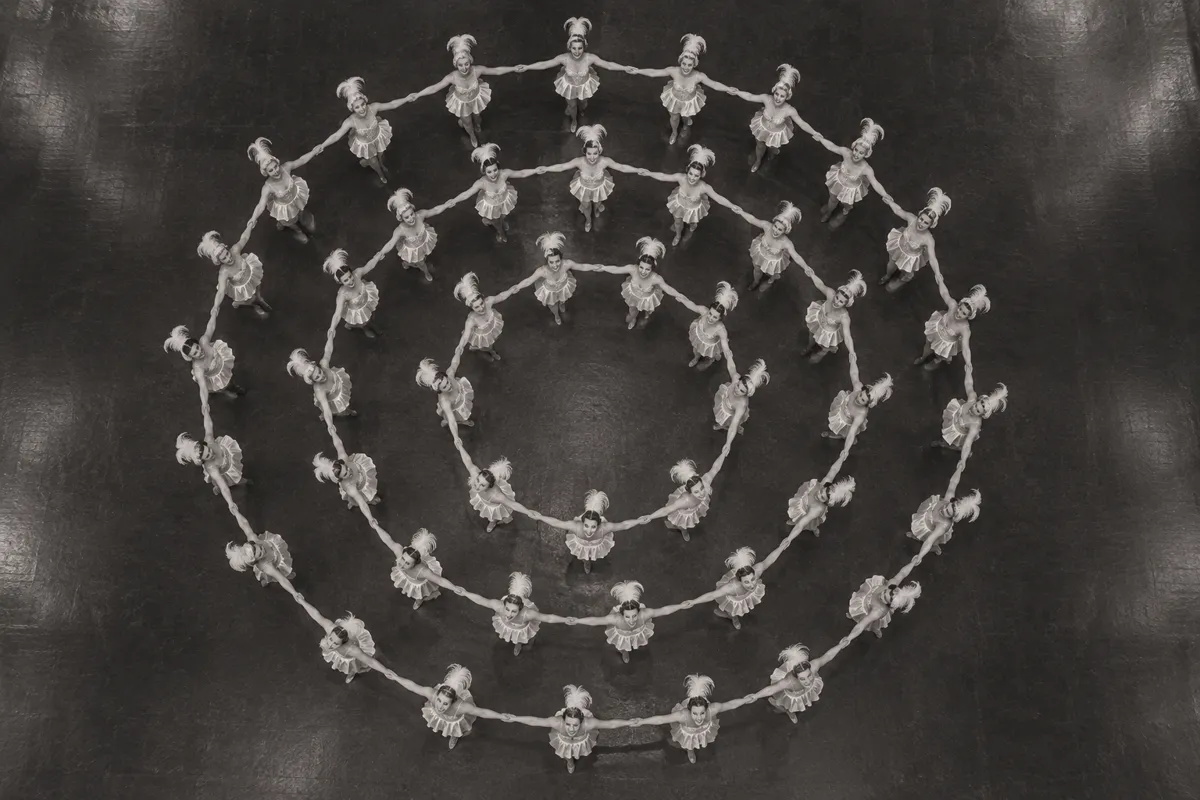
AI illustration: Concentric Rings of Dancers in Radial Formation.
AI illustration: Concentric Rings of Dancers in Radial Formation.Illustration generated for the Atlas (AI)View source ↗

Prompt

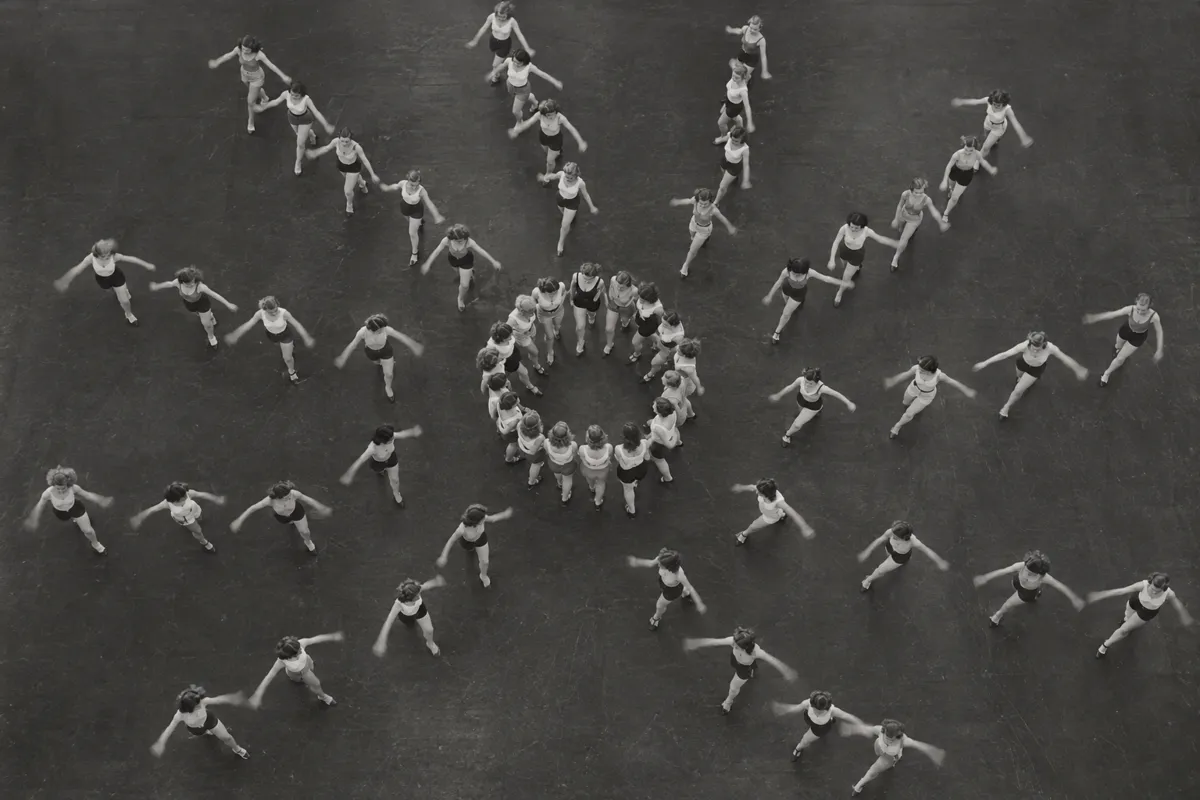
Apply a Busby Berkeley Top Shot-inspired treatment with overhead-style decorative formations, concentric rings, radiating spokes, and flowerlike repetitions of small dancer silhouettes. Use flattened depth, crisp theatrical lighting, monochrome silver tones, and precise radial symmetry around the existing focal point. Keep the original subject and composition.

Identify

Seen directly from above, dancers form concentric circles1, radiating spokes, and flower-like patterns. Synchronized movement makes these human mosaics expand, rotate, and dissolve.

Principle

An overhead camera looks straight down, reducing visible depth and emphasizing the dancers’ arrangement across the floor. Repetition and radial symmetry2 create the kaleidoscopic appearance through choreography3, rather than mirrors.

Example

Busby Berkeley (musical numbers): Footlight Parade, 1933.

Try it out

Arrange twelve paper figures around a circle, then compare photographs taken from directly above and from table height.

Background

Busby Berkeley made overhead dance formations a signature of Hollywood musicals during the 1930s. His musical numbers in 42nd Street helped establish his reputation in 1933. Footlight Parade, released that same year, includes elaborate aquatic formations in its “By a Waterfall” number. These designs depended on precise spacing, synchronized gestures, and a camera position unavailable to ordinary theater audiences. From above, individual performers become parts of a larger geometric image. The effect comes primarily from staging and viewpoint, not from a special lens or chemical treatment of film.

Distinction

A mirror kaleidoscope multiplies images through reflections; Berkeley’s formations usually contain many actual performers arranged for the camera. A merely elevated shot can retain depth without revealing a complete geometric pattern.

Aftermath

The technique shows how camera position can turn choreography into moving graphic design.

Further examples · 7 images
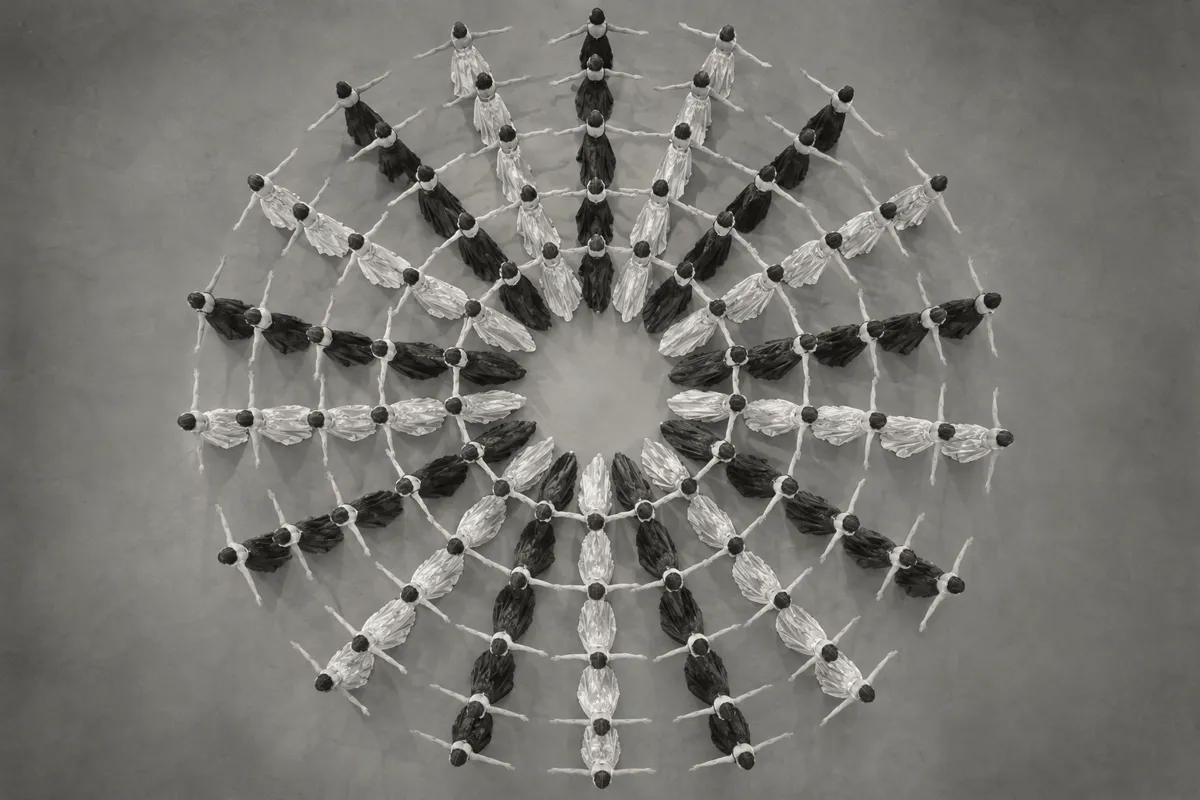
AI illustration: Geometric Radial Web of Contrasting Costumed Dancers
02 AI illustration: Geometric Radial Web of Contrasting Costumed DancersPerformers in contrasting light and dark costumes are positioned to create a complex web of spokes radiating from a central point. The high-angle shot eliminates depth to emphasize the intricate, graphic pattern formed by the collective ensemble.Illustration generated for the Atlas (AI)
AI illustration: Overhead Flower Motif Created by Synchronized Dancers
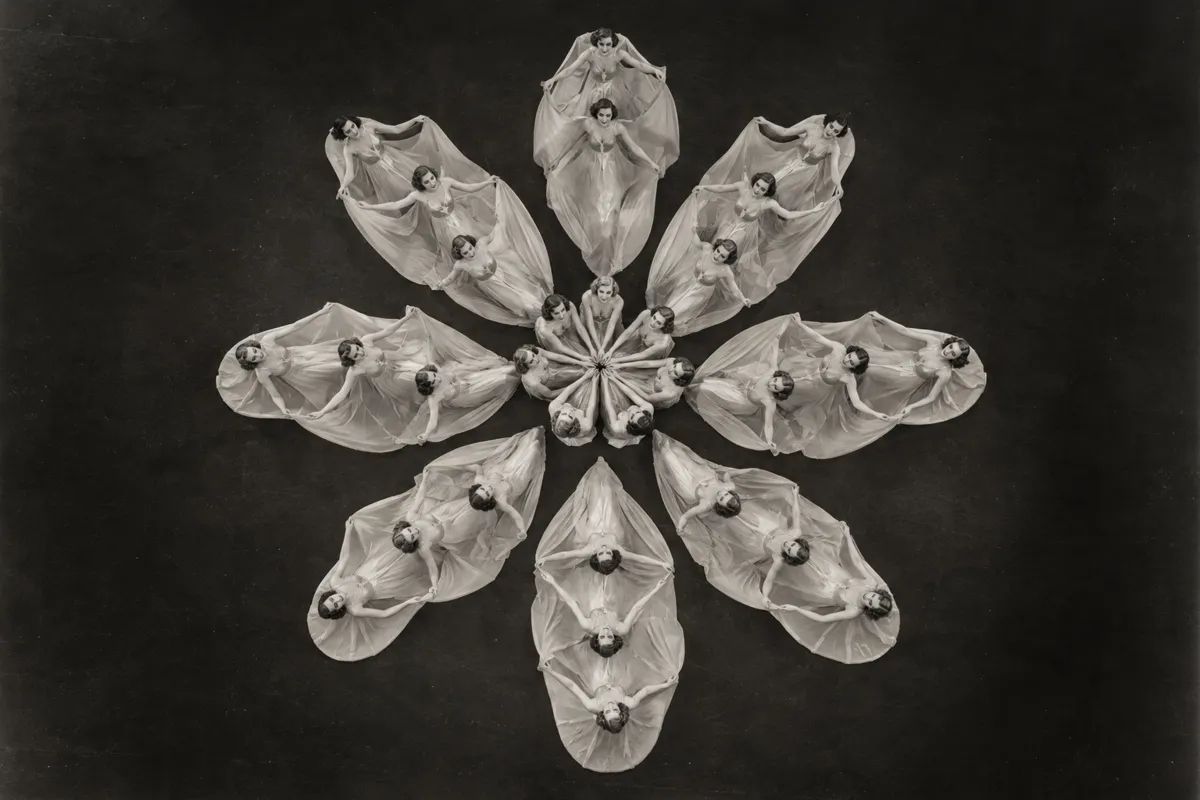
03 AI illustration: Overhead Flower Motif Created by Synchronized DancersFemale performers with flowing translucent fabric are arranged to resemble the petals of a blossoming flower from a direct vertical angle. This composition demonstrates the transformation of human figures into a singular, decorative organic shape through synchronized positioning.Illustration generated for the Atlas (AI)
AI illustration: Spiraling Arrangement of Dancers in Formal Attire
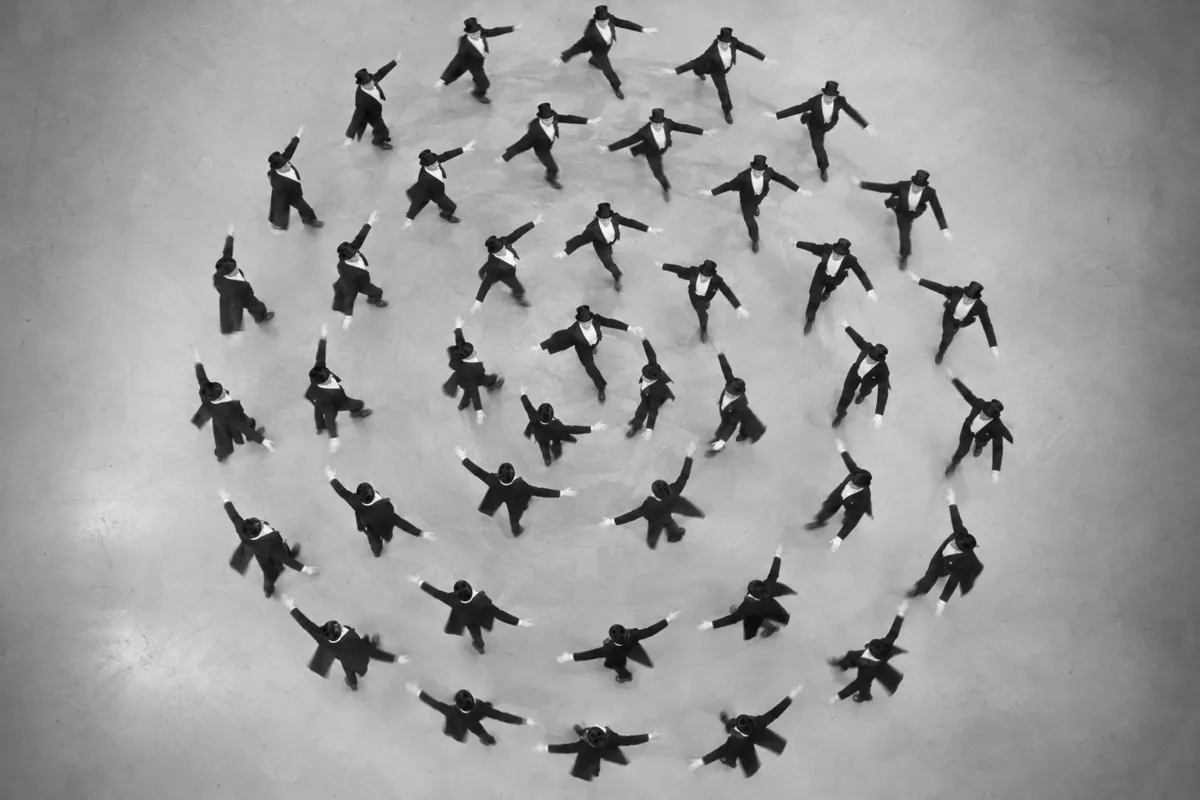
04 AI illustration: Spiraling Arrangement of Dancers in Formal AttireMen in formal attire with top hats are organized in a spiraling formation that suggests fluid motion across the stage floor. The top-down view highlights the mathematical arrangement and repetition of the figures, though the pattern is more dynamic than a static circle.Illustration generated for the Atlas (AI)
AI illustration: Kaleidoscopic Fan Pattern in Concentric Tiers
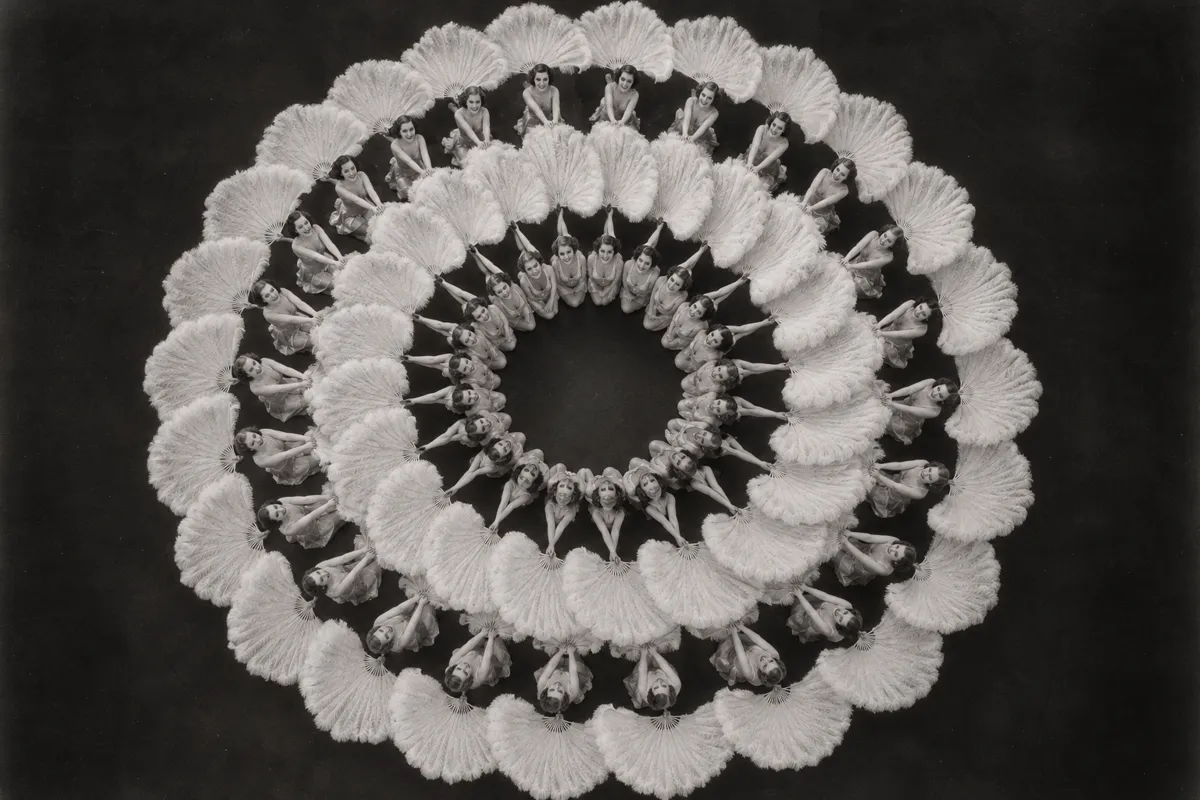
05 AI illustration: Kaleidoscopic Fan Pattern in Concentric TiersLayers of dancers holding large ostrich-feather fans create a dense, textured circular pattern that masks the individual floor space. This image exemplifies the use of props and choreography to generate a mechanical, kaleidoscopic visual effect from above.Illustration generated for the Atlas (AI)
AI illustration: Radial Starburst Formation in Synchronized Swimming
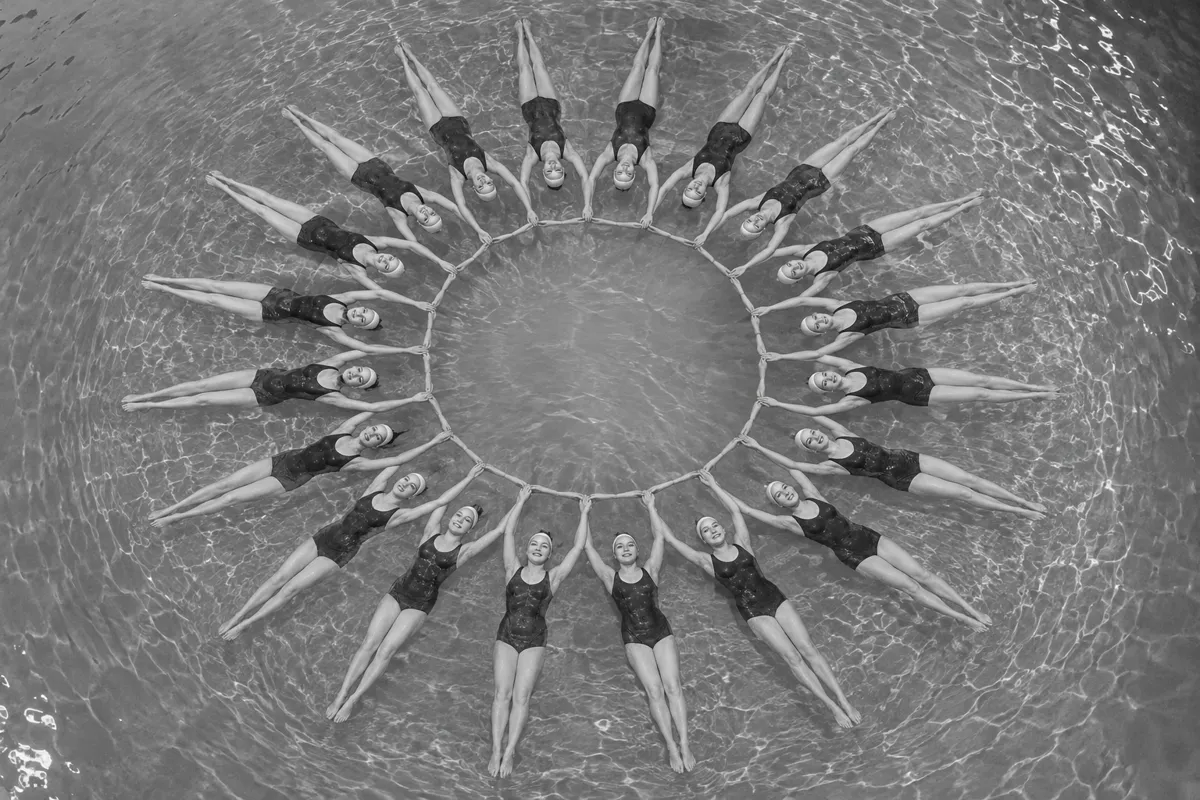
06 AI illustration: Radial Starburst Formation in Synchronized SwimmingSynchronized swimmers float in a pool, their bodies forming a starburst pattern with arms linked toward a central empty space. The overhead perspective captures the symmetry of the group, applying the principles of the human mosaic to an aquatic environment.Illustration generated for the Atlas (AI)
AI illustration: Sunburst Choreography Viewed from a Vertical Perspective
07 AI illustration: Sunburst Choreography Viewed from a Vertical PerspectiveDancers are spread out in a sunburst pattern with long rays extending from a tight central ring of performers. The vertical camera angle emphasizes the floor plan and the synchronized distribution of figures into a graphic, non-representational design.Illustration generated for the Atlas (AI)

Question

Why do these formations look different from the theater audience’s viewpoint?

Show possible answer +

From the side, bodies overlap and obscure the floor pattern. Looking straight down reveals spacing and symmetry across the whole formation.

Sources