Deep Focus
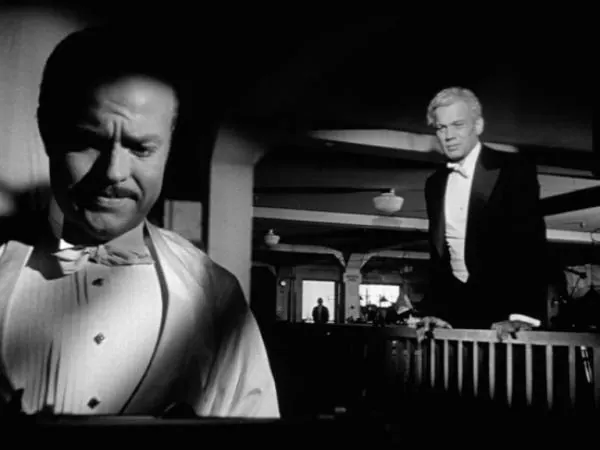
Deep-focus photography. 1941: Citizen Kane as a famous milestone.
Prompt
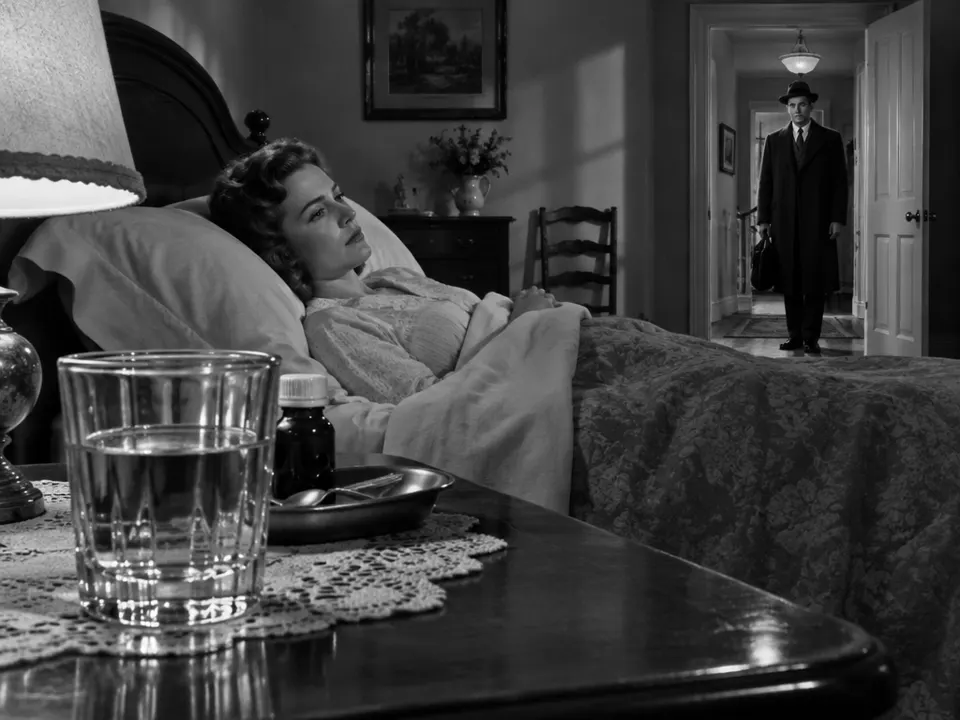
Apply a Deep Focus effect with simultaneously sharp foreground, middle ground, and background details. Resolve fine textures throughout, remove selective-focus blur, and use strong directional illumination, clean tonal separation, and restrained film grain to clarify spatial layers without artificial sharpening halos. Keep the original subject and composition.
Identify
Foreground, middle ground and background remain in focus simultaneously and tell the story in parallel.
Principle
Short focal length, small aperture, strong light, and precise staging increase the depth of field1. Some shots also use compositing2.
Example
Orson Welles and Gregg Toland: Citizen Kane, 1941.
Try it out
First describe the plot at the beginning, then at the very end. Decide which level deserves your attention first.
Background
Long history; further developed by Gregg Toland in the 1930s. 1941: Citizen Kane as a famous milestone. No added special effect and not invented in 1941. Deliberate photographic composition; greater depth of field alone does not explain a good composition.
recognize: Foreground, middle ground and background tell the story simultaneously; the distance remains legible. Mechanism: Short focal length, small aperture, strong light and precise staging keep near and far planes in focus; some shots also use compositing. example: Orson Welles / Gregg Toland: Citizen Kane, 1941. Practice: In a still image, first describe the action in the foreground, then the action in the background. Then decide for yourself on which level the most important information lies and what draws your eye there.
Short focal length, small aperture, strong light and precise staging keep near and far planes in focus; some shots also use compositing. Foreground, middle ground and background tell the story simultaneously; the distance remains legible. In the still image, first describe the action in the foreground, then the action in the very back. No added special effect and not invented in 1941. A deliberate photographic composition; greater depth of field alone does not explain a good composition.
Distinction
Not a post-processing special effect and not invented in 1941. A deliberate photographic composition; greater depth of field alone does not explain a good composition.
Aftermath
Influence on multi-layered image staging to this day.
Further examples · 7 images