H 312 / 3212020s

2.5D Parallax

2.5D parallax / 3D photo. 2020: 3D Photo Inpainting as a research milestone; layer animation older
Typeface · Exo 2

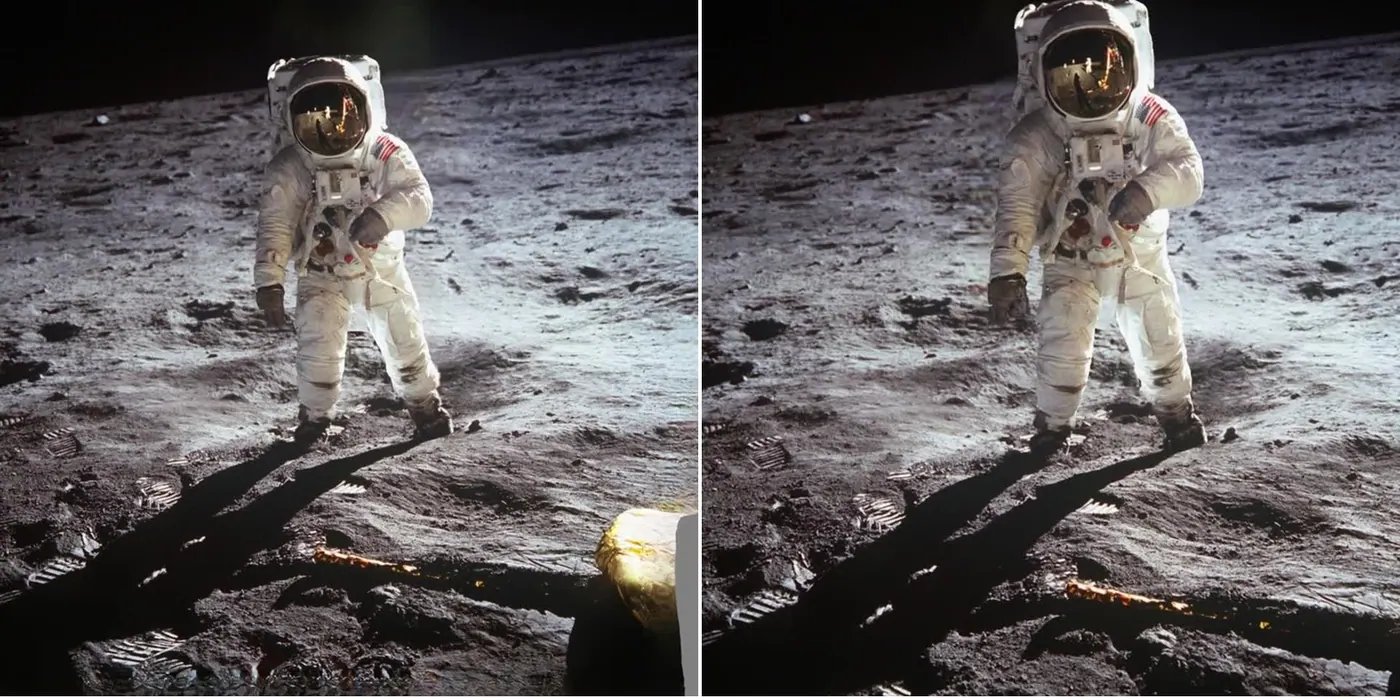
3D Photo Inpainting: two frames from Moon Swing, 2020.
3D Photo Inpainting: two frames from Moon Swing, 2020.Meng-Li Shih, Shih-Yang Su, Johannes Kopf and Jia-Bin Huang.View source ↗

Prompt

Apply a 2.5D Parallax effect as a single layered-depth still, separating foreground, subject, and background into subtly offset planes. Suggest shallow spatial movement through tiny edge reveals, gently differentiated focus, and seamlessly filled background gaps, without obvious collage seams. Keep the original subject and composition.

Identify

A photograph appears to move spatially, even though the depth is limited.

Principle

Image planes1 or depth values are shifted; hidden areas must be filled in.

Example

Shih and Team: 3D Photography, CVPR 2020.

Try it out

Animate three depth levels2 at different speeds.

Background

The term 2.5D describes spatial movement based on limited image and depth information. Manual layer animation is older; the CVPR work by Shih et al. in 2020 serves as a documented milestone. It transforms an RGB-D image into a layered depth representation and adds previously hidden color and depth areas. When the camera is moved laterally, near and far parts shift differently. Where this reveals new background behind a foreground object, information is missing in the original photo. The method estimates these areas. Therefore, pay particular attention to contours in the exercise. Small movements usually work more convincingly because less hidden space needs to be invented.

Distinction

A depth photograph is not a fully captured three-dimensional object with freely accessible back sides.

Aftermath

Parallax is the relative difference in motion, not a simple zoom. The depth of field must remain plausible so that the subject doesn't appear flat.

Further examples · 7 images
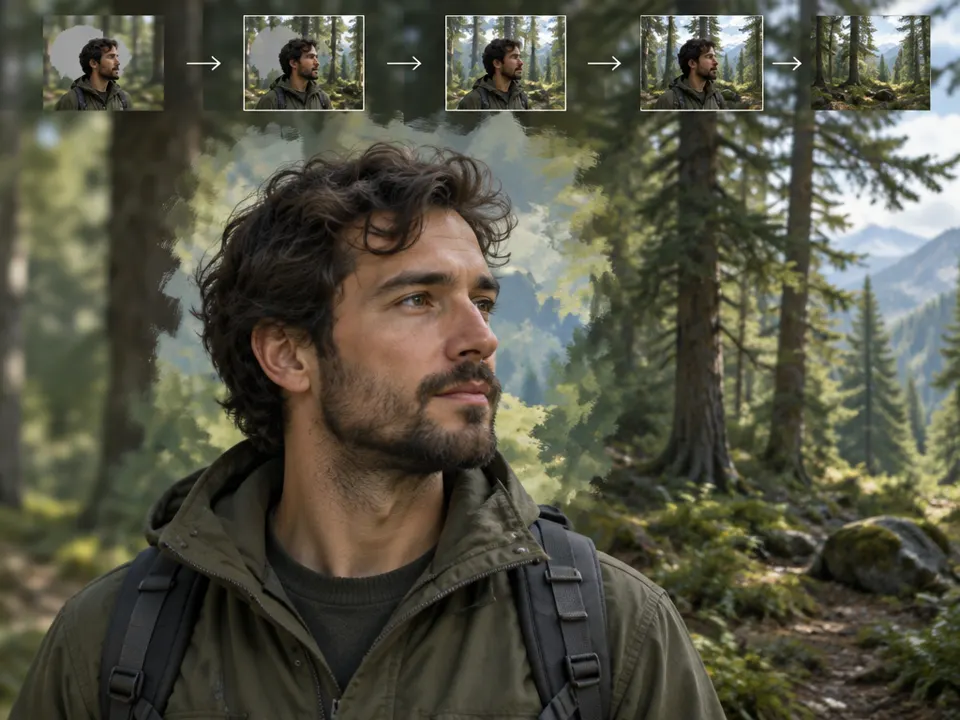
AI illustration: A sequence showing a portrait separated from its background
02 AI illustration: A sequence showing a portrait separated from its backgroundA sequence showing a portrait separated from its background. It illustrates the estimation of occluded areas necessary for spatial movement in 3D photography.Illustration generated for the Atlas (AI)
AI illustration: A city skyline divided into three distinct depth planes
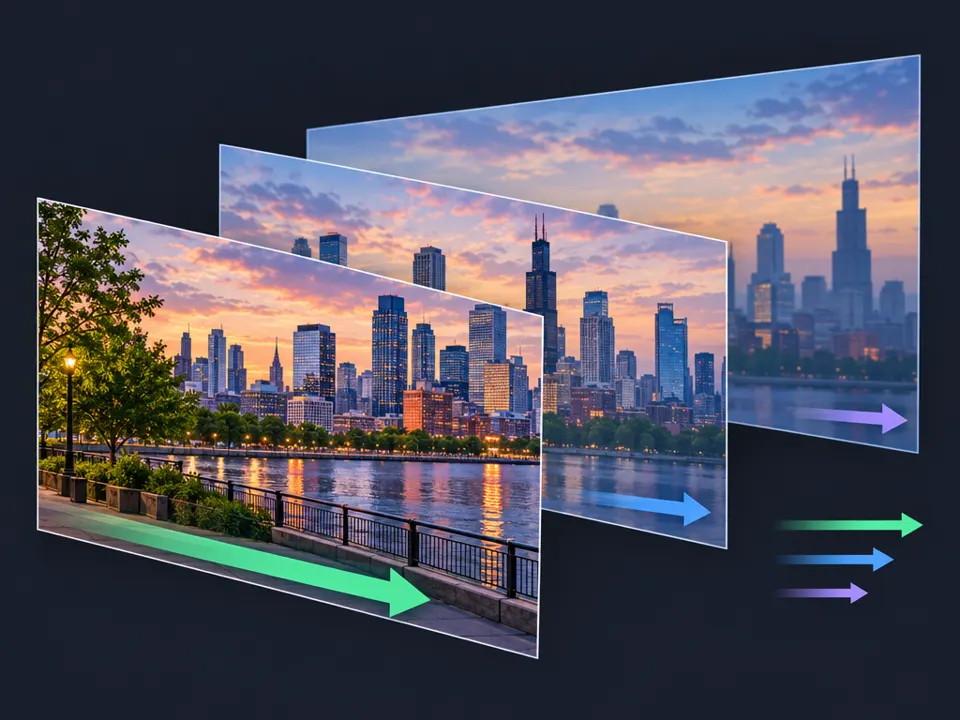
03 AI illustration: A city skyline divided into three distinct depth planesA city skyline divided into three distinct depth planes. Arrows indicate the varying speeds of movement for each layer to create a spatial effect.Illustration generated for the Atlas (AI)
AI illustration: Technical visualization of an RGB-D image and its mesh representation
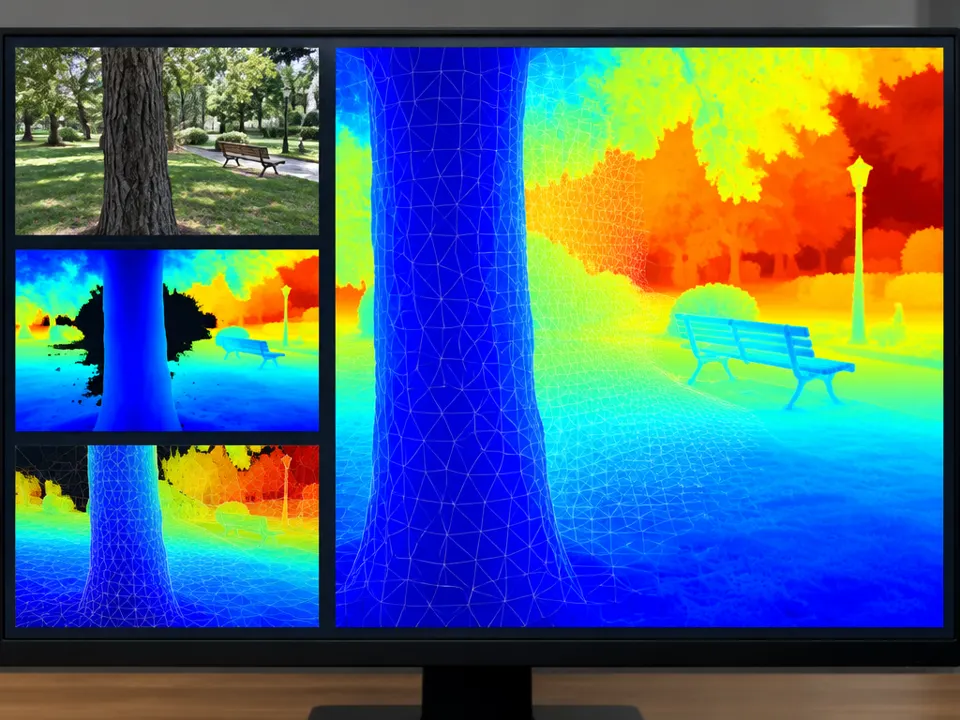
04 AI illustration: Technical visualization of an RGB-D image and its mesh representationTechnical visualization of an RGB-D image and its mesh representation. It shows the depth information used to project and animate a 2.5D scene.Illustration generated for the Atlas (AI)
AI illustration: A birthday photo is decomposed into three distinct depth layers along a Z
05 AI illustration: A birthday photo is decomposed into three distinct depth layers along a ZA birthday photo is decomposed into three distinct depth layers along a Z-axis. It clearly demonstrates the technical process of transforming a flat RGB image into a layered depth representation.Illustration generated for the Atlas (AI)
AI illustration: A software interface separating a photograph into discrete depth layers
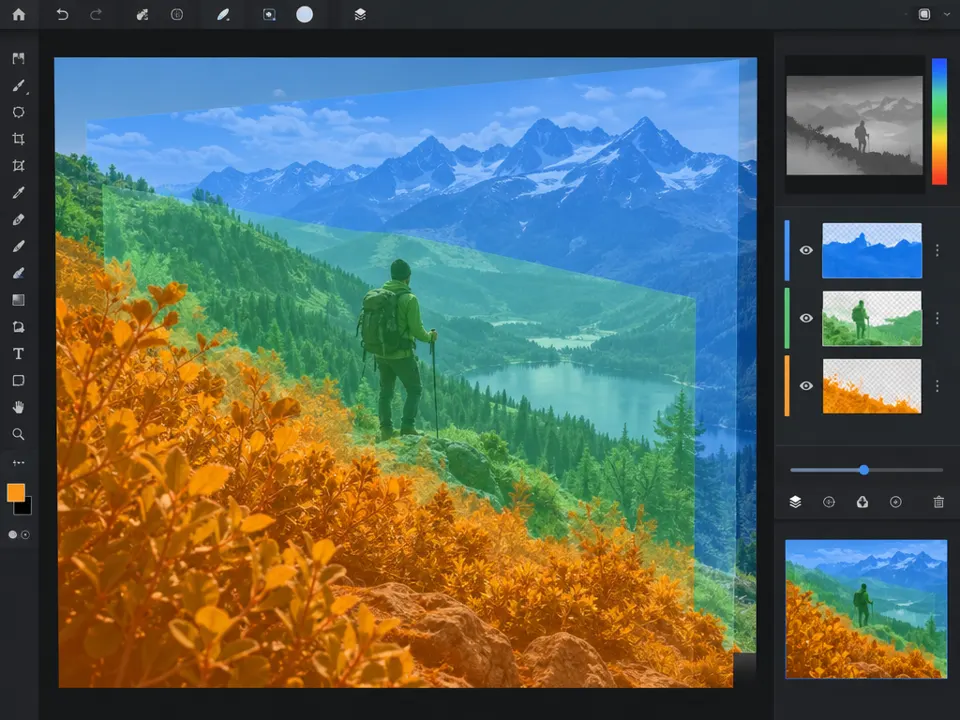
06 AI illustration: A software interface separating a photograph into discrete depth layersThe image shows a software interface separating a photograph into discrete depth layers. This visualization demonstrates how 2.5D parallax is achieved by assigning different planes to foreground, midground, and background elements.Illustration generated for the Atlas (AI)
AI illustration: A portrait is split into three physical layers representing foreground, m
07 AI illustration: A portrait is split into three physical layers representing foreground, mA portrait is split into three physical layers representing foreground, midground, and background. This depicts the decomposition of a static image into planes for differential shifting.Illustration generated for the Atlas (AI)

Question

Why do gaps appear behind a person when there is too much movement?

Show possible answer +

The new view reveals areas that were hidden in the original image and therefore need to be added.

Sources