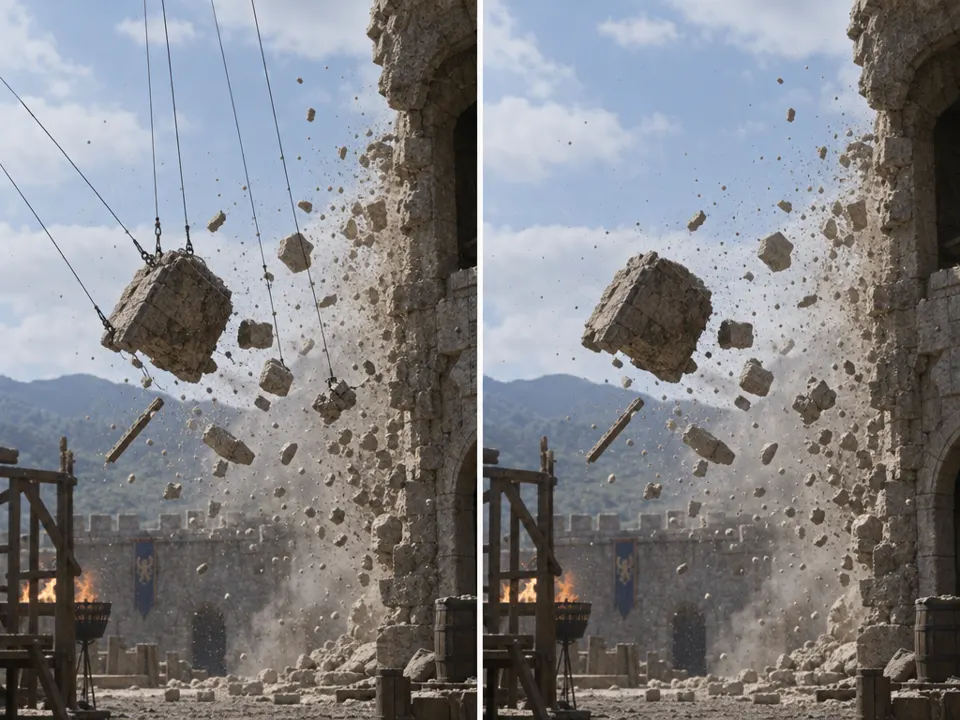
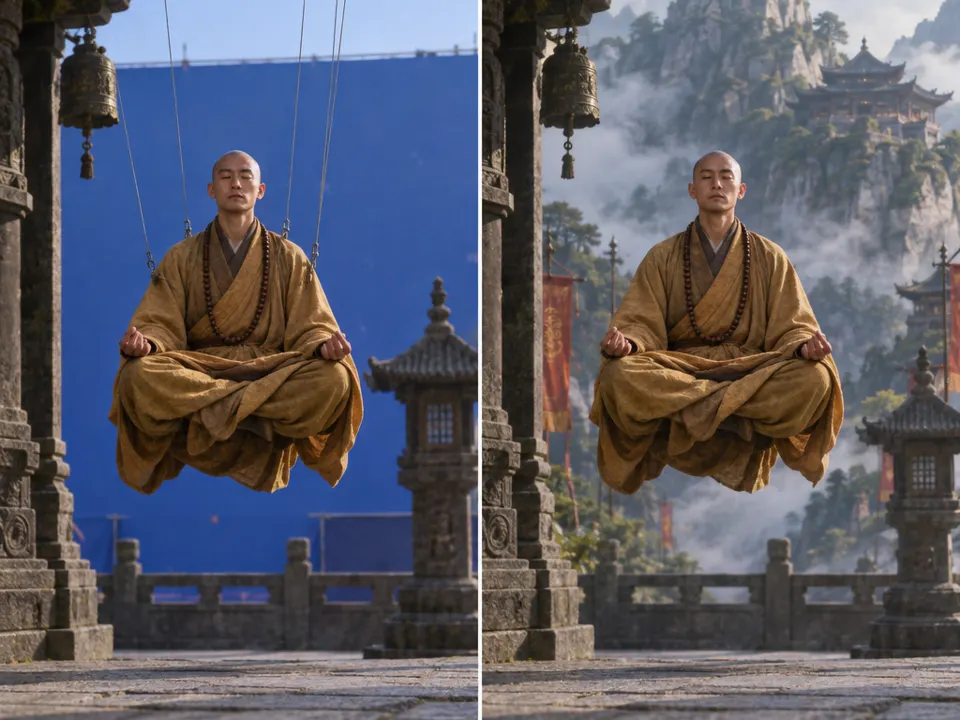
Apply a Wire Removal effect by erasing visible suspension wires, harnesses, rods, and support rigs around the subject. Reconstruct the exposed background with matching texture, grain, lighting, and clean contours, making any suspended elements appear convincingly unsupported without changing their positions. Keep the original subject and composition.
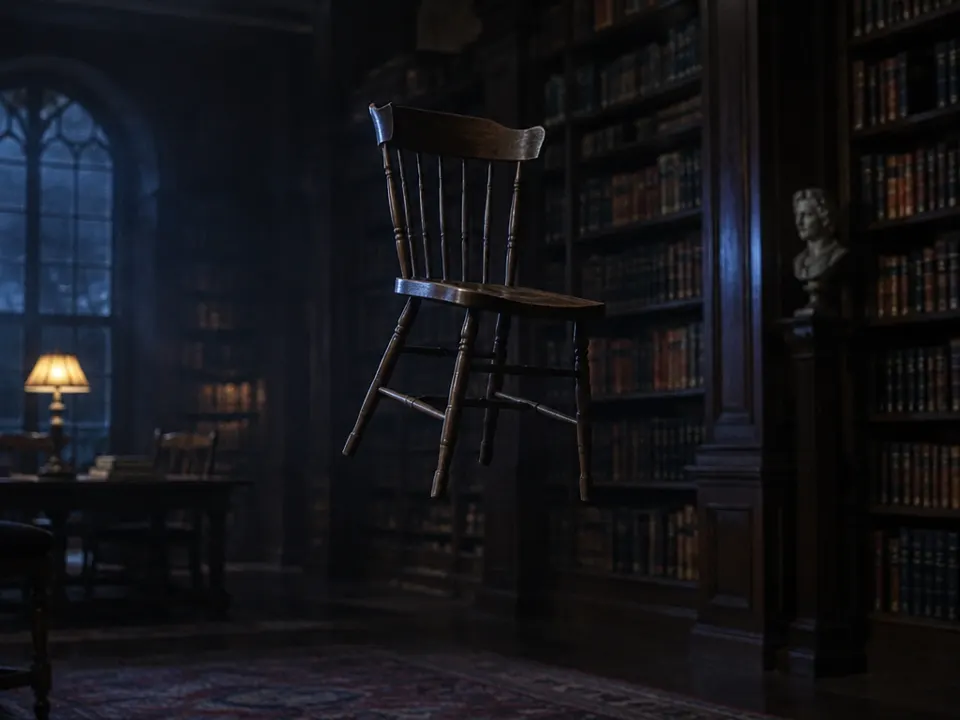
People or objects are [floating without visible supports].
Principle
[Wires are masked1]and [replaced with asuitable background].
Example
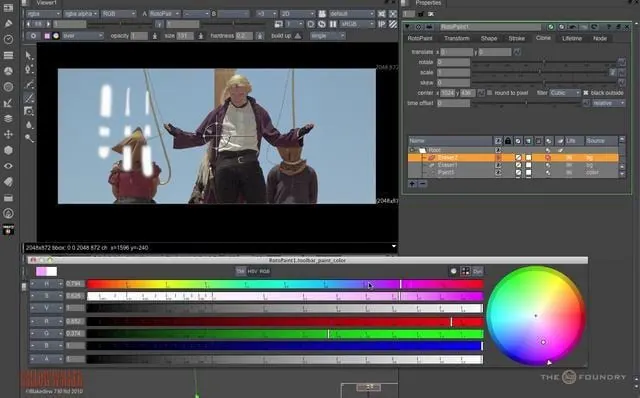
Foundry: Wire Removal With RotoPaint, 2010.
Try it out
Select wire, shadow, and hidden background separately.
Background
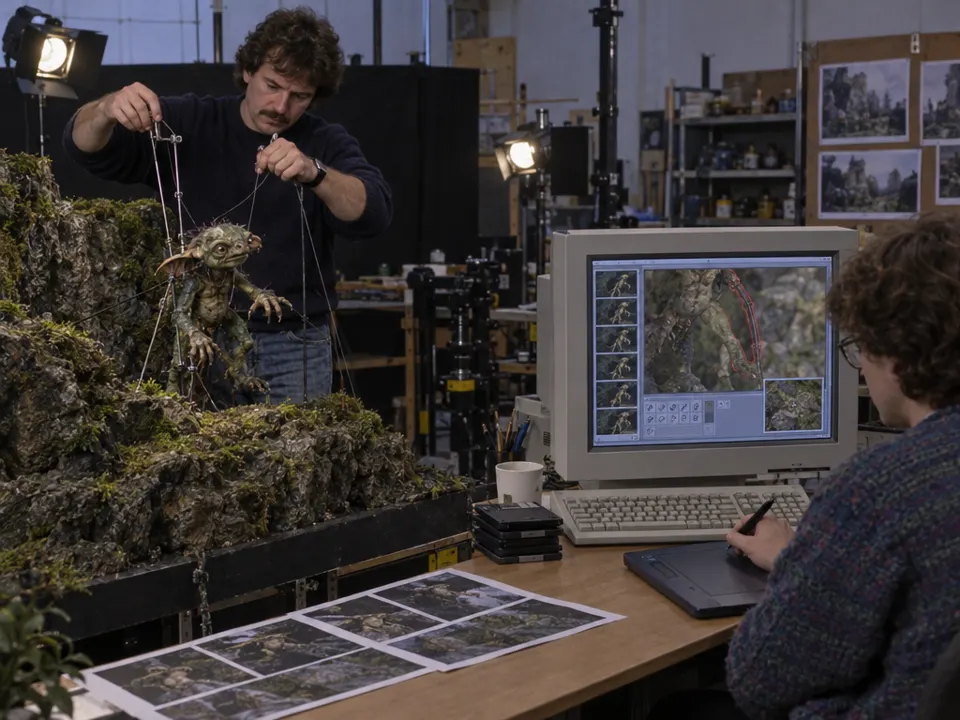
Digital wire removal makes physical stunts and puppet movements invisible. In Foundry's example, RotoPaint uses masks and copied image areas; tracking2keeps the repair in place as the camera moves. The 1990s mark the widespread use of digital technology, not the invention of all ways to hide wires. The finished effect is usually intended to be so subtle that it's not noticeable as an effect at all.
Distinction
It's not just the wire that needs to disappear. Motion blur, shadows, reflections, grain, and obscured image parts also require accurate reconstruction. Asingle clean frame doesn't guarantee astable clip.
Aftermath
Invisible effects often consist of many carefully coordinated small repairs.
Further examples · 7 images
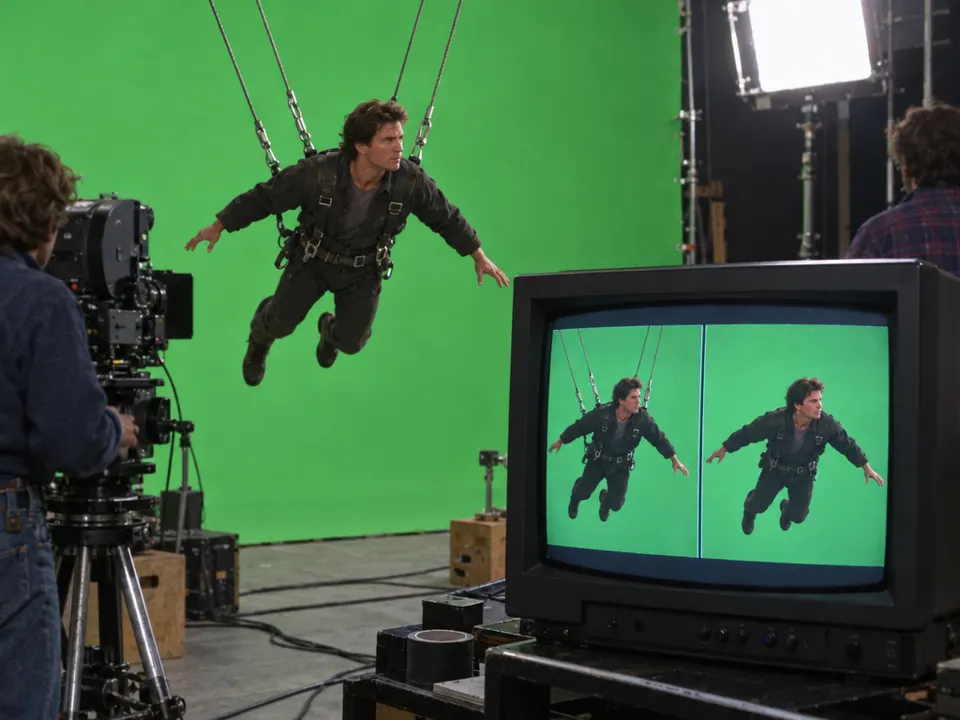
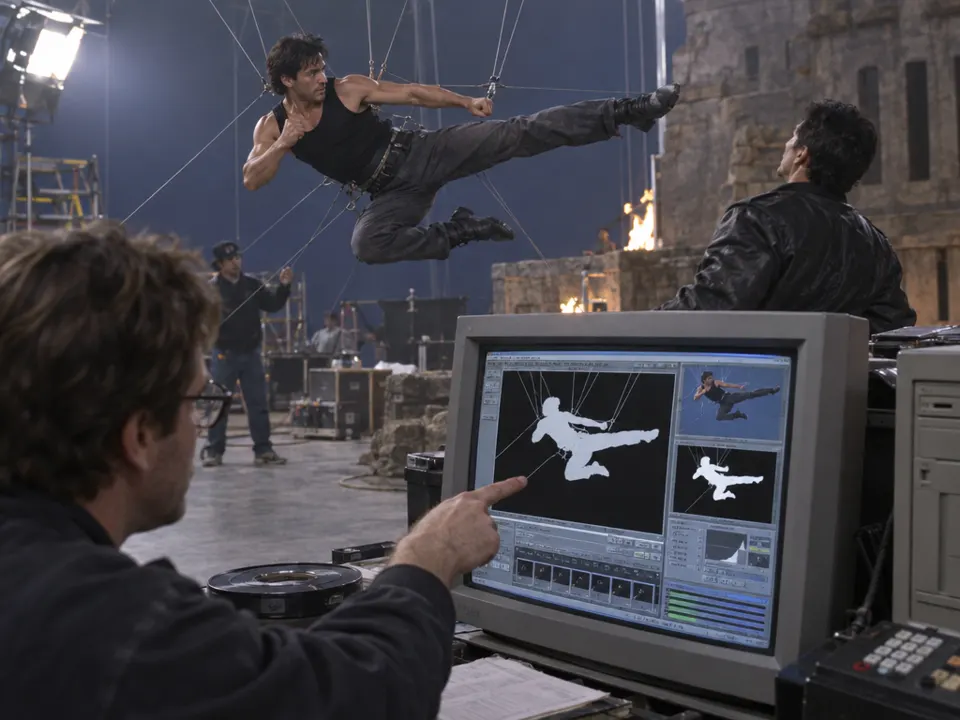
02AI illustration: A stuntman is suspended by wires against a green screenA stuntman is suspended by wires against a green screen. The monitor shows a side-by-side comparison of the raw footage and the final result where the supporting wires have been digitally erased.Illustration generated for the Atlas (AI)03AI illustration: A wooden chair appears to float in the center of a libraryA wooden chair appears to float in the center of a library. The absence of visible supports illustrates the final stage of wire removal where the suspension apparatus is completely hidden.Illustration generated for the Atlas (AI)04AI illustration: An actor performs a mid-air kick while supported by a complex wire rigAn actor performs a mid-air kick while supported by a complex wire rig. A computer monitor displays the digital masking process used to isolate the subject and remove the hardware.Illustration generated for the Atlas (AI)05AI illustration: A technician uses a digital tablet to edit footage of a puppet moved by sA technician uses a digital tablet to edit footage of a puppet moved by strings. The software interface shows the frame-by-frame process of painting out the mechanical supports to make the creature appear independent.Illustration generated for the Atlas (AI)06AI illustration: The image provides a direct comparison of a falling stone blockThe image provides a direct comparison of a falling stone block. The left frame shows the physical safety wires, while the right frame shows the wires erased to create the illusion of free-falling debris.Illustration generated for the Atlas (AI)07AI illustration: A comparison shows a levitating monk with wires and a blue screen, then tA comparison shows a levitating monk with wires and a blue screen, then the final result without wires. The second panel demonstrates successful digital wire removal.Illustration generated for the Atlas (AI)
Question
Why isn't painting over the image in a single frame sufficient?
Show possible answer +Hide answer −
The camera, wire, and background are moving; the repair must be timed to coincide with them.