Vortograph
1917, Alvin Langdon Coburn's abstract photographs
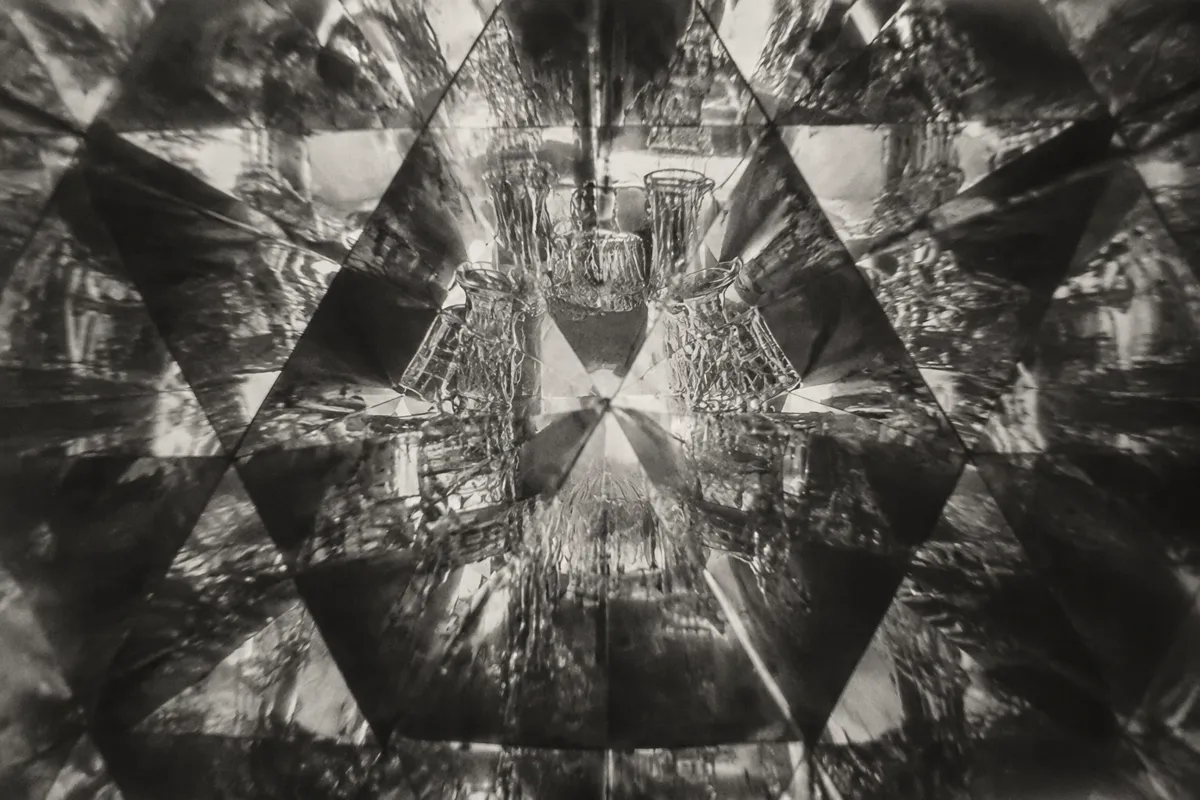
Prompt
Apply the Vortograph effect with triangular mirrored fragments, overlapping angular reflections, bright crystalline planes, and deep geometric shadows. Concentrate kaleidoscopic repetition within existing forms and surrounding textures, retaining a readable central silhouette. Use monochrome photographic grain and slightly imperfect optical reflections. Keep the original subject and composition.
Identify
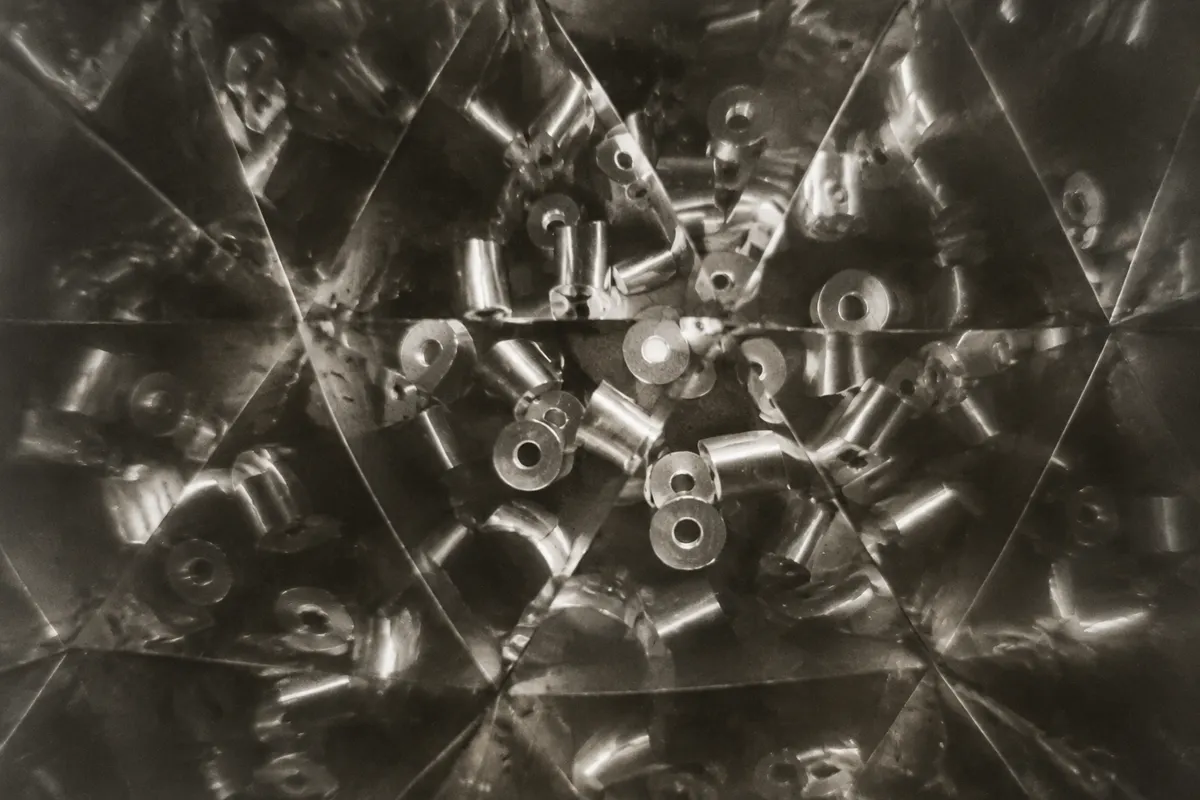
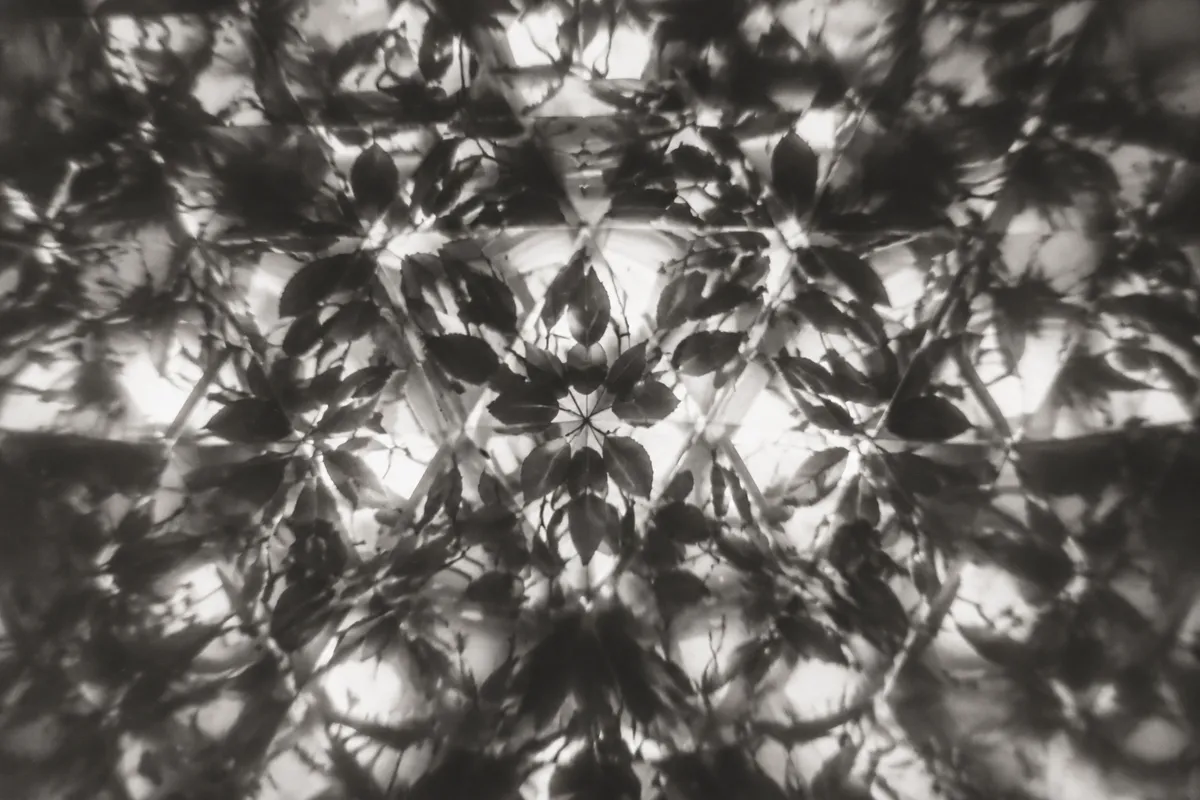
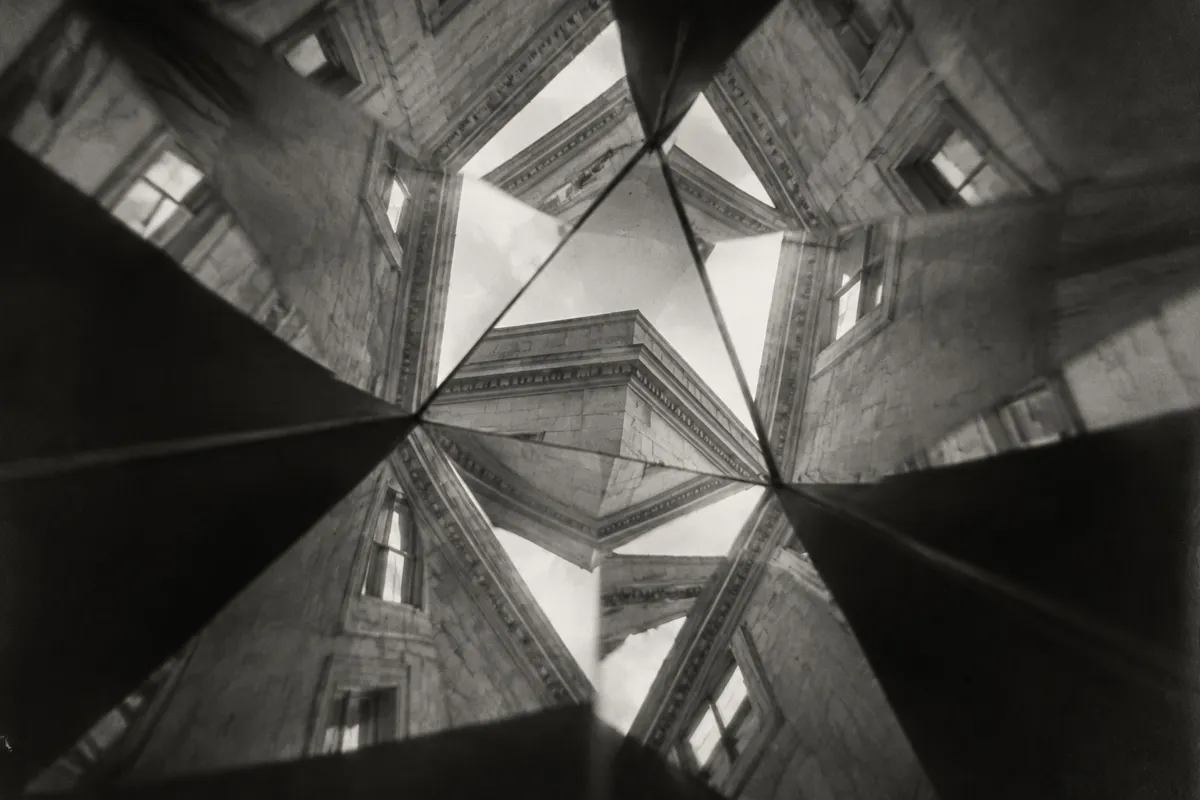
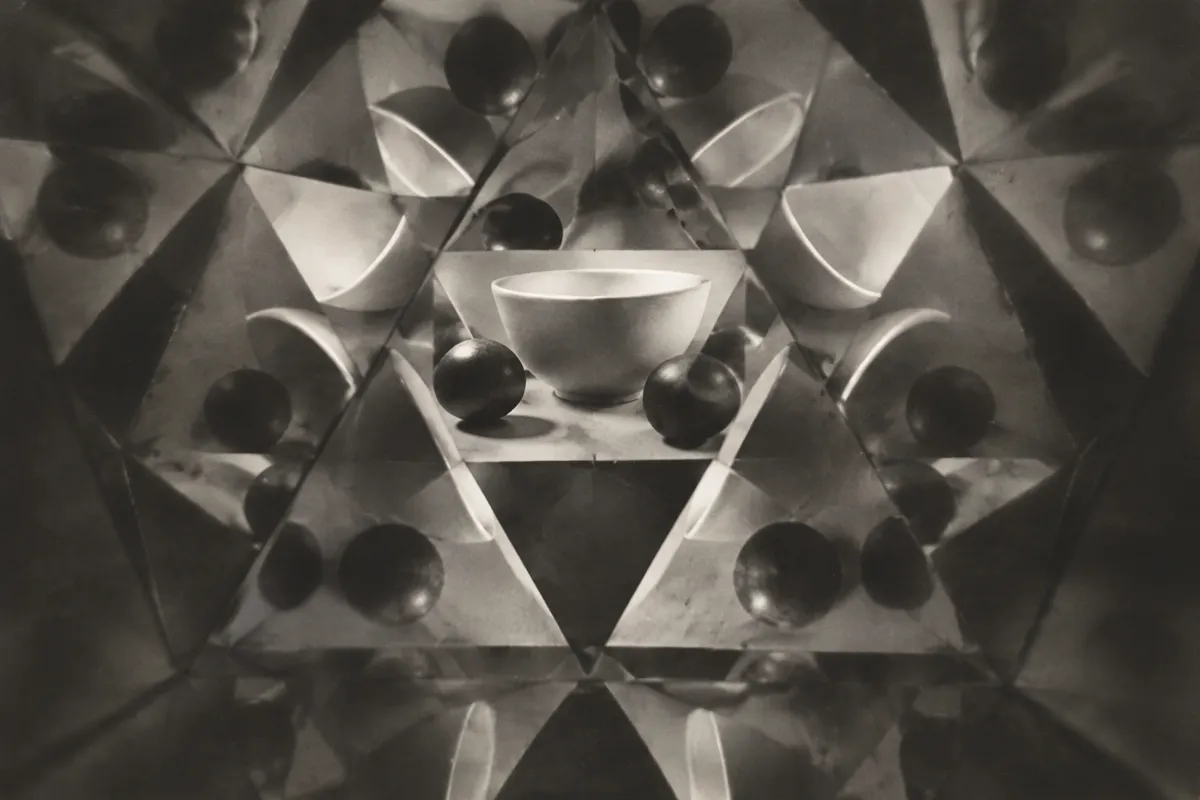
Angular fragments and repeated reflections form an abstract pattern of overlapping triangles, bright planes, and deep shadows. Recognizable objects often disappear into kaleidoscopic geometry.
Principle
Three mirrors arranged as a triangular tube reflect the subject along multiple paths before light enters the camera lens. The pattern forms optically during exposure1, rather than through chemical development or assembled prints.
Example
Alvin Langdon Coburn: Vortograph, 1917.
Try it out
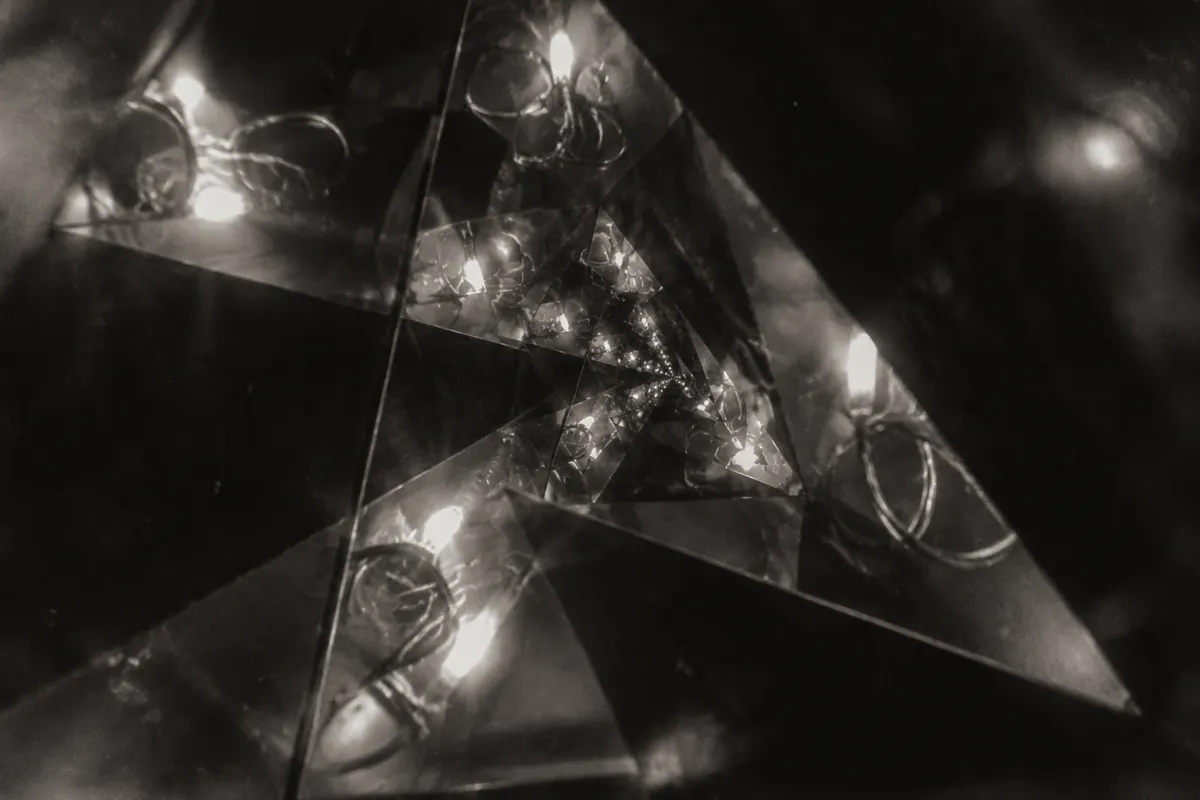
Arrange three small mirrors into a triangular tube, reflective sides inward, and look through it at crumpled paper under side lighting.
Background
In 1917, Alvin Langdon Coburn made abstract photographs using a mirror attachment called a vortoscope2. Its name connected the pictures with Vorticism3, a modern art movement associated with angular forms and dynamic compositions. Three inward-facing mirrors formed a triangular tube in front of the camera lens. Their reflections broke ordinary subjects into intersecting shapes and repeated fragments. This was a mirror system, not a solid glass prism splitting light into colors. Coburn's vortographs explored whether photography could create an independent visual composition rather than simply describe recognizable objects.
Distinction
Unlike multiple exposure, a vortograph can record its overlapping forms in a single exposure. Unlike a refracting prism, its mirror attachment redirects light by reflection.
Aftermath
The vortograph shows how changing the light path before exposure can turn descriptive photography toward abstraction.
Further examples · 6 images
Question
Why can several versions of a shape appear without exposing the photograph several times?
Show possible answer +Hide answer −
The mirrors send reflected views of the subject toward the lens along different paths. The camera records those views together during one exposure.