H 079 / 3211910s

Photodynamism

1910s; Anton Giulio Bragaglia's experiments from 1911
Typeface · Six Caps

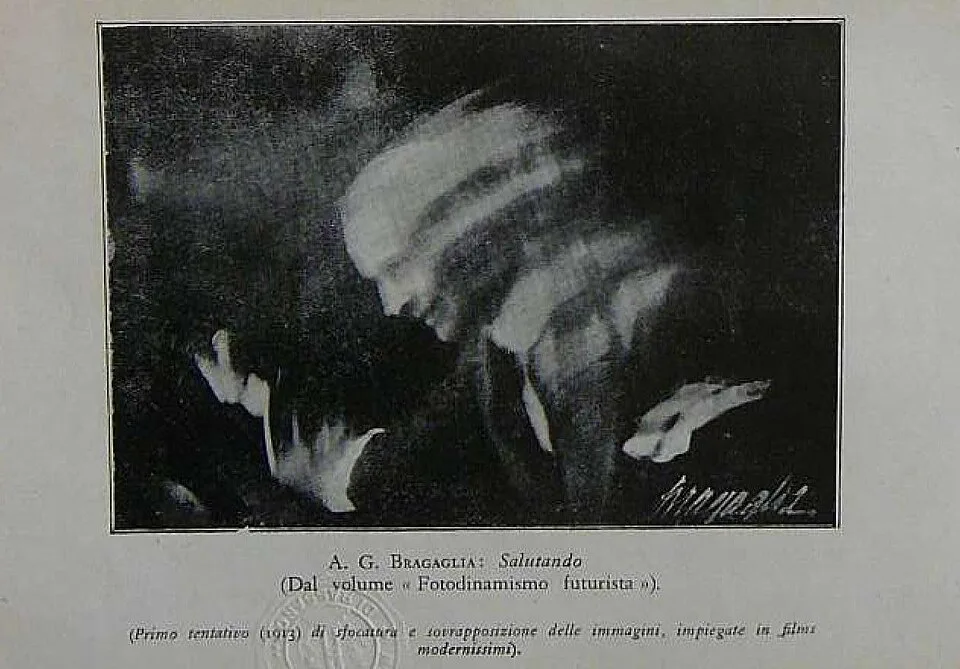
Bragaglia's Saluting Figure in Motion. A man's bowed head and gesturing hands dissolve into overlapping contours and pale, flowing trails against a dark background.
Bragaglia's Saluting Figure in Motion. A man's bowed head and gesturing hands dissolve into overlapping contours and pale, flowing trails against a dark background.Sebastiano Arturo Luciani · Public domain · via Wikimedia CommonsView source ↗

Prompt

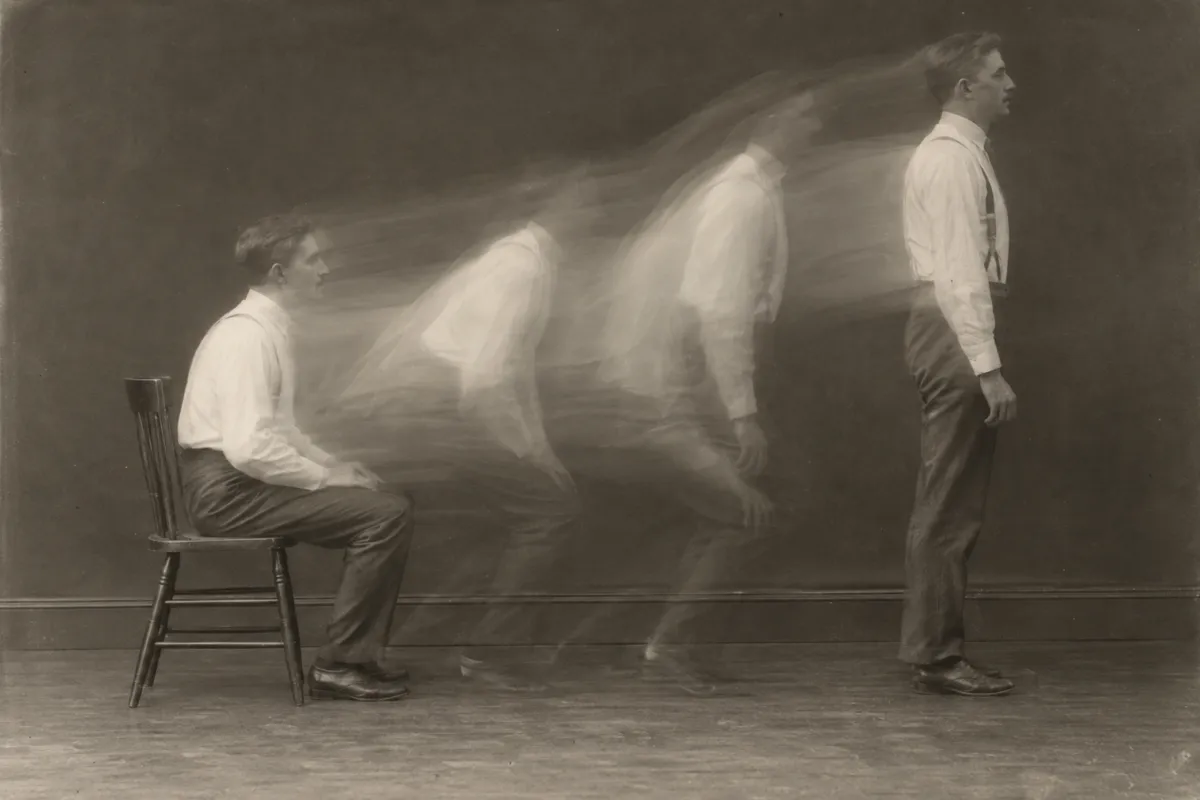
Apply Photodynamism by dissolving implied movement into connected translucent ribbons, flowing smears, and overlapping contours across a relatively still background. Anchor the motion with a few sharper resting forms, using subdued monochrome tones and long-exposure luminosity rather than separate evenly spaced snapshots. Keep the original subject and composition.

Identify

Moving figures dissolve into flowing motion trails, overlapping contours, and translucent smears against a relatively still background. Sharper resting positions sometimes anchor the blurred movement.

Principle

During a long exposure1, light from a moving subject reaches successive areas of the photographic surface. Continuous recording creates connected traces rather than isolated snapshots; the trails form during exposure, not development2.

Example

Anton Giulio Bragaglia: The Typist, 1911.

Try it out

Steady a camera for a one-second exposure and move your hand sideways, pausing briefly halfway; compare the pause with the flowing trace.

Background

Anton Giulio Bragaglia developed photodynamism with his brother Arturo in the early 1910s, within the orbit of Italian Futurism3. Their photographs explored movement as a continuous experience rather than a sequence of frozen poses. A stationary camera and prolonged exposure let gestures spread across the image. Pauses could leave stronger outlines, while faster passages appeared faint or blurred. Bragaglia wanted these traces to suggest the expressive energy of an action, not merely measure its path. Some Futurist painters resisted his claims for photography as a Futurist art.

Distinction

Chronophotography typically separates motion into successive recorded phases, sometimes within one image. Photodynamism instead emphasizes the continuous transitions between positions, using blur as its central expressive material.

Aftermath

Photodynamism teaches that a photograph can describe an interval of movement rather than a single frozen instant.

Further examples · 7 images
AI illustration: Man pivoting head with motion trails
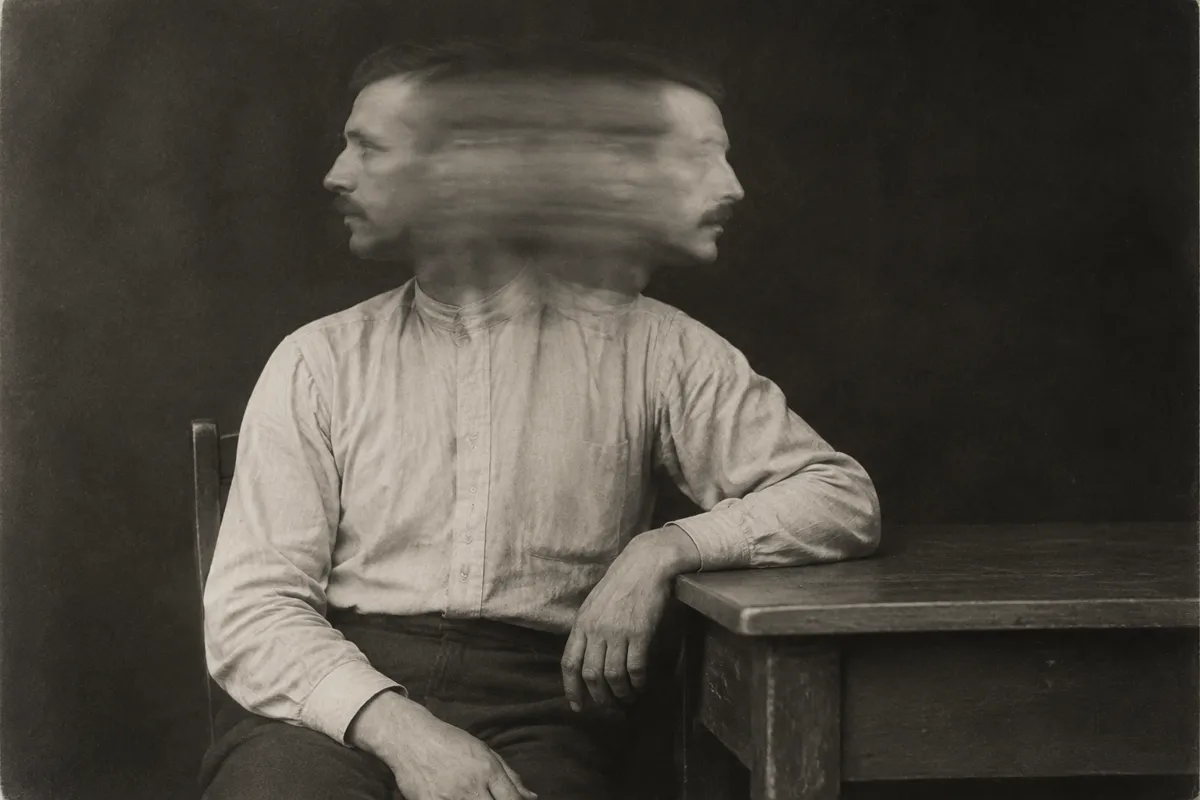
02 AI illustration: Man pivoting head with motion trailsA man sits at a table while his head pivots, creating a ghostly translucent smear between two sharper resting profiles. The image captures the dematerialization of the subject through continuous motion recorded on a single plate.Illustration generated for the Atlas (AI)
AI illustration: Arm trajectories captured through long exposure
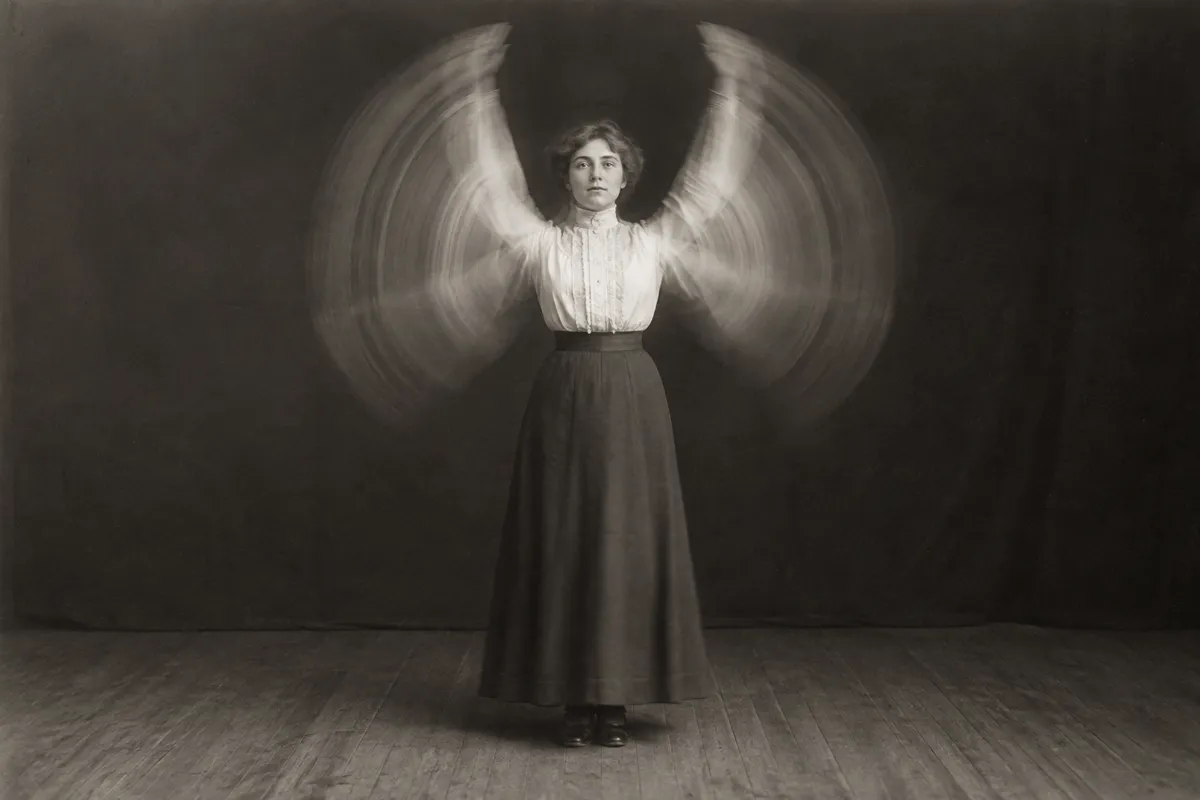
03 AI illustration: Arm trajectories captured through long exposureA woman stands still while her arms move rapidly, resulting in translucent arc-shaped traces that resemble wings. This illustrates the rhythmic trajectory of movement through space while the torso remains a solid anchor.Illustration generated for the Atlas (AI)
AI illustration: Dynamic blur of a carpenter at work
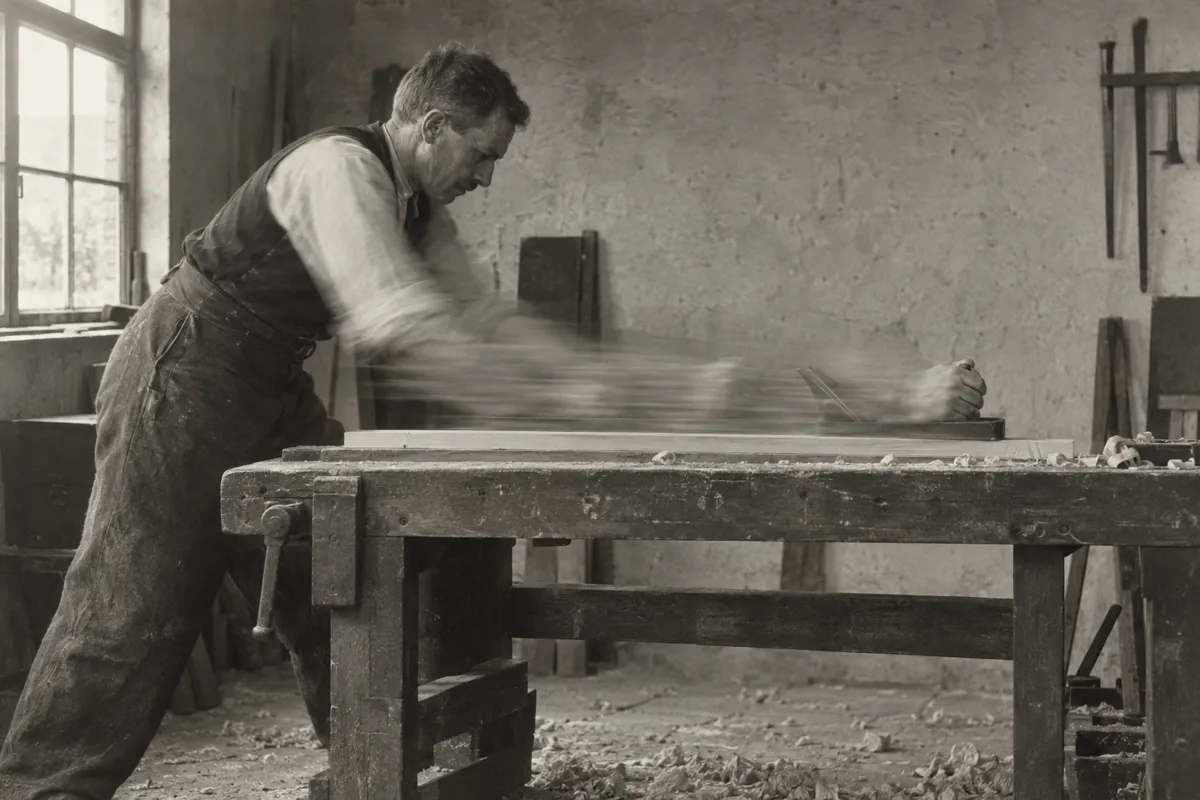
04 AI illustration: Dynamic blur of a carpenter at workA carpenter works at a bench, with his arms and tool becoming a horizontal blur of repeated action. The blurred mid-action contrasts with the stationary environment to emphasize the energy of labor.Illustration generated for the Atlas (AI)
AI illustration: Luminous motion trails of a spinning dancer
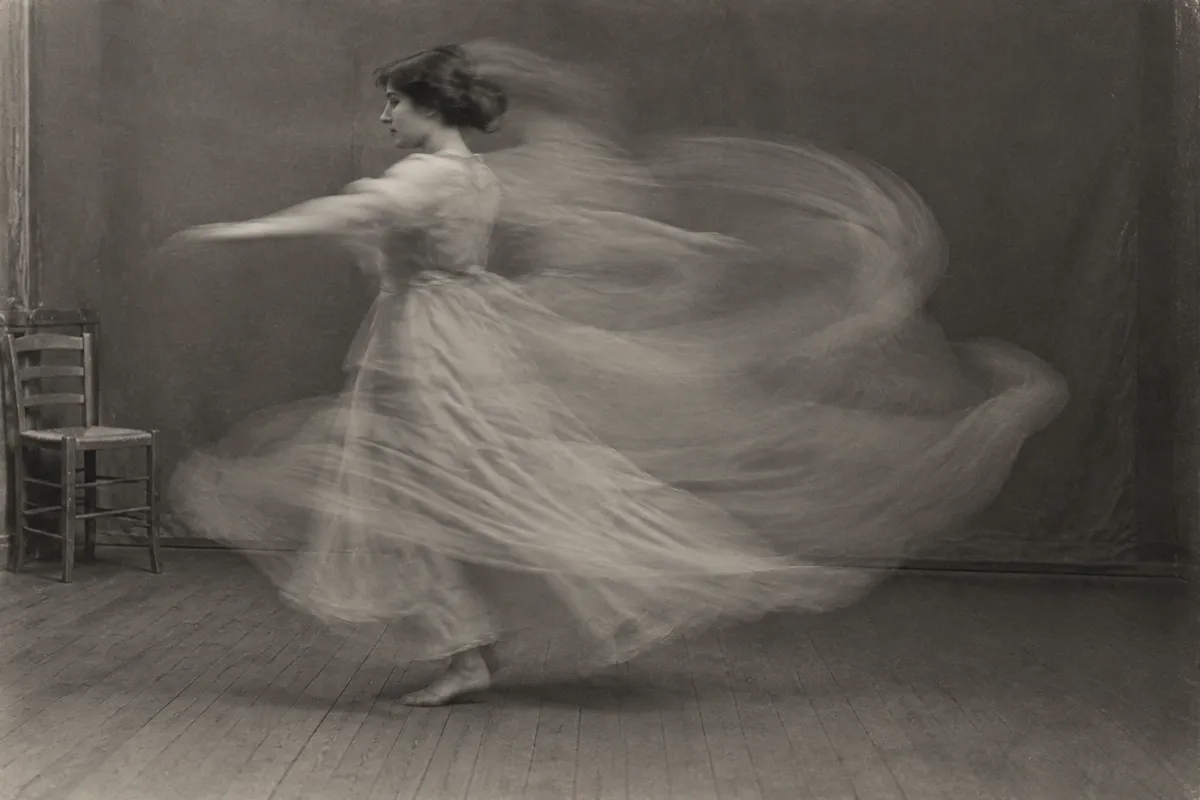
05 AI illustration: Luminous motion trails of a spinning dancerA dancer twirls in a long dress, turning the fabric into a voluminous series of flowing motion trails and overlapping contours. The figure appears to dissolve into the surrounding space through the recording of her continuous path.Illustration generated for the Atlas (AI)
AI illustration: Translucent smears of hands playing piano
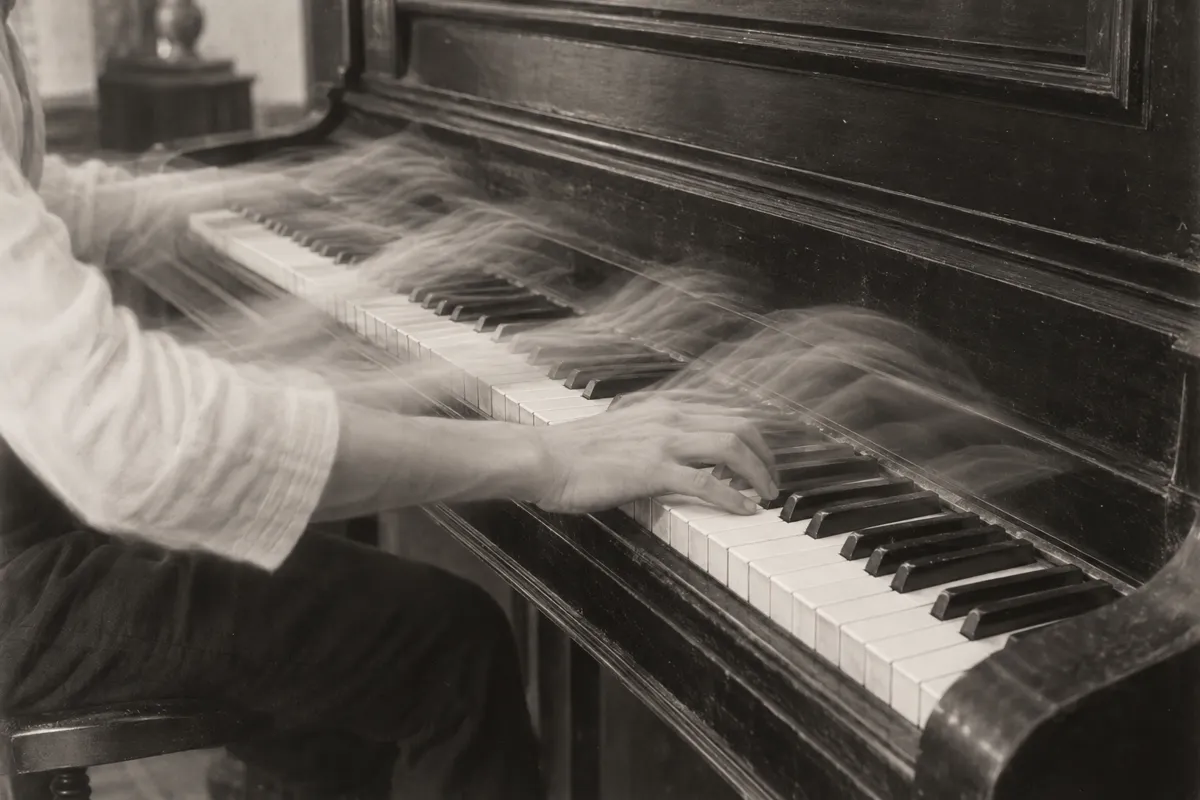
06 AI illustration: Translucent smears of hands playing pianoHands move rapidly across a piano keyboard, leaving behind ethereal smears of light that track the musician's gestures. These traces visualize the duration and speed of the performance within a single frame.Illustration generated for the Atlas (AI)
AI illustration: Continuous recording of a man rising from chair
07 AI illustration: Continuous recording of a man rising from chairA man is shown rising from a chair, with his transition through space recorded as a series of connected, translucent overlapping figures. The resulting image maps the entire evolution of the movement from a seated to a standing position.Illustration generated for the Atlas (AI)

Question

Why can a brief pause produce a clearer outline within a motion trail?

Show possible answer +

During the pause, the subject's image stays in roughly the same place on the recording surface. Light accumulates there instead of spreading along its path.

Sources