H 183 / 3211970s

Vector Display Graphics

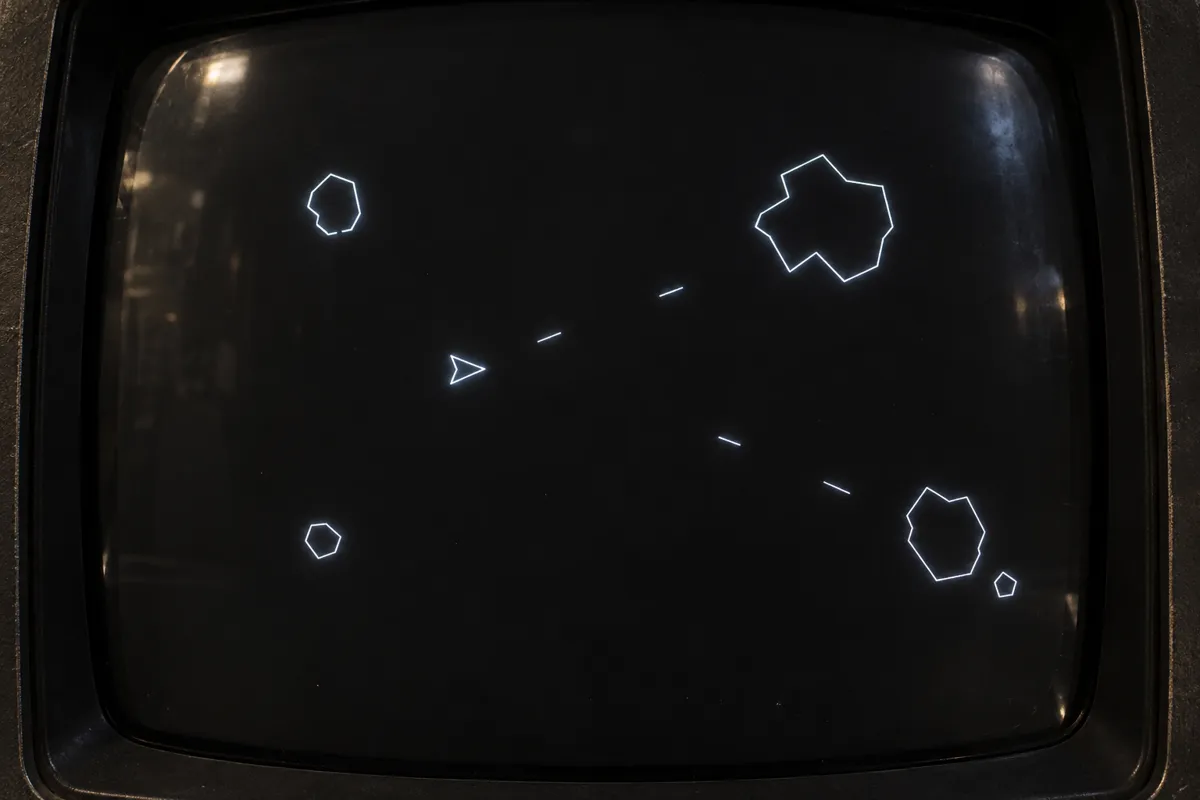
1970s, arcade games like Asteroids
Typeface · Wire One

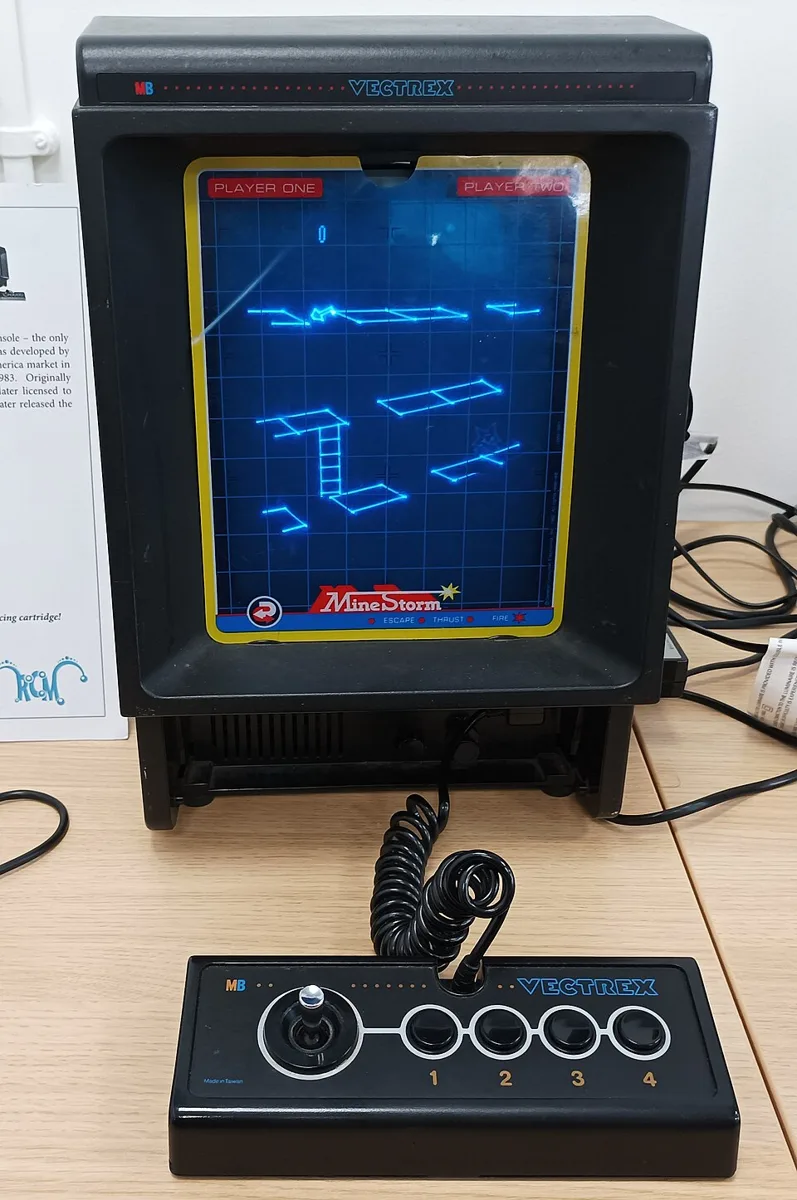
Luminous Vector Platforms and Ladder. Bright blue geometric platforms and a ladder glow across a Vectrex screen beneath a colored overlay.
Luminous Vector Platforms and Ladder. Bright blue geometric platforms and a ladder glow across a Vectrex screen beneath a colored overlay.RetroEditor · CC BY 4.0 · via Wikimedia CommonsView source ↗

Prompt

Apply a 1970s vector display graphics effect, rebuilding visible forms as continuous luminous green or cyan outlines against deep black. Use smooth geometric strokes, bright intersections, subtle phosphor halos, and restrained persistence trails, without filled shading, raster stair-stepping, or paper texture. Keep the original subject and composition.

Identify

You see crisp, glowing lines forming geometric shapes on a black background. The lines have no jagged pixels. Their intersections glow intensely.

Principle

An electron beam is drawn directly from point to point across a phosphor screen1. This continuous movement creates perfectly smooth, unbroken lines.

Example

Atari, Inc.: Asteroids, 1979.

Try it out

Draw a star without lifting your pen. Notice how ink pools at the points where lines cross, resembling glowing vector intersections.

Background

In the 1970s, computer memory was very expensive. Raster screens2 wasted memory by storing every blank background pixel. Vector displays solved this by only processing coordinates for the actual shapes. An electron gun3 physically moved its beam between these X and Y coordinates. This stroke technique traced lines directly onto the glowing screen. Arcade makers loved this because it allowed fast, complex motion without heavy computing power. Games like Asteroids and Tempest used this hardware for smooth space combat. The technology faded when memory chips became cheaper.

Distinction

Unlike raster graphics which build images row by row using square pixels, vector monitors draw lines continuously like a pen.

Aftermath

It reveals how early hardware constraints inspired elegant engineering solutions for real-time graphics.

Further examples · 7 images

Glowing Vector Maze on Vectrex
02 Glowing Vector Maze on VectrexA player operates a Vectrex console displaying a luminous, angular maze on its dark screen. The continuous phosphor outlines visibly demonstrate the console's directly drawn vector graphics.Kai Wegner from Berlin, Deutschland · CC BY 2.0 · Wikimedia Commons
Spike Character in Glowing Vector Lines
03 Spike Character in Glowing Vector LinesA blue outline character stands beneath an angular speech balloon containing the name Spike. The glowing connected contours and stroke lettering clearly show the Vectrex's vector display technique.RetroEditor · CC BY 4.0 · Wikimedia Commons
Vector Spacecraft on a Dark Screen
04 Vector Spacecraft on a Dark ScreenSmall angular spacecraft and scattered points shine against the dark screen of a Vectrex console. The spacecraft are visibly constructed from glowing vector strokes rather than filled pixel shapes.A7N8X · CC0 · Wikimedia Commons
AI illustration: Vector monitor displaying geometric space game shapes
05 AI illustration: Vector monitor displaying geometric space game shapesSharp, glowing geometric shapes are rendered against a dark background, mimicking the aesthetic of early arcade vector games. The lines are perfectly continuous and lack the staircase effect typical of pixel-based raster monitors.Illustration generated for the Atlas (AI)
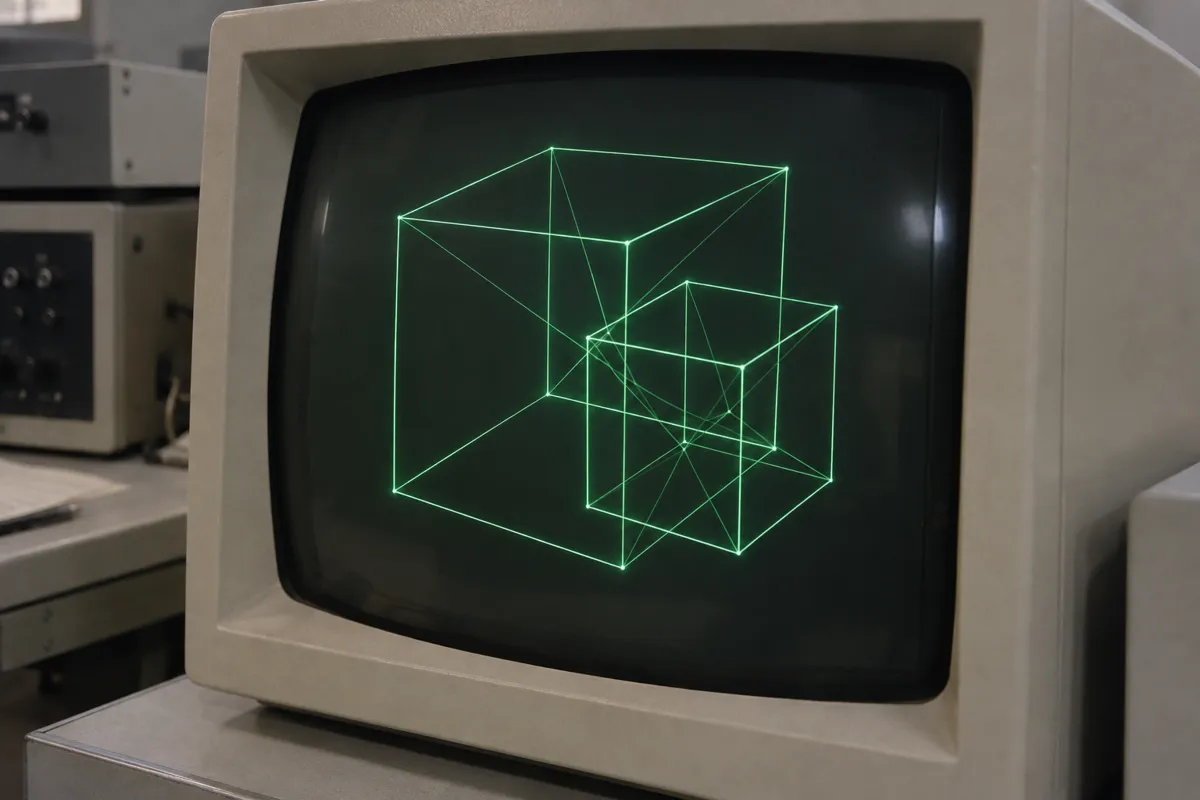
AI illustration: Wireframe cubes on a green vector display
06 AI illustration: Wireframe cubes on a green vector displayA green phosphor screen displays wireframe cubes with intense glow at the vertices where the electron beam dwells. The image demonstrates a calligraphic display where lines are drawn as direct mathematical paths rather than a grid of pixels.Illustration generated for the Atlas (AI)
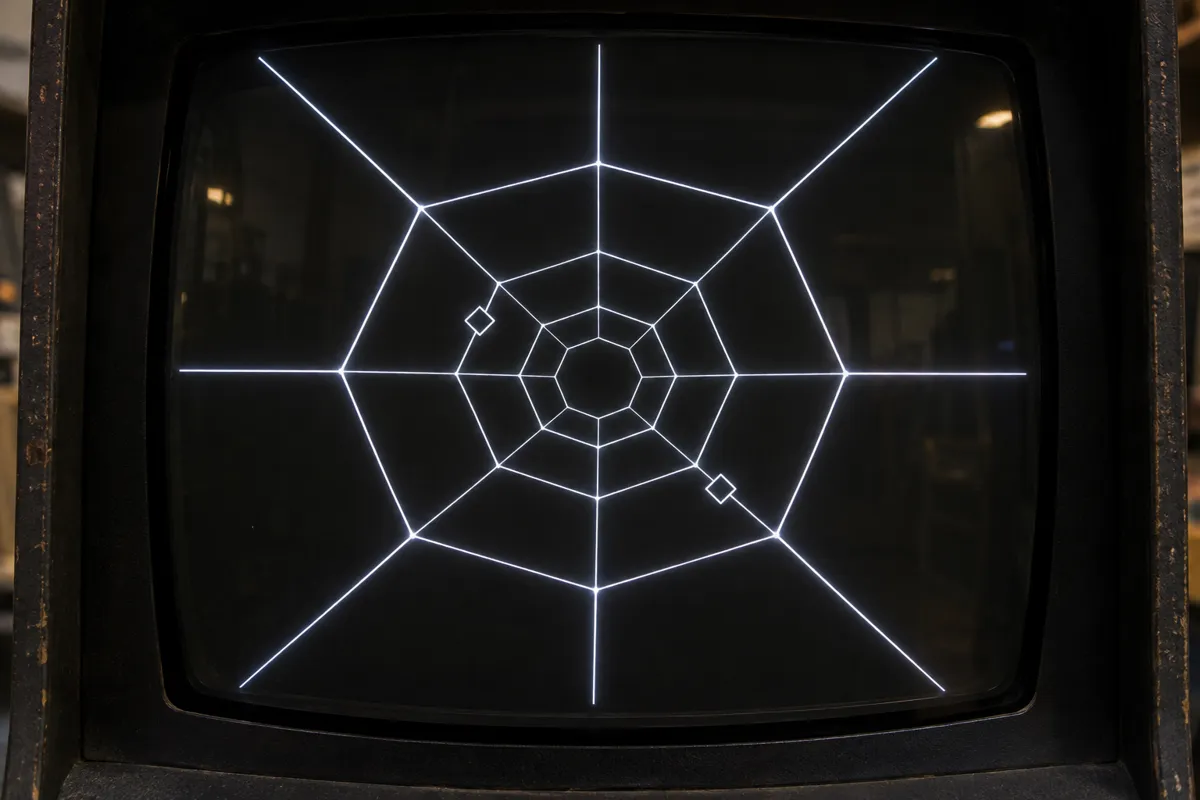
AI illustration: Radial geometric pattern on a vector cathode ray tube
07 AI illustration: Radial geometric pattern on a vector cathode ray tubeA series of concentric octagonal shapes and radiating lines form a web-like pattern with uniform luminance. This illustrates the vector technique's ability to render smooth diagonal lines that maintain high resolution regardless of orientation.Illustration generated for the Atlas (AI)

Question

Why did early vector games have simple black backgrounds?

Show possible answer +

The electron beam could only draw a limited number of lines before the screen flickered. Filling backgrounds would take too much time.