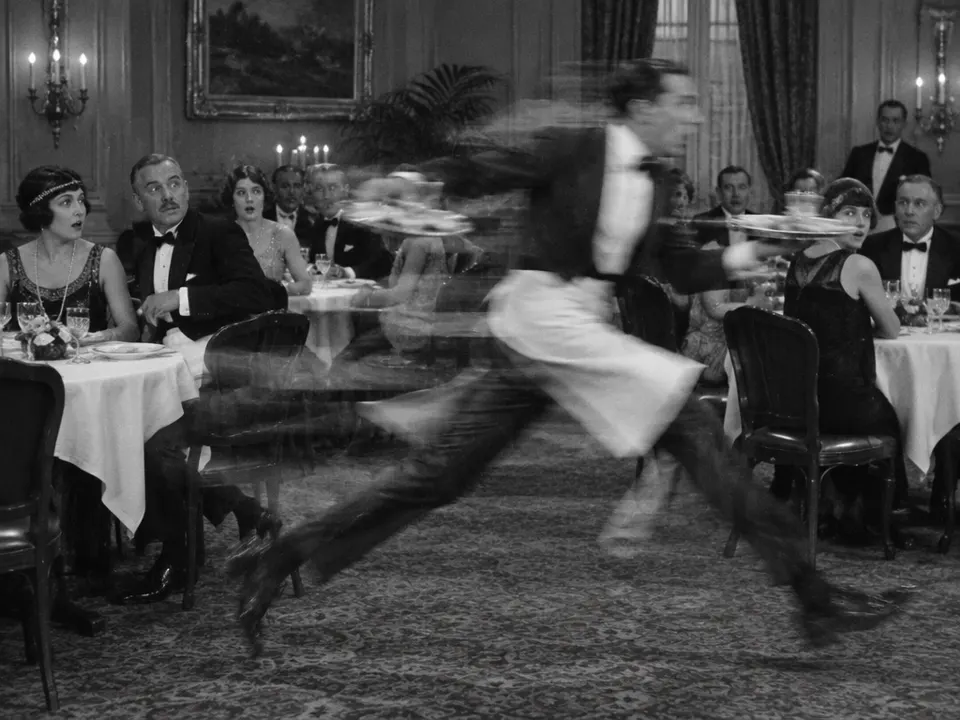
Apply an Undercranking treatment that suggests accelerated silent-film movement through widely spaced directional motion echoes, abrupt short blur streaks, and slightly jittered moving contours. Use high-contrast monochrome, coarse film grain, faint scratches, and mild exposure unevenness while keeping the central form readable. Keep the original subject and composition.
1920s silent film comedy; later action and deliberate stylization
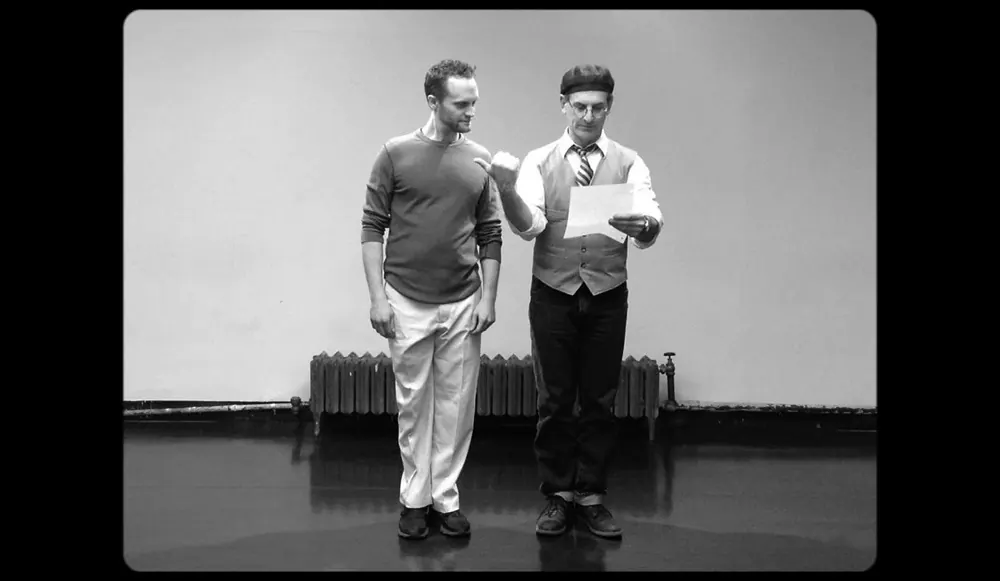
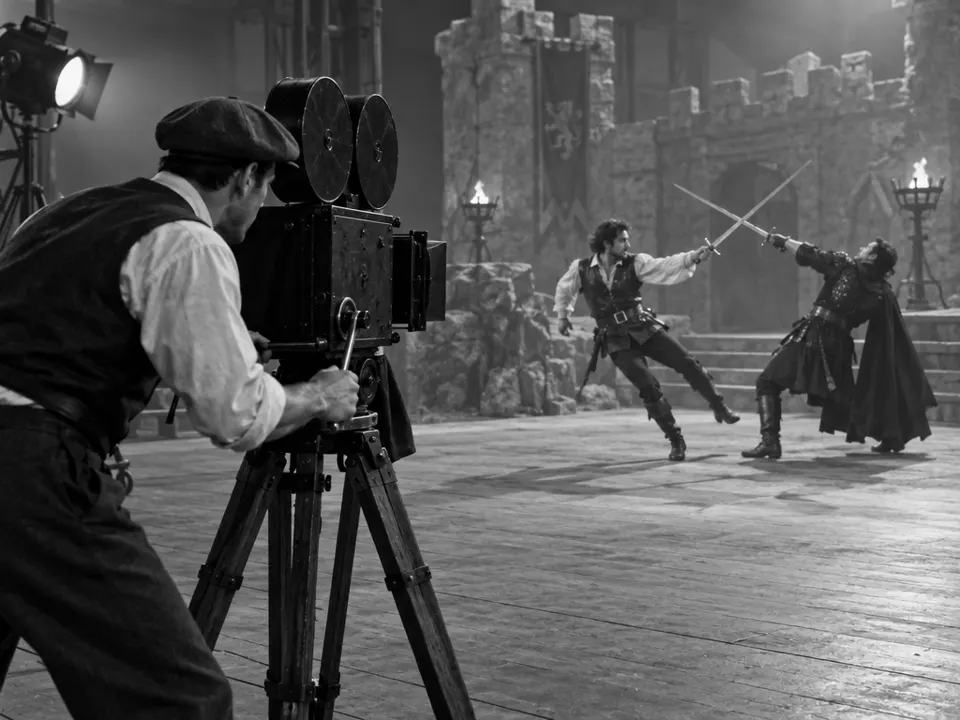
When cranking afilm camera, the frame rate controls the perceived time effect. Fewer frames per second, projected later at ahigher frequency, accelerate the action. Silent film expert and researcher Ben Model demonstrates this technique with contemporary actors and smartphone footage. Unlike reverse motion, the frame sequence remains the same; unlike long interval time-lapse, the camera typically films acontinuous movement.
Distinction
Not every seemingly fast-paced silent film recording was intentionally undercranked. Variable historical projection frequencies and modern transfers can alter speeds. Undercranking refers to adeliberate shooting decision.
Aftermath
Time tricks become clearer when sequence, recording frequency and playback are considered separately.
Further examples · 7 images
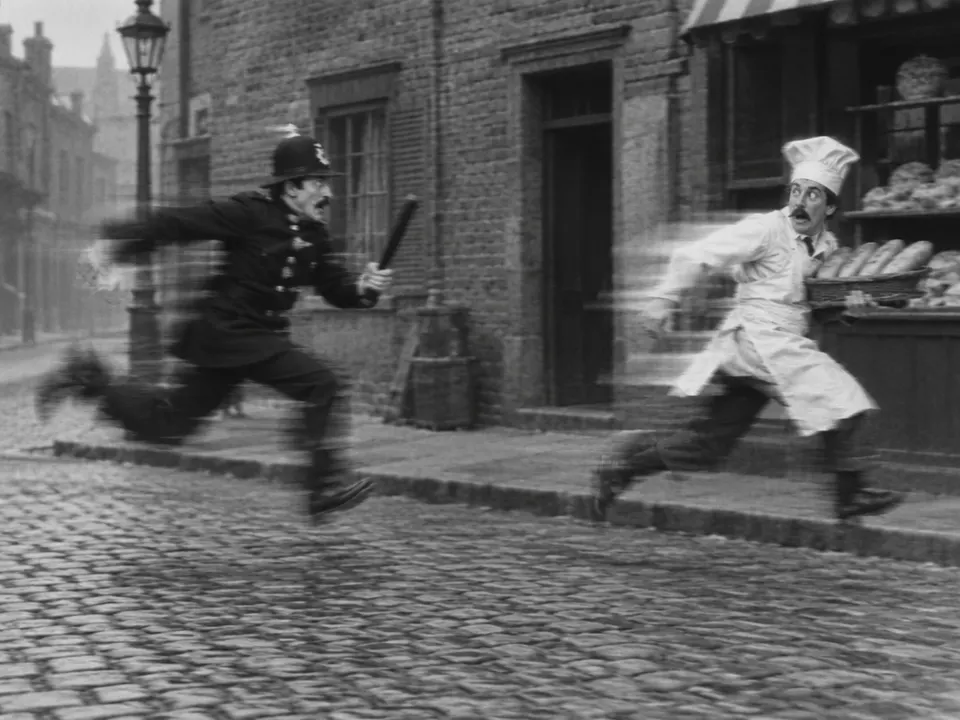
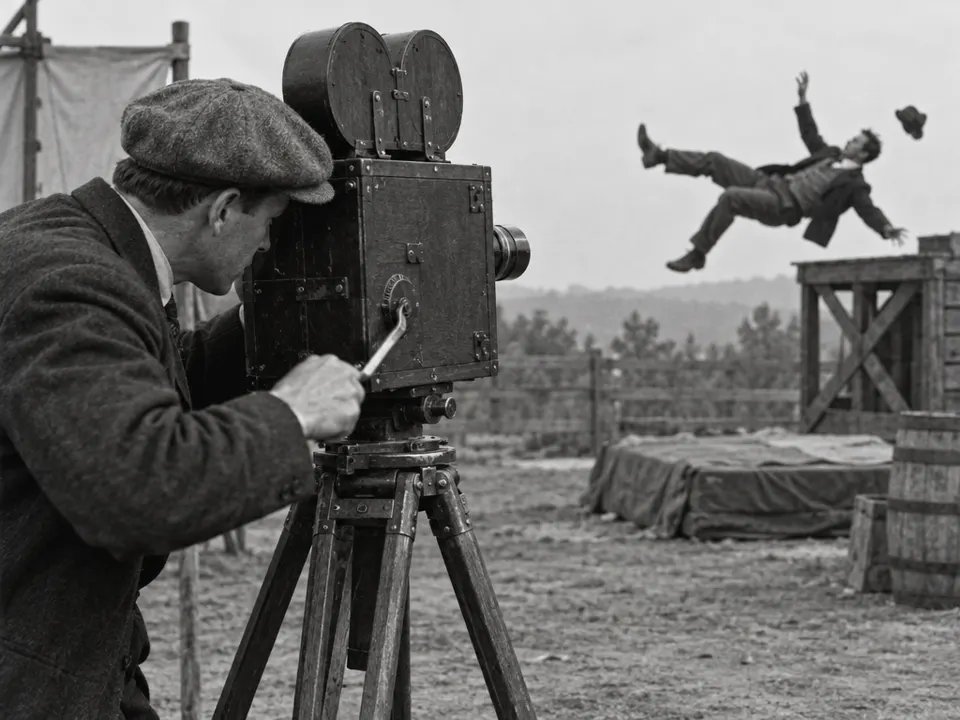
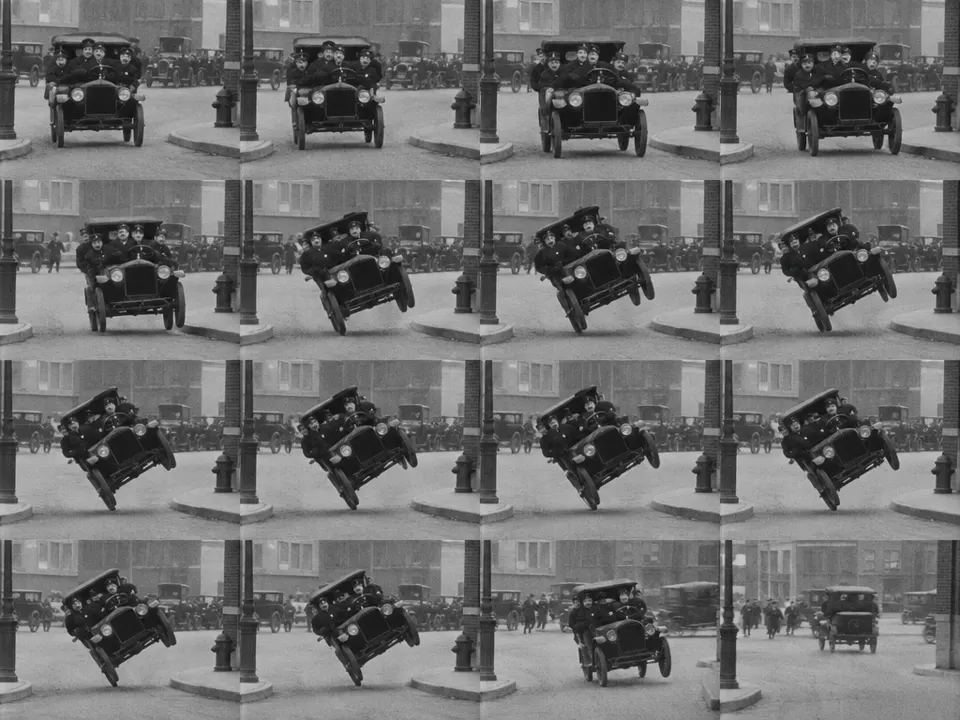
02Ben-Hur (1925) - 6Film crew members are positioned on a mobile camera platform next to large set pieces. The hand-cranked cameras shown were the primary tools used to achieve undercranking by manually slowing the capture rate during filming.Metro-Goldwyn-Mayer · Public domain · Wikimedia Commons03AI illustration: A police officer chases a baker with exaggerated motion blurA police officer chases a baker with exaggerated motion blur. This visualizes the fast-motion effect produced when footage recorded at a low frame rate is played back at standard speed.Illustration generated for the Atlas (AI)04AI illustration: A cameraman is shown manually operating a hand-cranked camera to capture A cameraman is shown manually operating a hand-cranked camera to capture a stunt. By turning the crank slower than the standard rate, the resulting footage will appear accelerated during playback.Illustration generated for the Atlas (AI)05AI illustration: A filmstrip sequence displays a car performing a stunt in rapid incrementA filmstrip sequence displays a car performing a stunt in rapid increments. The progression of frames captures distinct stages of motion that would appear fast and energetic when projected at standard speeds.Illustration generated for the Atlas (AI)06AI illustration: A camera operator manually cranks a film camera during a sword fightA camera operator manually cranks a film camera during a sword fight. This captures the physical act of undercranking to ensure the resulting footage appears accelerated and energetic during projection.Illustration generated for the Atlas (AI)07AI illustration: A waiter dashes through a restaurant with visible motion trailsA waiter dashes through a restaurant with visible motion trails. This blur effectively represents the frantic, fast-motion look achieved by playing back fewer recorded frames.Illustration generated for the Atlas (AI)
Question
What happens when recording at 12 fps and playing back at 24 fps?