Stereo Day-Night Tissue
1850s onward, French tissue stereoviews.
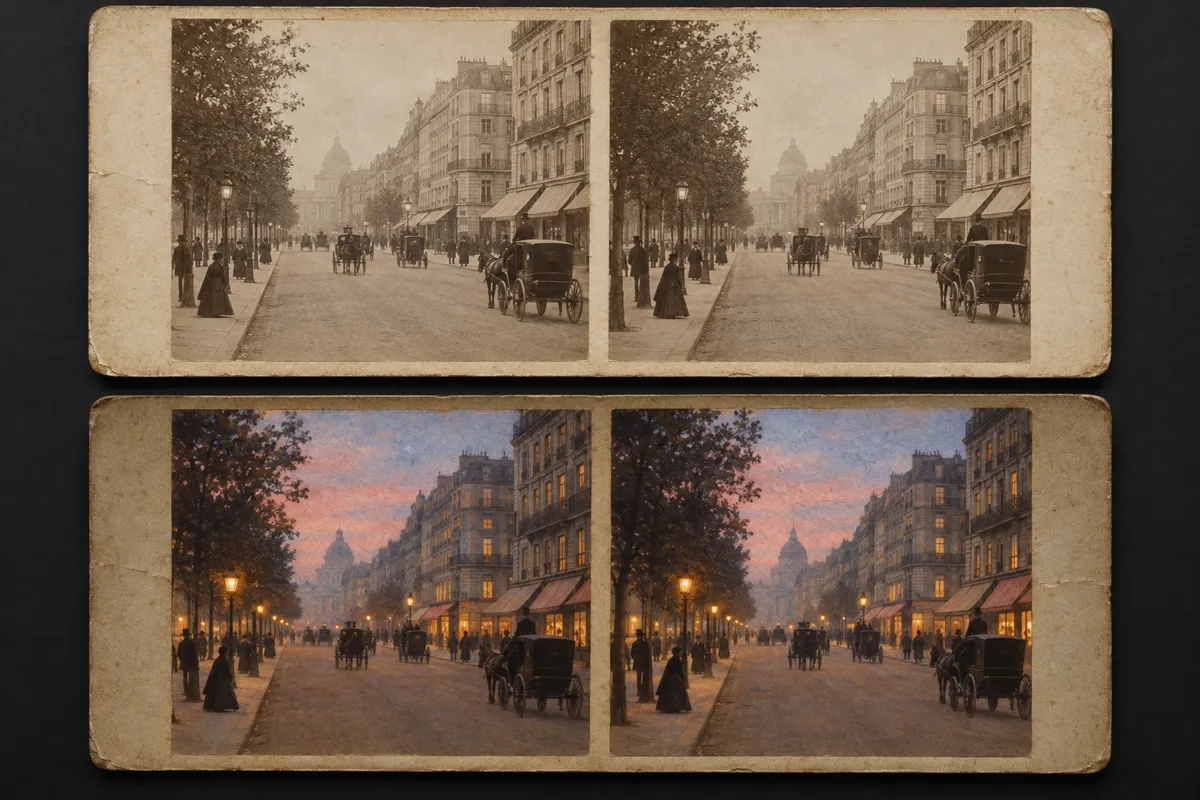
Prompt
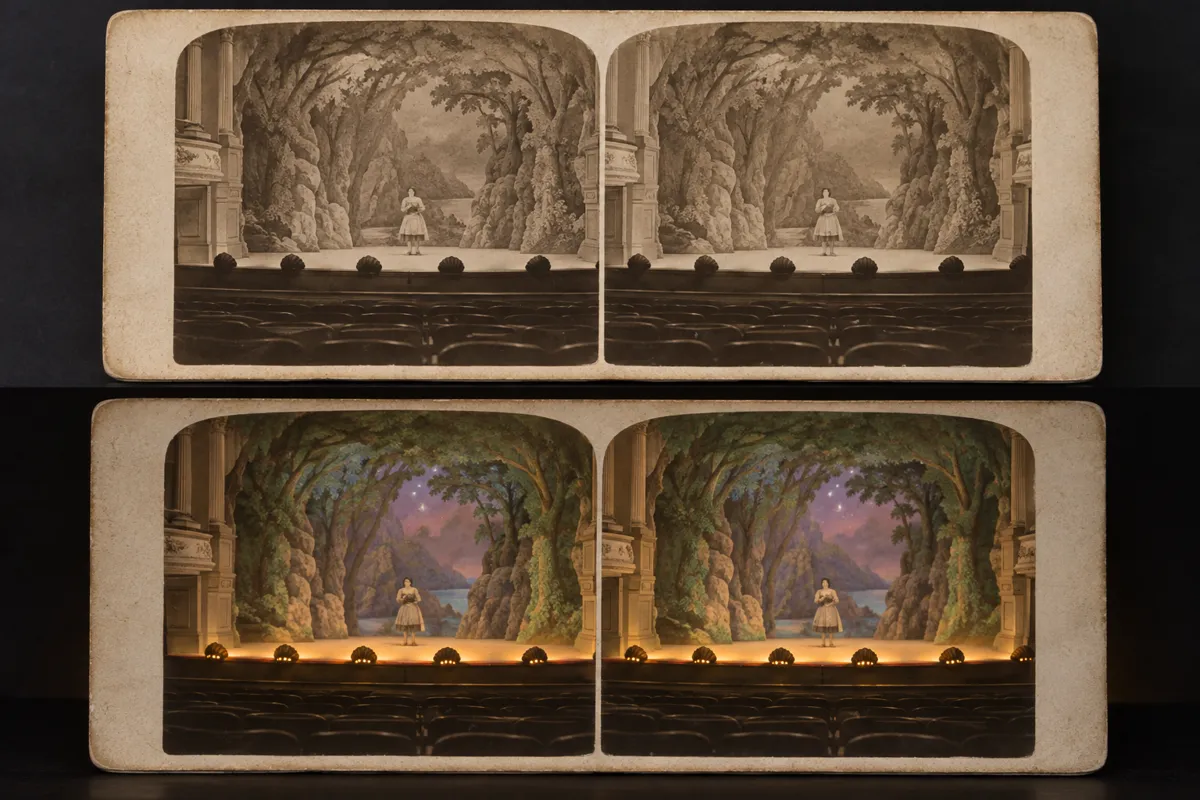
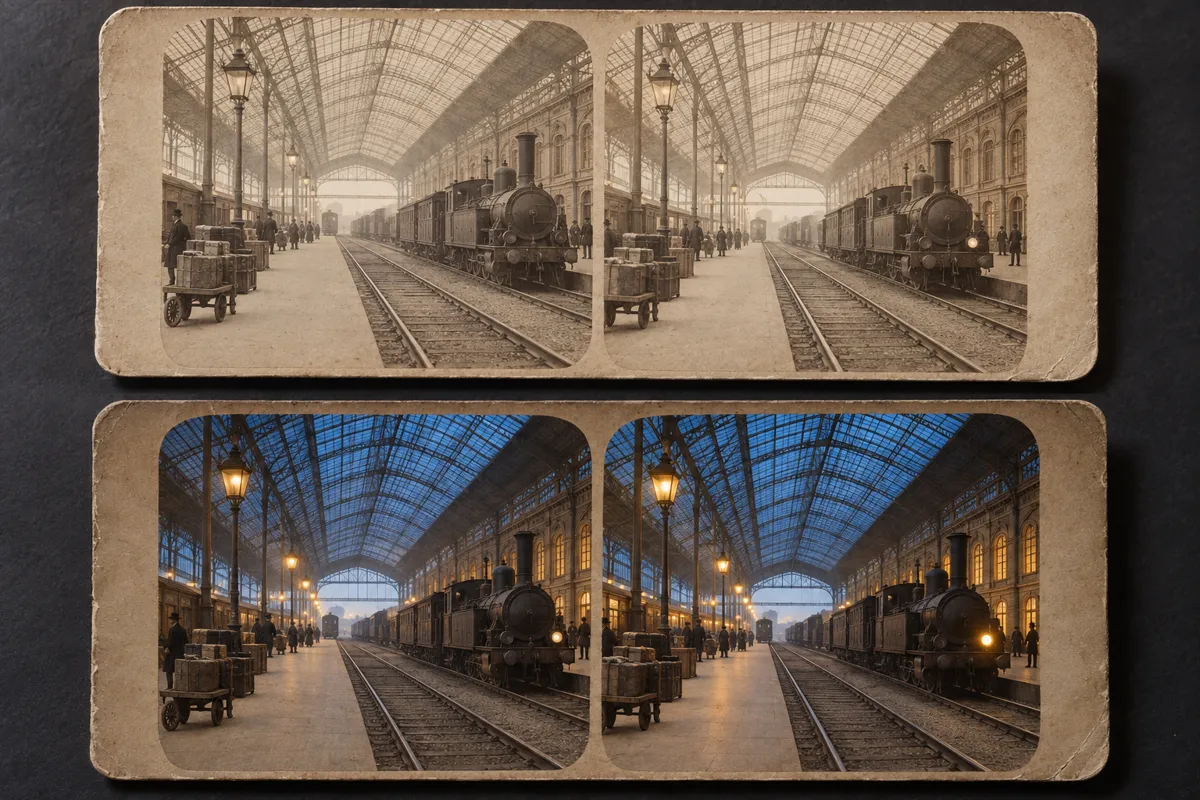
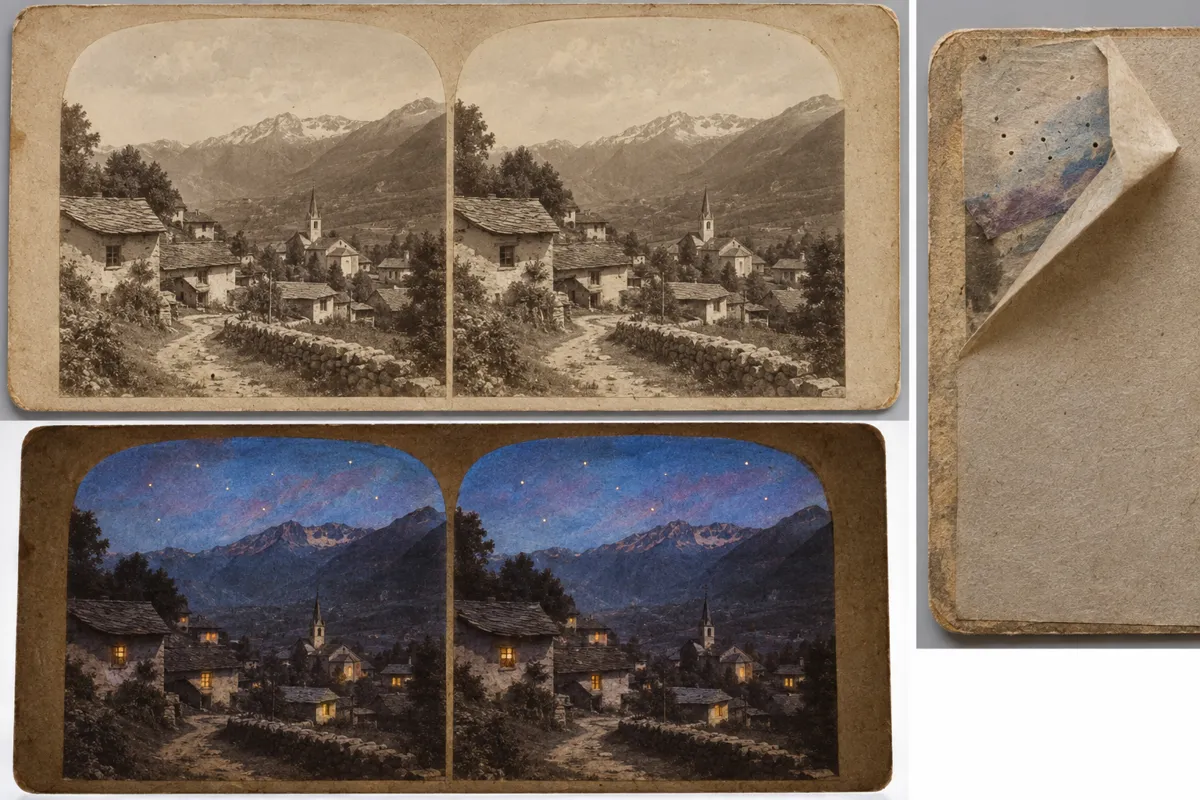
Apply a Stereo Day-Night Tissue treatment, presenting paired, subtly offset photographic views on thin translucent paper. Blend subdued daylight sepia with backlit jewel-colored washes, glowing existing windows or highlights, and tiny pierced points of light. Show delicate tissue fibers and a dark card surround. Keep the original subject and composition.
Identify
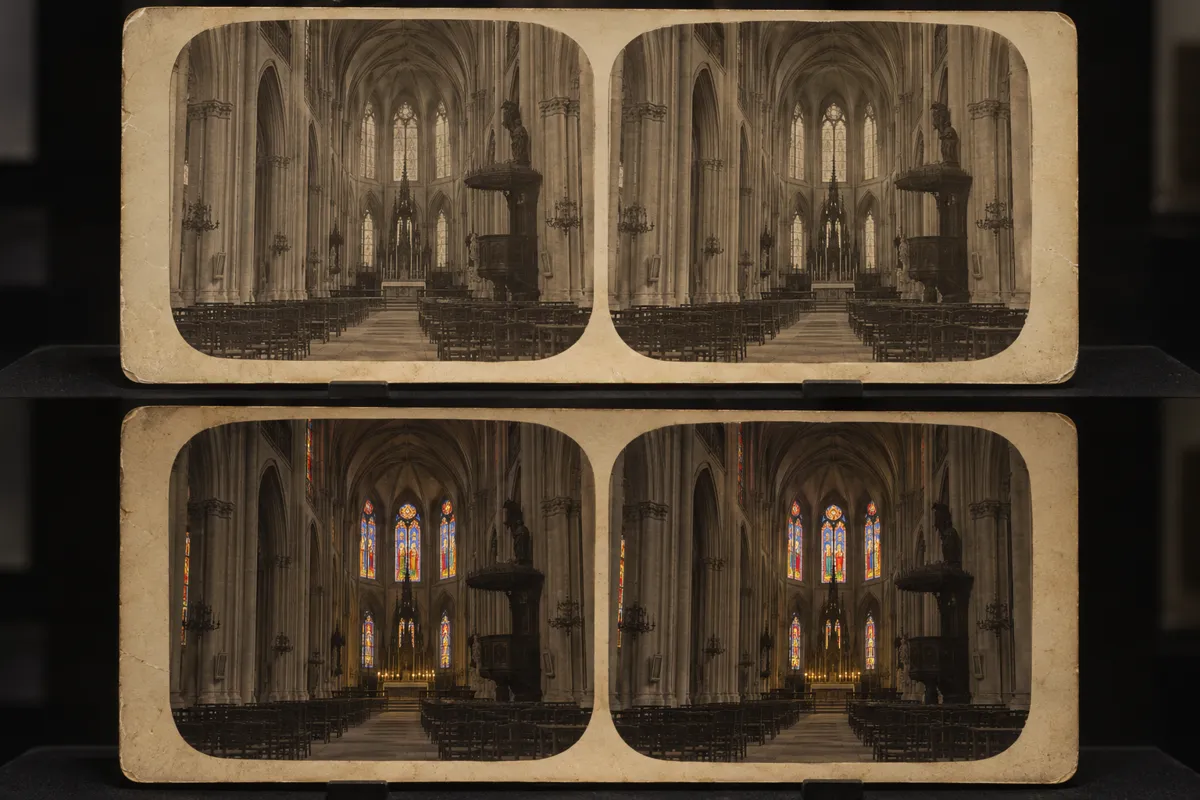
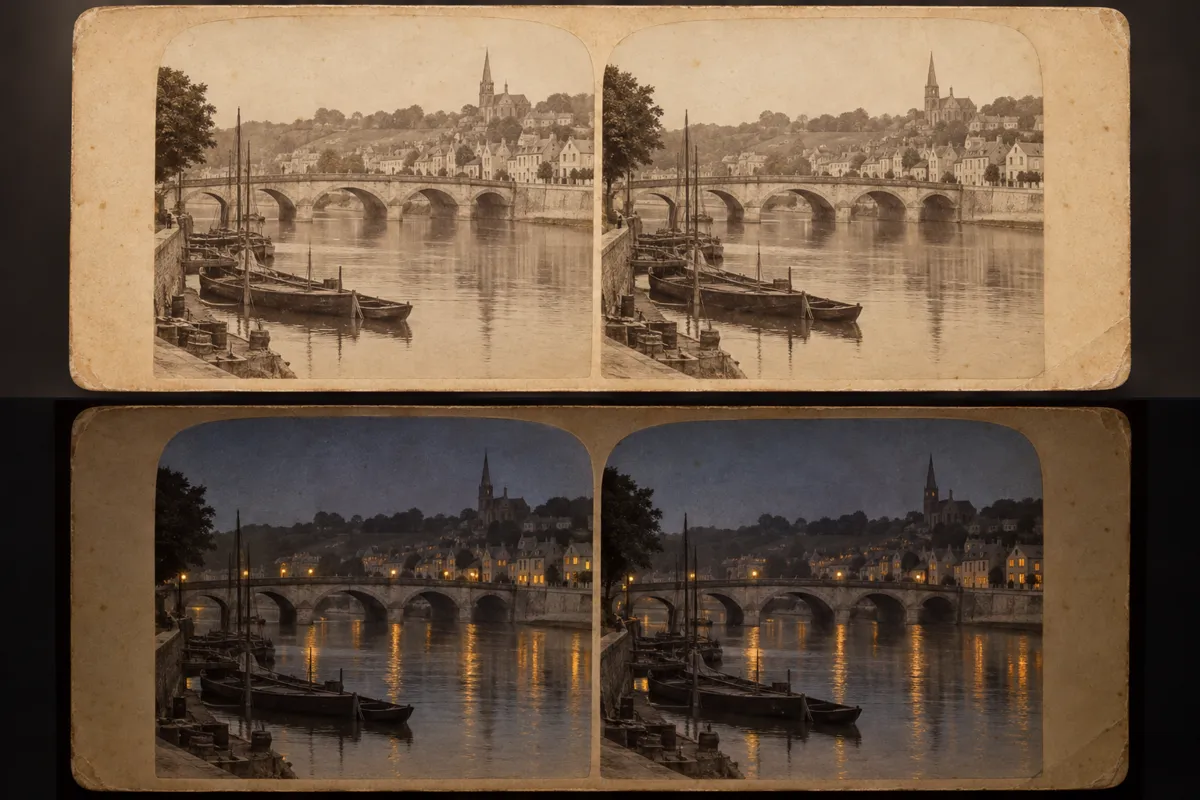
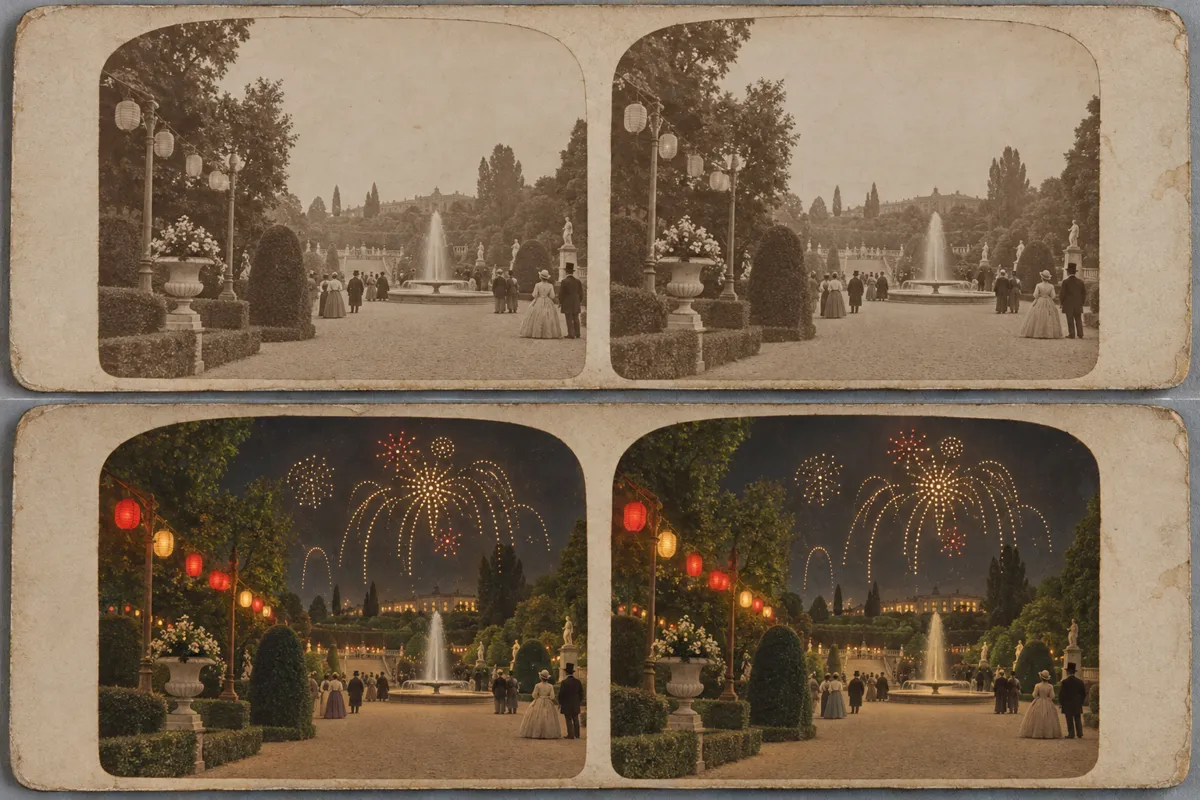
In front light, paired photographs show an ordinary daylight scene with stereoscopic depth1. With backlighting, hidden colours emerge, windows glow, and tiny points of light suggest lamps, stars, or fireworks.
Principle
Thin photographic prints, coloured backing tissue, and selective pinholes control transmitted light2. Colouring filters the backlight subtractively3, while pierced areas transmit brighter light; the paired views supply depth.
Example
Pierre Hennetier and Louis Habert (sculptors): Diableries, series begun 1867.
Try it out
Compare front lighting and backlighting on a paper reproduction backed with coloured tissue; never pierce or alter an original.
Background
French tissue stereoviews combined photography, hand colouring, and paper construction in a small theatrical object. They appeared in the 1850s and remained popular later in the century. A stereoscope presented a slightly different view to each eye, creating apparent depth. Thin photographic prints carried colouring behind them, often with a tissue backing. Front lighting largely concealed these additions. Backlighting revealed colour and made pierced details shine, suggesting night illumination rather than simply darkening the scene. The transformation happened during viewing, not through another exposure or chemical development.
Distinction
Unlike an ordinary coloured stereograph, a tissue view changes markedly with the direction of illumination. Unlike a double exposure, it needs no second photographed scene.
Aftermath
It shows how a photograph’s physical layers and viewing light can change its apparent time, atmosphere, and meaning.
Further examples · 7 images
Question
Why can a pierced window look illuminated when the rest of the scene seems darker?
Show possible answer +Hide answer −
The hole transmits more backlight than the surrounding photographic paper and colouring. This local contrast makes the window resemble a light source.