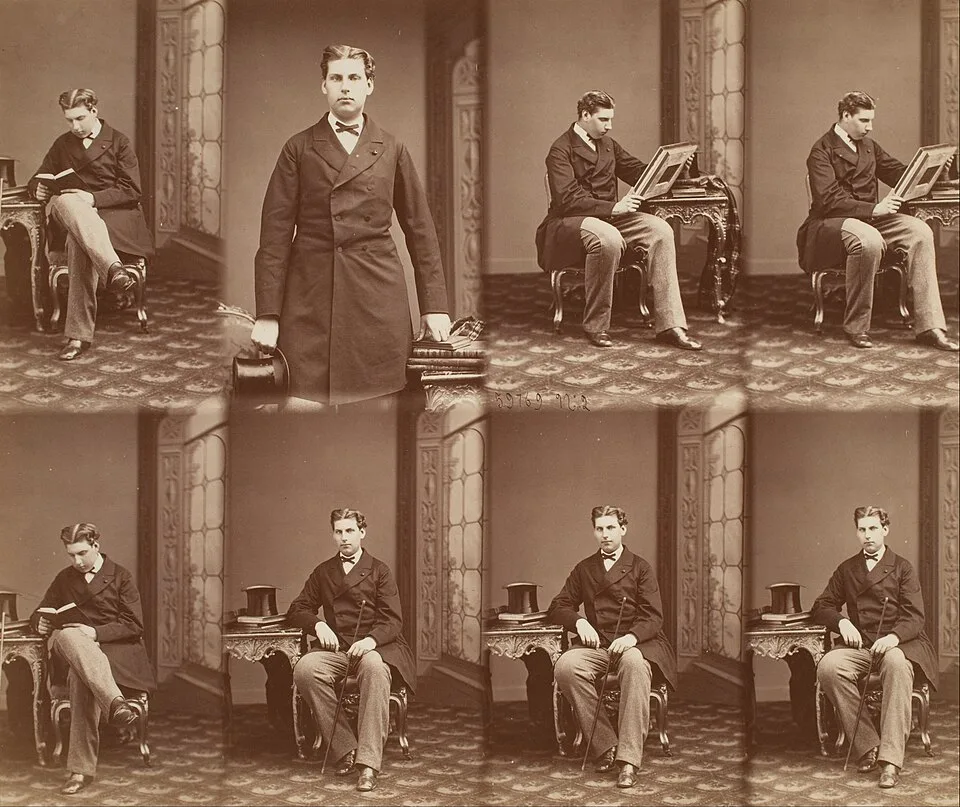
1854, André-Adolphe-Eugène Disdéri's patented portrait format
Typeface · Libre Caslon Text
Eight Portrait Exposures for Cartes de Visite. Eight sepia portrait exposures show a man standing or seated among the same studio furnishings.André-Adolphe-Eugène Disdéri · Public domain · via Wikimedia CommonsView source ↗
Prompt
Transform this image into a Carte de Visite, presenting a small warm-brown photographic print on a larger cream rectangular card mount. Use fine albumen detail, subdued studio-like lighting, gently faded highlights, softly worn card corners, and a narrow decorative border without lettering. Keep the original subject and composition.
Asmall photographic portrait sits on a[rectangular card mount], often showing afull-length figure against astudio backdrop. [Warm brown tones]and printed studio names are common.
Principle
Amulti-lens camera and amoving plate holder could record eight small negatives on one glass plate through [successive exposures1]. Paper prints were then cut apart and mounted on cards.
Example
John Jabez Edwin Mayall: Queen Victoria, 1860.
Try it out
Compare three historical cards, noting repeated furniture, poses, and mount sizes that reveal astandardized studio process.
Background
Disdéri patented his carte de visite process in Paris in 1854. Afour-lens camera and ashifting plate holder allowed eight portraits on one plate, reducing material costs. The wet collodion process2required preparing, exposing, and developing the glass negative while its coating remained wet. Studios commonly made albumen prints3from these negatives, then trimmed and pasted them onto cards about the size of visiting cards. Customers exchanged portraits with relatives and collected famous faces in albums. The format became especially popular during the 1860s.
Distinction
Unlike adaguerreotype, acarte de visite is apaper photograph mounted on card, usually printed from areusable negative. Later cabinet cards used asimilar presentation but were substantially larger.
Aftermath
The carte de visite shows how repeatable production and astandard physical format helped turn portraits into widely exchanged objects.
Further examples · 11 images
02Sojourner Truth Standing With a CaneSojourner Truth stands with a cane and bag in a portrait mounted on a bordered card bearing her name and a printed sales motto. The small mounted photograph and identifying inscription clearly display the carte-de-visite format used to circulate her likeness.Miscellaneous Items in High Demand, PPOC, Library of Congress · Public domain · Wikimedia Commons03Disdéri Portrait of a Standing GentlemanA man in formal dress leans against a decorative pedestal beside a chair and potted foliage, with “Disdéri Phot” printed below. The warm-toned full-length portrait on a rectangular card mount is a characteristic carte de visite.Eugène Disdéri · Public domain · Wikimedia Commons04Sojourner Truth Seated Beside a TableSojourner Truth sits beside a table holding flowers and books, with thread crossing her skirt and a printed motto beneath the photograph. The sepia portrait and captioned card mount exemplify the carte de visite as a portable photographic likeness.American 19th Century · CC0 · Wikimedia Commons05Disdéri Carte de Visite of a CoupleA man wearing a top hat stands beside a woman in a layered dark dress on a cream card marked “Disdéri Phot.” The full-length studio pairing, sepia print, and prominent card mount clearly embody carte-de-visite portraiture.Eugène Disdéri · CC0 · Wikimedia Commons06Family Portrait on a Printed Studio CardA woman and child stand beside a seated man in a sepia family portrait mounted above a printed studio address. The narrow rectangular card, full-length studio arrangement, and photographer’s imprint clearly identify the carte-de-visite presentation.Sergey Lvovich Levitsky · Public domain · Wikimedia Commons07Sojourner Truth's Inscribed Portrait CardSojourner Truth sits beside a flower-filled vase in a photographic portrait mounted within a ruled rectangular border above a printed slogan. The small mounted portrait and integrated identifying inscription clearly display the carte-de-visite format.Sojourner Truth · Public domain · Wikimedia Commons08Sojourner Truth Seated on a Mounted CardA sepia portrait of Sojourner Truth seated in an upholstered chair is mounted on a narrow cream card with worn corners. The visibly separate photographic print and rectangular card support clearly demonstrate the carte-de-visite presentation.unattributed · Public domain · Wikimedia Commons09Woman Beside a Draped Studio PedestalA woman in a voluminous dark dress poses beside a studio pedestal and heavy curtain within a narrow rectangular border. The full-length composition and small photographic card format exemplify carte-de-visite portraiture.Mayall, J. E. (John Jabez Edwin), 1813-1901, photographer · Public domain · Wikimedia Commons10Family Carte de Visite in an AlbumA family portrait appears within an ornate arched album opening, showing a standing woman and child beside a seated man. The small photograph displayed in a decorative album setting illustrates how cartes de visite were collected, although its card edges are concealed.Rijksmuseum · CC0 · Wikimedia Commons11Queen Victoria Beside Studio DraperyA warm-toned full-length portrait shows Queen Victoria beside a studio pedestal and heavy drapery, with a photographer's credit near the foot. The formal staging and small vertical photographic format exemplify carte-de-visite portraiture, although the card mount is cropped away.John Jabez Edwin Mayall · Public domain · Wikimedia Commons
Question
Did eight portraits on one plate necessarily mean eight simultaneous exposures?
Show possible answer +Hide answer −
No. Afour-lens arrangement could expose four images, then expose another four after the plate holder shifted.