H 210 / 3211980s

Sprite Scaling

1980s arcade graphics; Sega's Hang-On, 1985
Typeface · Jersey 20

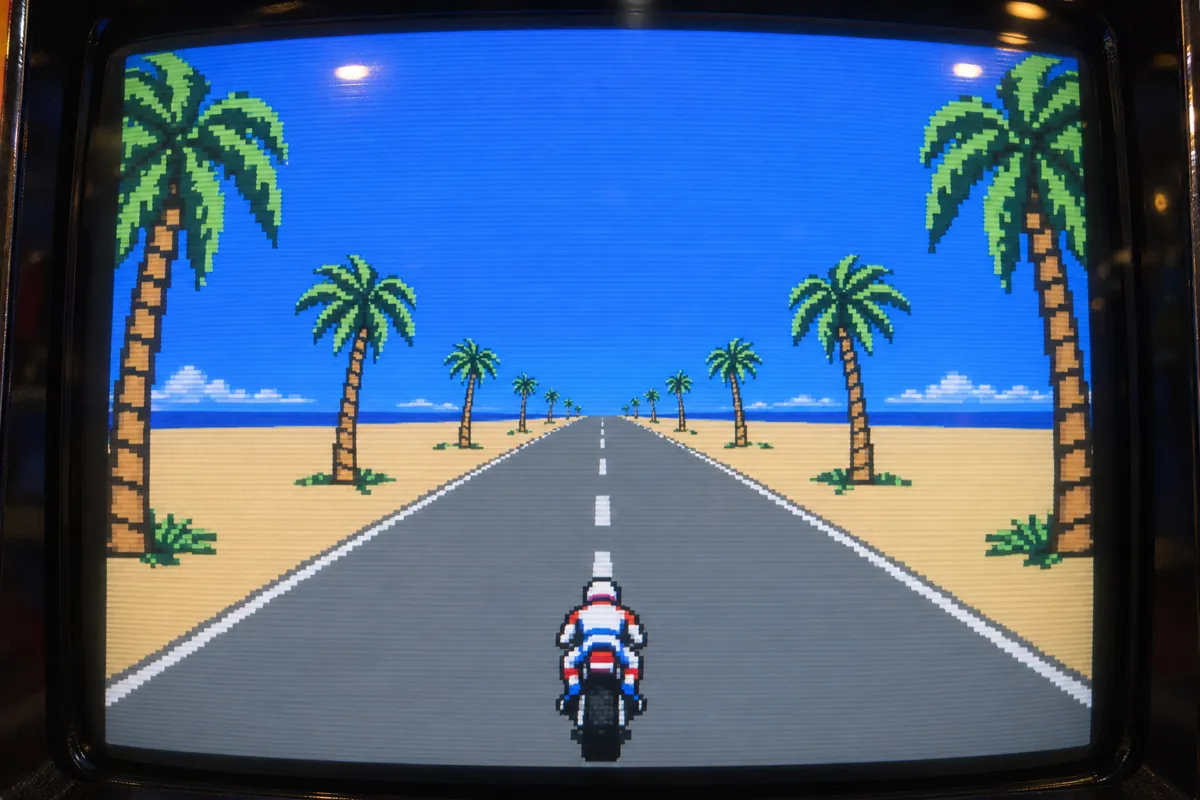
AI illustration: Receding palm tree sprites in a motorcycle game.
AI illustration: Receding palm tree sprites in a motorcycle game.Illustration generated for the Atlas (AI)View source ↗

Prompt

Apply a Sprite Scaling effect by rendering existing elements as flat bitmap cutouts, with larger foreground pixel blocks and progressively smaller, finer background sprites. Emphasize depth through overlapping layers, stepped contours, and simple arcade-style shading, avoiding smoothly modeled three-dimensional surfaces. Keep the original subject and composition.

Identify

Cars, trees, and signs grow rapidly as they approach, creating an illusion of forward motion. Their flat bitmap shapes retain crisp edges or visible pixel steps as their size changes.

Principle

Graphics hardware resamples1 bitmap sprites2 at different sizes, making flat images suggest changing distance. Coordinated screen positions and drawing order3 strengthen the impression of depth.

Example

Sega: Out Run, 1986.

Try it out

Watch Out Run footage and track one roadside tree: notice how its size and screen position change together.

Background

Sprite scaling became a defining feature of Sega's 1980s arcade racing and action games. Hang-On appeared in 1985, followed by Out Run in 1986. Sega's Super Scaler hardware family made large numbers of changing sprite sizes practical during play. Stored bitmap artwork supplied vehicles, scenery, and other objects. Hardware sampled that artwork to produce different displayed sizes. Position, overlap, and size changes suggested movement through depth without constructing every object from polygons. Separate road graphics helped complete the scene. The result combined flat pictures with a convincing sense of speed.

Distinction

Unlike polygon rendering, sprite scaling does not reveal new surfaces when an object turns; different views generally require different artwork. Unlike scrolling, it changes displayed size, not just position.

Aftermath

Sprite scaling shows how coordinated size, position, and overlap can suggest depth without fully three-dimensional objects.

Further examples · 7 images
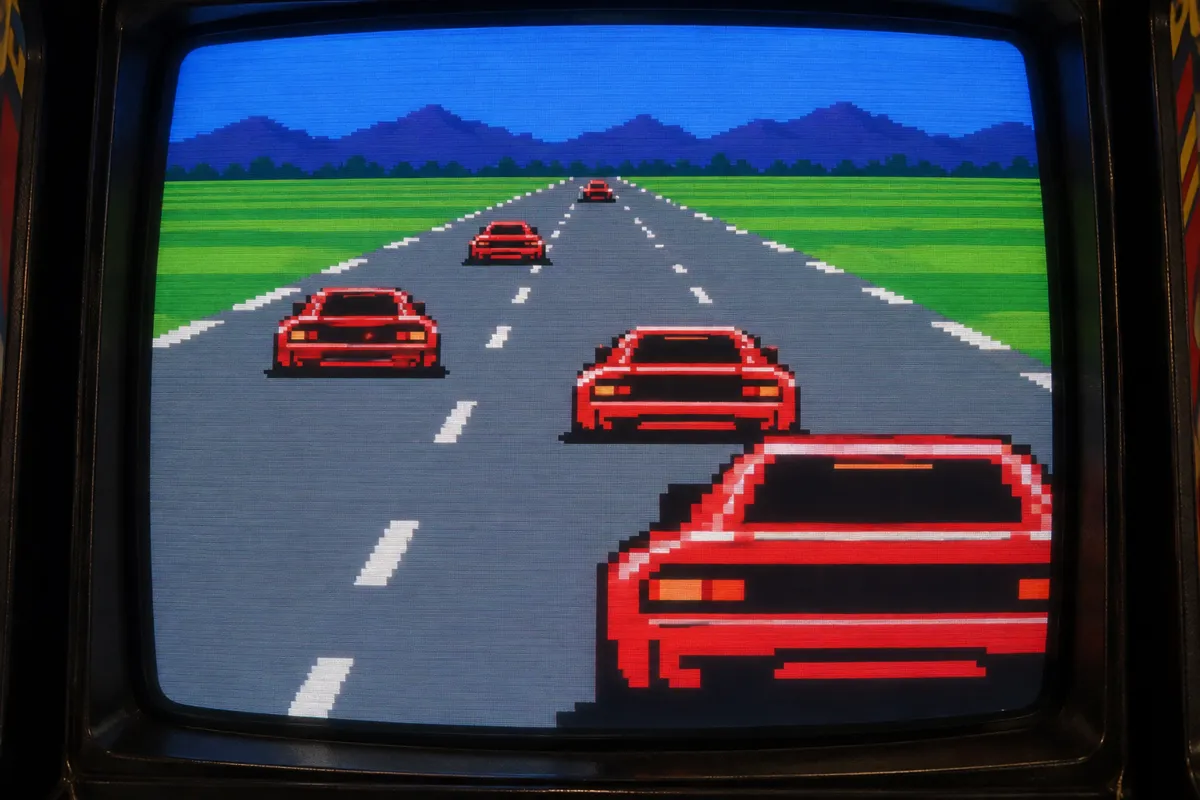
AI illustration: Sequential car sprites demonstrating pseudo-3D scaling
02 AI illustration: Sequential car sprites demonstrating pseudo-3D scalingSeveral red car sprites are displayed at different pixel resolutions along a vanishing point. This arrangement demonstrates how hardware-scaled bitmaps simulate distance without true 3D geometry.Illustration generated for the Atlas (AI)
AI illustration: Road sign sprite enlargement across multiple displays
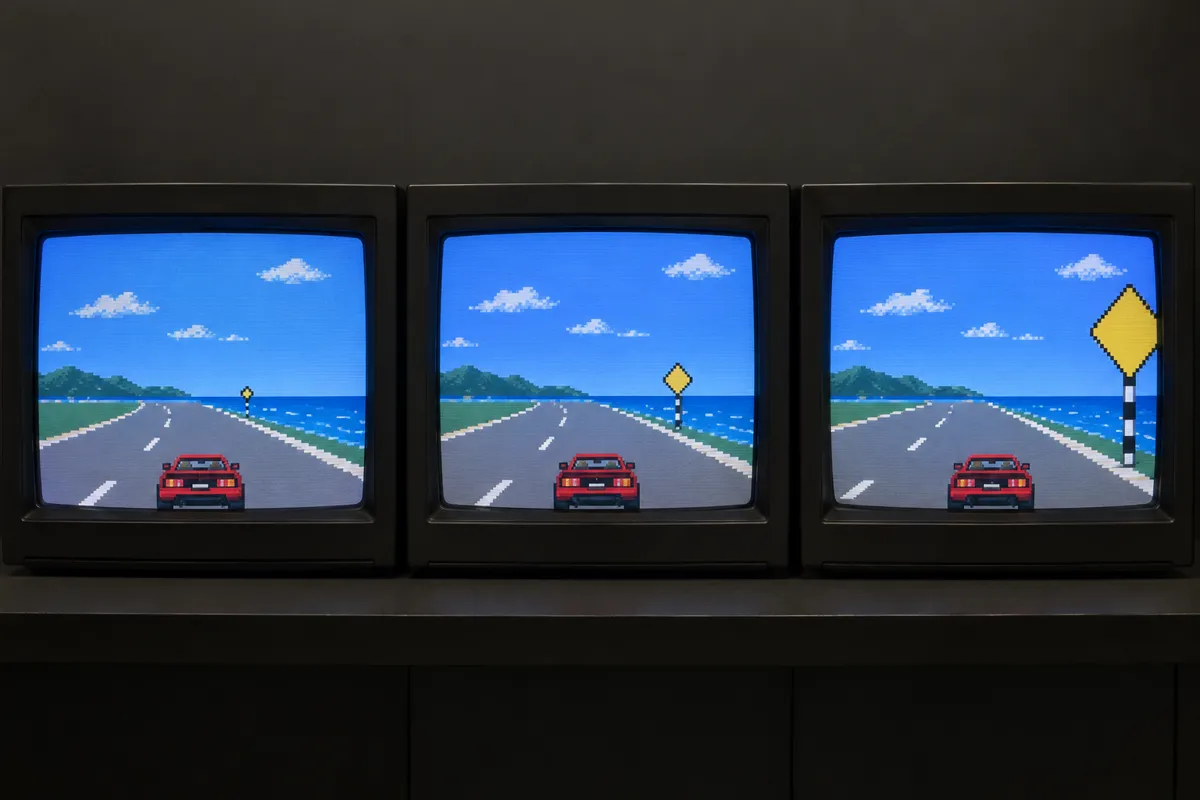
03 AI illustration: Road sign sprite enlargement across multiple displaysThree screens show a road sign at three distinct levels of magnification as the car moves forward. The comparison highlights the discrete jumps in size characteristic of early scaling hardware.Illustration generated for the Atlas (AI)
AI illustration: Desert landscape using scaled cactus bitmaps
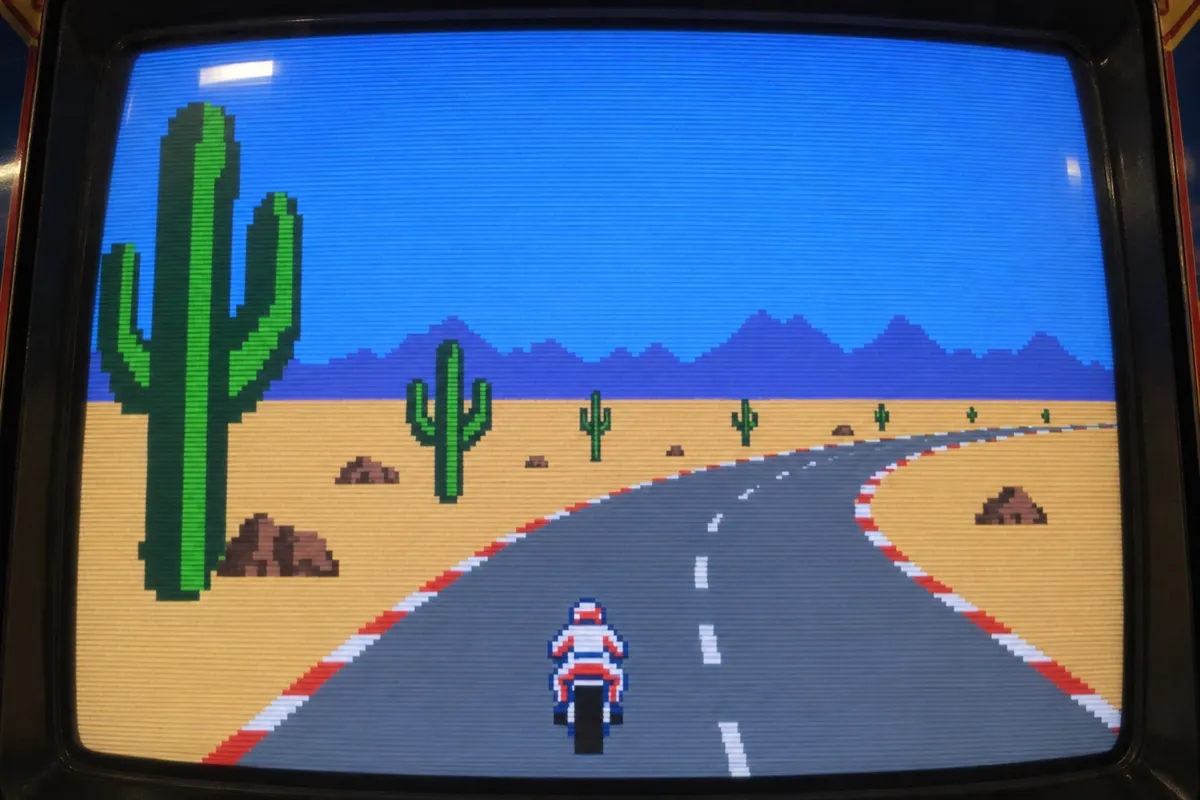
04 AI illustration: Desert landscape using scaled cactus bitmapsCactus sprites are placed along a curving road, with those closer to the viewer appearing significantly larger and more detailed. The use of flat, scaled bitmaps effectively builds a convincing desert environment.Illustration generated for the Atlas (AI)
AI illustration: Oceanic depth created through sprite resampling
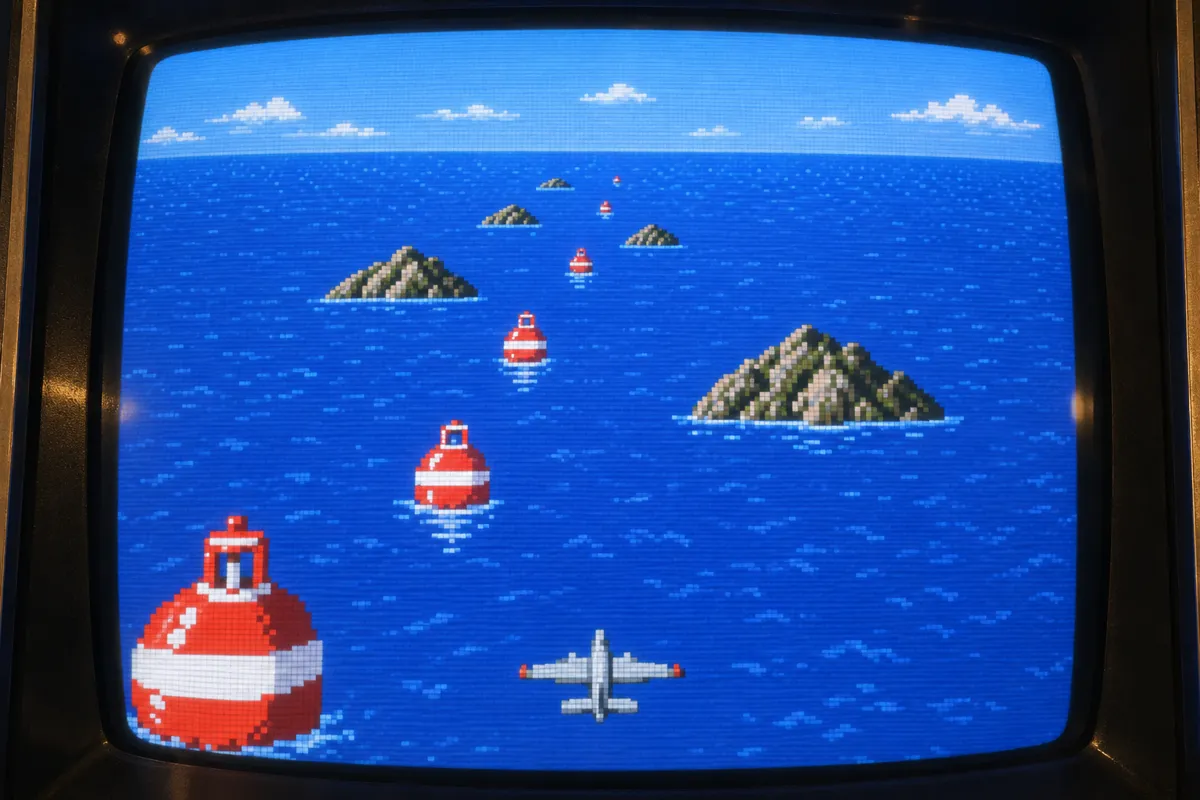
05 AI illustration: Oceanic depth created through sprite resamplingBuoys and islands appear to float on a blue surface, scaled to different sizes to suggest their varying distances from the pilot. Each object maintains a crisp, blocky edge that reveals its nature as a resampled 2D image.Illustration generated for the Atlas (AI)
AI illustration: Perspective scaling of traffic cone sprites
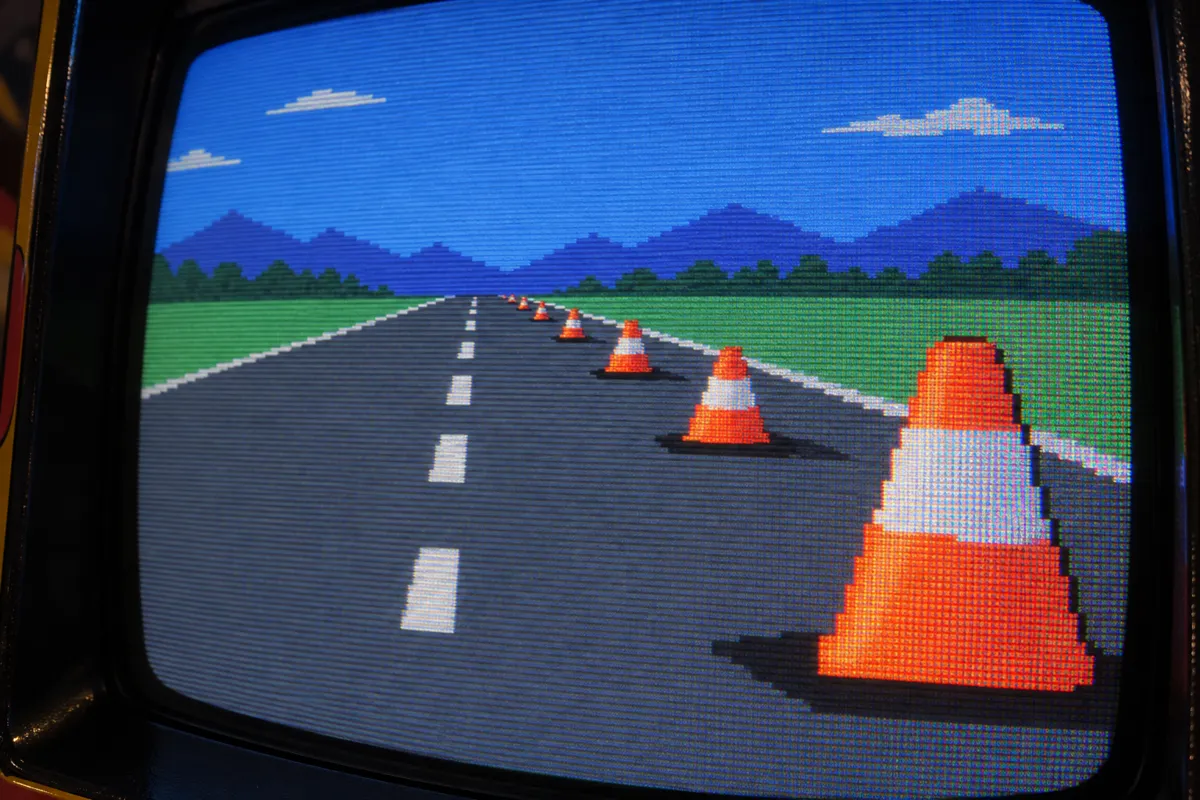
06 AI illustration: Perspective scaling of traffic cone spritesOrange traffic cones decrease in size toward the horizon, showing visible pixel steps in their diagonal edges. This illustrates the simple geometric scaling used to imply a three-dimensional plane.Illustration generated for the Atlas (AI)
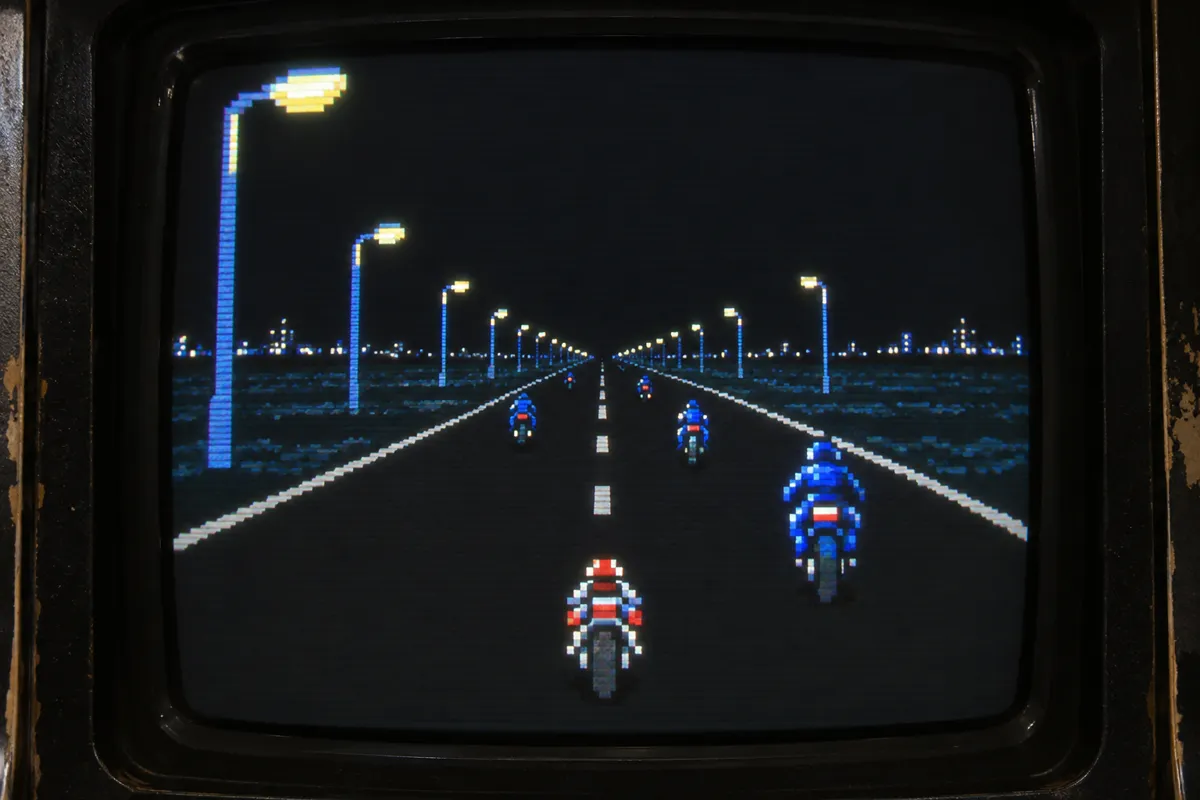
AI illustration: Night racing sprites scaled for depth
07 AI illustration: Night racing sprites scaled for depthStreet lamps and rival riders are rendered as glowing pixel clusters that shrink toward the center of the screen. The coordinated reduction in size and vertical position simulates a night race through a 3D space.Illustration generated for the Atlas (AI)

Question

Why does enlarging a sprite help it appear to approach?

Show possible answer +

Nearby objects usually occupy more of our view than distant ones. Increasing a sprite's size imitates that visual cue.

Sources