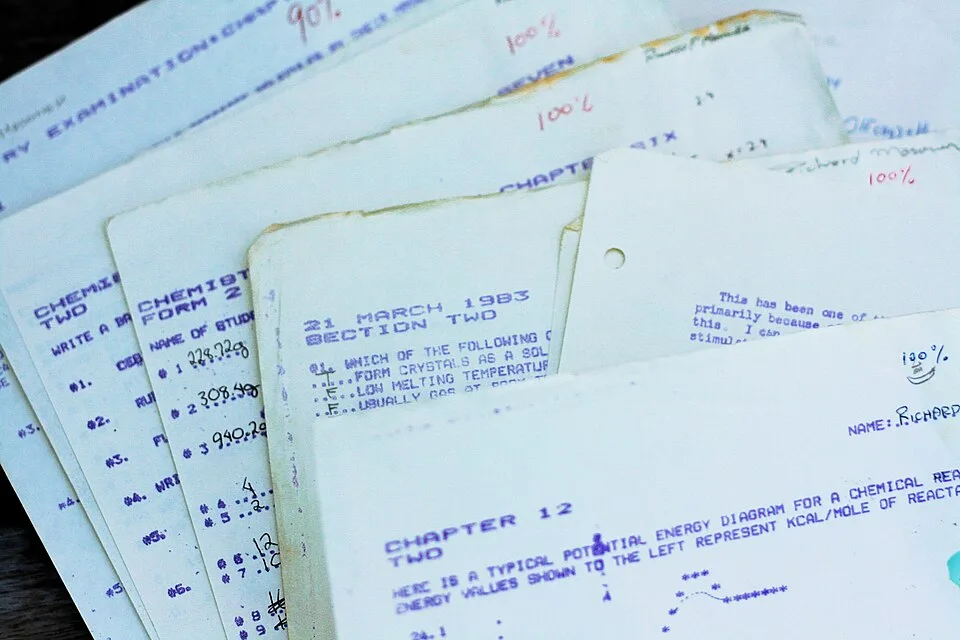
Violet Chemistry Worksheets. Overlapping chemistry worksheets bear violet lettering on pale paper, with handwritten marks added in red.Richard Masoner · CC BY-SA 2.0 · via Wikimedia CommonsView source ↗
Prompt
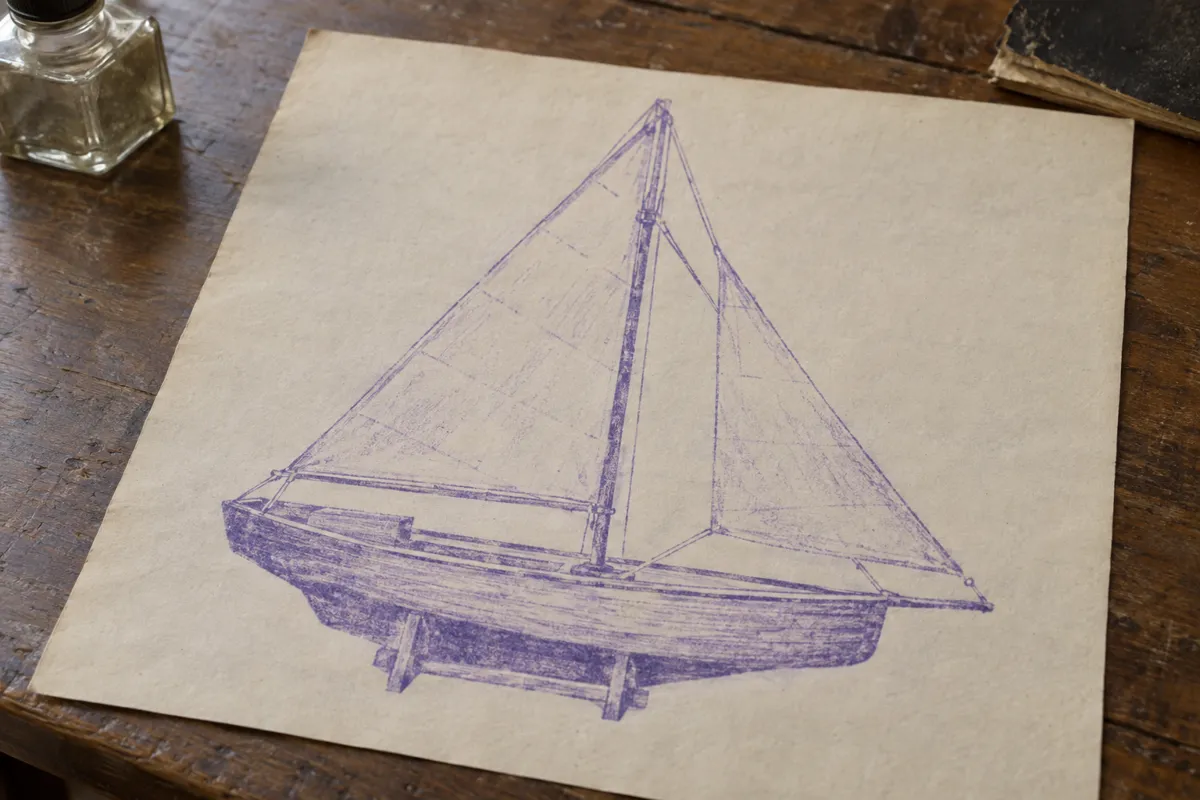
Transform this image into a Spirit Duplicator print, translating forms into violet linework and sparse lavender shading on pale, slightly absorbent paper. Add fuzzy dye edges, uneven ink density, faint doubled contours, paper fibers, and patchy fading that suggests an exhausted master. Keep the original subject and composition.
[Purple lettering]and line drawings sit on pale paper, often with [soft edges]and uneven density. Later copies can look noticeably weaker.
Principle
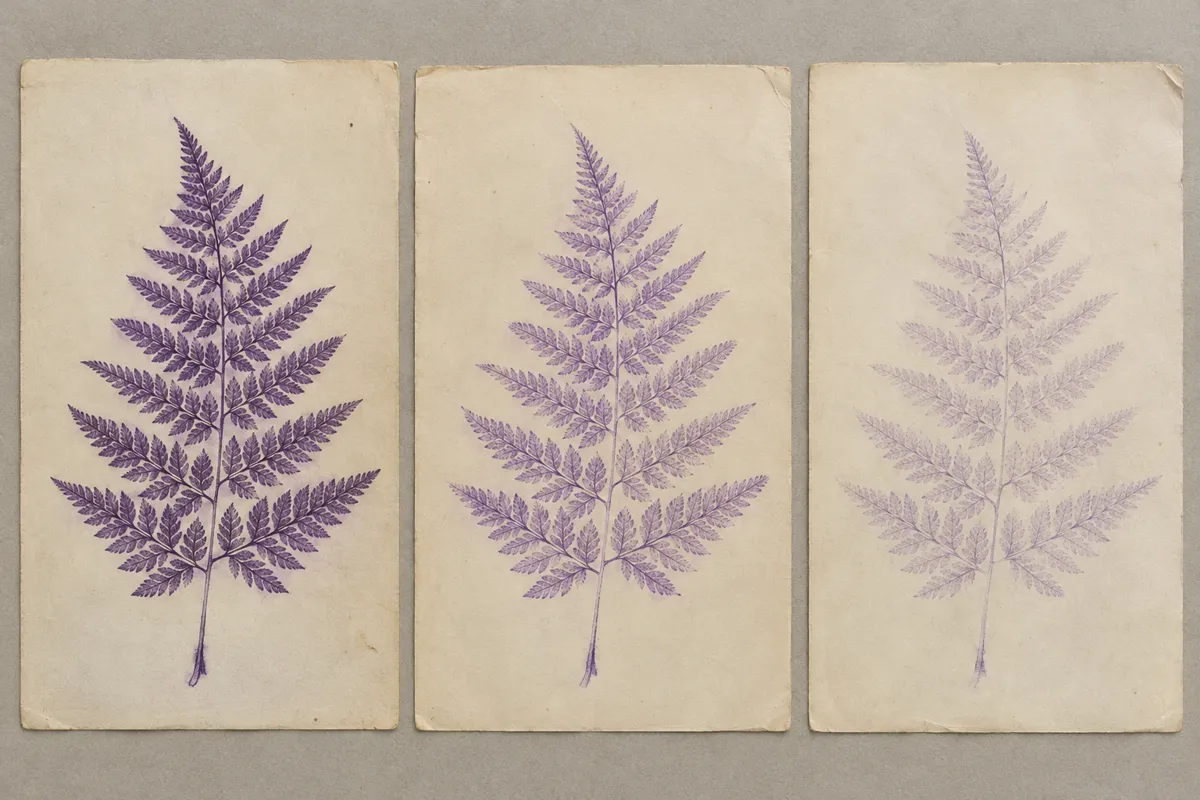
An alcohol-based solvent dissolves small amounts of aniline dye1from amaster2and transfers them onto paper. The master gradually loses dye, producing [progressively paler copies].
Example
Wilhelm Ritzerfeld: Spirit duplicator, 1923.
Try it out
Compare several surviving copies of one ditto sheet, looking for changes in purple density and the disappearance of fine lines.
Background
Introduced in 1923, the spirit duplicator became familiar in schools, offices, and small publishing operations. Typing or drawing pressed awaxy dye coating from abacking sheet onto the master's reverse. This created amirror image3of the original marks. During duplication, paper moistened with an alcohol-based fluid contacted that image, picking up alittle dissolved dye. Purple was common, though other colors existed. The process required neither photographic exposure nor development. Its limited dye supply suited short runs, while repeated copying gradually weakened the printed image.
Distinction
Mimeographs force ink through openings in astencil; spirit duplicators dissolve dye from amaster. Gelatin hectographs also transfer dye, but use agelatin surface rather than this alcohol-moistened paper process.
Aftermath
Spirit duplication shows how afinite supply of color can make the copying process visible in its results.
Further examples · 7 images
02Pale Violet School NewsletterA school newsletter combines handwritten headlines, typed columns, ruled borders, and a small drawing in pale violet. The weakened, uneven dye impressions across these different marks strongly illustrate the appearance of spirit duplication.*Dan T.* · CC BY-SA 3.0 · Wikimedia Commons03Spirit-Duplicated Theatre Props ListFour groups of small violet type list theatrical props beneath act headings on a pale sheet. The faint purple lettering and variable impression provide a clear example of a spirit-duplicated print.Leslie Slape · CC BY-SA 4.0 · Wikimedia Commons04Duplicated Mathematics Exercises With Written AnswersA pale mathematics exercise sheet with violet handwriting appears above two pages of worked answers in blue ink. The upper sheet shows the soft purple transferred lines of spirit duplication, unlike the directly written notebook pages below.KurtSchwitters · CC BY 4.0 · Wikimedia Commons05Violet Mathematics Exercise PrintViolet handwritten mathematics questions occupy a cream sheet above blue-ink answers on squared paper. The upper sheet's softly edged, uneven purple impressions visibly demonstrate spirit duplication, while the lower page provides a handwritten contrast.KurtSchwitters · CC BY 4.0 · Wikimedia Commons06AI illustration: Sequential spirit duplicator prints showing dye exhaustionThree sequential prints of a fern are shown side-by-side, displaying a distinct transition from a deep violet to a faint, ghostly lavender. This clearly demonstrates the characteristic exhaustion of aniline dye as multiple copies are pulled from a single spirit duplicator master.Illustration generated for the Atlas (AI)07AI illustration: Purple line drawing showing characteristic spirit duplicator inkThis purple line drawing of a sailboat features the soft, slightly fuzzy edges and rich mauve hue typical of early-run hectograph or ditto prints. The uneven saturation of the ink on the off-white paper mimics the alcohol-mediated transfer process used in the mid-20th century.Illustration generated for the Atlas (AI)
Question
Why might the last sheets in a run look paler than the first?
Show possible answer +Hide answer −
Every copy removes some dye from the master. Less dye remains available for later sheets.