Pulfrich Effect
1922, Carl Pulfrich's description
Prompt
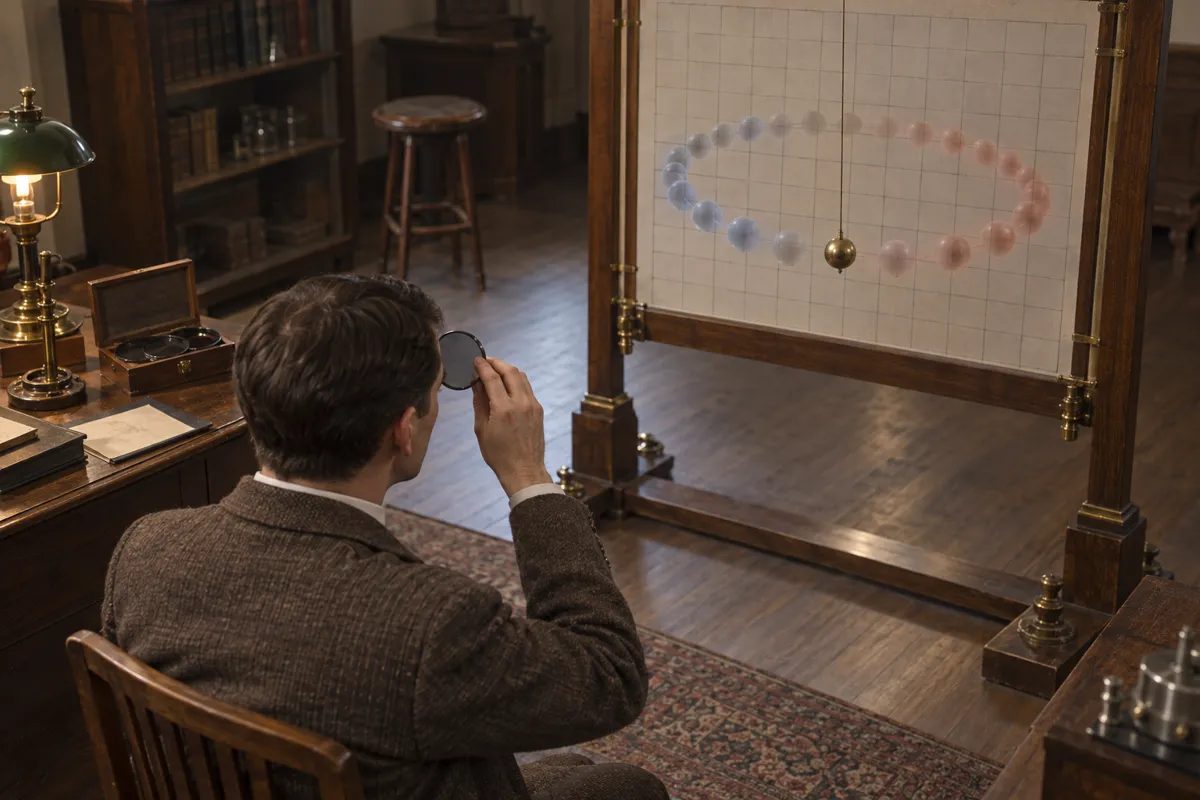
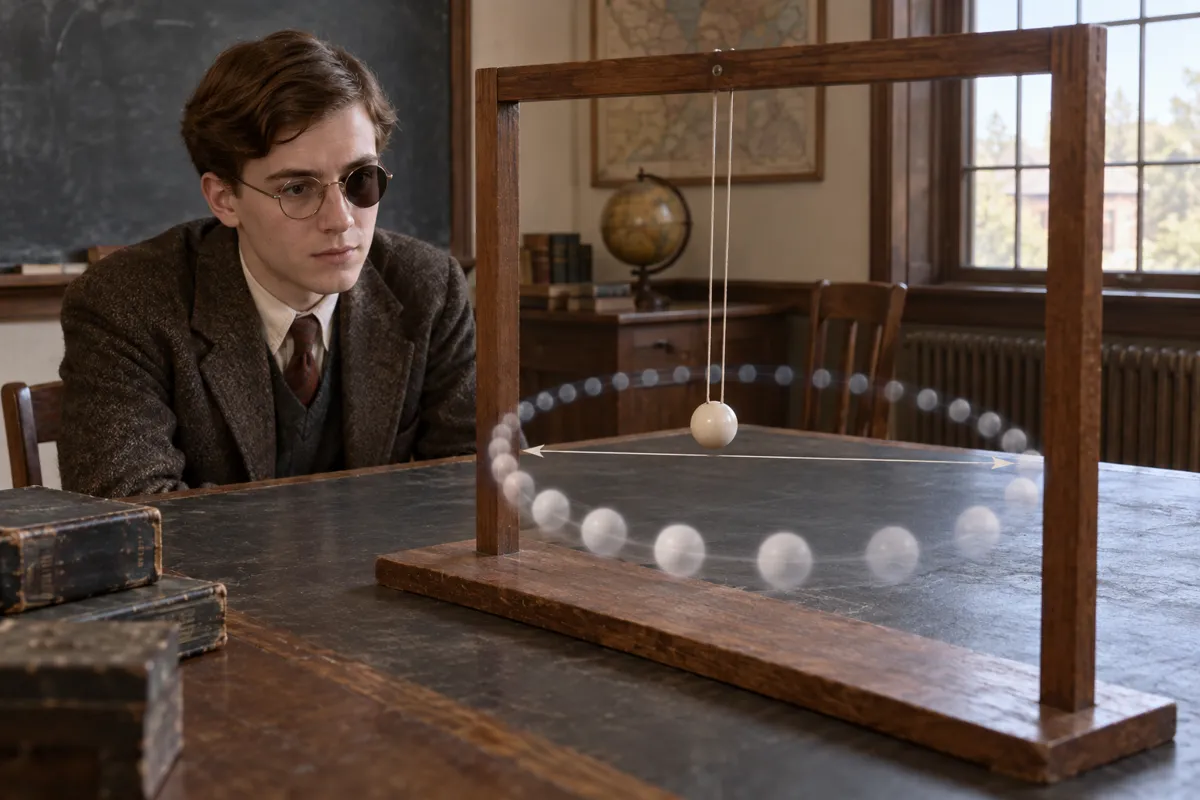
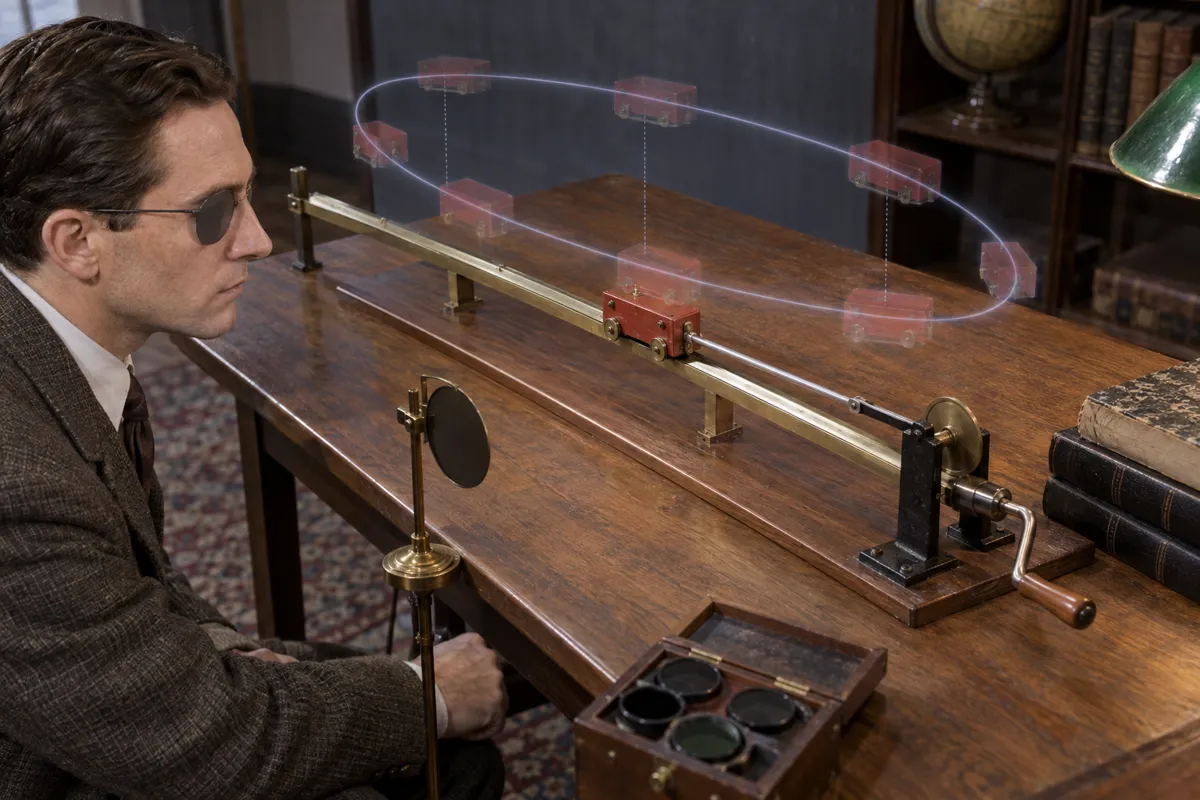
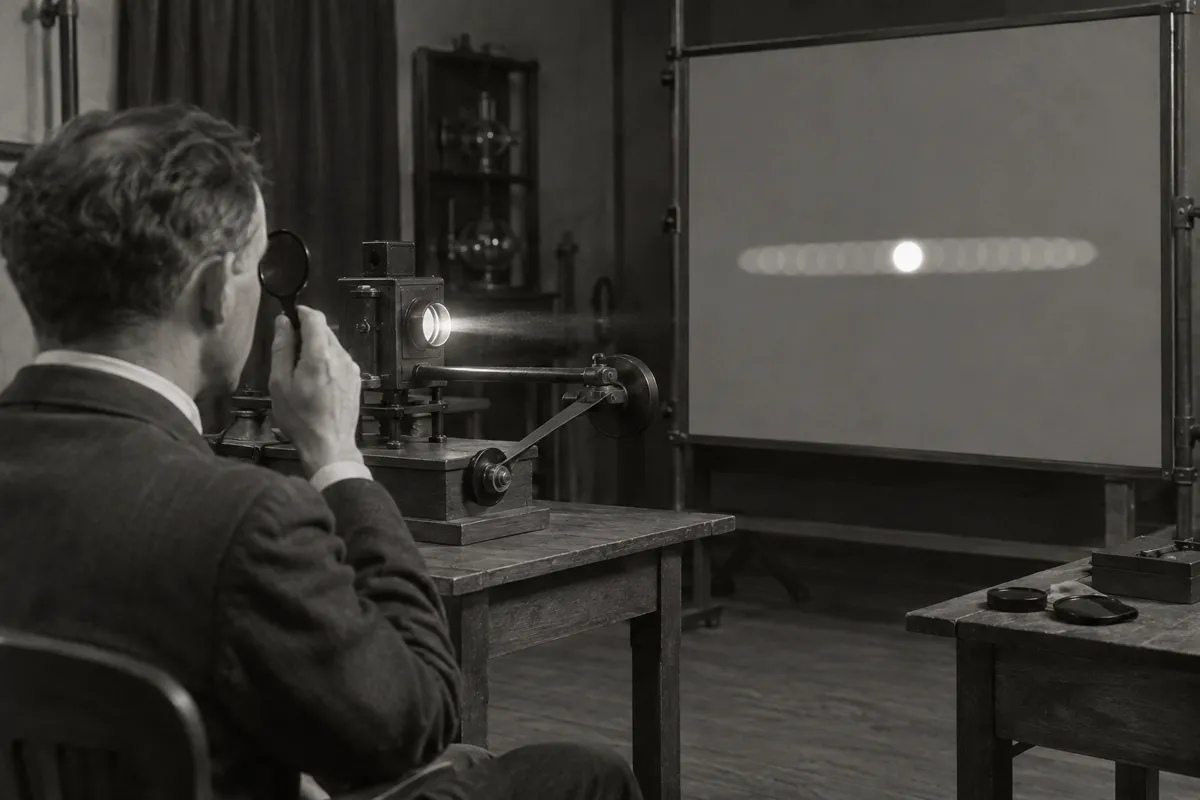
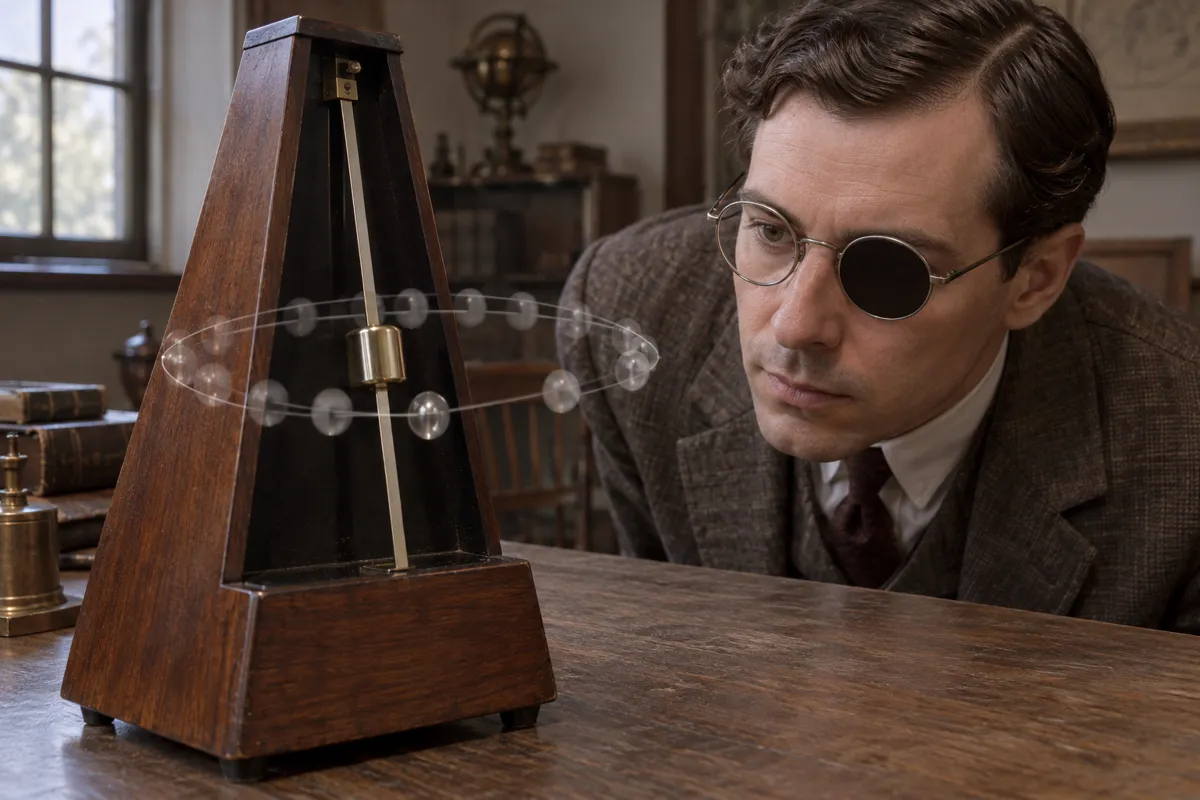
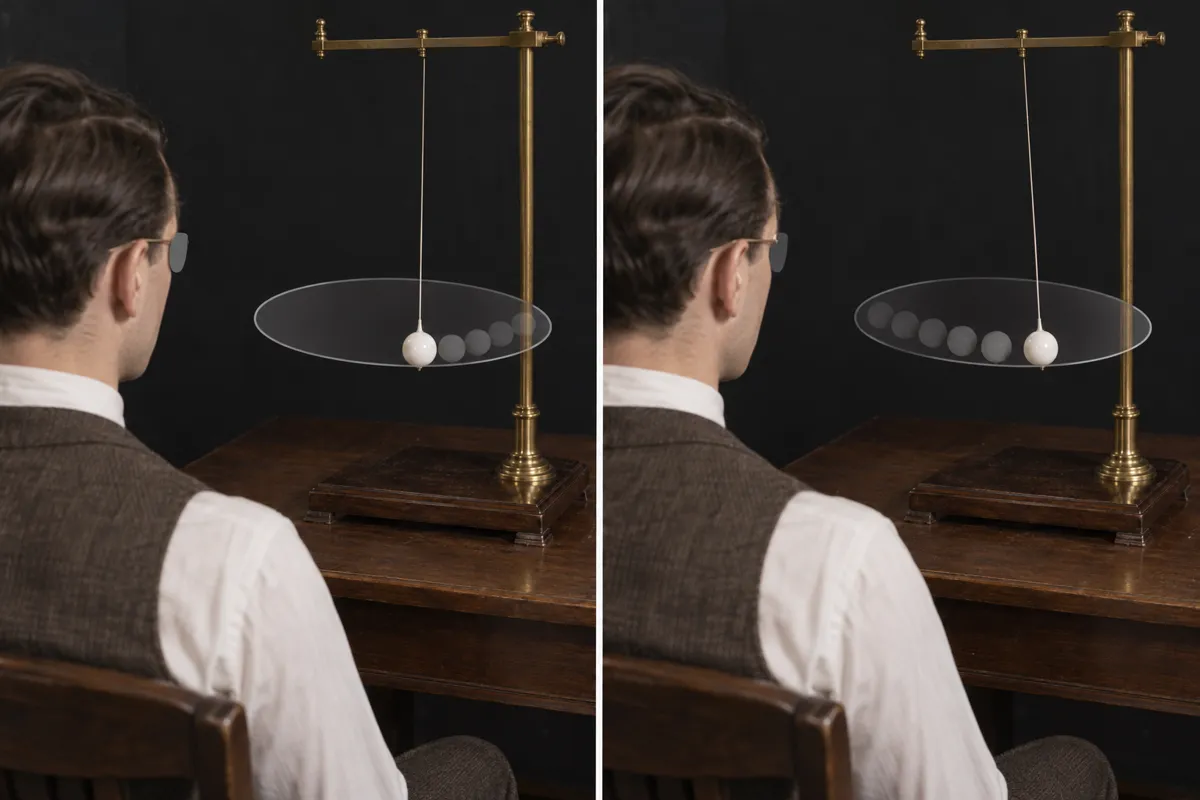
Apply a Pulfrich Effect visualization as a static motion study, suggesting lateral movement through closely spaced translucent positions that follow a shallow elliptical depth path. Use asymmetric brightness between motion echoes, subtle overlap, and a clear central subject; avoid red-cyan anaglyph coloring. Keep the original subject and composition.
Identify
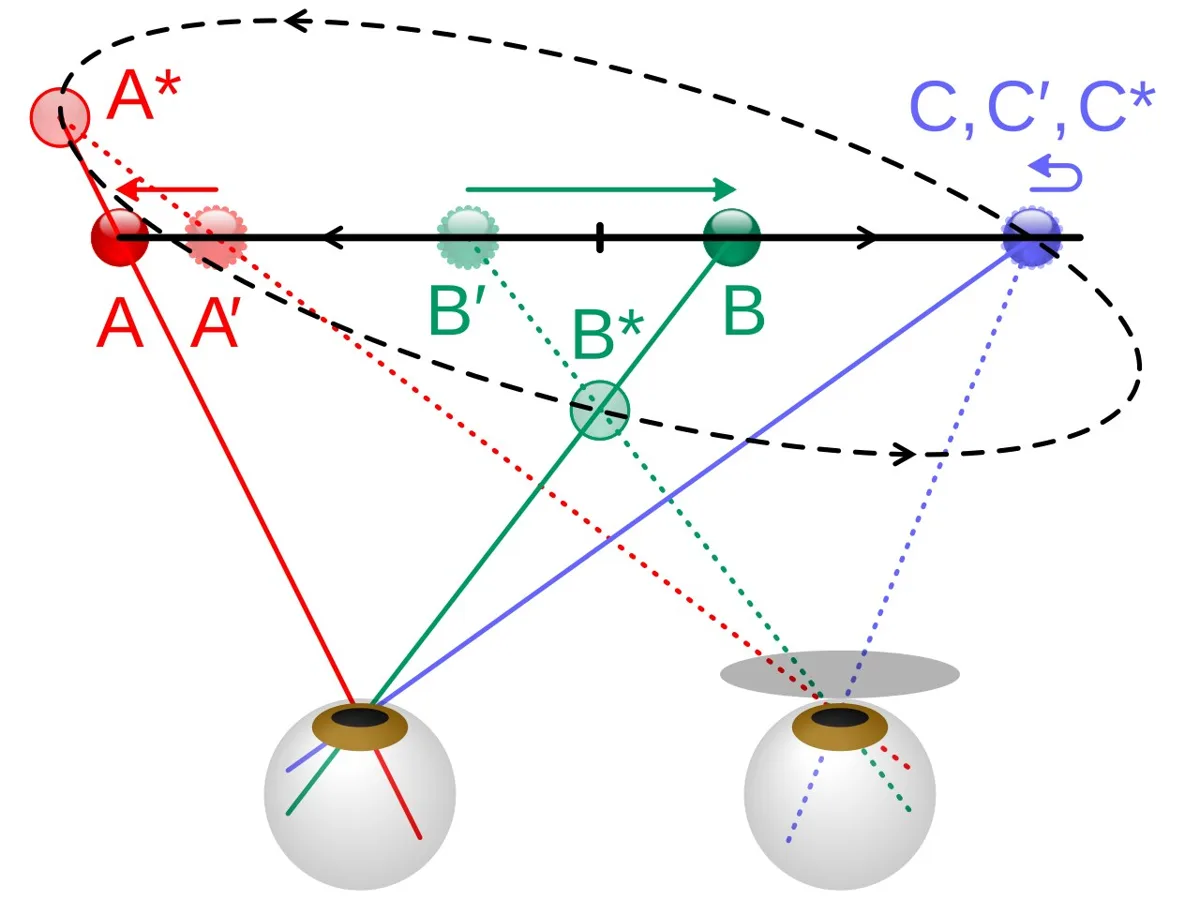
With one eye darkened, sideways motion appears to curve through depth. A swinging pendulum seems to follow an elliptical path1 instead of moving within one plane.
Principle
Reduced brightness creates a processing delay2 in the darkened eye's visual pathway. During lateral motion, this timing difference produces binocular disparity3, which the brain interprets as depth.
Example
BBC: Doctor Who — Dimensions in Time, 1993.
Try it out
Watch a pendulum swing sideways with both eyes open, holding one sunglass lens over one eye; then switch eyes.
Background
Carl Pulfrich described this effect in 1922, linking unequal brightness between the eyes to an illusion of depth during motion. A dark filter reduces the light reaching one eye and delays its visual response. The brain therefore combines signals corresponding to slightly different positions of a moving object. It interprets this mismatch as depth, much as it interprets differences between ordinary binocular views. Later television productions used the effect with specially arranged movement and glasses containing one dark lens. A stationary photograph alone cannot demonstrate the defining motion-dependent illusion.
Distinction
Unlike anaglyph 3D, this technique does not separate two encoded views using different colored filters. Its depth illusion depends on motion and unequal visual timing.
Aftermath
The effect shows that perceived depth depends on the timing of visual signals, not just their spatial arrangement.
Further examples · 7 images
Question
Why does a stationary object not gain depth from the classic Pulfrich effect?
Show possible answer +Hide answer −
Without motion, the processing delay does not create a difference in the object's apparent position between the eyes.