Dunning Process
1927, Carroll Dunning's colour-separation process
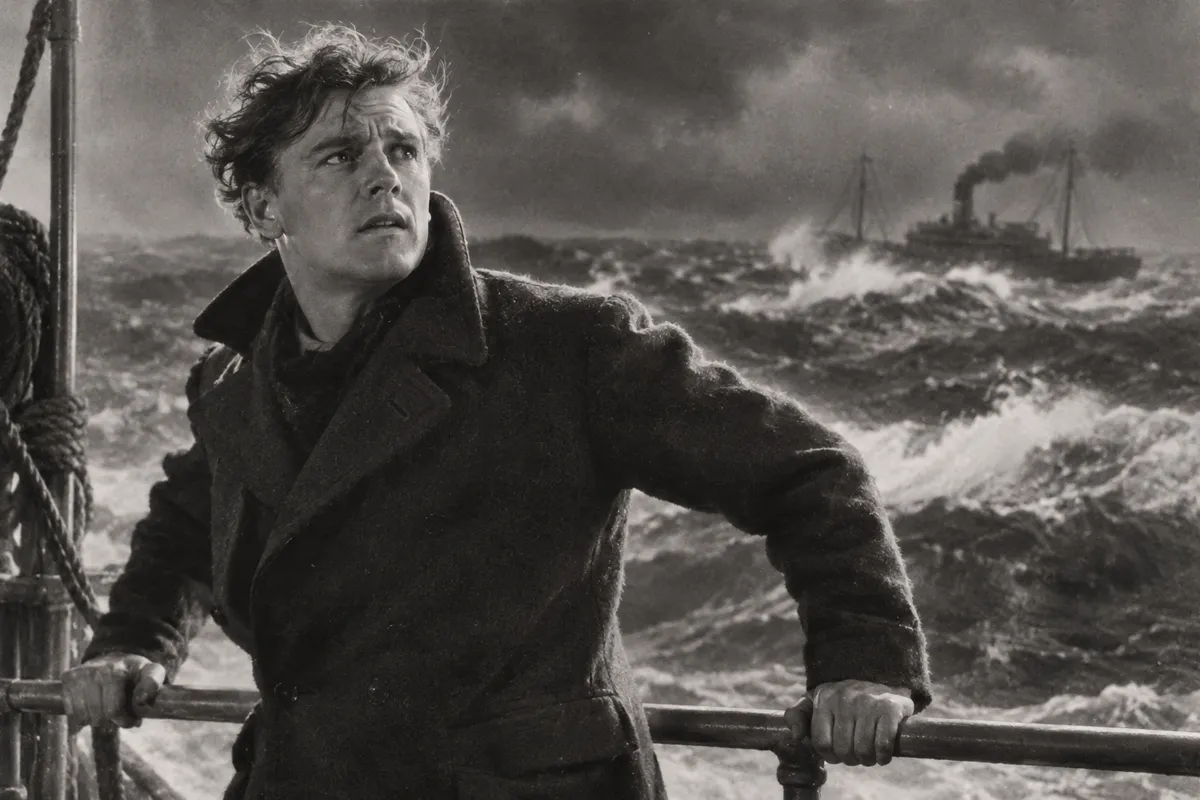
Prompt
Apply a Dunning Process treatment as a black-and-white optical composite, separating a clearly lit foreground from the existing setting. Introduce fine silhouette fringes, subtly different contrast between layers, soft background detail, and period film grain. Keep foreground surfaces naturally shaded rather than visibly blue or yellow. Keep the original subject and composition.
Identify
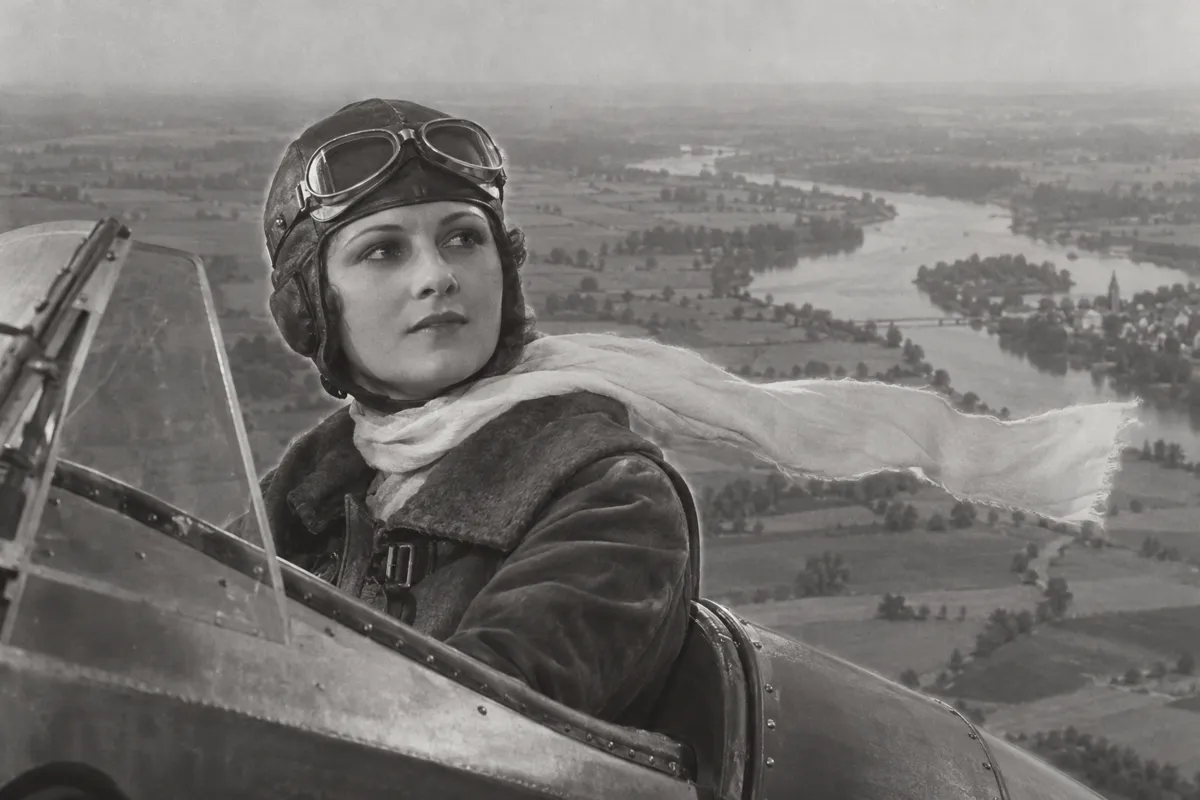
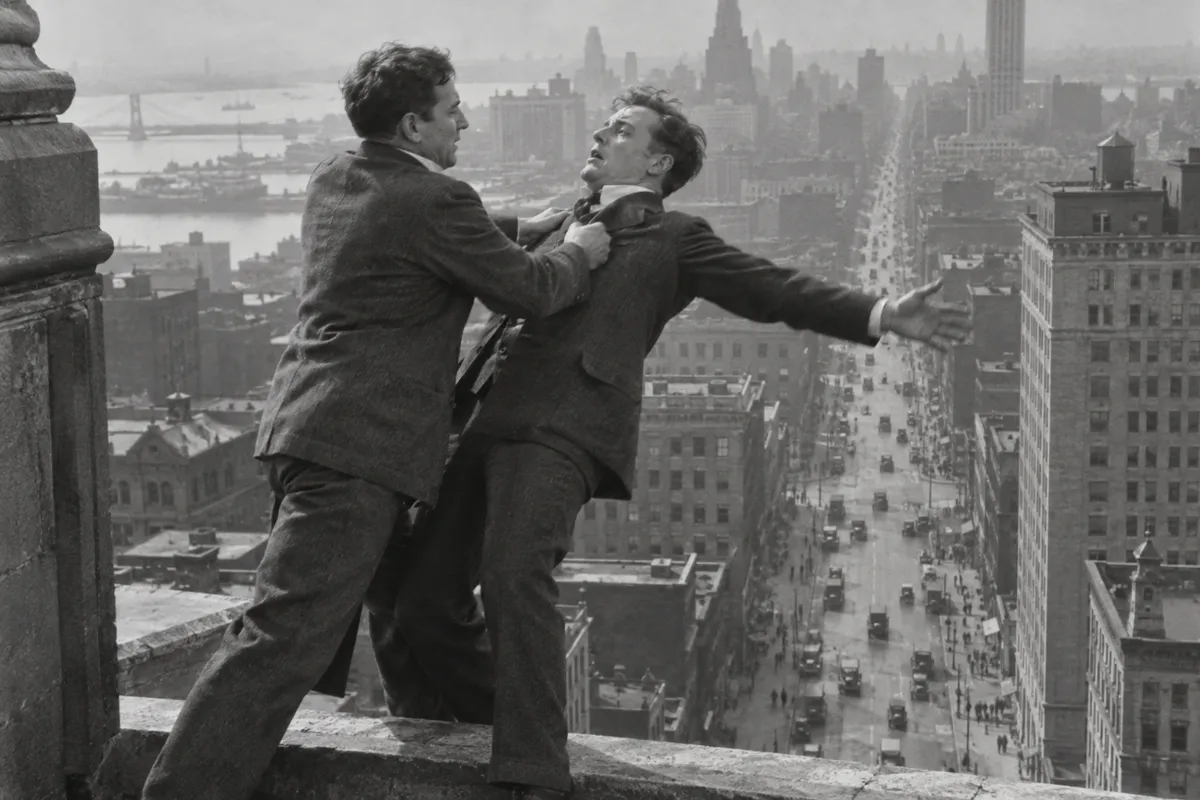
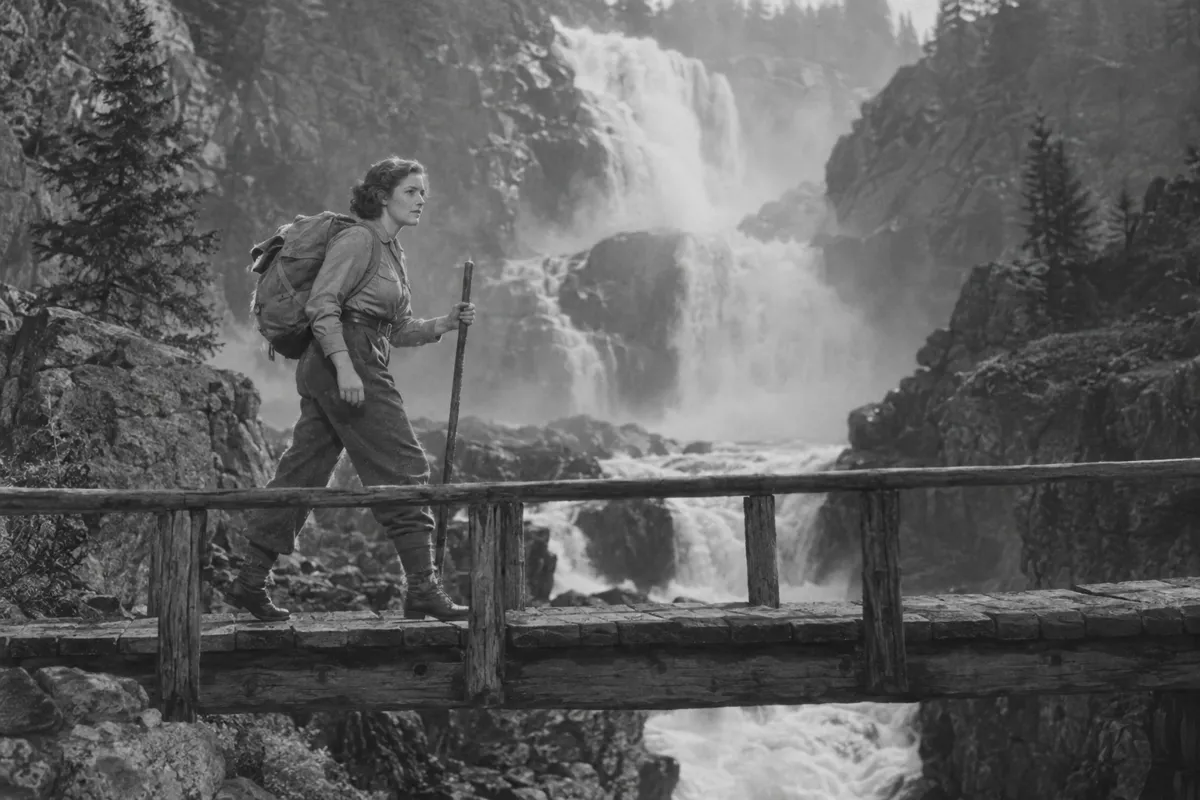
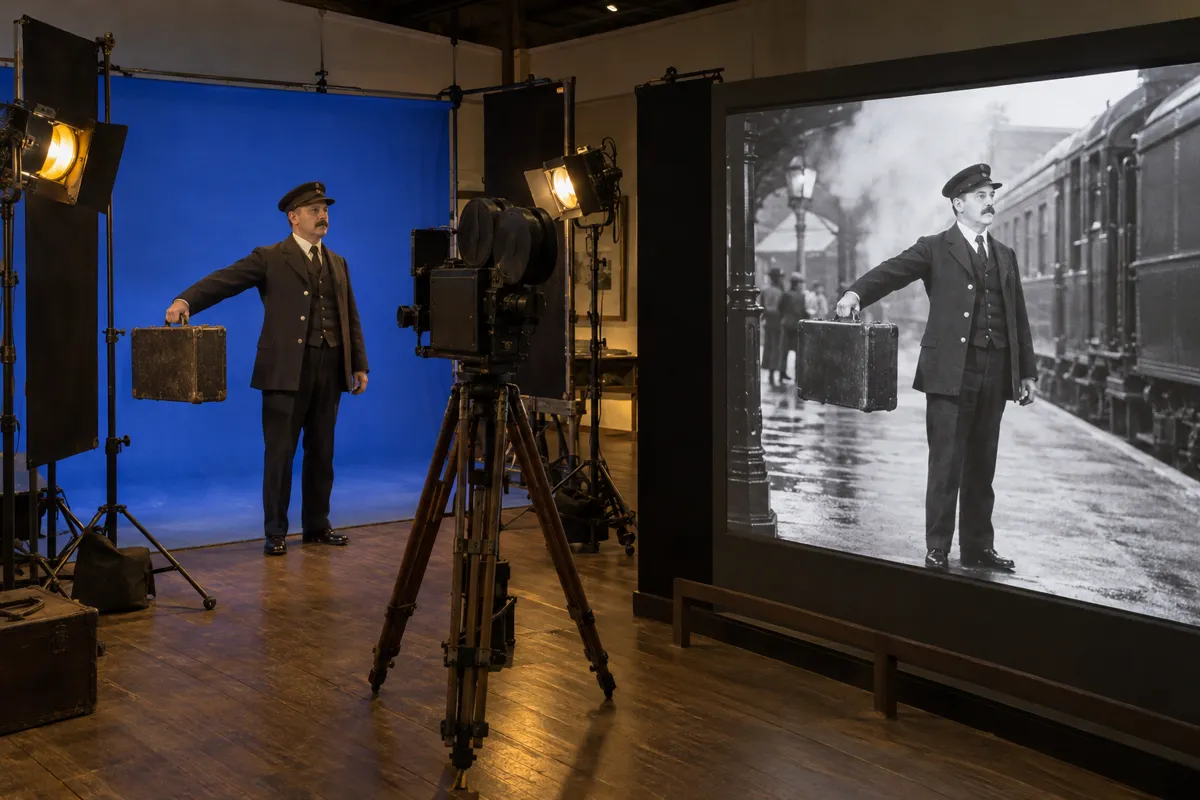
Live actors appear inside a separately filmed setting, with moving silhouettes revealing the background around them. The finished composite is black and white, sometimes with visible edge fringes.
Principle
Yellow-lit actors stand before a blue backing, while a yellow-dyed background positive1 runs against unexposed negative film inside the camera. The positive filters blue light according to its image, while passing yellow foreground light to expose the negative.
Example
Merian C. Cooper and Ernest B. Schoedsack: King Kong, 1933.
Try it out
Look through transparent yellow film at blue and yellow patches on a screen; compare how strongly each patch darkens.
Background
Carroll Dunning introduced this process in the 1920s, and Roy Pomeroy helped develop it for studio use. It combined actors with previously photographed scenery during exposure2, rather than joining two finished images afterward. The camera carried two film strips together, an arrangement called bipack3. A yellow-dyed positive supplied the background image, while a fresh negative recorded the combination. Yellow light illuminated the actors, and blue light came from the backing. Their different transmission through the dyed positive separated foreground from background. Careful lighting was essential, especially around hair, shadows, and reflective costumes.
Distinction
Unlike modern blue-screen compositing, Dunning combined the images photographically inside the camera rather than extracting a digital mask afterward. Its coloured lighting produced a black-and-white result.
Aftermath
It shows how colour separation can control where an image forms, even when the finished picture contains no colour.
Further examples · 5 images
Question
Why did the process need yellow foreground light and a blue backing?
Show possible answer +Hide answer −
The dyed positive transmitted yellow foreground light but selectively absorbed blue light according to the background image. This let one exposure combine both scenes.