H 085 / 3211920s

Solarization

Solarization / Sabattier effect. Late 1920s–1930s: Surrealism and experimental photography.
Typeface · Unica One

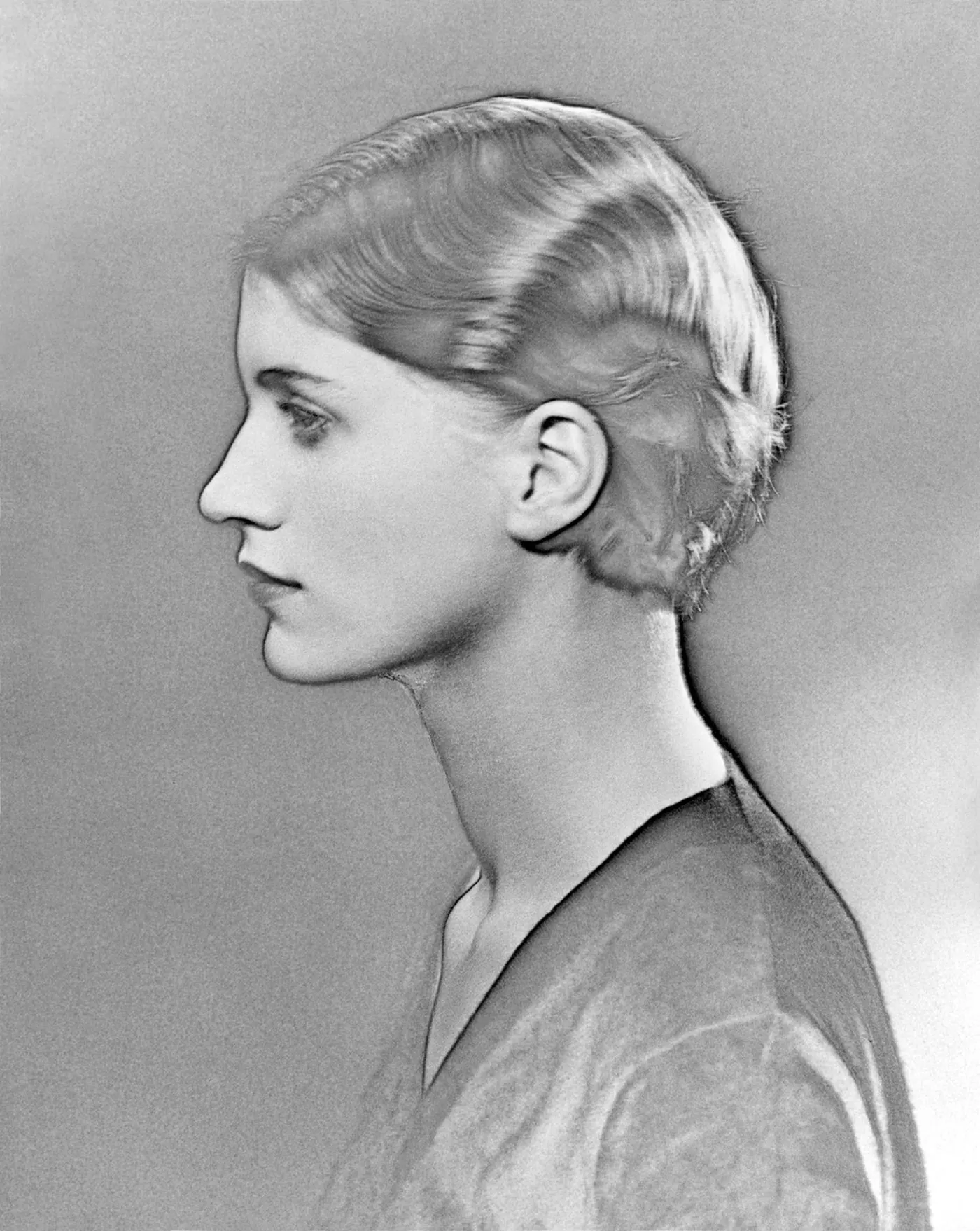
Man Ray: Lee Miller (1929).
Man Ray: Lee Miller (1929).The Museum of Modern Art,New York,Gift of James Thrall Soby;via The Met; Man Ray rights apply;museum web reproduction,no open license stated.View source ↗

Prompt

Apply Solarization with selective tonal reversals, silvery midtones, darkened highlights, and luminous shadows. Outline major forms with narrow light and dark contour bands, retaining recognizable photographic detail beneath uncanny metallic shading. Use predominantly monochrome tones, fine darkroom grain, and smooth gradients interrupted by reversal boundaries. Keep the original subject and composition.

Identify

Silvery skin, inverted tonal values1 and striking contour edges appear both familiar and uncanny.

Principle

A negative or print is exposed to light again during development2. This causes parts of the tonal values to be reversed.

Example

Man Ray: Lee Miller, 1929. Developed further together with Miller around 1929/1930.

Try it out

Look for the most noticeable border lines, especially on the face, hair, and shoulders.

Background

An older photographic phenomenon; Lee Miller rediscovered it around 1929/1930 for his collaboration with Man Ray. Late 1920s–1930s: Surrealism and experimental photography. Often referred to as solarization in Surrealist terminology; technically, it is the Sabattier effect. Not to be equated with extreme overexposure.

Recognize: Silvery-metallic skin, partly negative tonal values ​​and light or dark contour edges. Mechanism: A negative or print is exposed to light again during development. Parts of the tonal values ​​are reversed; contours can appear as pronounced lines. example: Man Ray: Lee Miller, 1929; Lee Miller: Solarized Piano, around 1933. Practice: In the portrait, look for the boundary line where a normal tonal value tips into an inversion. Pay particular attention to the facial contours.

During development, a negative or print is exposed to light again. Parts of the tonal values ​​are reversed; contours can appear as pronounced lines. Silvery-metallic skin, partly negative tonal values ​​and light or dark contour edges. In the portrait, look for the boundary line where a normal tonal value tips into an inversion. In surrealist terminology, it's often called solarization; technically, it's the Sabattier effect. It shouldn't be equated with extreme overexposure.

Distinction

In surrealist terminology, often referred to as solarization; technically, it is the Sabattier effect. Not to be equated with extreme overexposure.

Aftermath

Digital solarize filters evoke tonal inversion.

Further examples · 7 images

Monochrome pos neg digital solarized
02 Monochrome pos neg digital solarizedA comparison showing a normal photograph and its solarized counterpart. The right panels display partially reversed tonal values and prominent Mackie lines along the edges of the chairs.N0TABENE · CC BY-SA 4.0 · Wikimedia Commons
Art Photography - Workshop Photography - Women show a street photographer their naked body with their soul of being - Solarization of the im
03 Art Photography - Workshop Photography - Women show a street photographer their naked body with their soul of being - Solarization of the imThe objects show metallic tonal values and light halo outlines against a neutral background. The reversal of highlights into dark tones demonstrates the aesthetic of pseudo-solarization used in experimental photography.Lupus in Saxonia · CC BY-SA 4.0 · Wikimedia Commons
1981-fotozirkel-kulturbund-eberswalde-by-RalfR-21-sol2
04 1981-fotozirkel-kulturbund-eberswalde-by-RalfR-21-sol2This portrait exhibits dark contour lines around the face and hair against a light background. Tonal values are partially reversed, resulting in a characteristic silvery appearance of the skin and highlights.Ralf Roletschek · GFDL 1.2 · Wikimedia Commons
Sabattier paper prints
05 Sabattier paper printsThese paper prints demonstrate the Sabattier effect through distinct tonal reversals and halo-like outlines around the figures. The contrast between positive and negative values illustrates the result of re-exposing the medium during development.N0TABENE · CC BY-SA 4.0 · Wikimedia Commons
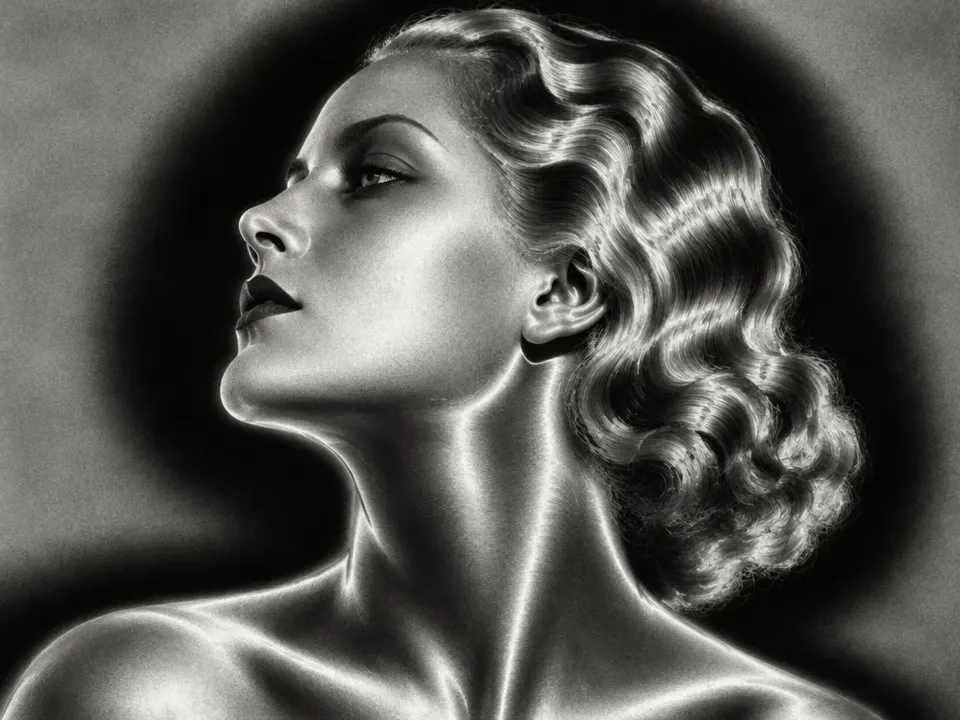
AI illustration: A monochrome profile displays characteristic silvery skin tones and sharp
06 AI illustration: A monochrome profile displays characteristic silvery skin tones and sharpA monochrome profile displays characteristic silvery skin tones and sharp halo-like contours. These glowing edges between the figure and dark background correctly simulate the Sabattier effect seen in Surrealist photography.Illustration generated for the Atlas (AI)
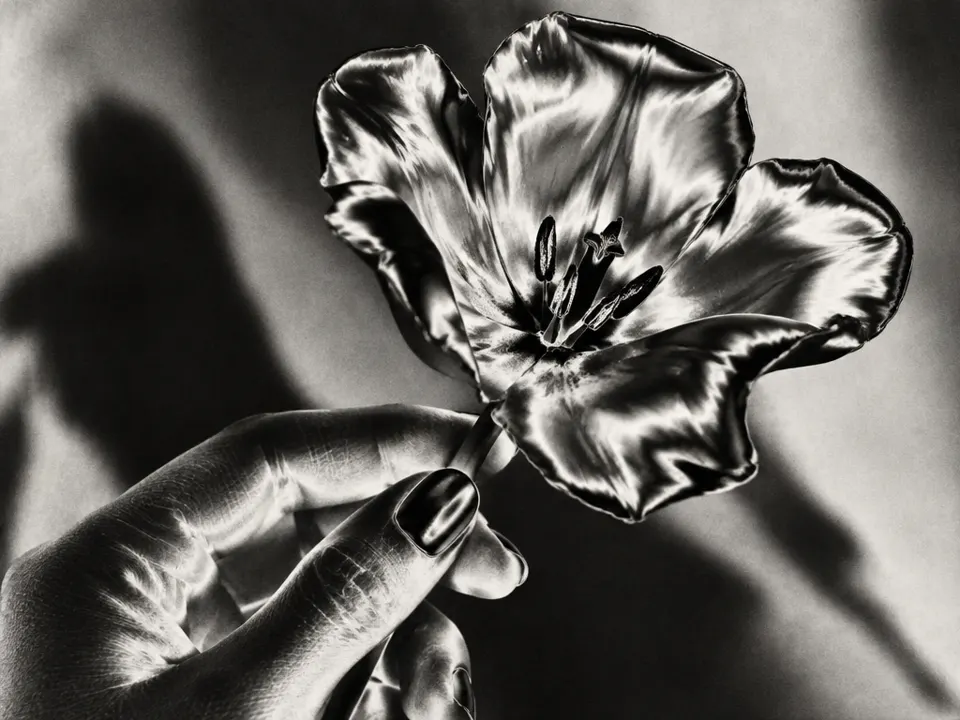
AI illustration: A hand holding a flower shows partial tonal inversion and distinct dark b
07 AI illustration: A hand holding a flower shows partial tonal inversion and distinct dark bA hand holding a flower shows partial tonal inversion and distinct dark border lines along the petals. The metallic luster and edge definition accurately reflect 1930s experimental solarization techniques.Illustration generated for the Atlas (AI)

Sources