H 245 / 3211990s

Shaky Cam

1990s prominence; handheld roots in earlier documentary filmmaking
Typeface · Sedgwick Ave

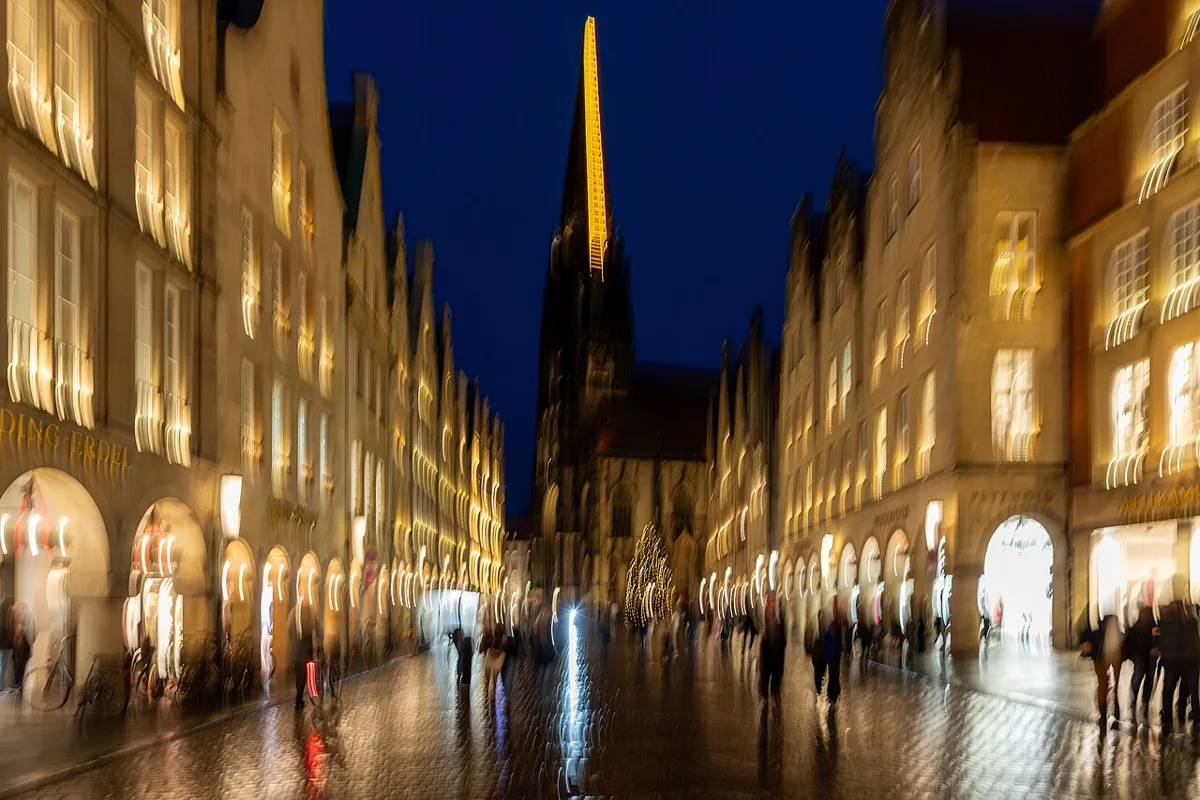
Camera Shake on a Night Street. Illuminated façades and a church spire rise above a wet street, with stationary architectural details visibly smeared and doubled.
Camera Shake on a Night Street. Illuminated façades and a church spire rise above a wet street, with stationary architectural details visibly smeared and doubled.Dietmar Rabich · CC BY-SA 4.0 · via Wikimedia CommonsView source ↗

Prompt

Apply a shaky cam still-frame effect with short irregular directional smears, faint doubled contours, and uneven motion blur concentrated around background details and high-contrast edges. Suggest an abrupt handheld jolt while leaving the main subject readable; avoid smooth radial zoom streaks or reframing. Keep the original subject and composition.

Identify

The frame shows irregular jolts, drifting horizons, and abrupt reframing1 rather than smooth camera travel. Moving details may smear briefly.

Principle

Unstabilized camera movement changes the viewpoint and framing during recording. Movement during each exposure can also produce motion blur, depending on exposure time2.

Example

Daniel Myrick and Eduardo Sánchez: The Blair Witch Project, 1999.

Try it out

Record the same short walk with stabilization off and on, if available. Compare horizon movement and how easily you follow objects.

Background

Shaky cam became especially visible in 1990s fiction, but handheld documentary practice long predates that decade. Lightweight cameras let operators follow events without fixed supports. Their footsteps, breathing, and corrections could become visible in the frame. Fiction filmmakers borrowed these signs to suggest urgency, uncertainty, or eyewitness access. The Blair Witch Project made unstable footage part of its story: characters were recording their own frightening experience. In the following decade, Paul Greengrass's Bourne films combined handheld movement with rapid editing3 for action. Camera shake and editing remained separate techniques.

Distinction

Shaky cam changes framing within a shot; rapid cutting switches between shots. Motion blur can accompany shake, but either can occur without the other.

Aftermath

Shaky cam teaches how imperfect framing can suggest eyewitness authenticity without proving that an event is real.

Further examples · 7 images

Camera-Shaken View of a Toy Vehicle
02 Camera-Shaken View of a Toy VehicleA red tracked toy vehicle rests on a wooden floor, its edges softened into displaced, overlapping outlines. Blur affecting both the toy and its surroundings demonstrates camera movement during exposure rather than movement of the subject alone.Stefan-Xp · CC BY-SA 3.0 · Wikimedia Commons
Jolted Lights at a Night Intersection
03 Jolted Lights at a Night IntersectionStreetlights and illuminated signs break into jagged, repeated streaks above a blurred nighttime intersection. The coordinated irregular displacement of stationary lights clearly demonstrates camera shake during exposure.Suwatch · CC BY 2.0 · Wikimedia Commons
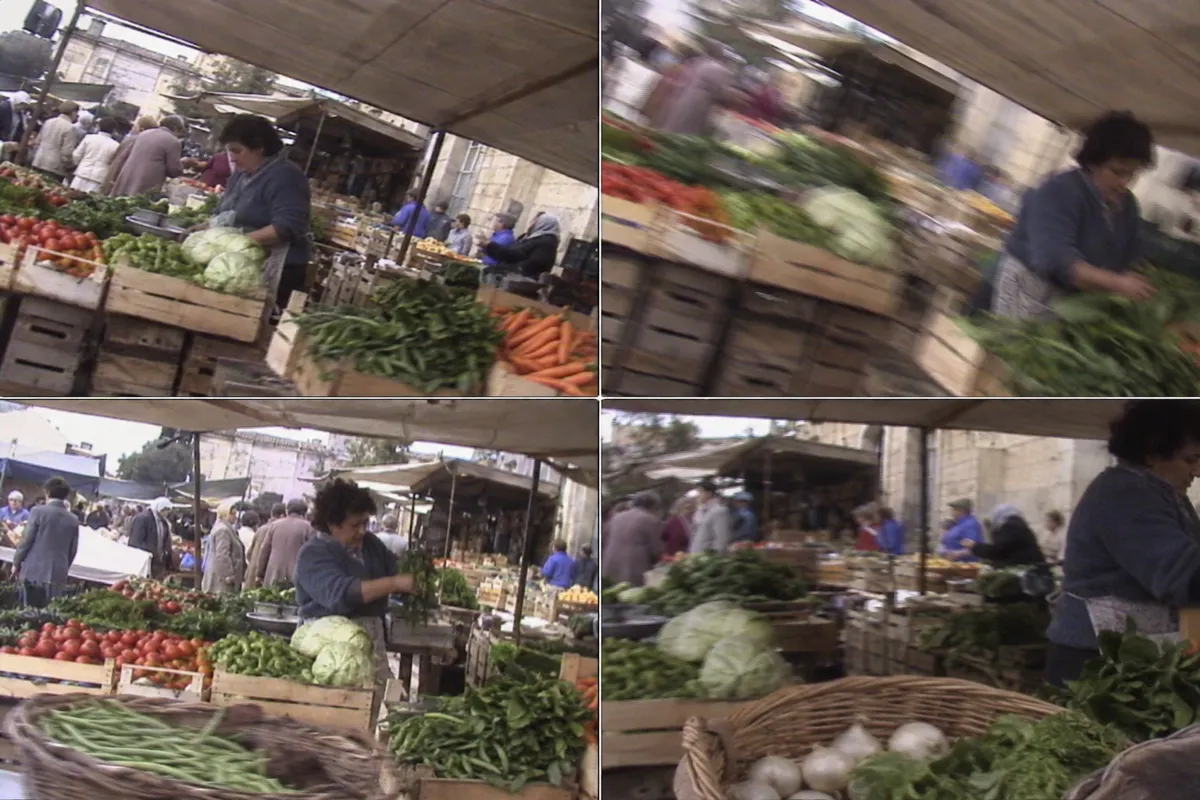
AI illustration: Market scene sequence with significant handheld camera shake
04 AI illustration: Market scene sequence with significant handheld camera shakeFour frames from a market scene display sudden horizon shifts and significant motion blur during an unstable pan. The sequence illustrates the jerky, handheld quality characteristic of unstabilized documentary-style cinematography.Illustration generated for the Atlas (AI)
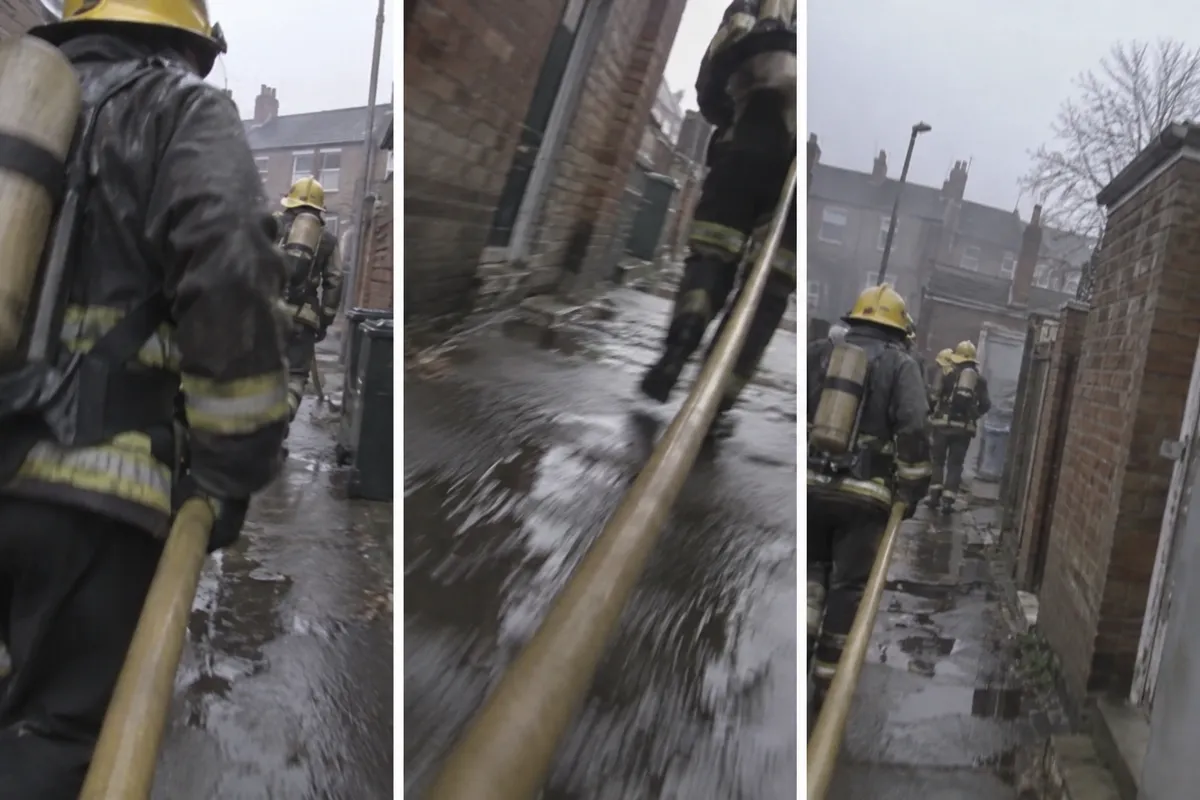
AI illustration: First-person perspective movement showing reactive camera tilt
05 AI illustration: First-person perspective movement showing reactive camera tiltA triptych shows firefighters moving through an alley with a low-angle camera that tilts and blurs. The dynamic, uncentered framing mimics a body-worn camera reacting to the physical movement of the operator.Illustration generated for the Atlas (AI)
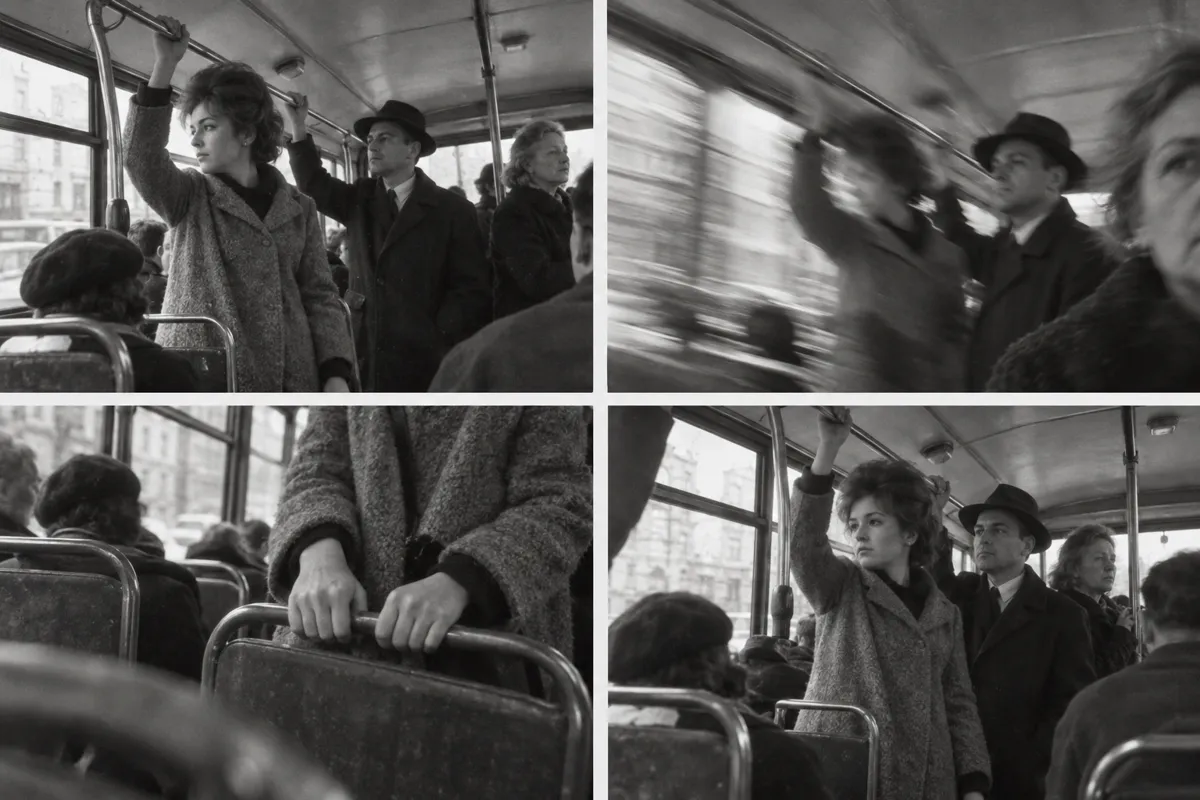
AI illustration: Sudden frame instability and motion blur in transit
06 AI illustration: Sudden frame instability and motion blur in transitA monochrome sequence inside a bus features one frame with heavy diagonal motion smear and tilted geometry. This abrupt transition from stable to chaotic framing exemplifies the jarring nature of the shaky cam technique.Illustration generated for the Atlas (AI)
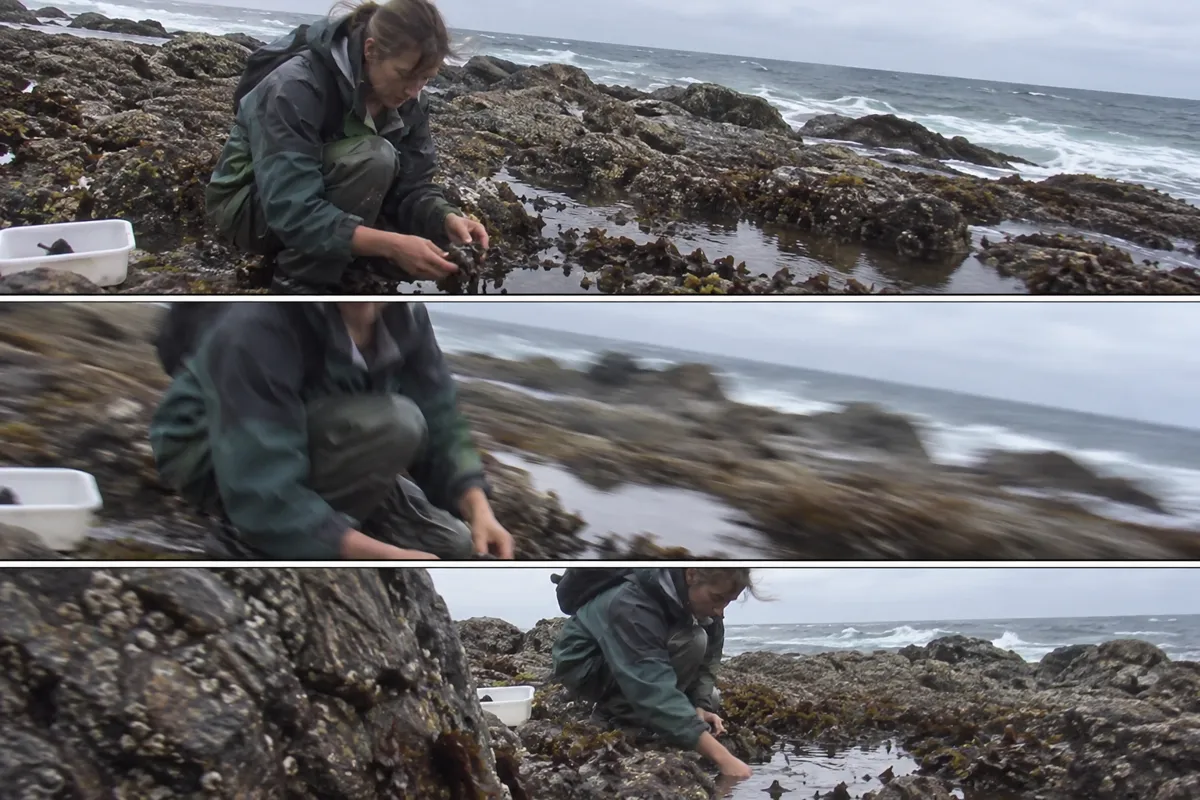
AI illustration: Jolted framing and motion smear on location
07 AI illustration: Jolted framing and motion smear on locationThree frames of a researcher on a rocky shore demonstrate a violent horizontal jolt and subsequent reframing. The middle panel captures the characteristic 'smear' that occurs when the camera is moved rapidly during exposure.Illustration generated for the Atlas (AI)

Question

Why can shaky footage look sharp in individual frames?

Show possible answer +

Short exposures can freeze detail even when the camera moves substantially between frames. The sequence still looks unstable.

Sources