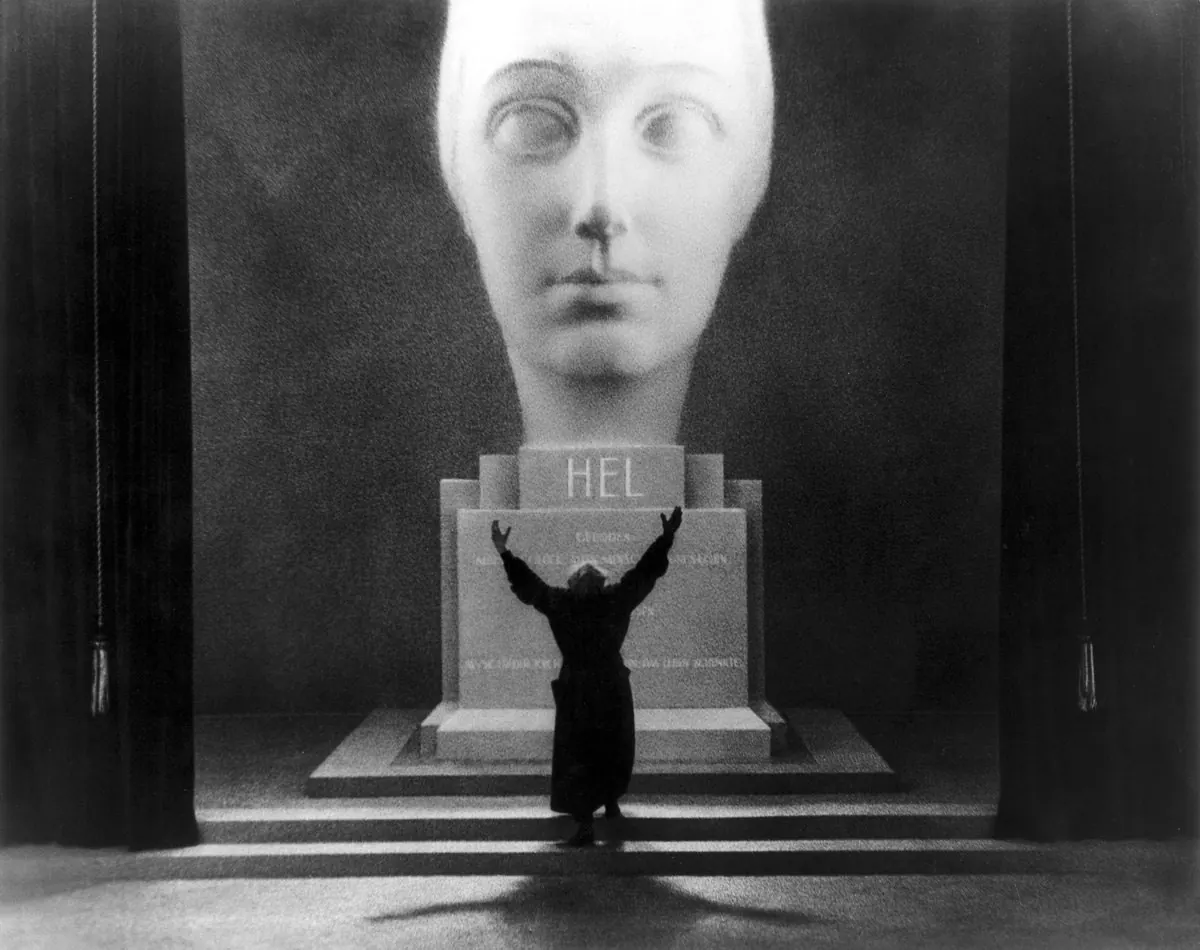
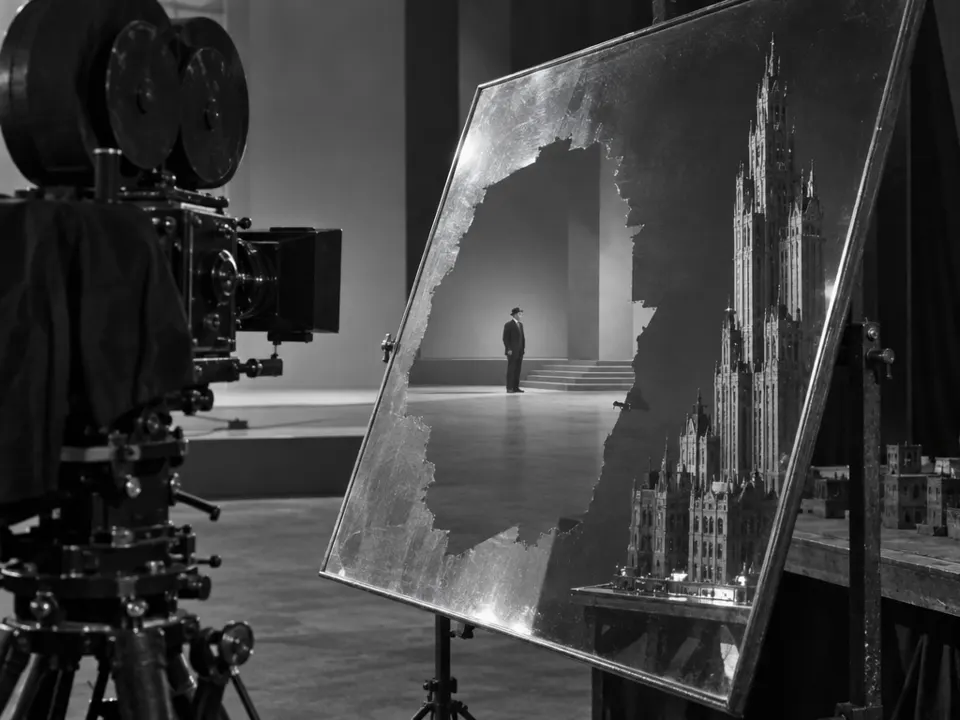
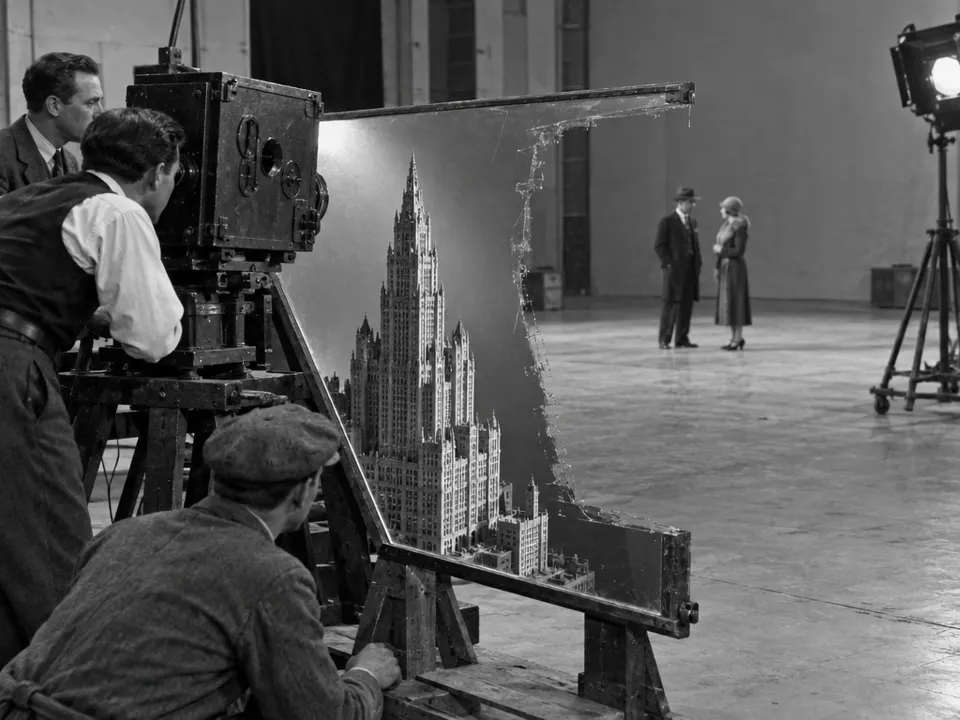
Metropolis (1927): Rotwang in front of the large Hel bust, Schüfftan combination.Ufa / Fritz Lang; historical film frame, via Wikimedia Commons.View source ↗
Prompt
Apply a Schüfftan Process treatment, making the existing setting resemble monumental model architecture seamlessly combined with the foreground through a mirror. Use aligned perspective, deep focus, monochrome film grain, slight reflection softness, and faint brightness discontinuities at architectural joins. Keep the original subject and composition.
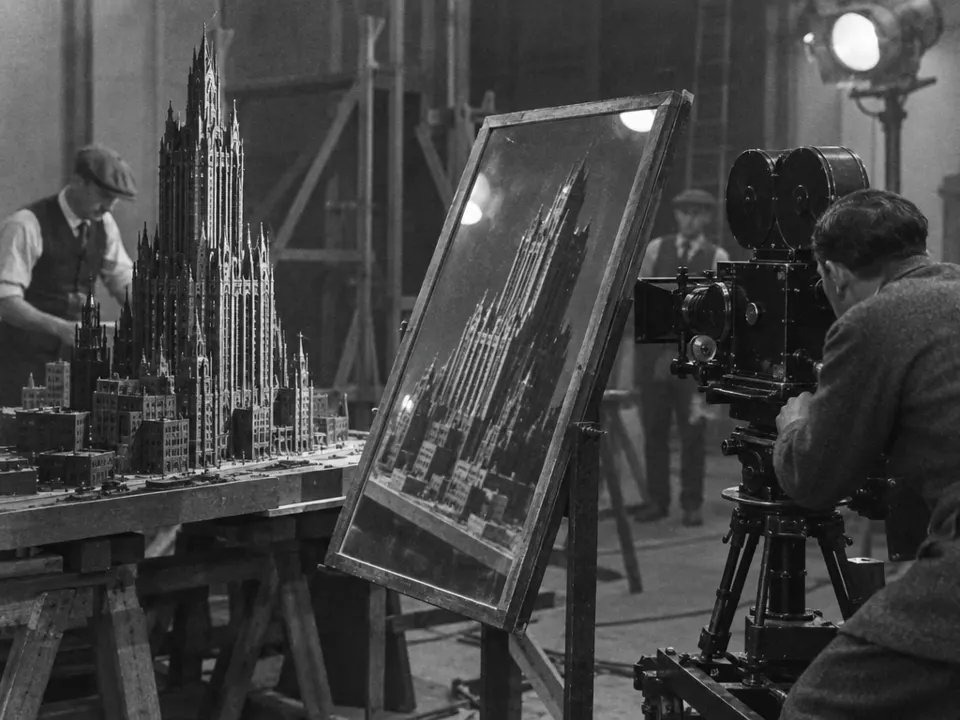
Draw the path of light from the model, mirror, and actor.
Background
In the early 1920s, Eugen Schüfftan and Ernst Kunstmann developed amirror technique for creating gigantic-looking sets. Atilted mirror reflects the small model; exposed sections allow adirect view of the actors. Acomposite image is created during the filming process. The technique became famous through the film Metropolis. Filmportal documents both their collaboration and the development of the technique prior to this film.
Distinction
The camera and mirror must be precisely aligned. This differentiates this recording process from afreely movable digital collage; imprecise transitions betray the combination.
Aftermath
Early compositing can already occur in the camera.
Further examples · 7 images
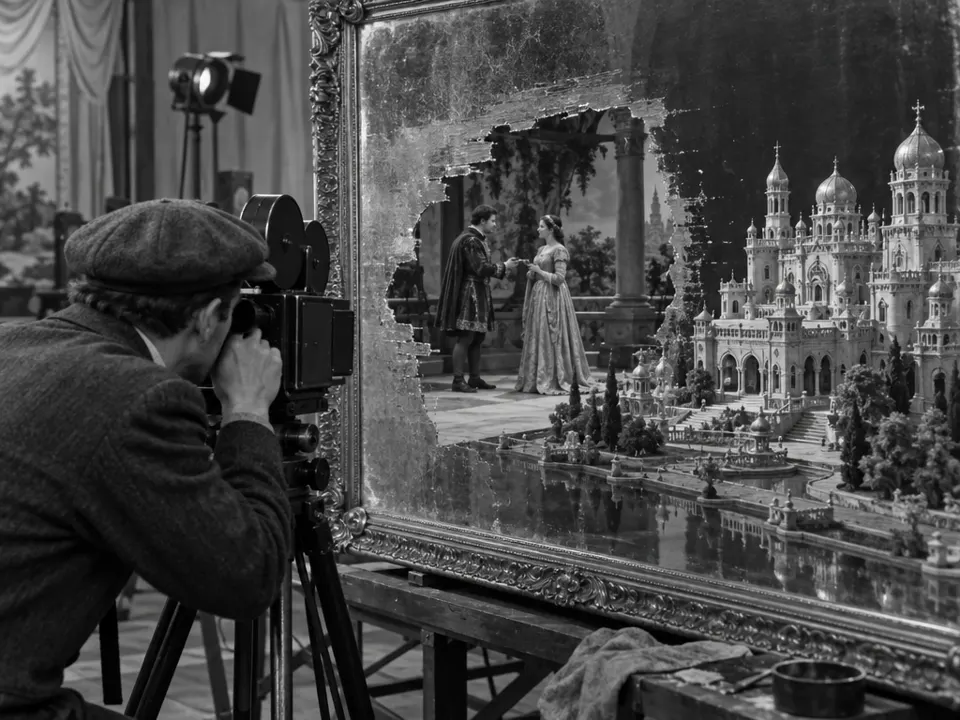
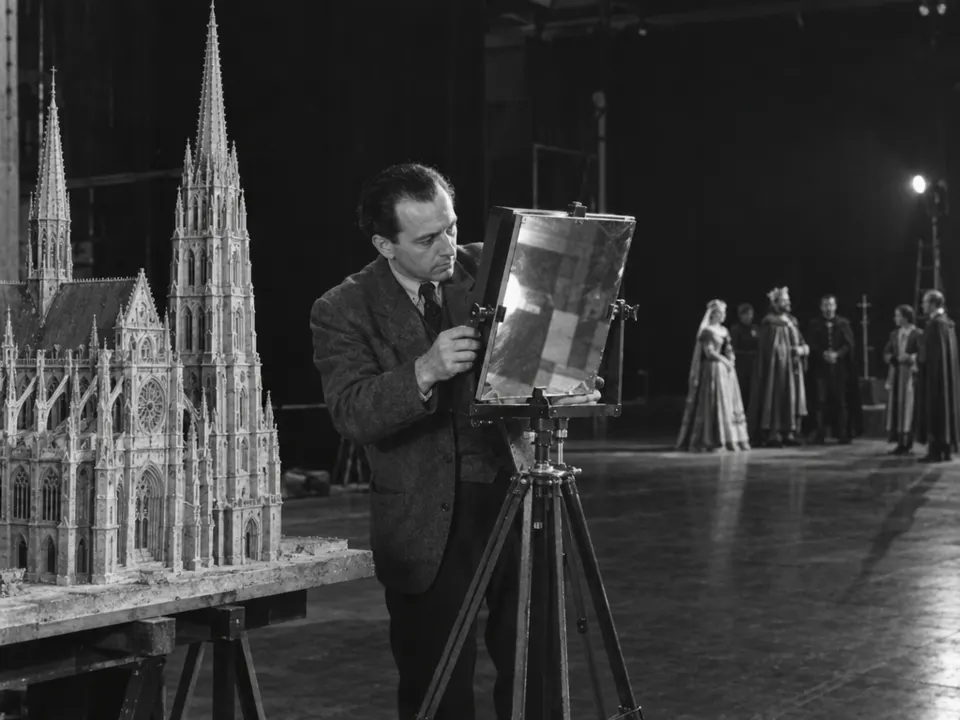
02Donald Calthrop Blackmail 1929 StillA small figure hangs from a rope next to a large Egyptian head statue. This is a Schüfftan Process example where a miniature model is reflected via mirror to dwarf the live actor.Unknown authorUnknown author · Public domain · Wikimedia Commons03AI illustration: A camera looks at a tilted mirror reflecting a miniature buildingA camera looks at a tilted mirror reflecting a miniature building. The mirror aligns the model with the background studio space, demonstrating the in-camera composition of two different planes.Illustration generated for the Atlas (AI)04AI illustration: A mirror with scraped-away silvering is placed before the cameraA mirror with scraped-away silvering is placed before the camera. Actors are visible through the clear glass section, while the remaining mirror surface reflects a model to create a single image.Illustration generated for the Atlas (AI)05AI illustration: A technician adjusts a mirror between a miniature cathedral and distant aA technician adjusts a mirror between a miniature cathedral and distant actors. The mirror reflects the model into the camera lens while allowing actors to be seen through a transparent area.Illustration generated for the Atlas (AI)06AI illustration: A camera faces a mirror with a scraped-away sectionA camera faces a mirror with a scraped-away section. The mirror reflects a model building while the actor is visible through the transparent glass, demonstrating the in-camera composite technique.Illustration generated for the Atlas (AI)07AI illustration: A camera films live actors through a transparent cutout in a mirrorA camera films live actors through a transparent cutout in a mirror. The mirror reflects a model skyscraper, blending both elements into a single composite frame during production.Illustration generated for the Atlas (AI)
Question
Which part of the image comes directly through the glass?
Show possible answer +Hide answer −
The actors appear through the areas without amirrored coating.