Scanimate analog animation. A seminal TV animation production of the 1970s.
Typeface · Baumans
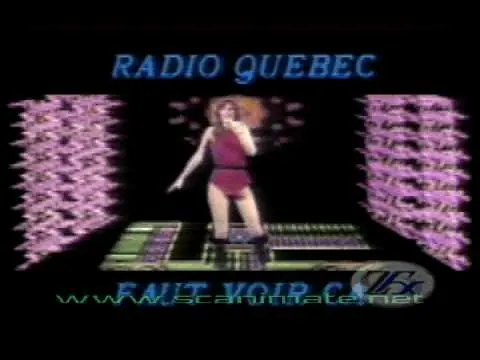
Image West: Scanimate-Demoreel, 1978. Video thumbnail.Image West / Video image in the People Behind the Pixels oral history archive.View source ↗
Prompt
Apply an Analog Scan Animation effect, bending existing contours into elastic electronic curves with localized stretching, rolling distortions, and luminous trailing outlines. Use saturated rainbow gradients, bright white cores, soft phosphor halos, horizontal scanlines, and slight analog instability without introducing lettering or logos. Keep the original subject and composition.
Animate aword using stretching, rotation, and afterglow2.
Background
Lee Harrison's Computer Image Corporation developed real-time animation systems based on ANIMAC. Scanimate dominated television logos, commercials, and program opening sequences in the 1970s. Ed Kramer, drawing on his own production experience, describes the wiring of oscillators and amplifiers, as well as the re-filming of aspecial picture tube. Colorization, keying, and multiple tape passes completed the analog image creation process.
Distinction
Scanimate is aspecific production system and not asingle filter. Later digital retro effects only imitate apart of its visual language.
Aftermath
Real-time control and an operable image instrument combine early TV graphics with today's motion tools.
Further examples · 7 images
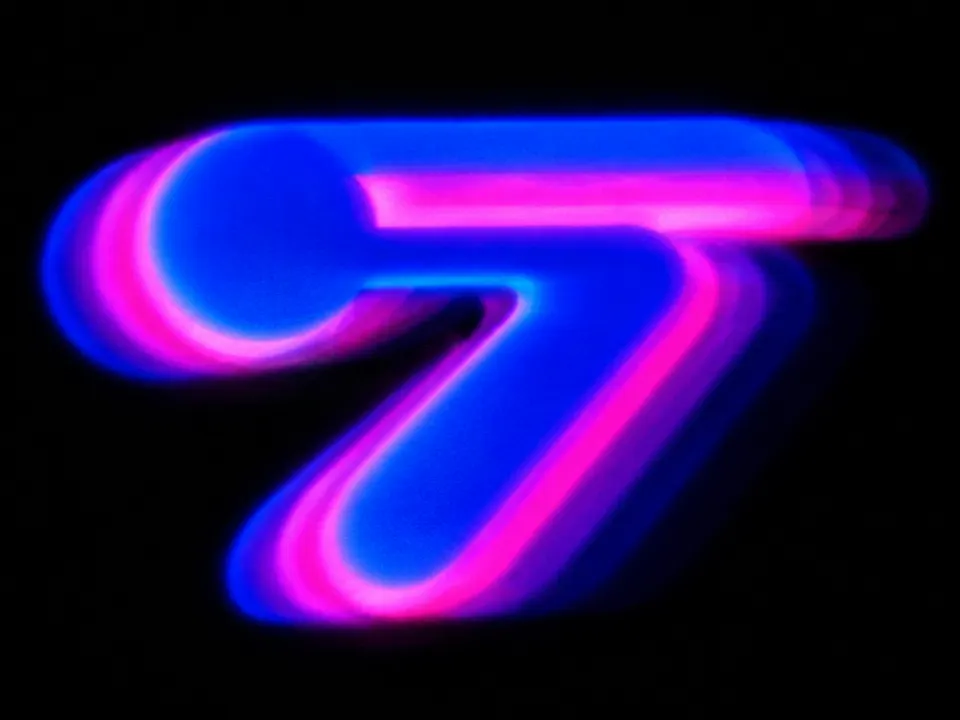
02Collection Charles Cros. Caméras film (média : image animée). Caméras pour oscilloscope type 6 - Telec. Caméra Telec pour oscilloscope de l' (1)A film camera designed to record oscilloscope displays. It represents the crucial final stage of the Scanimate process, where the analog output on a special high-resolution tube was re-filmed to create the final animation.Telec. Concepteur · Public domain · Wikimedia Commons03Collection Charles Cros. Caméras film (média : image animée). Caméras pour oscilloscope type 6 - Telec. Caméra Telec pour oscilloscope de l' (2)The interior and lens assembly of a specialized oscilloscope camera are shown. This hardware enabled the transfer of real-time electronic signal distortions into a permanent film format for television broadcast.Telec. Concepteur · Public domain · Wikimedia Commons04Collection Charles Cros. Caméras film (média : image animée). Caméras pour oscilloscope type 6 - Telec. Caméra Telec pour oscilloscope de l' (3)This view shows the camera body used for technical display recording. Scanimate relied on such optical-electronic interfaces to capture the elastic movement of logos generated by analog circuitry.Telec. Concepteur · Public domain · Wikimedia Commons05Collection Charles Cros. Caméras film (média : image animée). Caméras pour oscilloscope type 6 - Telec. Caméra Telec pour oscilloscope de l' (4)The specialized hood and lens of this recording camera are visible. This apparatus allowed for light-tight filming of the phosphor screen, capturing the characteristic glow and motion of analog electronic animation.Telec. Concepteur · Public domain · Wikimedia Commons06Collection Charles Cros. Caméras film (média : image animée). Caméras pour oscilloscope type 6 - Telec. Caméra Telec pour oscilloscope de l' (5)The control panel and mounting for a cathode-ray tube camera are visible. It provides a historical example of the technology used to document the real-time distortions essential to 1970s analog visual effects.Telec. Concepteur · Public domain · Wikimedia Commons07AI illustration: A glowing number displays multiple trailing exposures and vibrant colorizA glowing number displays multiple trailing exposures and vibrant colorization. This illustrates the system's ability to stretch and layer analog signals through multiple tape passes.Illustration generated for the Atlas (AI)
Question
How could a metallic 3D logo be created without digital 3D rendering?
Show possible answer +Hide answer −
Atwisted balsa wood logo was filmed; moving gold textures were used to replace its light and dark areas via brightness masks.