H 072 / 3211910s

Rotoscoping

Late 1910s–1920s: Out of the Inkwell. Later music video and digital VFX.
Typeface · Kalam

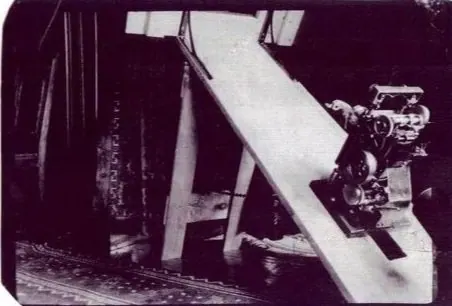
Early rotoscope in the living room of the Fleischer family.
Temporal effect: still image or image sequence.
Early rotoscope in the living room of the Fleischer family. Temporal effect: still image or image sequence.Fleischer Studios archive; Fleischer Studios web reproduction; no open license stated.View source ↗

Prompt

Apply the Rotoscoping effect by translating photographic forms into hand-traced animated shapes while retaining natural anatomy and pose. Use slightly wavering contour lines, simplified flat color regions, selective painted shading, and small registration irregularities around silhouettes, preserving recognizable facial and environmental details. Keep the original subject and composition.

Identify

Drawn figures move in a strikingly human and fluid manner.

Principle

Real film movements are traced frame by frame1. Digital rotoscoping can also create animated clipping masks2.

Example

Max and Dave Fleischer: Out of the Inkwell, from 1918. Max developed the rotoscope in 1915.

Try it out

Trace three consecutive body poses. Invent another figure with the same movement.

Background

Max Fleischer developed the rotoscope in 1915; patent granted in 1917. Late 1910s–1920s: Out of the Inkwell; later, music video and digital VFX. The Fleischer website contains an obvious typo in the patent dates: 2015/2017; MoMA confirms 1915. This does not refer to automatic AI video transmission.

Recognize: Drawn figures move in a strikingly human and fluid manner. Mechanism: Real film movements are traced frame by frame. In digital compositing, roto also refers to the manual animation of clipping masks. Example: Max and Dave Fleischer: Out of the Inkwell, from 1918; later Cab Calloway's Dance in Snow-White, 1933. Practice: Trace a person's posture in three consecutive video frames. Then invent a new character that could perform the exact same sequence of movements.

Real film movements are recreated frame by frame. In digital compositing, roto also refers to the manual animation of clipping masks. The drawn figures move in a strikingly human and fluid way. Trace the posture of a person in three consecutive video frames. The Fleischer website contains an obvious typo in the patent data: 2015/2017; MoMA confirms 1915. This does not refer to automatic AI video transmission.

Distinction

The Fleischer website contains an obvious typographical error in the patent data, stating 2015/2017; MoMA confirms 1915. This does not refer to automatic AI video transmission.

Aftermath

Bridge between live-action and animation; basis for many cutout works.

Further examples · 7 images

US patent 1242674 figure 3
02 US patent 1242674 figure 3A technical diagram shows an artist tracing a figure projected onto a glass surface. It illustrates the original patent for rotoscoping, where film frames provide a template for animation.Patent by Max Fleischer, artist Unknown authorUnknown author cropped/retouched by Rl · Public domain · Wikimedia Commons
Rotoscoped frames of Eadweard Muybridge's 'Horse in Motion' engraved into twenty metal discs
03 Rotoscoped frames of Eadweard Muybridge's 'Horse in Motion' engraved into twenty metal discsAn animated sequence shows a horse and rider engraved onto rotating metal discs. This demonstrates how early rotoscoping techniques translated photographic motion studies into stylized line art.Ballistametalcraft · CC BY-SA 3.0 · Wikimedia Commons
Zhenya001
04 Zhenya001A young girl in a red dress is shown mid-jump among broken shards. The fluid, life-like anatomy of the character indicates the use of live-action reference footage for the animation.Michael Tsekhanovsky (director) Soyuzmultfilm (production company) · Public domain · Wikimedia Commons
Lucasfilms Rotoscope Machine
05 Lucasfilms Rotoscope MachineA large industrial machine from Lucasfilm is displayed in a museum setting. This hardware represents the professional equipment used to project film for manual rotoscoping in high-end visual effects.TymmeRMortis · CC BY-SA 4.0 · Wikimedia Commons
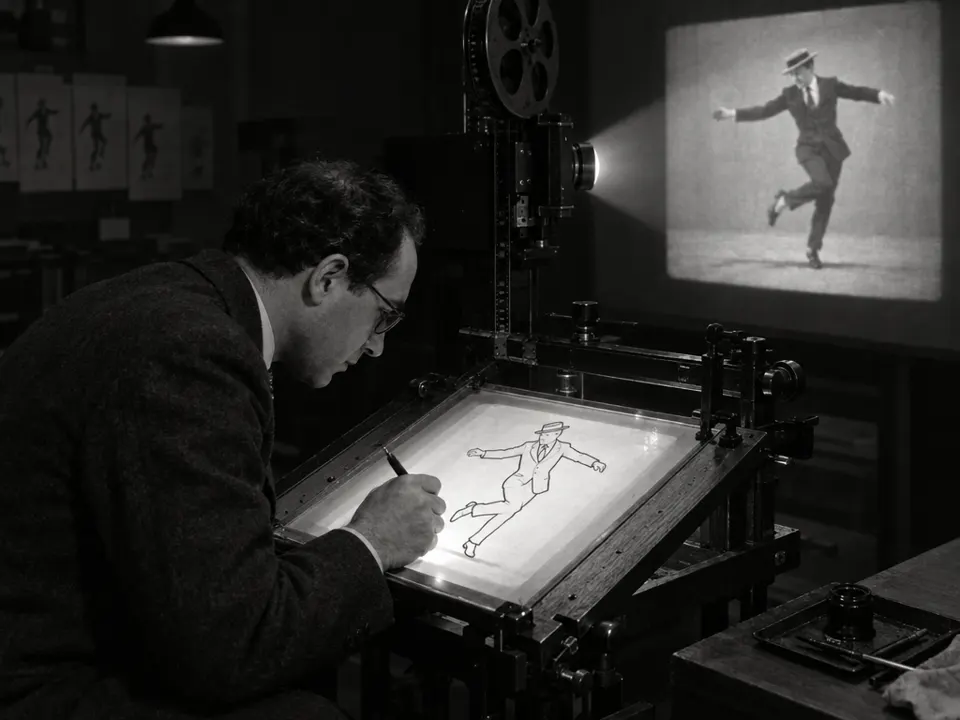
AI illustration: An animator traces a live-action film frame projected onto a glass desk
06 AI illustration: An animator traces a live-action film frame projected onto a glass deskAn animator traces a live-action film frame projected onto a glass desk. The process illustrates how rotoscoping translates human movement into hand-drawn animation through direct tracing.Illustration generated for the Atlas (AI)
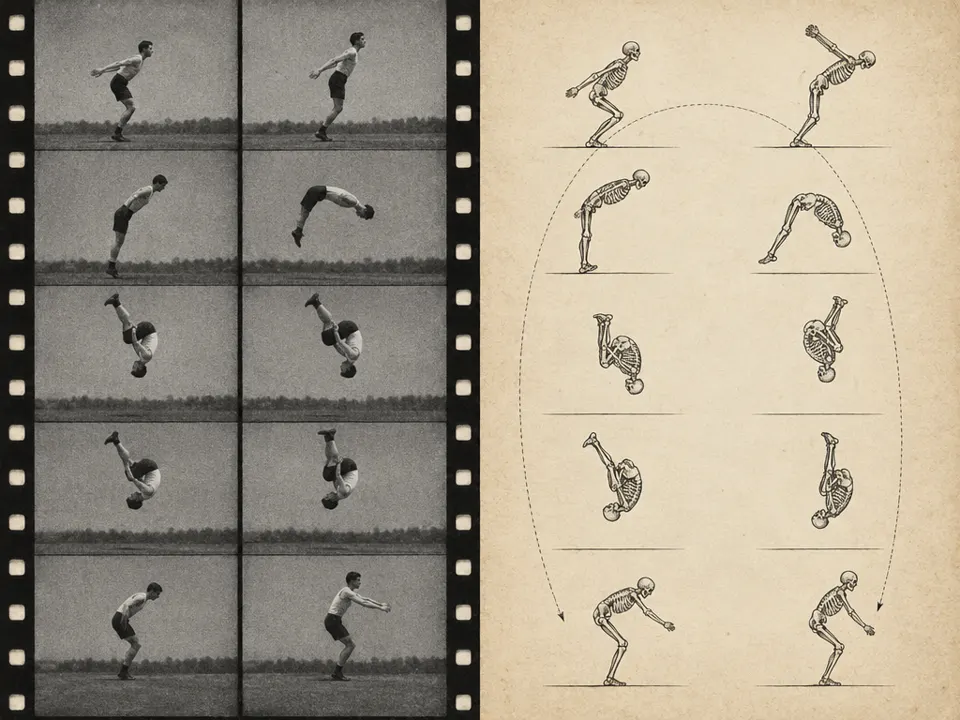
AI illustration: A film strip shows a person performing a flip alongside corresponding ske
07 AI illustration: A film strip shows a person performing a flip alongside corresponding skeA film strip shows a person performing a flip alongside corresponding skeletal drawings. The side-by-side comparison demonstrates the rotoscoping technique of capturing fluid motion from live footage.Illustration generated for the Atlas (AI)

Sources