Risograph
Risograph / Riso print. 1980: first RISOGRAPH; later zine and design revival
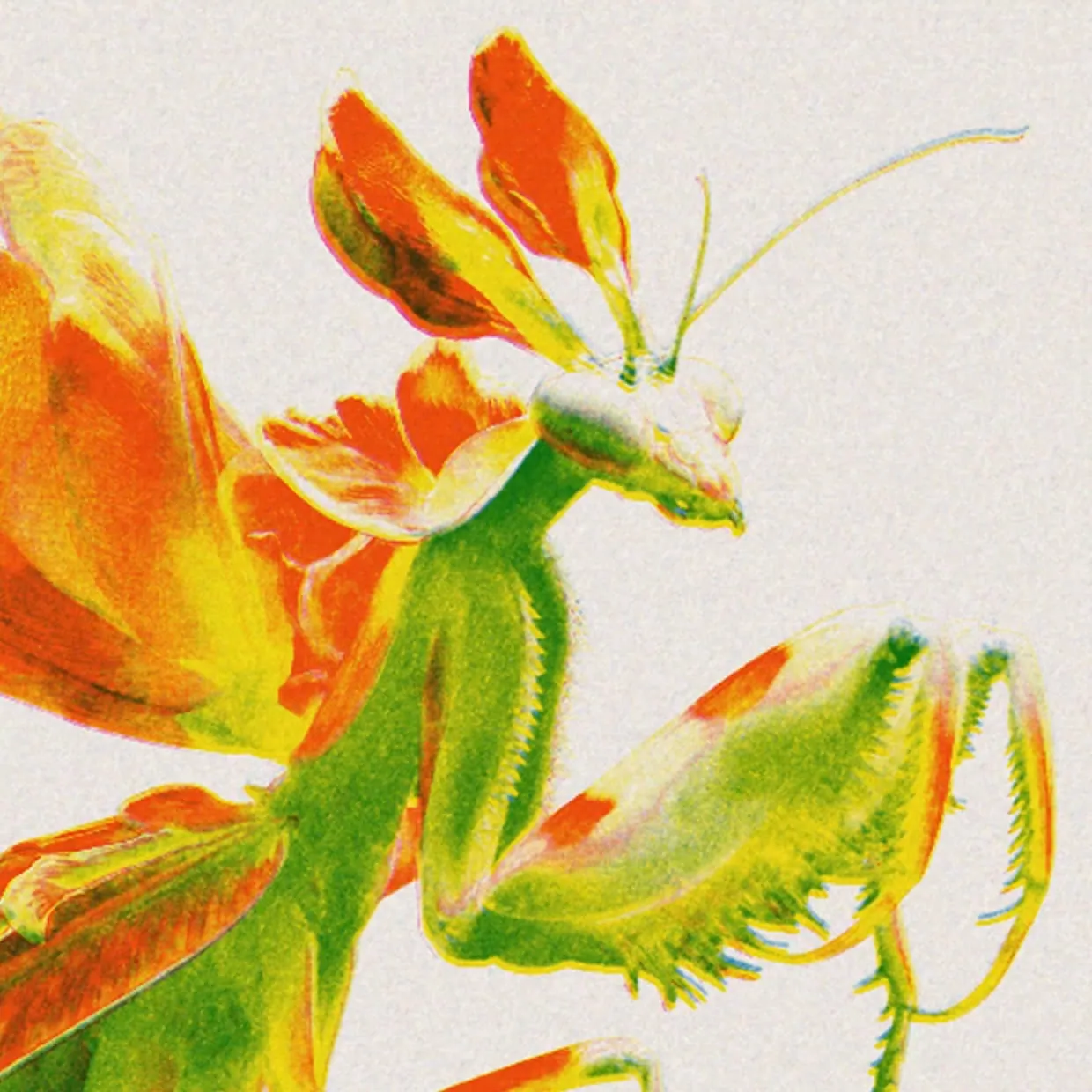
Prompt
Transform this image into a stencil duplicator print, separating forms into fluorescent pink, teal, and sunflower-yellow ink layers on uncoated cream paper. Add coarse halftone dots, grainy solid fills, slight registration offsets, translucent overprints, and uneven ink coverage with tactile paper fibers. Keep the original subject and composition.
Identify
Bright special colors, grainy surfaces and slight color variations.
Principle
Colors are applied separately using stencils1 and printing drums.
Example
Zines, art books, and multicolored small print runs.
Try it out
Separate an image into two colors; move one section slightly.
Background
RISO launched its first RISOGRAPH products in 1980. The manufacturer describes the process as a unique duplication technology. The attractive design, featuring separate colors, overprinting2, and offset printing, gained further significance in artistic publishing. The decade here refers to the documented product launch, not the date of each subsequent production. Digitally, the visible properties can be simulated using separate color channels, paper texture, and offset separations. A digital image editor can produce a subtractive overprint simulation using scanned grain plates for this purpose. Pay particular attention to the overlaps: A third visible color can emerge from two printed colors. This is precisely what distinguishes overprinting from simply adjacent color fields.
Distinction
A risograph look on the screen does not replace paper or real spot colors.
Aftermath
Keep colors and print passes mentally separate. A small misalignment can create rhythm, a large one makes facial recognition and readability more difficult.
Further examples · 8 images


Question
How can two printing inks produce more than two visible colors?
Show possible answer +Hide answer −
Different levels of coverage and overpressure create mixtures and gradations in the paper white.