Quantel Paintbox
1981 launch; widely used for 1980s television graphics
Prompt
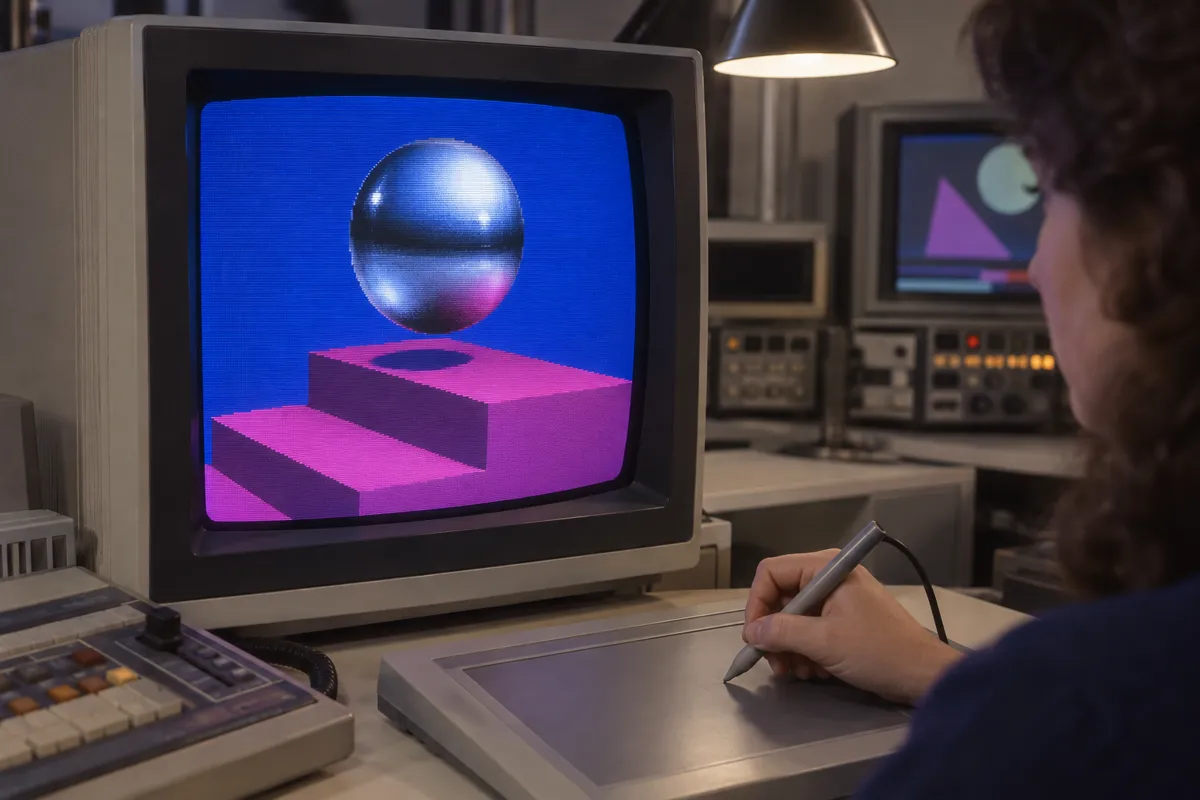
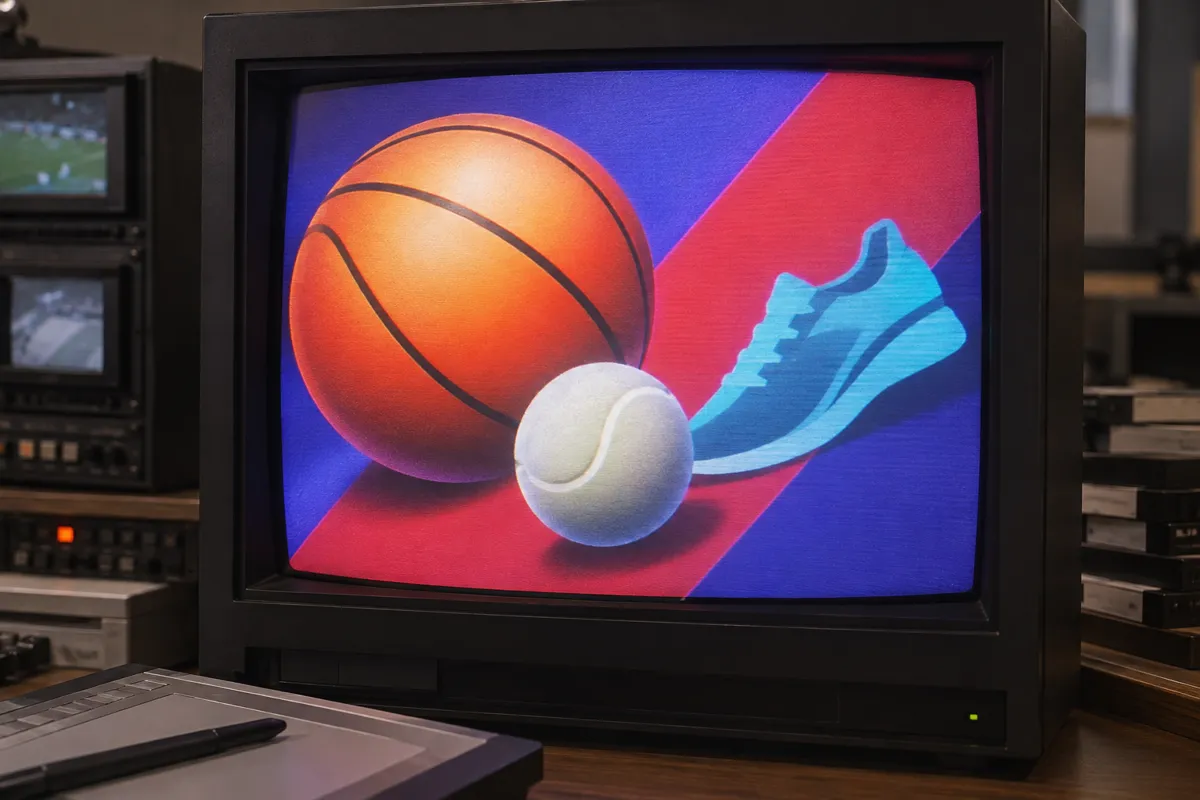
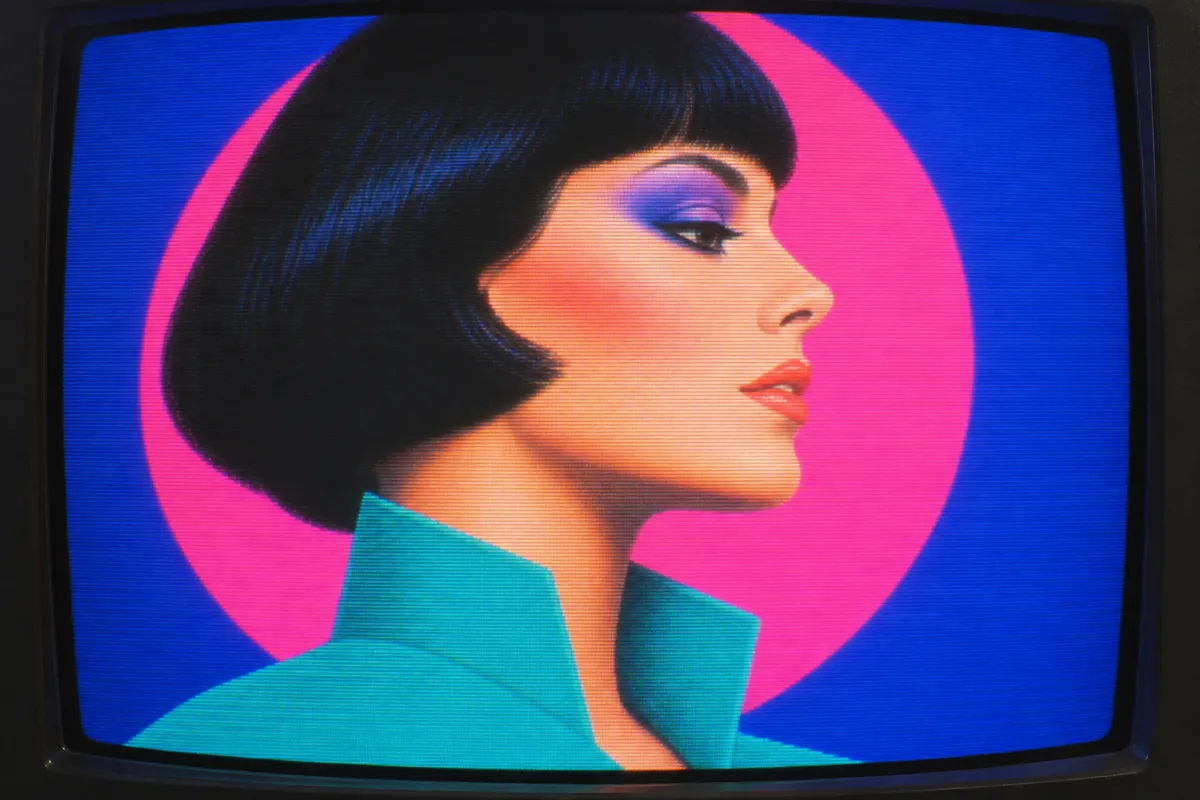
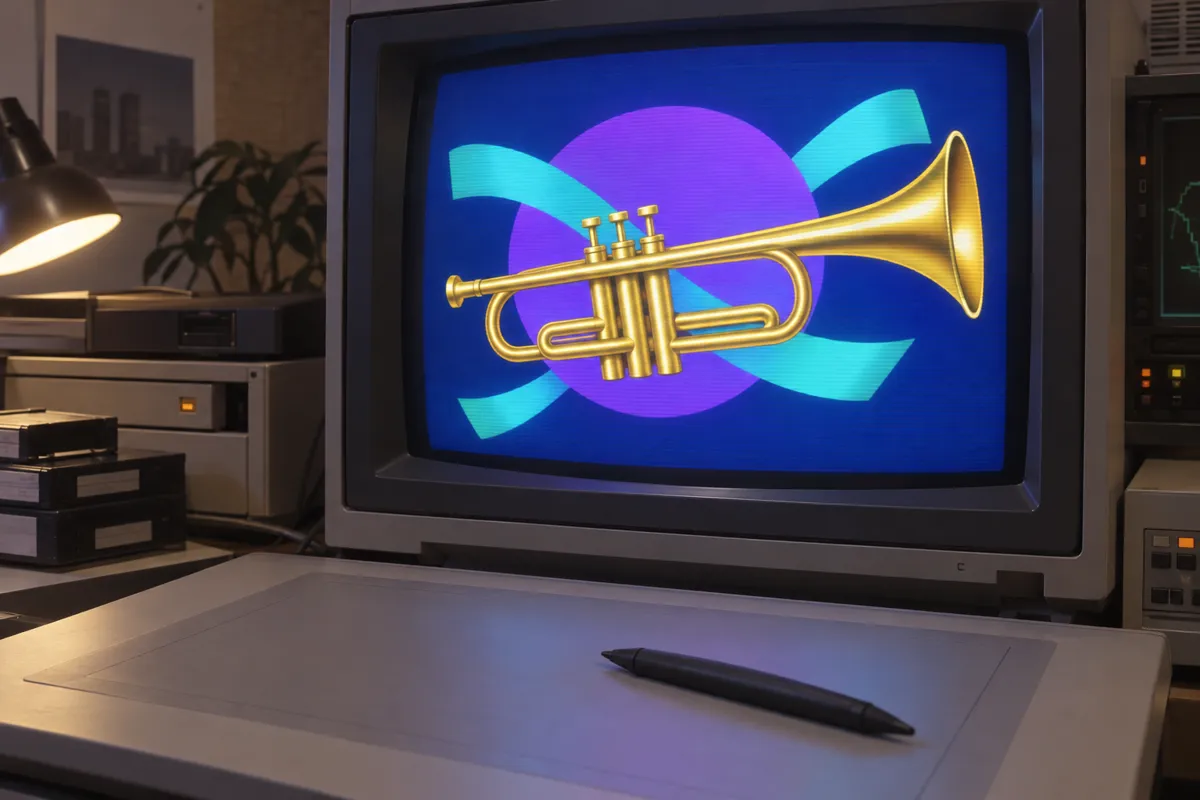
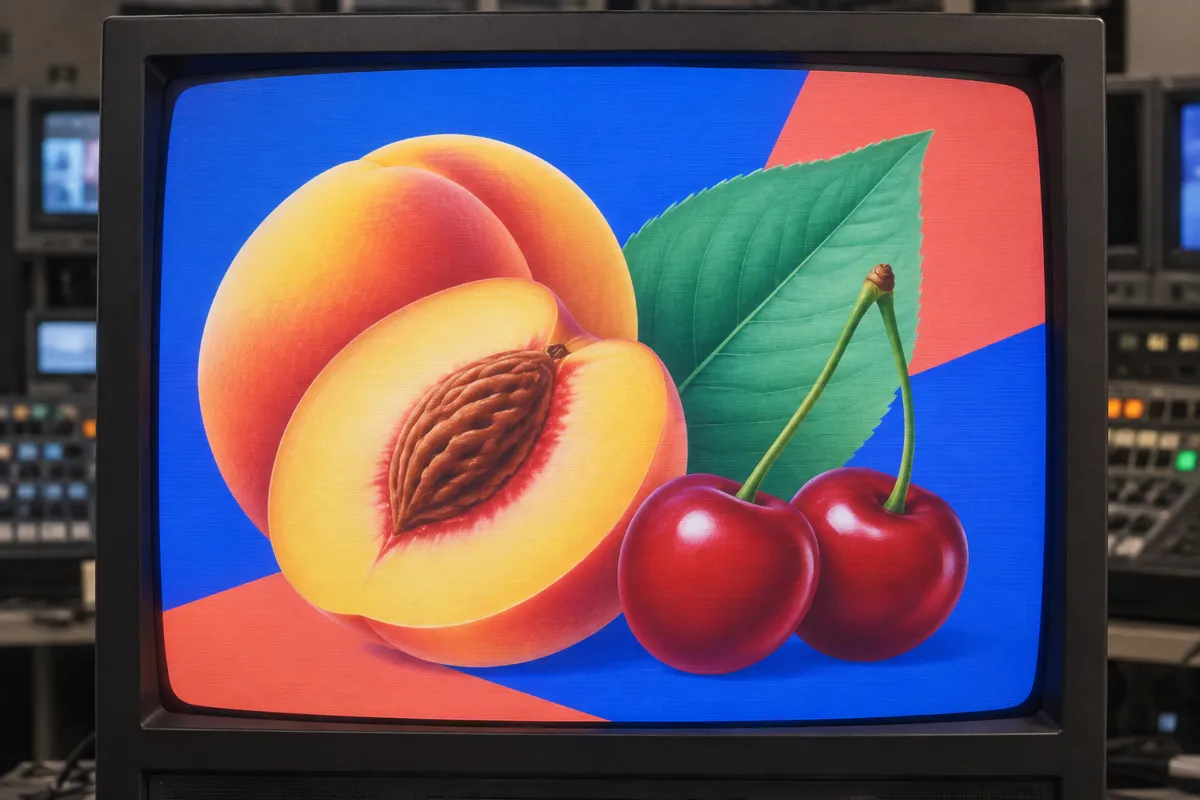
Apply a 1980s Digital Airbrush effect with saturated turquoise, hot pink, and violet accents, soft sprayed-looking shading, and exceptionally smooth electronic gradients. Combine crisp masked silhouettes with glossy highlight strokes and subtly pixelated edge details, avoiding physical canvas texture. Keep the original subject and composition.
Identify
Soft airbrushed shading, saturated colours, and crisp cutout edges often appear together in television titles and illustrated backgrounds. These traits suggest a workflow, not proof that Paintbox made an image.
Principle
A stylus and graphics tablet1 controlled digital brushes that changed pixels2 in a frame store3. Electronic colour blending produced smooth gradients without spraying pigment or exposing photographic material.
Example
David Hockney: Painting with Light (BBC television contribution), 1986.
Try it out
Draw a hard-edged shape in a digital painting tool, then shade inside it with a soft brush. Compare the boundaries.
Background
British company Quantel introduced Paintbox in 1981 as a dedicated digital painting system for television production. Artists worked with a stylus and tablet while viewing their images on a monitor. A frame store held the picture electronically, allowing brushes and other tools to alter its pixels. Broadcast teams could combine painted marks, lettering, and captured imagery without photographing finished artwork. Soft shading and precise cutouts became familiar features of this workflow. Paintbox was equipment, however, rather than a single filter or a fixed visual style.
Distinction
Traditional airbrushing deposits pigment on a surface; Paintbox simulates soft marks by changing pixel values. Unlike vector drawing, its painted image is a pixel grid.
Aftermath
Paintbox shows how direct drawing tools helped bring electronic image manipulation into everyday television production.
Further examples · 7 images


Question
Can smooth shading and bright colours identify a Paintbox image with certainty?
Show possible answer +Hide answer −
No. Other digital systems and traditional airbrush techniques can produce similar appearances; reliable identification needs production records or artist testimony.