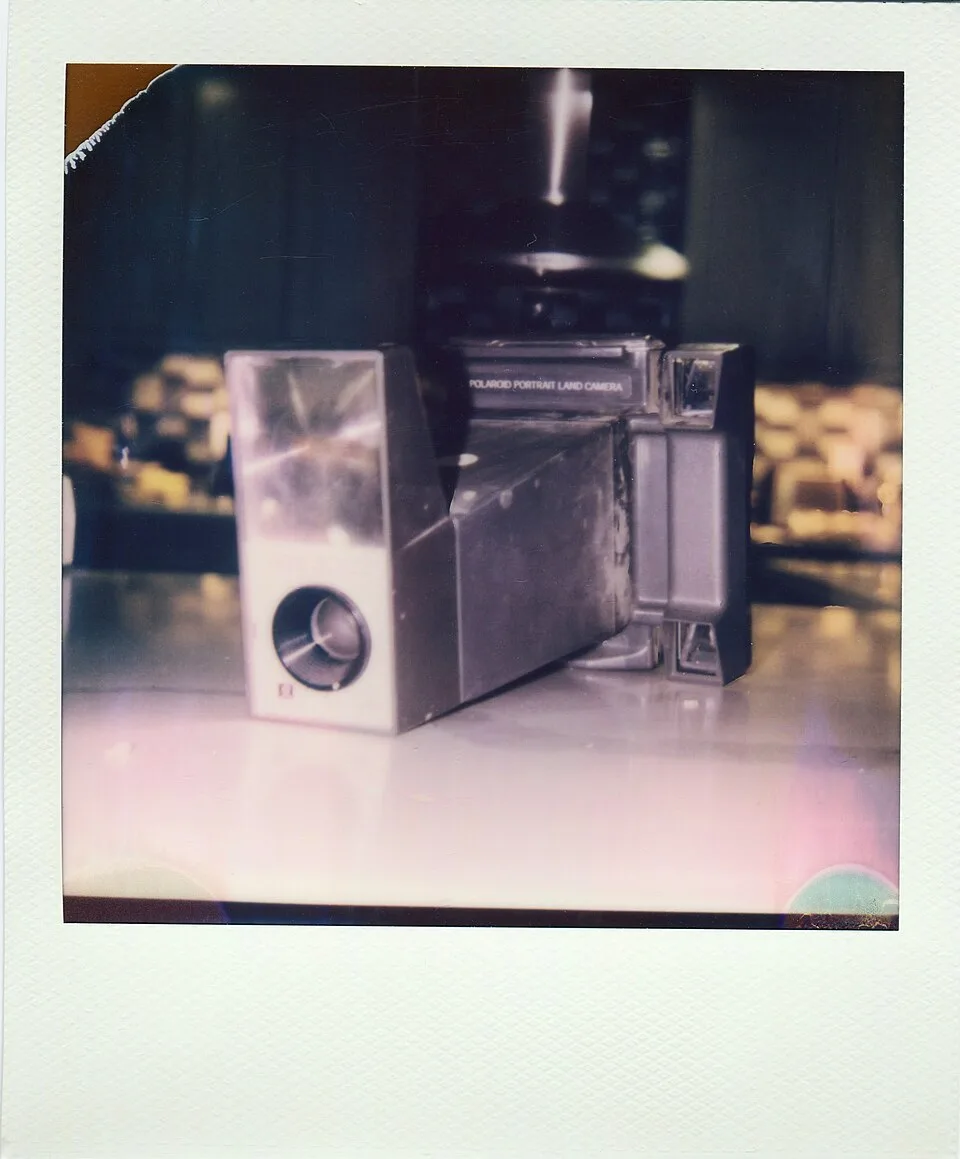
Camera Still Life on Instant Film. A softly colored photograph of a vintage camera sits within a white instant-film border with a broad lower margin.Moki8 · CC BY 4.0 · via Wikimedia CommonsView source ↗
Prompt
Transform this image into an Integral Instant Film photograph, using softly muted colors, creamy highlights, warm skin tones where present, gentle shadow haze, and subtle chemical mottling. Fit the uncropped image within a square print surrounded by an ivory border with a wider bottom margin. Keep the original subject and composition.
Find avintage Polaroid and feel the thicker bottom border where the chemical developer pod was once concealed.
Background
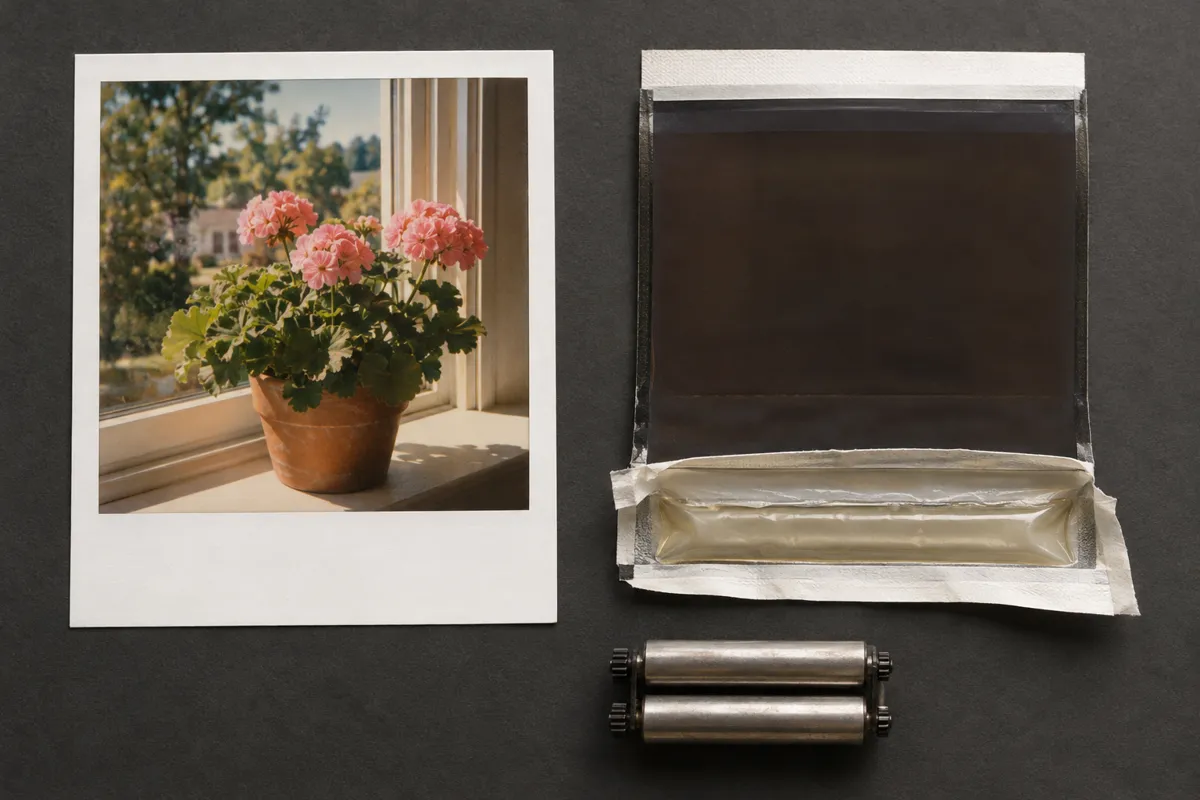
Introduced in 1972, the Polaroid SX-70 was afolding single-lens reflex camera. It used aradically new format called integral instant film2. This film pushed out of the camera immediately after exposure. The photograph developed in daylight with no waste to discard. The thick bottom margin held atiny pod of chemicals. As the picture ejected, steel rollers squeezed this pod. The paste spread evenly across the internal layers. An opaque chemical temporarily blocked ambient light to protect the negative. Underneath, subtractive color dyes3migrated upward to form the final visible image.
Distinction
Unlike earlier peel-apart film, integral film sealed all chemical layers inside one packet. There was no messy paper negative to discard.
Aftermath
It demonstrates how complex photochemistry can be engineered into asimple, self-contained consumer product.
Further examples · 7 images
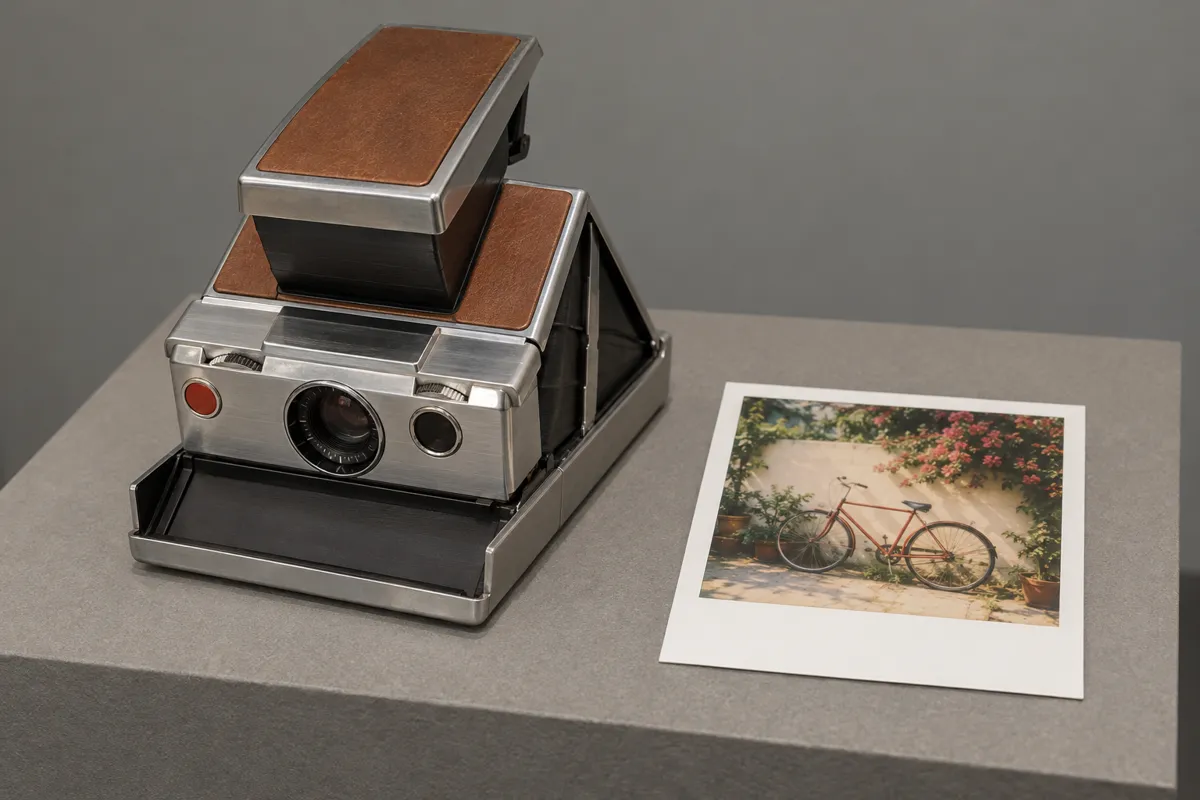
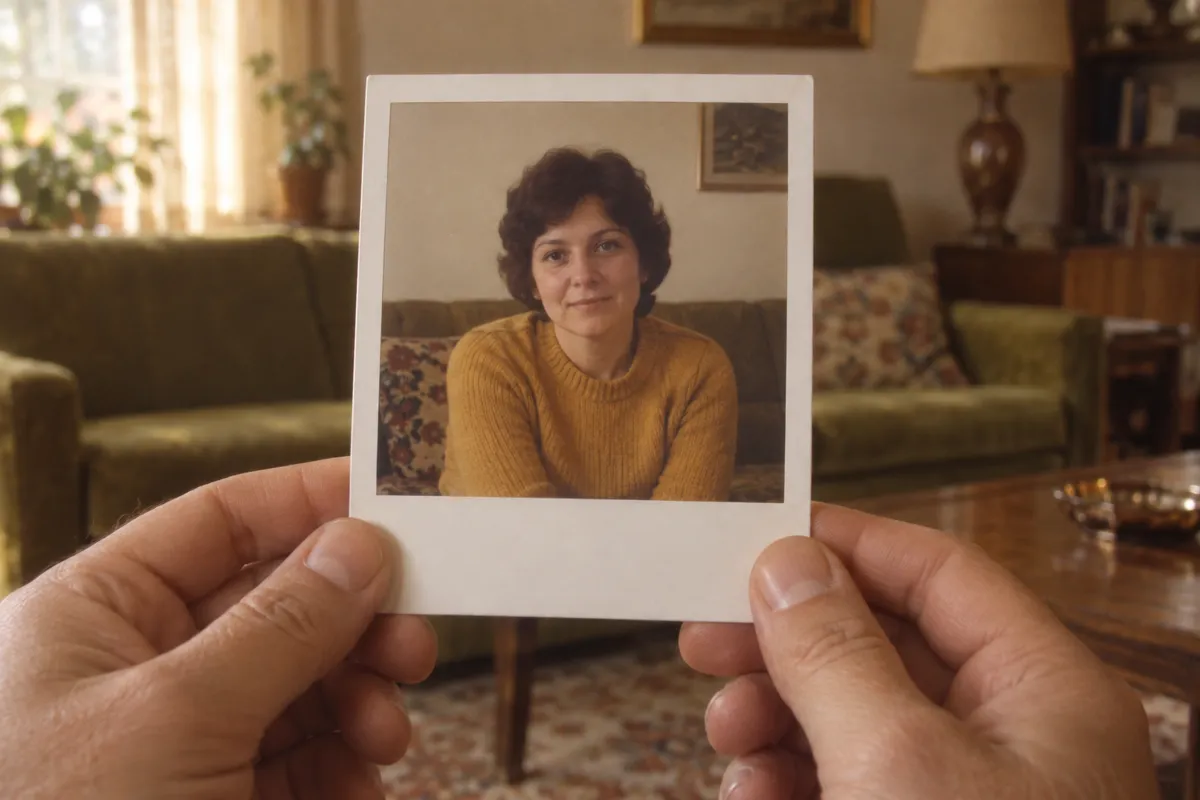
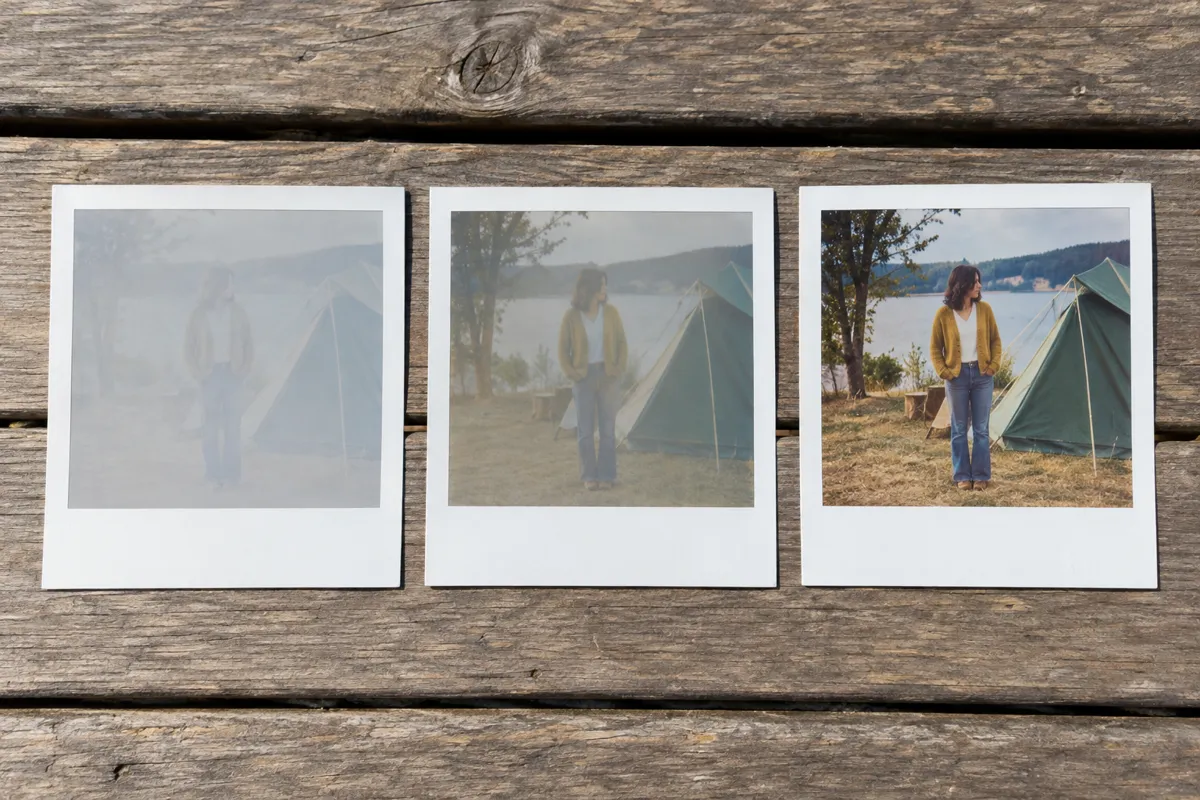
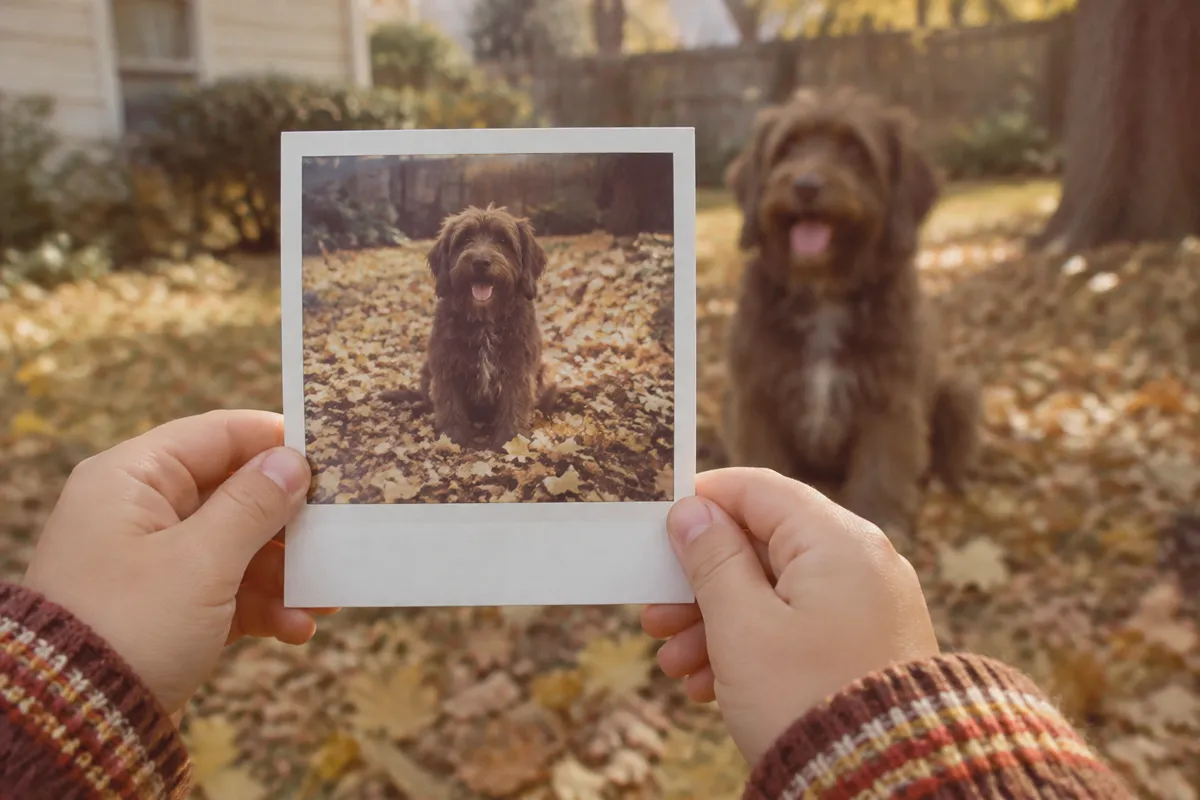
02Pool Game on White-Bordered Instant FilmA player leans over a pool table while several people watch, captured in a dim color photograph with a wide white bottom border. The square image and characteristic integral-film surround clearly show the SX-70 instant-print format.Sgroey · CC BY-SA 4.0 · Wikimedia Commons03AI illustration: Polaroid SX-70 camera and square format printA classic folding SLR camera is displayed alongside a square instant photograph of a bicycle. The image demonstrates the specific square format and integrated white border characteristic of this instant film system.Illustration generated for the Atlas (AI)04AI illustration: Square integral film portrait with wide borderA finished square photograph is held in front of the subject, featuring a distinct wide bottom margin. The print showcases the saturated colors and iconic physical framing of a developed integral film unit.Illustration generated for the Atlas (AI)05AI illustration: Progressive daylight development of instant filmThree square prints show the chronological emergence of an image over several minutes of daylight development. This sequence illustrates the self-developing nature of the chemicals contained within the integral film structure.Illustration generated for the Atlas (AI)06AI illustration: Internal chemistry pod and development rollersThis display reveals the internal components of a film sheet, including the reagent pod and the metal rollers used for processing. It provides a technical view of how the chemical pod is crushed to distribute opacifier and developer layers.Illustration generated for the Atlas (AI)07AI illustration: Instant print comparison to original subjectA small square photograph of a dog is held against the original scene, mimicking the immediate physical output of the camera. The image quality and physical border are representative of the instant gratification offered by this medium.Illustration generated for the Atlas (AI)
Question
Why did the photo not overexpose while developing in daylight?
Show possible answer +Hide answer −
The pod contained an opacifier paste that blocked light immediately after ejection. This opaque layer gradually faded as the picture developed.