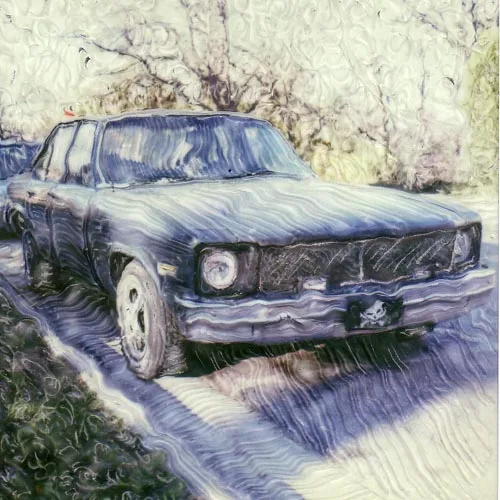
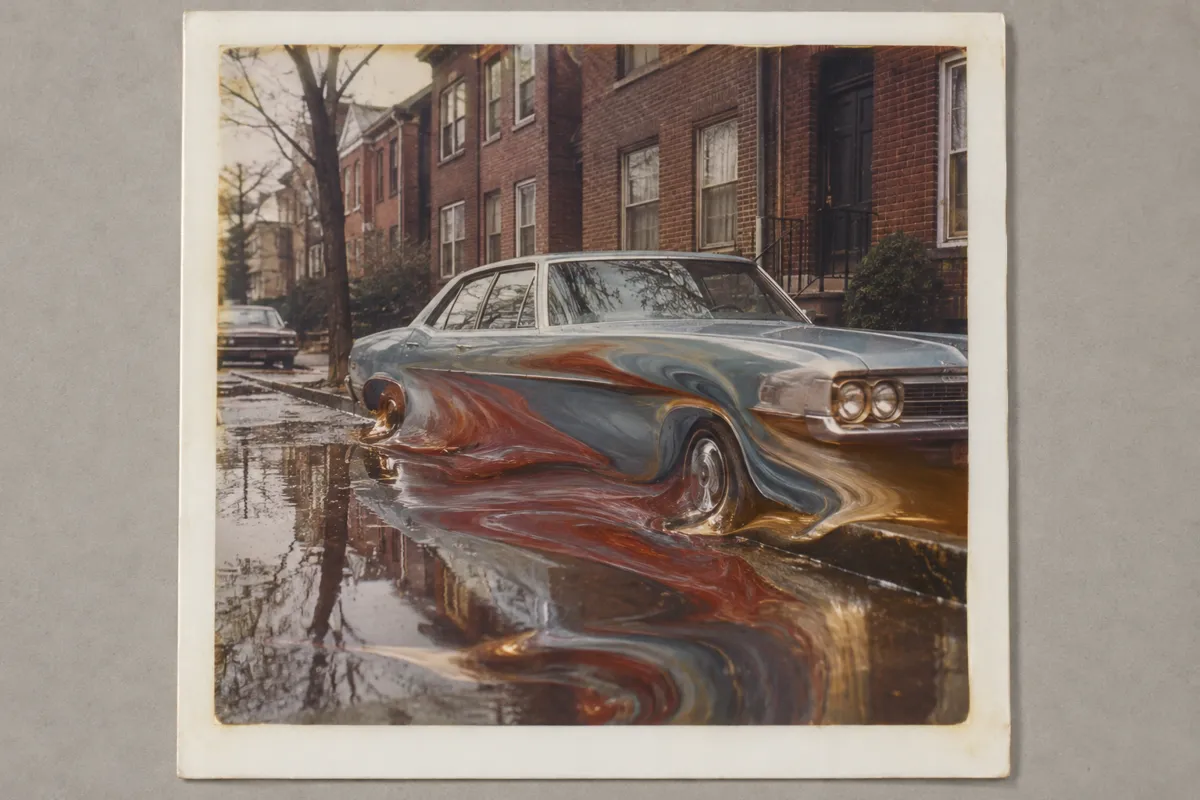
Car in Rippling Polaroid Emulsion. A parked car and its surroundings dissolve into rippling strokes, with blue-gray color dragged across the hood, windshield, and pavement.Hellbus · CC BY-SA 3.0 · via Wikimedia CommonsView source ↗
Prompt
Apply a 1970s instant-photo emulsion manipulation effect, making photographic details resemble thick, wet paint pushed beneath a glossy surface. Introduce melted contours, pressure-dragged streaks, swirling color pools, soft chemical bleeding, and uneven pastel saturation while retaining recognizable features. Keep the original subject and composition.
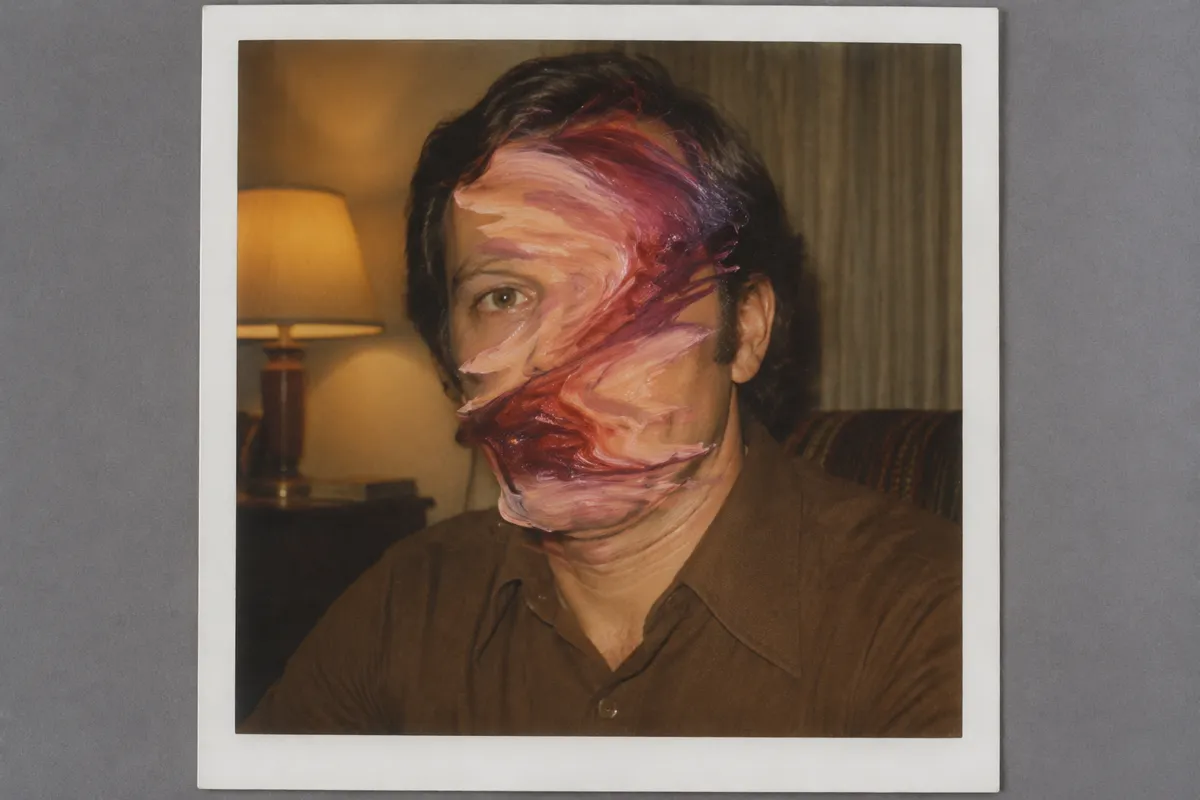
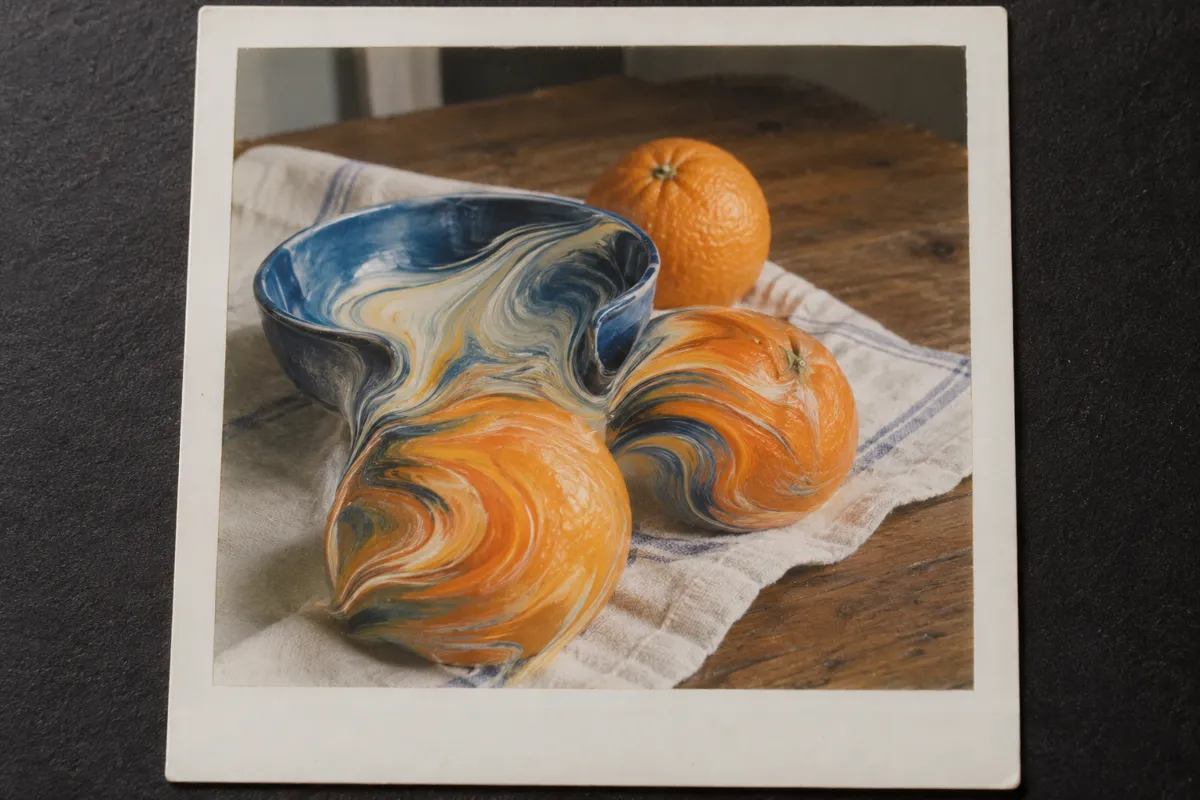
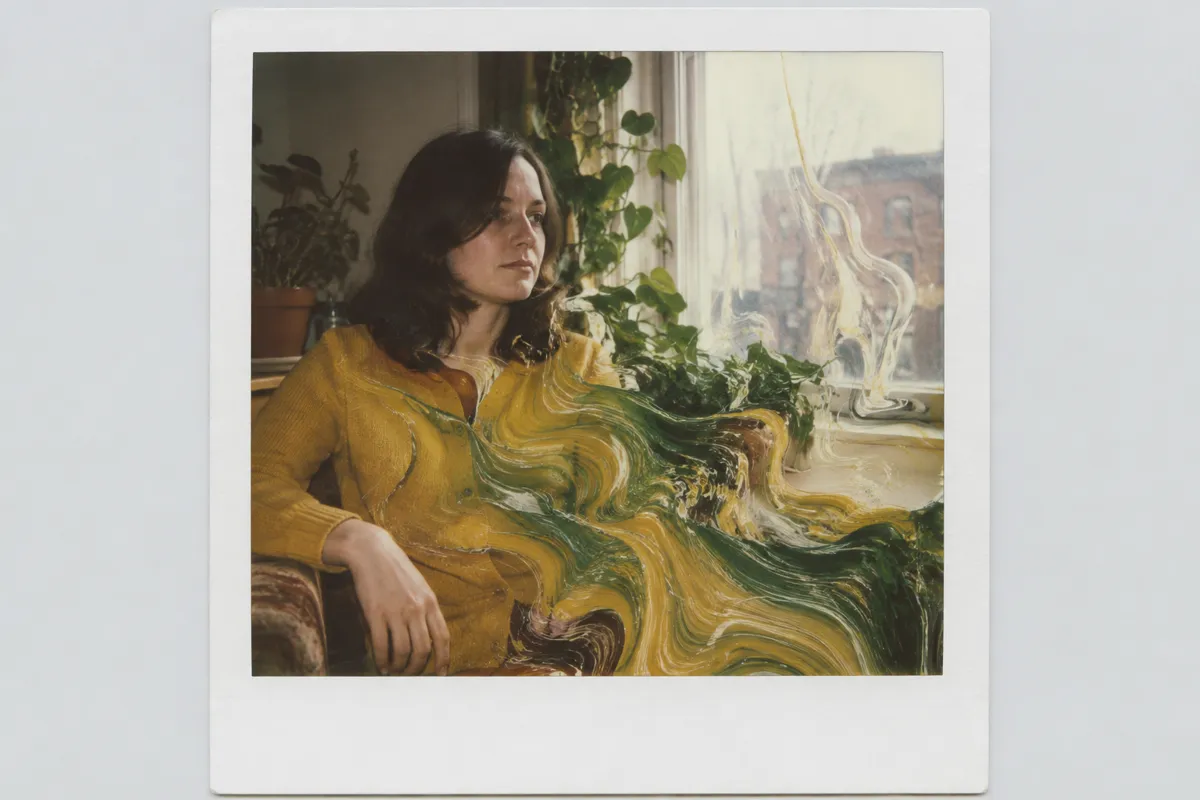
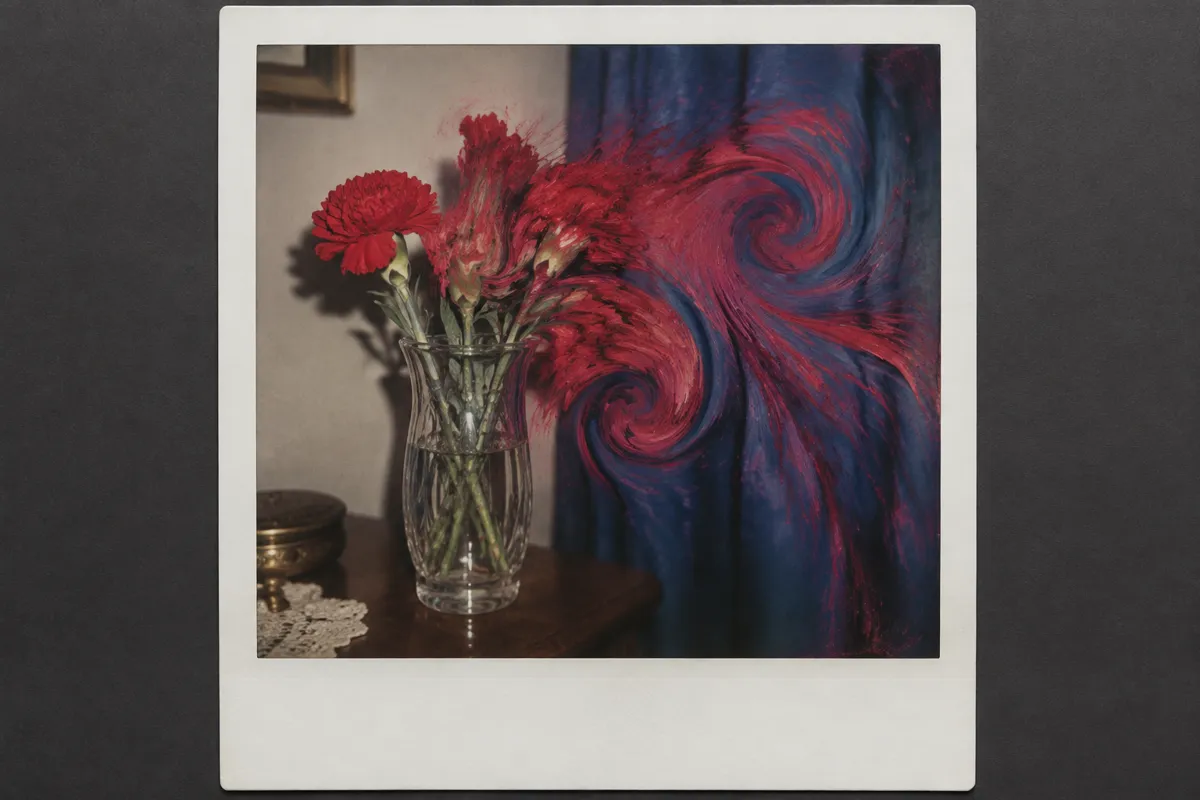
You see aphotograph where the subjects look melted, smeared, or painted. The [colors swirl together]like thick wet paint.
Principle
Artists applied pressure to the surface of a[developing instant photo]. This pushed the [trapped chemical emulsion1]around before it hardened.
Example
Lucas Samaras: Photo-Transformation, 1973.
Try it out
Press your finger firmly against asealed plastic bag filled with thick liquid to see how pressure displaces the contents.
Background
Polaroid introduced the SX-70 camera in 1972. It ejected aself-contained film packet holding both the negative and positive layers. Between these layers sat apaste-like chemical emulsion that developed the image in daylight. This emulsion remained soft and wet for minutes after ejection. Artists like Lucas Samaras quickly discovered they could alter the image. They used styluses, blunt tools, or fingers to rub the protective clear mylar surface2. This physical pressure physically displaced the colored dyes inside. The resulting images blurred the line between photography and painting.
Distinction
This differs from emulsion transfer, which moves acompleted image layer onto paper. Manipulation changes the wet image inside its original casing.
Aftermath
It shows how photographers can physically intervene in automated chemical processes to create unique artwork.
Further examples · 7 images
02Portrait with Manipulated EmulsionA woman's portrait retains a clear face amid heavily worked contours, creamy smears, and dark incised-looking lines. The selectively displaced image material around her clothing and surroundings visibly demonstrates pressure manipulation of developing instant-photo emulsion.Augusto De Luca · CC BY-SA 2.0 · Wikimedia Commons03AI illustration: Distorted Portrait Through Chemical Emulsion ManipulationA portrait of a man features heavy, impasto-like swirls of red and pink obscuring his face. This demonstrates the manipulation of SX-70 dye layers using a stylus before the hardening process is complete.Illustration generated for the Atlas (AI)04AI illustration: Melted Still Life With OrangesA still life of oranges and a blue bowl shows the colors bleeding into one another in thick, fluid waves. The artist has physically pushed the internal chemicals to merge the boundaries of separate objects.Illustration generated for the Atlas (AI)05AI illustration: Ethereal Portrait With Smeared Emulsion TexturesA woman sits by a window as the dyes of her yellow sweater and the green plants smear into a dreamlike texture. The effect is achieved by applying pressure to the protective plastic layer during the development phase.Illustration generated for the Atlas (AI)06AI illustration: Liquified Vintage Car On City StreetA vintage car appears to liquify into a puddle, with the blue and brown tones swirling across the lower half of the frame. This utilizes the slow-drying properties of instant film to distort architectural and mechanical lines.Illustration generated for the Atlas (AI)07AI illustration: Floral Arrangement With Spiral Dye ManipulationRed flowers in a glass vase transition into spiral patterns that blend into the blue background. This exemplifies how targeted pressure can redirect the image-forming dyes into non-representational, painterly forms.Illustration generated for the Atlas (AI)
Question
Why did this technique only work well with early Polaroid SX-70 film?
Show possible answer +Hide answer −
Later films dried much faster to prevent accidental damage by consumers. The older SX-70 emulsion stayed soft long enough to modify.