Platinum Print
Platinum print / platinotype. Patented in 1873; art photography around 1900
Prompt
Apply a Platinum Print effect with a completely matte surface, exceptionally fine neutral-to-warm gray gradations, delicate luminous highlights, and deep yet open shadows. Embed the image softly into visible cotton paper fibers, avoiding glossy reflections, coarse grain, or harsh contrast. Keep the original subject and composition.
Identify
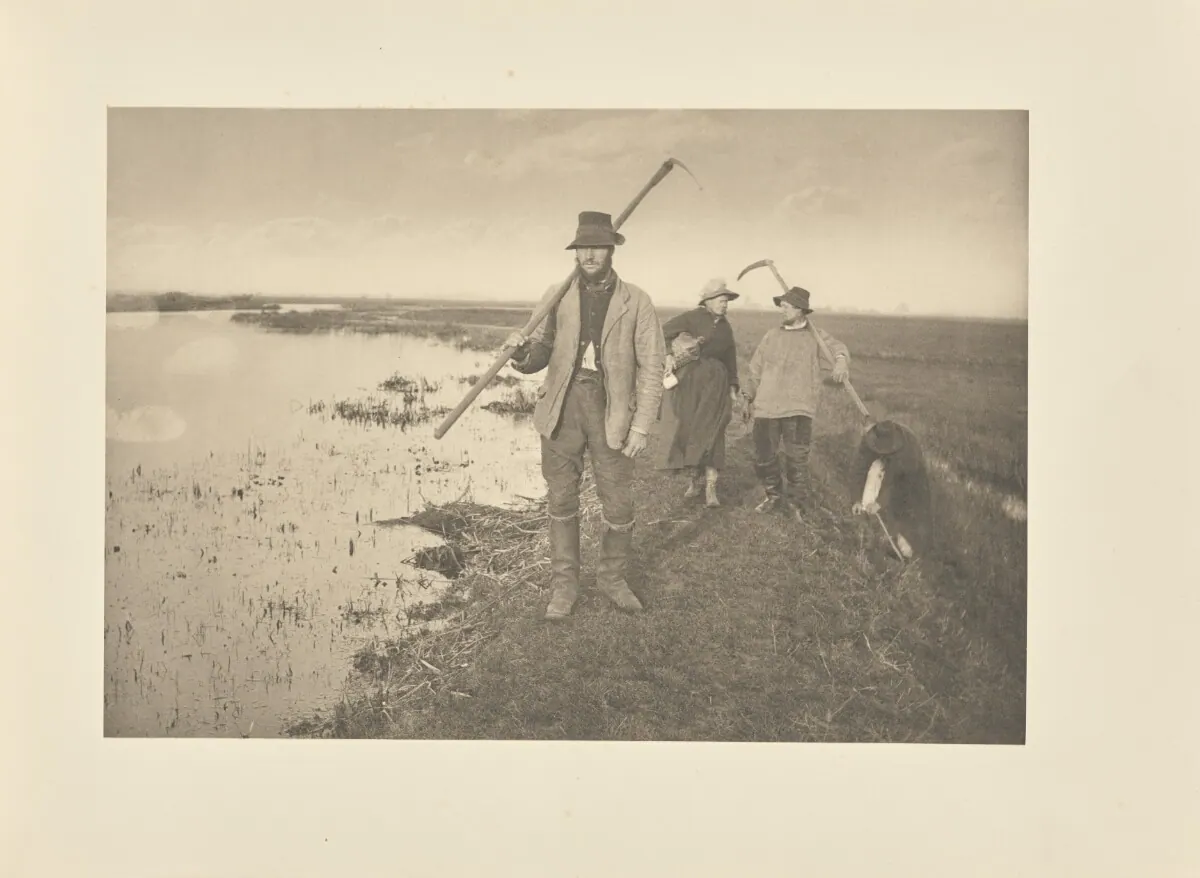
Matte surface and very fine shades of gray.
Principle
Iron compounds1 impart a permanent platinum2 image to the paper.
Example
Emerson: Coming Home from the Marshes, 1886.
Try it out
Compare five adjacent shades of gray instead of just black and white.
Background
William Willis patented the process in 1873. Around 1900, art photographers appreciated the understated surface and nuanced midtones. Rising platinum costs and the restrictions imposed during World War I altered its availability; palladium gained importance as a related metal used in photography. The look serves as a reminder that photographic effect also depends on reflection, paper fibers, and the presence of metal in the final image.
Distinction
A digital scan can only partially convey matte surfaces and subtle tonal gradations. Not every soft black and white image is a platinum print. Platinum printing refers to a material process, not simply a desaturated color adjustment.
Aftermath
Material luxury can have a subtle effect: rich tonal values instead of brilliance.
Further examples · 7 images


Question
What is more important here: maximum color saturation or fine tonal differences?
Show possible answer +Hide answer −
The subtle tonal variations and the matte material effect.