Establishment in the illustrated press from the 1880s onwards
Typeface · DotGothic16
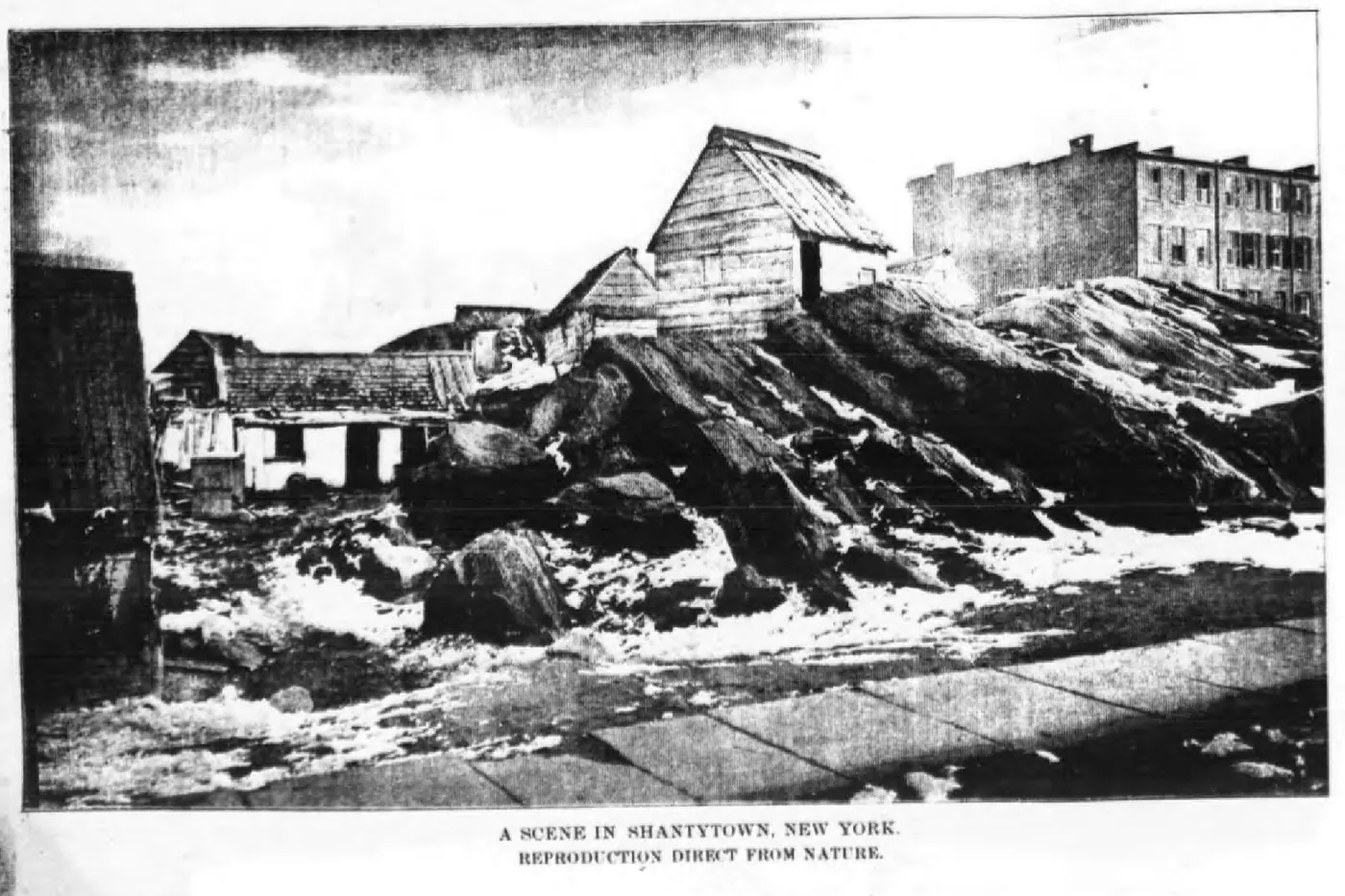
Daily Graphic: A Scene in Shantytown, New York, March 4, 1880. Early halftone reproduction.Daily Graphic; photographic source not securely named / Wikimedia Commons. Public domain; published 1880.View source ↗
Prompt
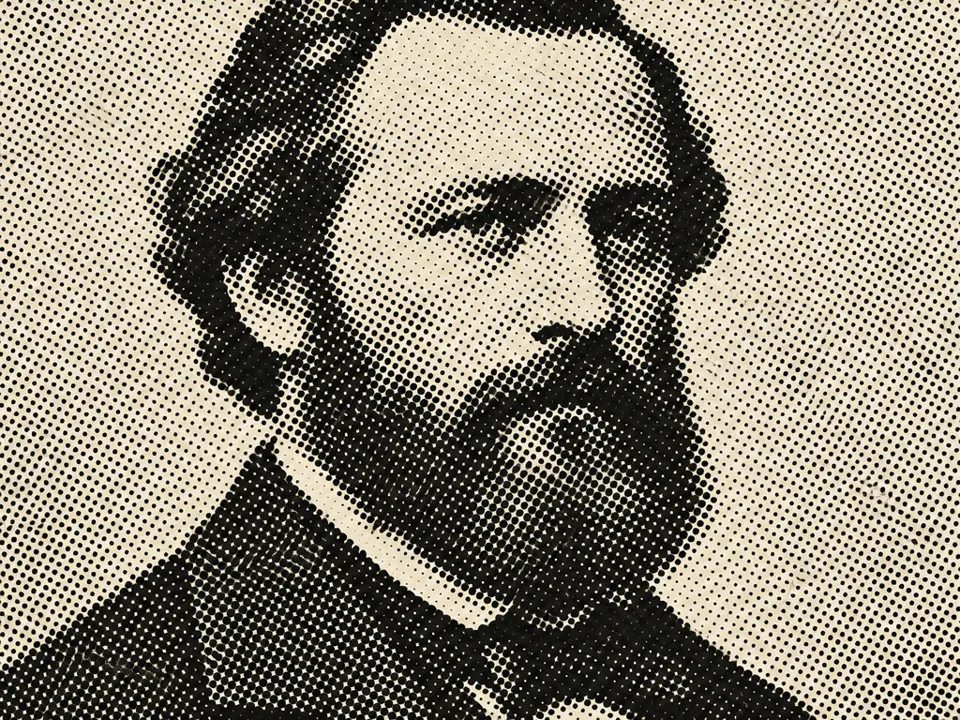
Apply a Halftone effect, rebuilding tonal values from a clearly visible, regular grid of black ink dots on warm white paper. Vary dot sizes from tiny highlight specks to dense shadow clusters, adding slight ink spread and paper grain while retaining readable contours. Keep the original subject and composition.
From adistance, tones emerge. Up close, you can see [dots or lines in aregular pattern].
Principle
Printable halftone elements [translate continuous tonal values1]. Their [size or density simulates different brightness]levels on paper.
Example
Daily Graphic: AScene in Shantytown, New York, 1880.
Try it out
Enlarge anewspaper clipping. Using adigital Halftone Screen effect, vary the dot size and screen angle2.
Background
Early precursors; commercially established in the 1880s. Illustrated mass press from the late 1880s; later comics and Pop Art. Detailed mechanism: Tonal values are broken down into printable halftone elements. The size or density of the dots or lines simulates gray on paper. Ahalftone translates acontinuous image into discrete characters. In this early example, the halftone is coarse and linear.
Distinction
Agrid translates acontinuous image into discrete characters. In this early example, the grid is coarse and line-like.
Aftermath
Halftone filters, risograph and newspaper looks, screen printing and comic-like shadows.
Further examples · 7 images
02Screens. Halftone process in printing. img 05A field of pink displays a fine, regular pattern of small white dots. This illustrates how the density of discrete elements creates the optical illusion of a continuous light pink tone.Dmitry Makeev · CC BY-SA 4.0 · Wikimedia Commons03Screens. Halftone process in printing. img 11A solid dark gray area is positioned above a gray halftone pattern of small dots. The lower section demonstrates the breakdown of tonal values into discrete characters for mass press reproduction.Dmitry Makeev · CC BY-SA 4.0 · Wikimedia Commons04Test Screens. Halftone process in printing. img 06This vertical landscape uses a halftone screen to depict buildings and fields. It is a good example of how early mass press used coarse patterns to simulate gray values.Dmitry Makeev · CC BY-SA 4.0 · Wikimedia Commons05Better paper-better printing (1920) (14780853852)A fine halftone screen is used to reproduce this architectural photograph. The regular pattern of dots is particularly noticeable in the mid-tones of the columns and the reflection in the water.Warren, S. D., company, Boston. [from old catalog] · No restrictions · Wikimedia Commons06Photo engraving department of the New York Times newspaper. 8d22683vA technician inspects a halftone negative on a light table. The image shows the discrete dots or lines that represent tonal values before the plate is etched for newspaper printing.Marjory Collins · Public domain · Wikimedia Commons07AI illustration: This portrait uses a clear grid of varying dot sizes to create tonal valuThis portrait uses a clear grid of varying dot sizes to create tonal values. The density and size of the individual dots simulate shadows and mid-tones, accurately illustrating a digital halftone screen effect.Illustration generated for the Atlas (AI)